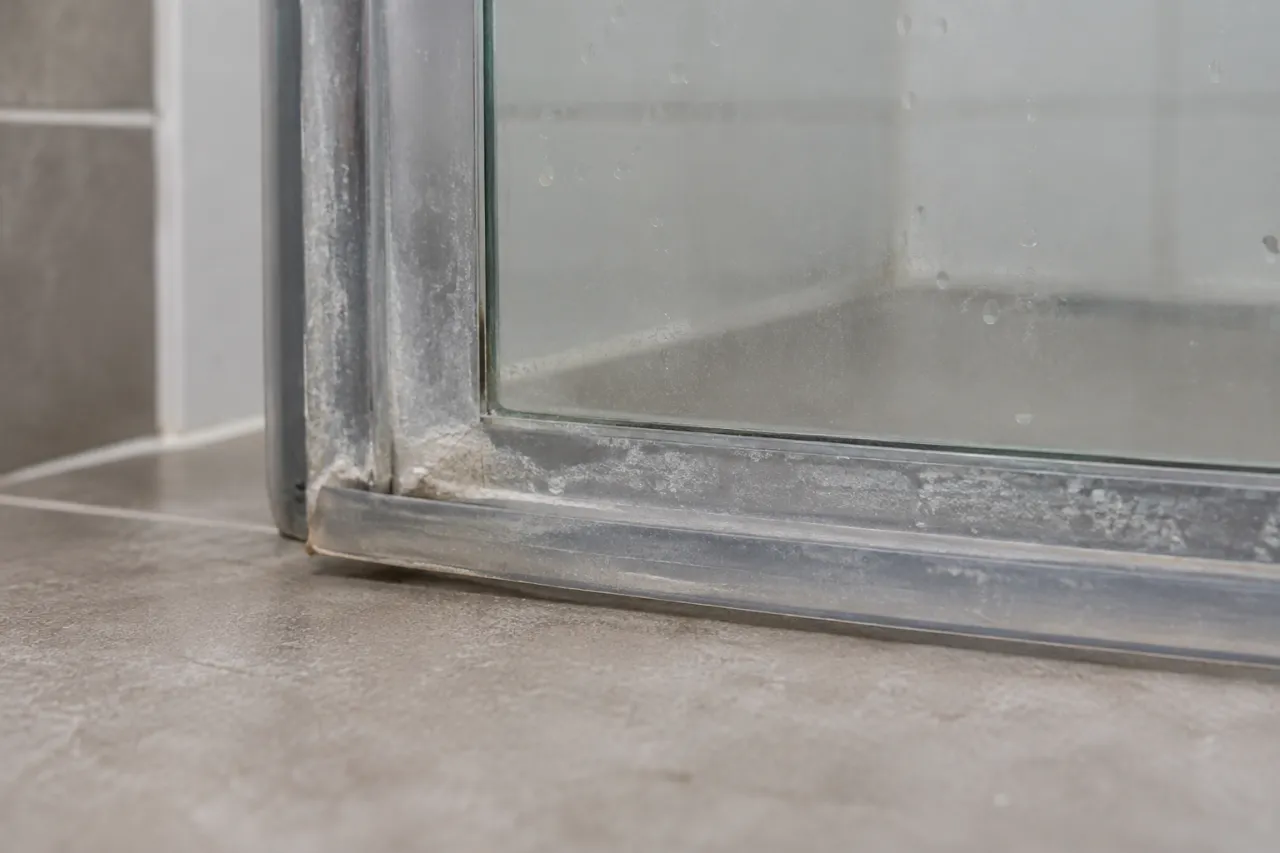
入居直後の賃貸住宅のカビ相談
2026/10/08

Moving into an apartment in Tokyo, Kanagawa, or Chiba is busy enough without finding a dark patch behind a door, a damp closet wall, or a musty smell before the boxes are unpacked. It can be especially difficult when the move-in inspection sheet and the property manager's messages are in Japanese. You may wonder whether the stain was already there, whether it is actually mold, who should arrange an inspection, and whether cleaning it yourself will make the situation worse. This guide gives you a practical sequence, not a remote diagnosis or a promise about legal responsibility.
Quick answer: photograph the condition before you clean or cover it; check whether water is still entering; promptly notify the landlord or property manager in writing; and keep the condition report, lease, photos, and replies together. If the area remains wet, expands, smells strongly, or involves swollen wall or floor materials, ask about an inspection of the moisture source. Kabi Busters Yokohama can also receive an inquiry in English about the mold concern and the appropriate scope of investigation, while permission and repair arrangements for a rental should be coordinated with its manager or owner. This order helps everyone work from the same facts.
日本語の要点:入居直後にカビらしい黒ずみを見つけたら、掃除や荷物の設置前に日付付き写真を撮り、現在も濡れているかを確認して、貸主・管理会社へ書面で連絡してください。見た目だけで原因や費用負担を断定せず、漏水や建材の傷みがあれば管理側の点検を優先します。カビの範囲や再発が気になる場合は、カビバスターズ横浜へ英語でもご相談いただけます。
1. Before unpacking: make a safe, dated record
If water is actively dripping, the floor is slippery, an electrical outlet is wet, or a ceiling panel looks unstable, step away from the hazard and contact the property manager or building's emergency contact first. Do not touch a wet electrical device or climb to inspect an unsafe area. A small dark mark is different from an active leak. Your first task is to establish what is visible at move-in, not to prove its biological identity from a photo.
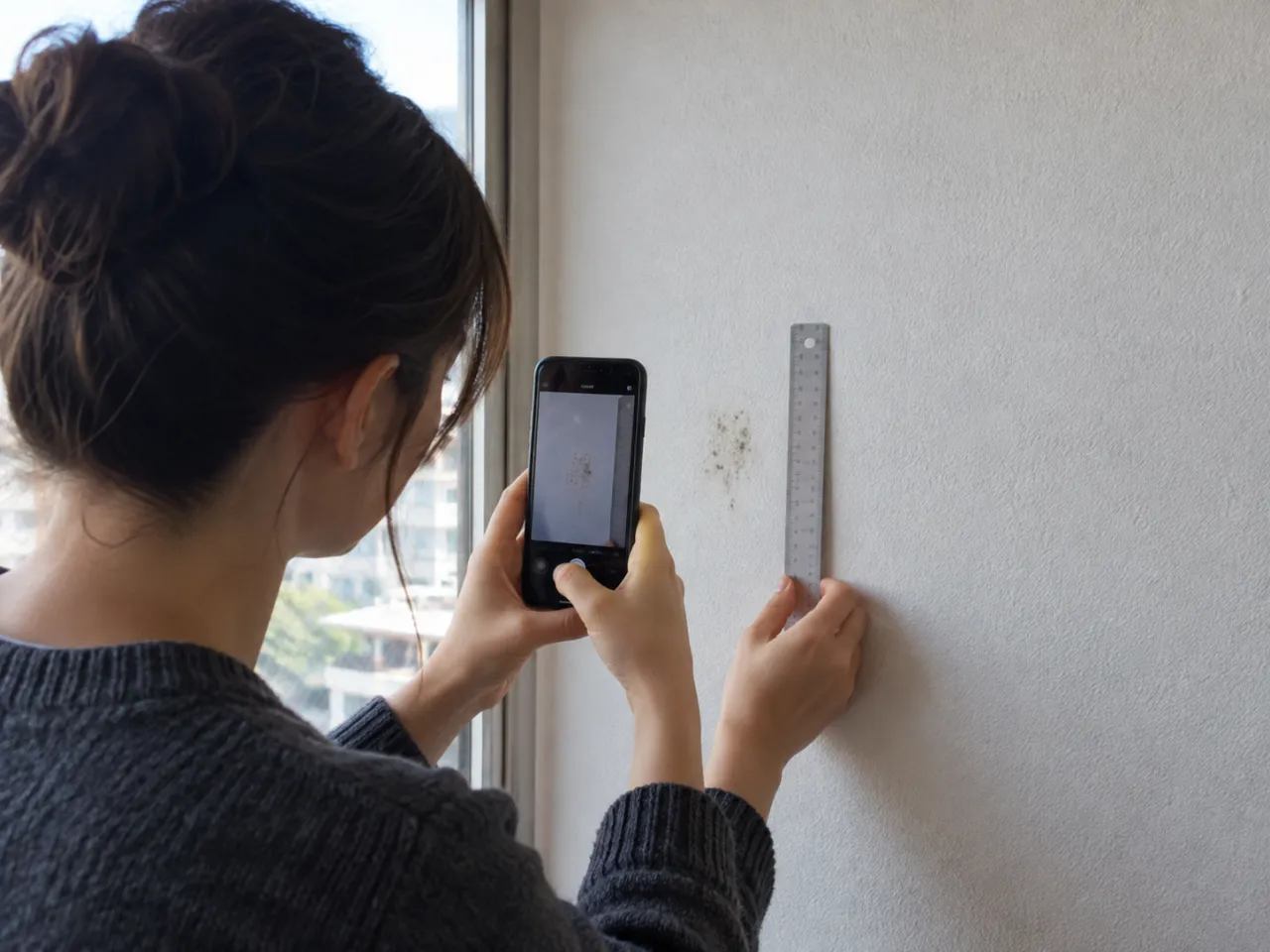
Take one wide photograph showing where the affected area sits in the room, then one closer image of the surface and its edges. Photograph a nearby window, pipe, air-conditioner, closet, or exterior wall if the location helps explain possible moisture. Keep the original files with their dates. If you use a ruler or a coin to show scale, place it beside the mark rather than scraping the surface. A brief video can show dripping water or a repeating leak, but do not create a leak just to film one. Write down the date you received the keys, when you first noticed the mark, and whether the room was already furnished or cleaned by someone else.
Japan's Ministry of Land, Infrastructure, Transport and Tourism provides an English move-in condition checklist. Its purpose is to let both sides record the condition of the rental, helping prevent later disagreement about restoration. Chiba Prefecture's English leaflet similarly advises residents to check for existing problems before moving in and report them to the landlord or property manager. These are useful primary references for residents of Tokyo, Kanagawa, and Chiba, although the exact form and deadline in your own lease may differ. If the manager supplied a condition report, complete it accurately and keep a copy; if you did not receive one, send a dated written message with photos and ask how they want the condition recorded.
Do not put a wardrobe or moving boxes tightly against the affected wall before you photograph it. Covering the mark can make it harder to tell whether it changes. At the same time, there is no reason to leave the apartment in a dangerous state to preserve evidence. If standing water is present, deal with immediate safety and tell the manager what you did. An honest sequence—“I photographed the wet floor at 10:00, then wiped the water to prevent slipping”—is much more useful than silently cleaning everything and trying to reconstruct it later.
2. Is it an old stain, surface dirt, condensation, or an active moisture problem?

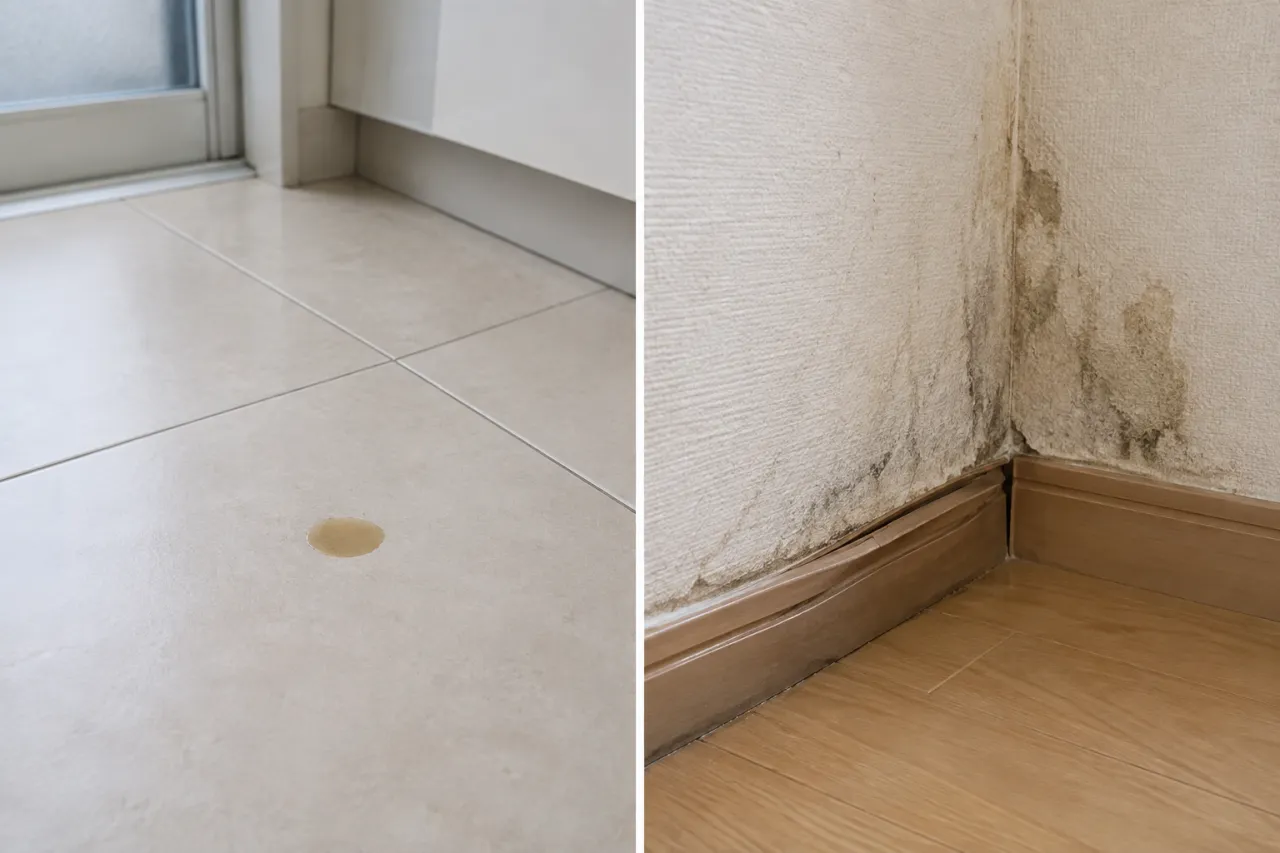
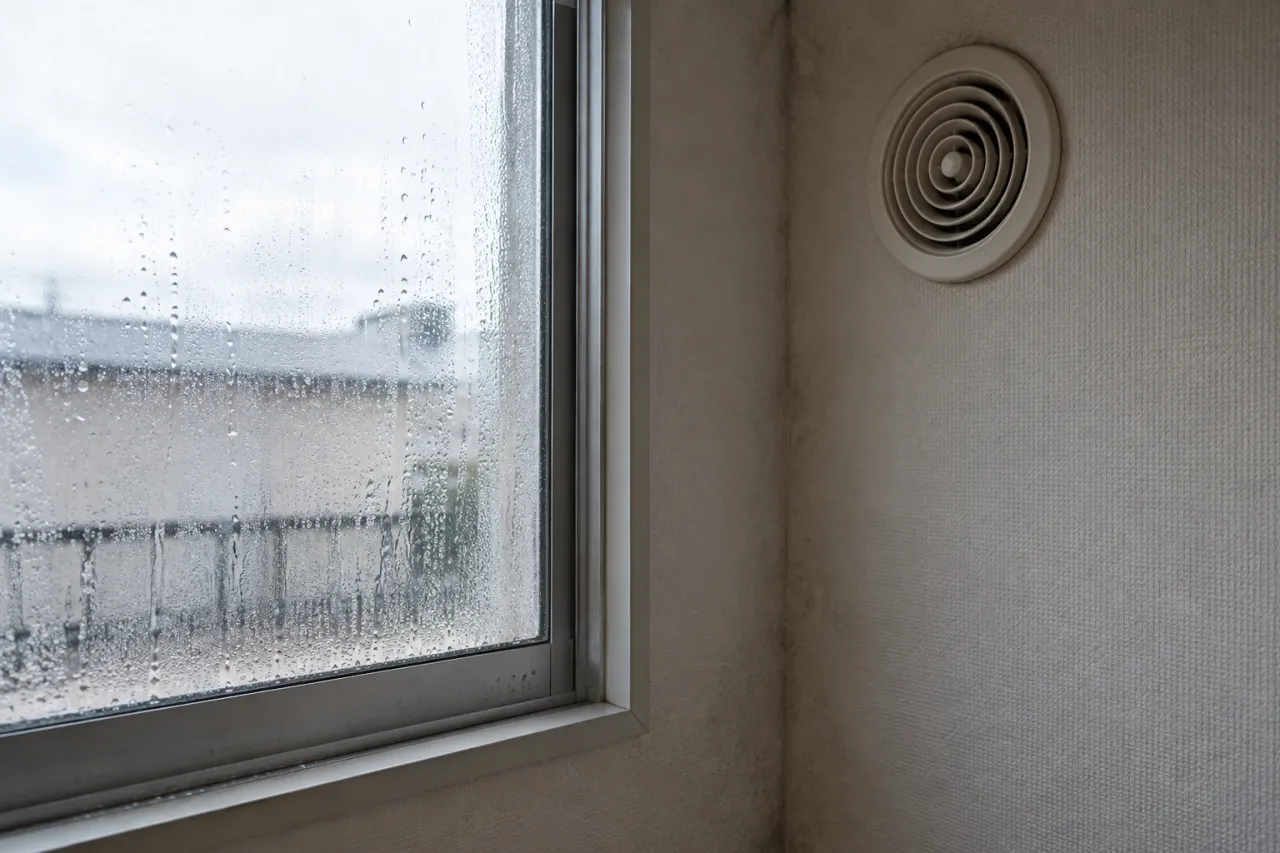
Dark color alone cannot confirm mold, identify a species, or establish who caused the condition. A stain may be old and dry, or it may be the visible edge of continuing moisture behind wallpaper. A musty odor without a visible patch also does not reveal its source. Look for changes that can be observed without opening walls or dismantling equipment: Does the surface feel damp? Is the wallpaper lifting? Is a skirting board swollen? Does the mark return after a dry day? Does the window collect water during cold weather? Is a pipe or air-conditioner close to the affected area?
The key distinction for a new tenant is not “Who is to blame?” but “Is water still reaching the material?” A leak requires the relevant equipment or building manager to investigate; routine surface cleaning cannot repair a pipe, window seal, or building envelope. Condensation can also be a building-and-use interaction, involving ventilation, heating, cold surfaces, and moisture released by daily activities. Record when it appears and what area gets wet. Do not assume that all moisture is caused by the occupant, and do not assume that every pre-existing stain proves a structural defect. The condition and the contract need to be assessed together.
| What you observe | What to record next | First contact |
|---|---|---|
| Small, dry discoloration visible on key handover day | Wide and close photos, location, move-in report | Landlord or property manager for a written record |
| Wet wallpaper, swollen trim, or dripping near a pipe | When wetness occurs, affected equipment, safety risks | Property manager and the relevant repair contact promptly |
| Water beads on a cold window and adjacent wall | Time of day, weather, ventilation, drying pattern | Manager if recurrent or damaging; specialist if mold extent is unclear |
| Persistent odor or repeated darkening after cleaning | Dates, photos, prior leak/cleaning history | Manager for moisture inspection; mold specialist for condition assessment |
| Water close to an outlet or a large continuing leak | Keep clear; document only from a safe place | Building emergency contact or appropriate urgent service |
This table is a decision aid, not a laboratory test or a legal allocation of costs. If you are unsure what you are seeing, describe the observable facts in the message: “Dark mark on the north closet wall, 25 cm from the floor; wall feels damp; photo attached.” That is clearer than stating as a fact that the building is contaminated. The manager can then respond about an inspection, and a mold specialist can later consider whether the material itself needs assessment.
3. Notify the property manager clearly, even if Japanese is difficult
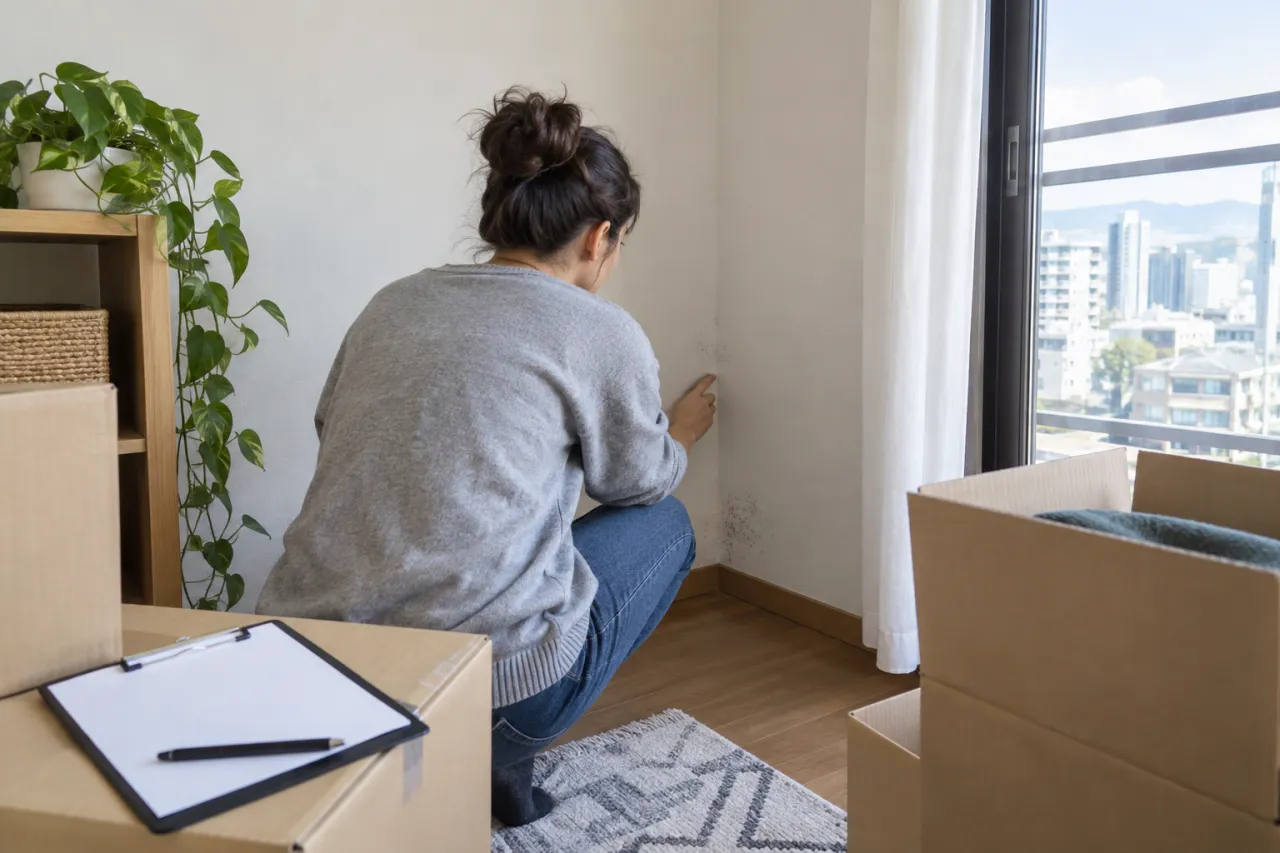
For a rental, report the condition to the landlord or property manager before arranging invasive work. Chiba Prefecture's English tenant leaflet warns that tenants should contact the landlord or property manager first for repairs; choosing and paying a contractor independently may create a dispute over the work or cost. This does not prevent you from asking a specialist for general information, but it means you should check who may enter, inspect, remove, or treat a part of the property. Tokyo Metropolitan Government publishes foreign-language guidance on tenant–landlord disputes, and Kanagawa Prefecture provides an English housing guide and a multilingual housing support contact. These official materials are more reliable than an anonymous social-media answer about who “always pays.”
You do not need advanced Japanese to send a useful first message. Include your name, building and unit, key handover date, exact location of the mark, whether the material is dry or wet, whether it is spreading, and the photos. Ask for a written response and a proposed inspection or repair process. Keep a copy of the sent message and any reply. If your manager has an app or prescribed reporting channel, use it and save a screenshot or confirmation. Phone calls can be useful for urgent water, but follow up in writing so that the facts and next step are recorded.
Suggested English message: “I moved into unit [number] on [date]. Before unpacking, I noticed a dark mark and dampness on [exact location]. I have attached wide and close photos taken today. Could you please confirm how to record this on the move-in condition report and arrange an inspection of the moisture source if needed? Please let me know whether any cleaning or repair should be done before the inspection. I would appreciate a written reply.” If there is active water, begin with “Water is currently entering near [location], and I have stopped using [fixture] for safety.” Do not delay urgent notification while translating a perfect message.
Simple Japanese version: 「入居日[日付]に[場所]の黒ずみ・湿りを見つけました。写真を添付します。入居時の状態確認表への記録方法と、水分の原因の点検についてご案内ください。点検前に清掃や修理をしてよいかもご確認をお願いします。」 Use this as a communication aid; it is not a legal notice. If a Japanese-only form cannot accept all details, send a short message and ask where to attach photos and a fuller explanation.
4. What you can do safely while waiting—and what to leave alone

Your immediate responsibilities are to avoid preventable damage and to keep the area safe. Wipe accessible standing water if safe, separate belongings from a damp surface, and follow the building's ventilation instructions. Keep a record of what you did. If an appliance appears to be leaking, stop using it if you can do so safely and tell the manager. If there is a strong odor or a large area of material damage, avoid disturbing the surface unnecessarily. Do not paint over the stain or place an impermeable sheet directly against damp wallpaper; this can hide the symptom without addressing its cause.
Avoid removing wall panels, peeling wallpaper, opening a ceiling cavity, or applying a strong chemical over a large area before the source and permission are clear. Such work can damage the rental, complicate an inspection, or put you in contact with a wet electrical component. Even when a small mark can be cleaned from a suitable nonporous surface, cleaning does not answer why it appeared. The treatment for damp plasterboard, wallpaper, wood, and washable tile is not interchangeable. Ask the manager what the building materials are and whether a professional inspection is planned.
The MLIT English model-lease guidance discusses normal wear and tear, tenant negligence, and specific examples involving unattended condensation, but it is not a rule that lets a blog assign every mold bill to one side. Agreements, special clauses, the state at move-in, notifications, and actual causes matter. Chiba Prefecture likewise warns that mold or stains can arise even during normal use and advises residents to report existing issues and maintain ventilation. The fair and practical step is to document promptly and ask for the process, not to accept or reject liability based on a single photo. If a deposit or repair-cost dispute develops, seek appropriate housing advice separately from technical mold assessment.
If you already cleaned a small area before realizing it should be reported, do not hide that fact. Send the earliest photos you have, explain the cleaning method and date, and describe whether the mark returned or the surface stayed wet. This gives the manager and any specialist a more accurate history. If you have asthma, other health concerns, or symptoms you think may be related to the room, contact a medical professional; a building blog cannot diagnose a person or promise that cleaning a wall will resolve symptoms.
5. When a mold specialist can help—and how to contact Kabi Busters Yokohama in English
The best time to ask for mold-specific advice is when the area is extensive, recurring, hidden behind materials, or uncertain after the moisture source has been checked. An inspection may help distinguish visible surface soiling from a broader material problem and plan appropriate treatment. It should not be used as a substitute for stopping an active leak. Kabi Busters Yokohama describes its service as investigating the condition of homes and facilities and proposing measures based on the suspected cause. Its published consultation flow begins with hearing the situation, followed by options such as testing and an estimate. The details depend on the property; do not assume that every case needs a test, that a particular result is guaranteed, or that Tokyo and Chiba visits are automatically available.
The Yokohama team has confirmed that it can respond in English. On the inquiry form, provide your name, available times for a phone call, phone number, email, and a concise description; the form also has a field for current-condition photos. You can write the description in English. A useful first message is: “I live in [city, prefecture] in a [rental apartment/owned home]. I found a dark area at [location] on [date]. It is [dry/damp/repeatedly wet], and I have contacted [property manager/repair company] about [possible leak or condensation]. Could you tell me whether a mold assessment is appropriate and whether you can support my location? I can speak English and can take a call at [times].” Avoid sending more personal information than the form requires.
For a rental, make clear whether the owner or manager has approved a visit or any work. If not, ask what information can be discussed first and obtain the necessary consent before intrusive inspection or treatment. If the problem is a burst pipe, unsafe electricity, or a major leak, contact the property emergency channel immediately; Kabi Busters Yokohama is a mold consultation route, not a replacement for emergency repair. For questions about the tenancy contract or a deposit claim, use the official housing guidance and dispute-support channels. These roles can cooperate without pretending that one company performs every service.
Tokyo, Kanagawa, and Chiba residents often use different lease formats and managers. The location words on this page are for finding relevant help, not a promise of identical service availability. Tell the team your city and the type of property and ask about coverage, language, inspection scope, quote, and permission requirements. A respectful, transparent inquiry is more likely to lead to a useful answer than a message that simply says “mold everywhere.”
6. Frequently asked questions for international tenants
Q: If I found a black spot on the first day, is the landlord automatically responsible? No single blog can decide that. Document the move-in condition and notify the manager promptly. The lease, special clauses, cause, and evidence matter. The official English move-in checklist and tenant guidance help you make a clear record; a housing adviser can help if a legal or cost dispute develops.
Q: Can I hire Kabi Busters Yokohama before telling my manager? You may ask a general question, but permission for a contractor to inspect or treat a rental should be coordinated with the owner or manager. The Chiba English leaflet advises contacting the landlord or manager before arranging repairs. Explain the situation and ask about the right sequence.
Q: Is a musty smell proof of mold inside the wall? No. Odor is a reason to investigate, not a species identification or proof of a hidden defect. Note when and where it occurs, whether materials are damp, and whether ventilation changes it. If persistent or accompanied by water damage, ask for an inspection.
Q: Should I bleach the wall before the move-in inspection? Do not apply a strong chemical to unknown wallpaper or a large area simply to improve its appearance. Photograph first, report the condition, and ask about the material and inspection plan. Surface cleaning alone cannot stop a leak or dry swollen building materials.
Q: What if I only speak English? You can contact Kabi Busters Yokohama in English about the mold concern. The official inquiry form has Japanese labels, but you can prepare an English description with the city, property type, exact location, moisture history, and photos. For lease-related communication, the sample English and simple Japanese message above may help you contact the manager; official Tokyo, Kanagawa, and Chiba resources also provide foreign-language housing information.
Q: Will an inspection prove who must pay? A technical inspection can help clarify material condition and possible moisture routes, but it does not automatically settle contractual responsibility. Keep the move-in record, notices, replies, repair history, and any technical findings together. Discuss cost allocation through the manager and, if needed, an appropriate housing advice service.
Your next step is simple: safety, photos, written manager notice, moisture-source inspection, then an informed mold consultation if the affected material or recurrence warrants it. For an English-language conversation about the condition, read Kabi Busters Yokohama's service information and consultation process, then use the inquiry form with a photo attachment option. Availability, price, and the work scope are confirmed individually.
Primary sources / 参考資料
- MLIT English move-in condition checklist
- Chiba Prefecture's English guide to restoring rental housing to its original condition
- Tokyo Metropolitan Government's foreign-language tenant–landlord guidance
- Kanagawa Prefecture's English living and housing guide
- MLIT English model lease and restoration examples
----------------------------------------------------------------------
カビバスターズ横浜
住所 :
〒221-0056
神奈川県横浜市神奈川区金港町5-14 クアドリフォリオ8階
電話番号 :
0120-133-199
----------------------------------------------------------------------