
加湿器近くの壁・床の湿り相談
2026/10/27
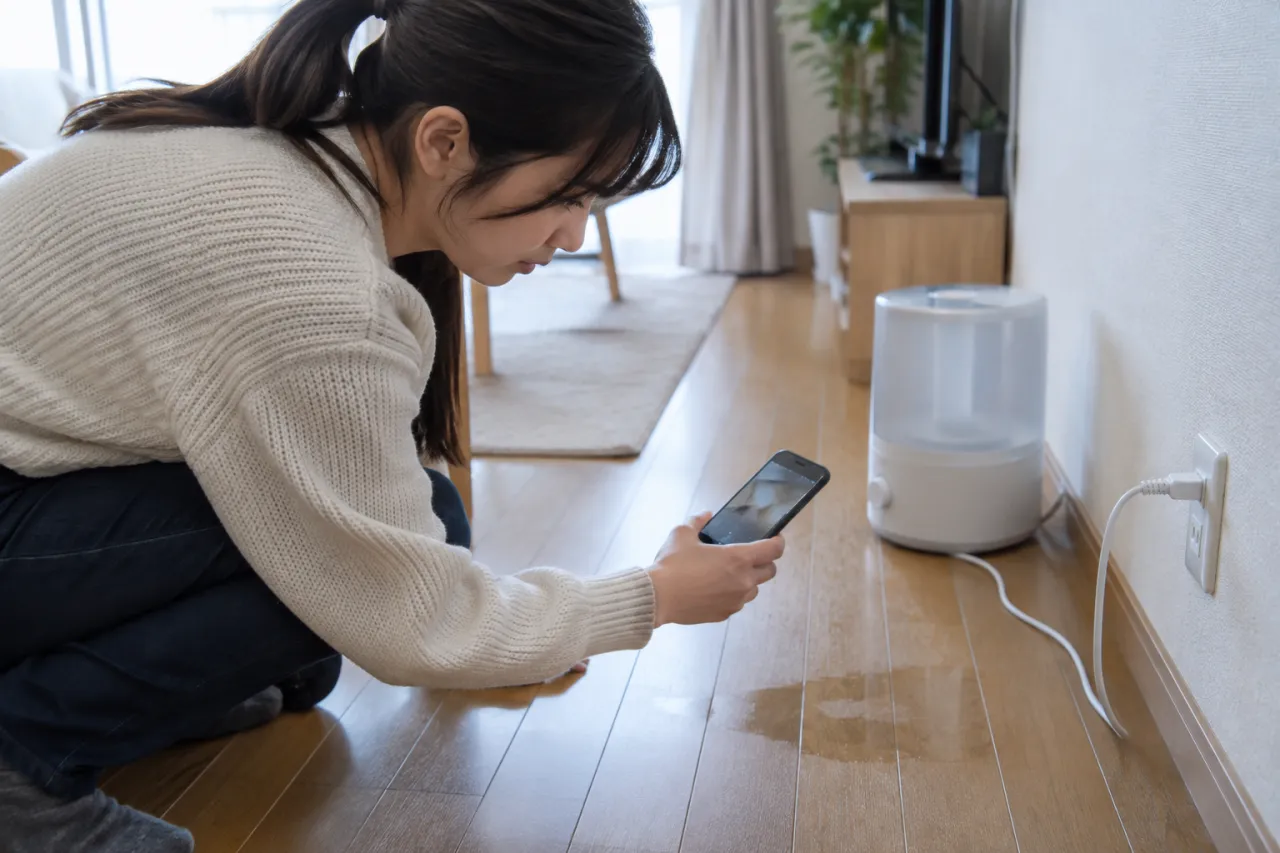
Quick answer for an English-speaking renter in Tokyo, Kanagawa or Chiba: If the wall, floor, curtain or furniture near your humidifier repeatedly feels damp, stop directing moisture at that area and check the appliance's official placement and care instructions. Photograph the wet surfaces and the unit's position. Dry safe, accessible droplets without soaking the finish, keep intended ventilation working, and observe whether the dampness stops when the appliance is off. Report soft wallpaper, swollen flooring, repeated staining or a suspected leak to the property manager. If the cause is corrected but visible growth or a persistent musty smell remains in fixed building materials, ask about specialist mold assessment. Kabi Busters Yokohama accepts English inquiries; confirm whether a visit or assessment is available for your address.
日本語の要点: 加湿器の近くの壁紙や床が湿るときは、加湿器の向き・設置場所・運転方法・水漏れを機種の説明書で確認します。濡れた状態と設置位置を写真で記録し、壁紙の剥がれや床の膨らみがある場合は賃貸の管理会社へ。原因を止めた後もカビや臭いが残る場合に専門相談を検討します。単に部屋全体の湿度数値だけで壁や床の状態は判断できません。
This article covers a local wet patch around a humidifier, not all winter condensation in the home. Different humidifier technologies release moisture differently, and a water tank or tray can leak independently of the mist. A nearby window, external wall, poorly insulated corner or floor joint can also become wet from room conditions. The fact that the wet area is close to the appliance does not prove the appliance is the sole cause. It is a useful clue to record and test safely. Do not blame the tenant, appliance maker or building from a photograph alone.
The Tokyo Metropolitan Government's English indoor-environment guidance advises avoiding excessive humidifier use in winter and controlling dampness that supports mold. The Panasonic official humidifier placement guidance is a maker-specific source about safe location and other devices. Read your own model's manual because clearances, tank care and use of additives vary. Neither source is an inspection of your particular apartment.
1. Separate mist contact, tank leakage and ordinary condensation
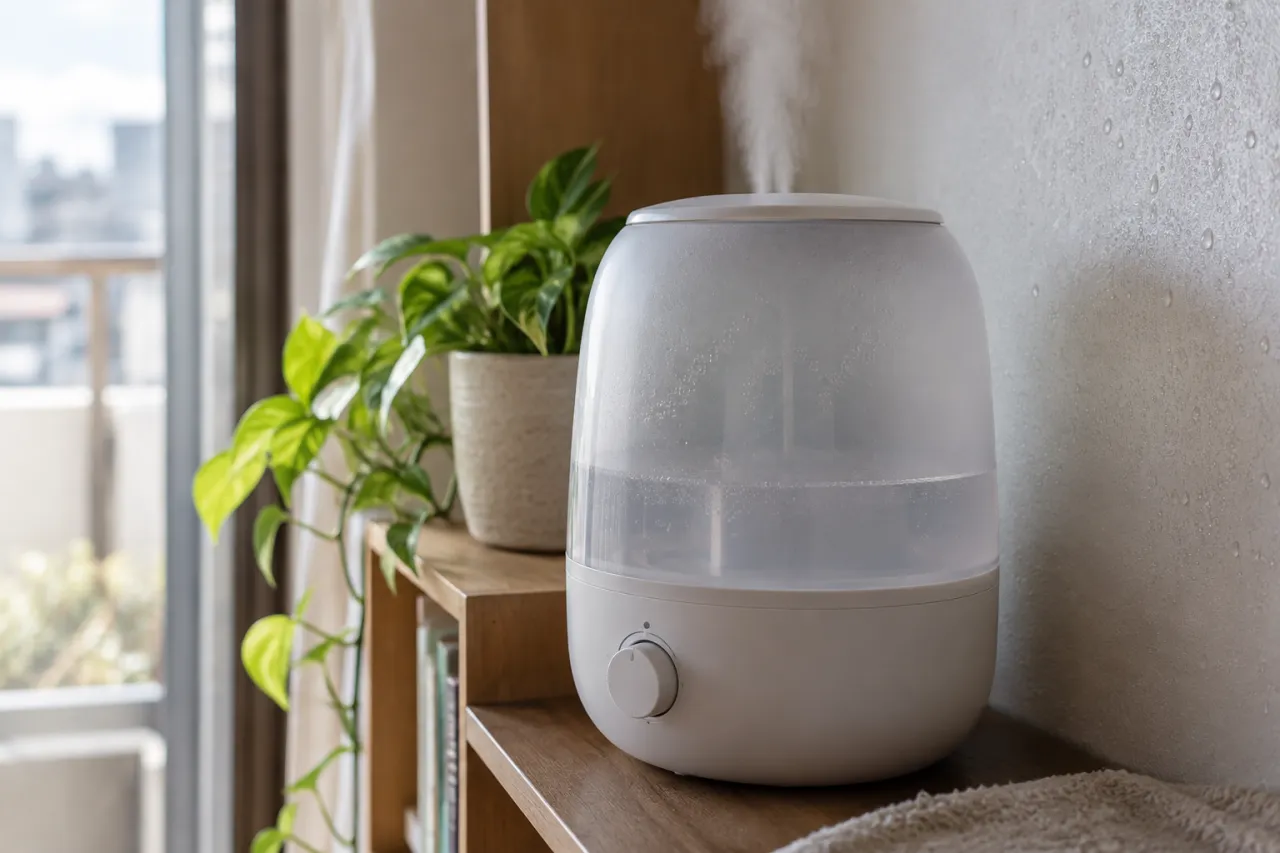
Begin with what you can see without touching electrical parts. Is the damp patch on the wall in the direction of the mist, directly under the unit, on a nearby windowsill, at the floor edge or inside the wall covering? Does it appear only when the humidifier runs, or does it remain after the appliance has been off and the room has been ventilated? Are there drops, soft paper, bubbles, peeling seams, a lifted flooring edge, discoloration or odor? Take a wide photograph of the room and appliance location, then close photographs of the affected surface. Write down dates and the setting used. Do not manufacture a numerical threshold from a single humidity-meter reading; a room reading cannot identify a damp patch at a cooler surface.
If water pools immediately underneath a humidifier even when no mist is directed there, inspect the appliance externally according to the manual. A poorly seated tank, overfilled vessel, spill during refilling or damaged tray may be involved. Switch off and unplug the appliance only if it is safe to reach the dry plug and follow the maker's instructions. Do not open electrical housing, run a damaged appliance to reproduce the leak, or place wet hands on a plug. If water is near an outlet, power strip or electrical device, avoid that area and obtain appropriate help. This article cannot remotely determine electrical safety.
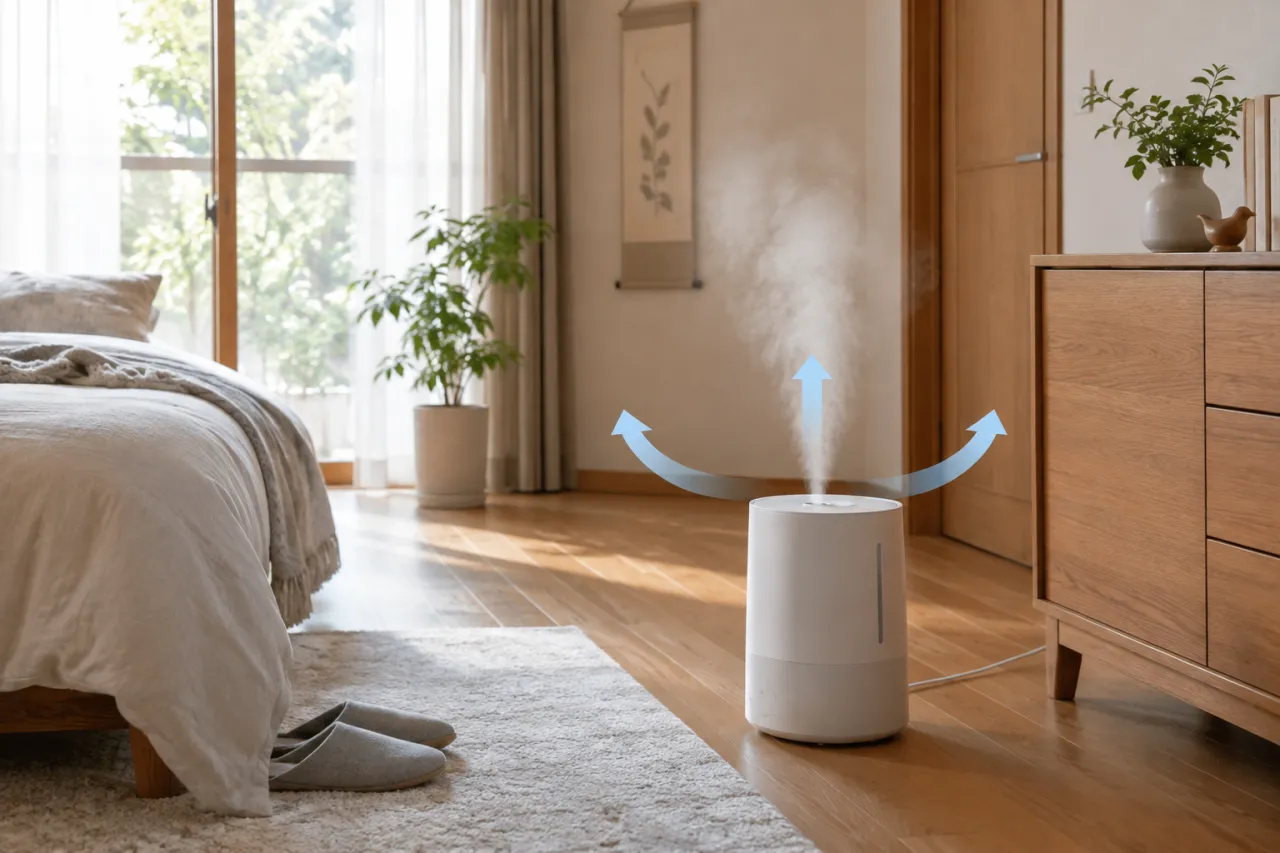
If moisture appears on the wall in the path of visible mist, check whether the unit is too close, pointed toward a surface, or operating for too long for the room conditions. A device can add moisture to the air without creating visible fog, so the absence of visible mist is not proof that its placement is safe. Conversely, a cool external wall or window may collect room moisture even if the appliance is on the opposite side of the room. Record what changes when the appliance is off rather than jumping to a conclusion. Daito Trust's English resident guidance on ventilation and condensation describes condensation in rentals and the need for ventilation; it does not identify the cause of any one wet floor.
| Observation | Question to investigate | Sensible first step |
|---|---|---|
| Drops only in the mist direction | Is the outlet pointed at a cool wall, curtain or furniture? | Stop that direction and follow the model's placement instructions |
| Water immediately under tank or tray | Is there a spill, poor tank seating or equipment fault? | Stop use safely; inspect exterior and manual; request maker advice |
| Wet window and nearby wall even when humidifier is off | Could room condensation or another moisture route contribute? | Note timing and weather; report persistent building-material dampness |
| Swollen flooring or lifting wallpaper | Has fixed material been affected? | Photograph and contact the property manager before altering it |
| Odor or dark material remains after moisture is controlled | Does residual material need assessment? | Ask management about dryness and consider mold specialist advice |
This table is a triage tool, not proof of fungal growth or equipment defect. It intentionally avoids invented percentages or a universal distance. A manufacturer may specify a minimum clearance for a particular model; an article cannot replace that instruction. The same symptom can involve more than one cause. A tank spill can wet a rug while room condensation wets the external wall, so describe each surface separately.
2. Use and position the humidifier without wetting surfaces

Read the maker's manual for the model name on your appliance. Check its placement, stable-base, ventilation, tank-cleaning, water-type, outlet and distance guidance. Panasonic's official placement FAQ provides information for its humidifiers; apply it only to the relevant model and verify any equipment-specific rule. Avoid placing the unit where its output strikes wallpaper, curtains, a bookshelf, desk, bedding or a power strip. Do not balance it on an unstable shelf to “get the mist higher.” A safe position must also respect child and pet access, trip hazards, earthquake stability and the available electrical outlet. Ask the property manager before installing brackets or modifying the rental wall.
Operate the humidifier in response to real room conditions, not a fixed habit of leaving it at maximum output all night. A hygrometer can help show trends, but compare it with visible condensation and the appliance instructions. If a window or wall becomes wet, reduce or pause operation and improve appropriate air movement. Do not switch off the apartment's designed ventilation solely to retain humidity. The Tokyo Metropolitan Government's English guidance explicitly warns against excessive winter humidifier use. It also advises removing surface water and preventing high-humidity pockets. It does not prescribe one numerical setpoint for every resident and building in this article.
Maintain the tank and tray as the manufacturer directs. Stagnant water, scale or dirt inside the appliance is a separate care issue from mold on the wall; treat it according to the manual, not a random cleaning recipe. Do not add fragrance, disinfectant or other chemicals unless the product instructions specifically allow them. Do not mix cleaners. If there is a persistent unusual smell from the appliance itself, switch it off and seek maker support. A building mold company is not a substitute for appliance repair. Likewise, replacing the humidifier may not solve a damp external wall if the building has another moisture source.
After adjusting placement, observe the affected wall and floor. Photograph the same area over several days under ordinary use. If the wall covering remains sound and the accessible surface dries, the immediate priority may be ongoing moisture management. If it stays damp, the stain spreads, or floorboards swell, a building inspection is appropriate. Do not paint over a patch or lay an impermeable mat on wet flooring. Those actions can conceal the condition that the manager needs to see. In a small Tokyo apartment, a local mist plume can reach a wall quickly; in a Kanagawa or Chiba home, orientation, a cold corner or a different ventilation pattern may matter. The prefecture is context, not diagnosis.
3. Decide what to clean, what to report and what to leave alone
For a few water droplets on a sound, accessible hard surface, use a clean cloth in a way compatible with the finish and dry it promptly. For wallpaper, wood flooring or a laminate seam, avoid soaking, abrasive scrubbing, steam cleaning or chemical spray. These materials may retain water or be damaged by harsh treatment. If the surface is soft, blistered, lifting or persistently stained, photograph it first and ask the property manager what may be cleaned. A rental's fixed materials are not the same as the tenant's portable appliance. Do not peel wallpaper, remove skirting or cut into the wall to check for hidden mold.
Notify management promptly if the floor is swelling, the wallpaper is peeling, wetness returns despite stopping humidifier use, or a leak from a pipe, window or building component is possible. Provide the time course and images of the humidifier's location. A factual English message might say: “The wall/floor near my humidifier became damp on [date]. I stopped using the humidifier and moved it according to the manual. The area is [drying/still wet], and the wallpaper or floor is [sound/peeling/swollen]. I have attached photos. Could you advise whether the fixed material needs inspection and what I may safely clean?” Do not write “the building is defective” or “the humidifier caused toxic mold” without evidence.
The Ministry of Land, Infrastructure, Transport and Tourism's multilingual rental materials help residents understand rental communication. The MLIT rental-housing Q&A explains the importance of notifying the landlord when repair is needed. Those resources do not decide an individual repair bill. Keep a copy of your report, the manager's response, the appliance model and any maker guidance. If the manager asks you to stop using the unit pending inspection, follow that direction or clarify it in writing.
If dark growth-like material or a musty smell remains after the appliance issue and room moisture are addressed, ask whether the affected building material is dry and whether a mold assessment is appropriate. A specialist may inspect accessible surfaces and discuss the extent and response. The specialist cannot repair a broken humidifier, replace unauthorized building materials, or assign legal responsibility. If a healthcare concern arises, seek medical advice separately; color, odor and a room reading cannot establish a medical diagnosis. If a large area is visibly affected or household members are sensitive, avoid disturbing the material while seeking professional advice.
4. FAQ and an English inquiry checklist for Tokyo, Kanagawa and Chiba

Does a humidifier cause mold by itself? It adds moisture, which may contribute to dampness if output, placement or ventilation is unsuitable. But a mark near the appliance can also involve a tank spill, cool surface, condensation or building leak. Determine the moisture route before treating a surface.
Is a white mark the same as mold? No. Some deposits can be mineral residue or other soil depending on water and appliance type; color alone cannot identify it. Follow the appliance maker's water and cleaning instructions. If the building surface is deteriorating, report that separately.
Can I keep using the humidifier if only the window is wet? Repeated condensation is a sign to review use, ventilation and the surface. The Tokyo government advises against excessive winter humidifier use. Pause or adjust the unit and wipe safe accessible droplets, then investigate if the problem persists. A wet window is not a reason to ignore a damp wall edge.
Should I use bleach on the wallpaper? Do not assume that is safe or effective. Wallpaper and adhesive can be damaged, and extra liquid may worsen moisture. A fixed rental surface that is soft, lifting or repeatedly stained should be documented and discussed with management. Never mix cleaning chemicals.
What if the floor is swollen? Stop adding water, protect the area from further spills, photograph it and notify management promptly. Swelling can mean water has affected the floor material. Do not cover it with a rug or attempt to sand or replace it yourself.
Do I need a mold contractor before contacting the manager? Usually contact the manager first for affected fixed surfaces and possible building defects. A mold specialist becomes relevant when the moisture cause is controlled or being investigated and suspected growth or odor remains, or management requests assessment. For appliance malfunction, also contact the maker or seller.
Can Kabi Busters Yokohama answer in English? English inquiries are possible. Give your city or ward, photos, dates, the humidifier model and position, what changed when it was turned off, and any manager response. Confirm the service area, scope, timing and cost for your case. The service overview describes mold-related support, and the contact form is the route for a case-specific inquiry.
What should I tell the manager in Japanese? “加湿器の近くの壁紙/床が湿っています。使用を止め、設置位置を変更しましたが、[湿りが残る/改善した] 状態です。写真を添付します。建材の確認が必要かご案内ください。” Fill the bracketed part truthfully. Japanese terms useful for an English-speaker are 加湿器 (kashitsuki, humidifier), 結露 (ketsuro, condensation), 壁紙 (kabegami, wallpaper), 床材 (yukazai, flooring) and 管理会社 (kanri-gaisha, property manager).
The sequence is to stop adding moisture to the affected spot, record where water appears, check the maker's instructions, keep suitable ventilation, notify management if fixed material is damaged or wet, then address any residual suspected mold. A specialist inquiry is most useful when it explains what has already been done about the water source. If you live in Tokyo, Kanagawa or Chiba and would like an English response about persistent indoor mold, contact Kabi Busters Yokohama with photos and a short timeline. Do not infer a guaranteed outcome or a fixed price from this general article.
Primary information used: Tokyo Metropolitan Government indoor-environment guidance in English, Panasonic's official humidifier placement FAQ, Daito Trust's English condensation and ventilation advice, and MLIT's multilingual rental-housing resources. These sources inform a sensible process; none inspects this particular room.
----------------------------------------------------------------------
カビバスターズ横浜
住所 :
〒221-0056
神奈川県横浜市神奈川区金港町5-14 クアドリフォリオ8階
電話番号 :
0120-133-199
----------------------------------------------------------------------