水漏れ後の壁紙の膨らみとカビ相談
2026/10/16
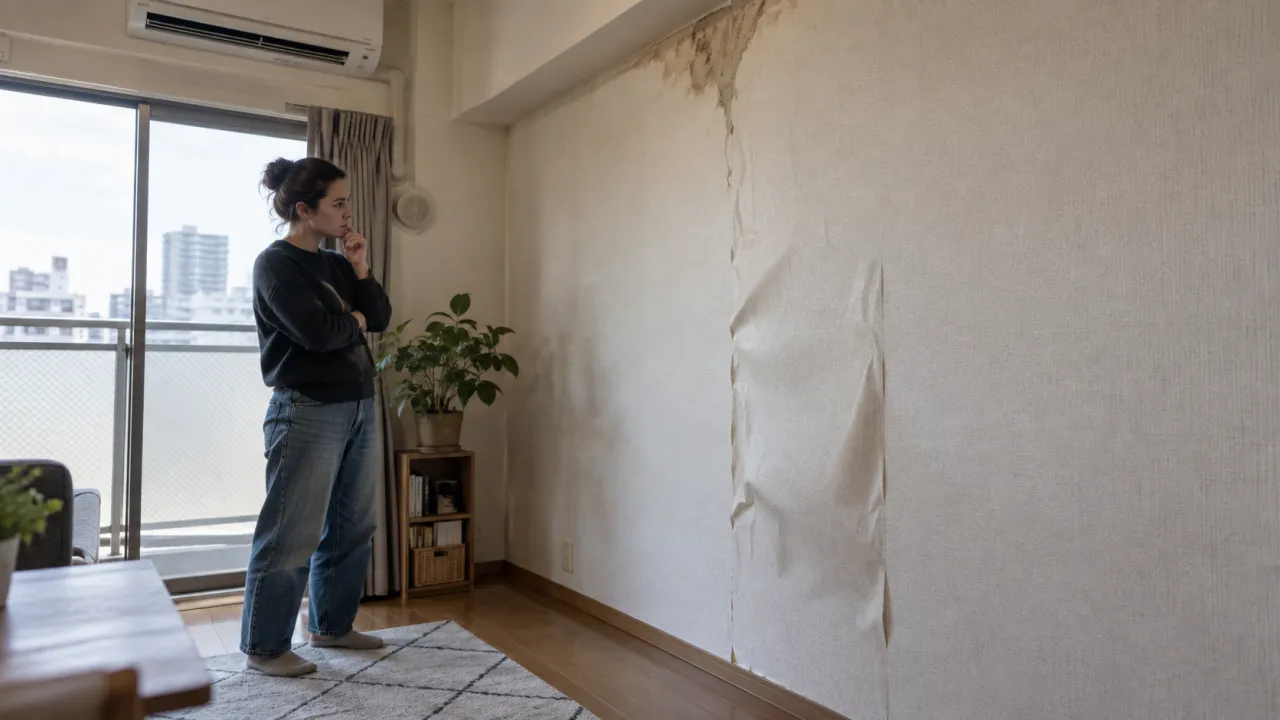
Quick answer. If wallpaper swells, peels or smells musty after a leak in a Japanese rental, treat the water source as the first problem. If water is near electricity or continues to flow, keep clear and use the building's urgent repair contact. Photograph the leak, damaged wall and affected possessions, note when the event began, and notify the property manager promptly in writing. Do not peel landlord-owned wallpaper or cover it with paint. Once the leak is stopped and the wall is assessed for drying, ask a mold specialist about the affected indoor material if odor, staining or uncertainty persists. Kabibusters Yokohama can receive an English inquiry from Tokyo, Kanagawa or Chiba residents.
日本語の要点: 漏水後に壁紙が膨らみ、剥がれ、臭う場合は、まず水源と電気の安全を確認し管理会社へすぐ連絡します。写真・日時・被害範囲を残し、壁紙を勝手に剥がさず、乾燥や修繕の方針が決まった後に必要なカビ相談を行います。
1. First hour: protect people, record the leak and report it
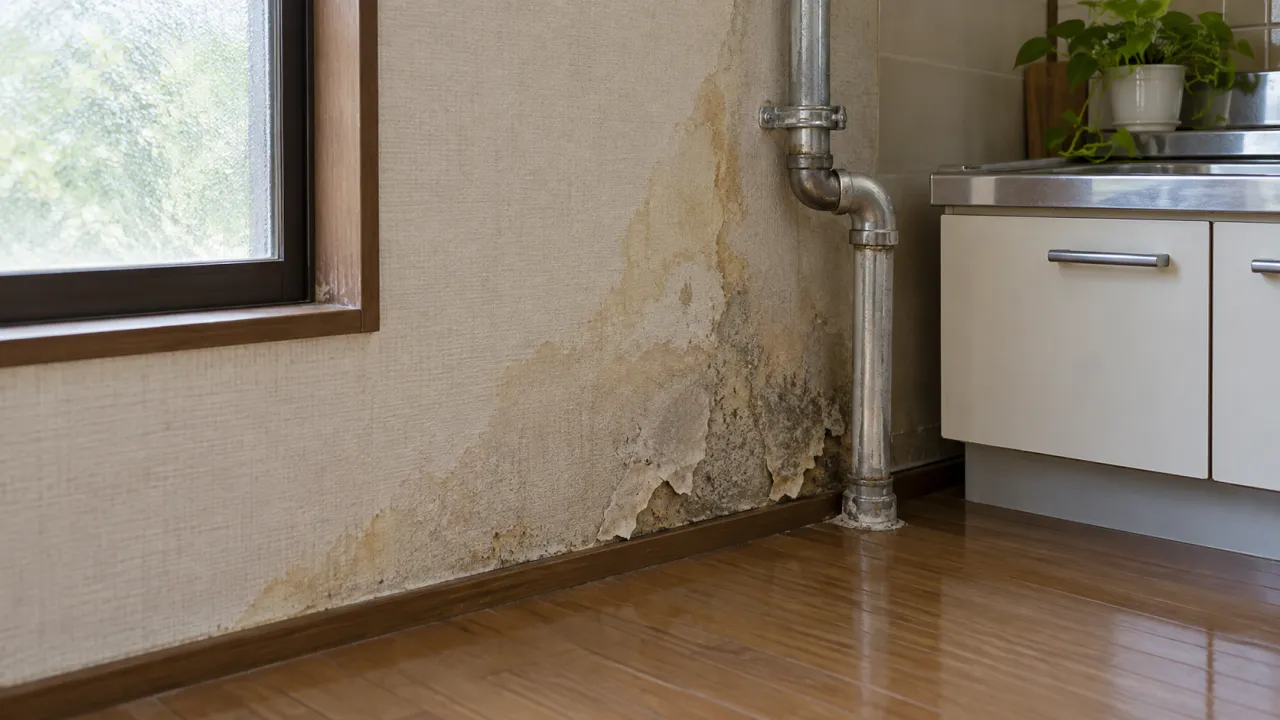
A wet wall is not a cosmetic defect to paint over. Water may have entered from a pipe, drain, air conditioner, roof, window or neighboring unit. A blister in wallpaper does not tell you which source is responsible. If water is actively flowing, follow the building emergency number and shut a local water valve only if its purpose is clear and it is safe to do so. Do not approach water around power outlets, lights or exposed wiring; get professional help. Protect your possessions without touching unsafe electrics. Do not open the wall yourself.
Take a wide photograph that shows the wall in relation to the ceiling, floor, bathroom, sink or appliance. Then take detail photos of the bubble, stain edge and any drops. Include a date and a short timeline: “At 08:20 the wallpaper felt damp; at 09:00 drops appeared below the pipe.” If the leak may affect another unit, tell management that possibility. Japan's Ministry of Land, Infrastructure, Transport and Tourism (MLIT) restoration FAQ explains the importance of notifying the landlord when repairs are needed and gives a water-leak example. This is general legal information, not a judgment about who caused your event.
Send the report by the management channel in your contract or building guide. A concise English message is: “Water is appearing at [room and wall] from [time/date]. The wallpaper is bubbling and [a socket is nearby/no electrical risk is visible]. I have not removed the wallpaper. Please arrange urgent inspection and tell me what immediate safety steps to take.” Call the emergency repair line as well when water is active; email alone may not be fast enough. Keep the message, reply and photographs. If your building offers a multilingual help desk, use it, but do not wait for a translation before reporting an active leak.
| Situation | Immediate priority | What not to assume |
|---|---|---|
| Active flow or water near wiring | Safety and urgent repair contact | That surface mold cleaning can fix it |
| Leak stopped but wallpaper swollen | Document, report and ask about drying | That a dry-looking surface means the cavity is dry |
| Persistent odor after repair | Ask about moisture and material assessment | That paint or deodorizer resolves hidden dampness |
| Dispute about cause or cost | Preserve timeline and written replies | That a blog can decide legal responsibility |
2. Why drying and material condition matter more than appearance
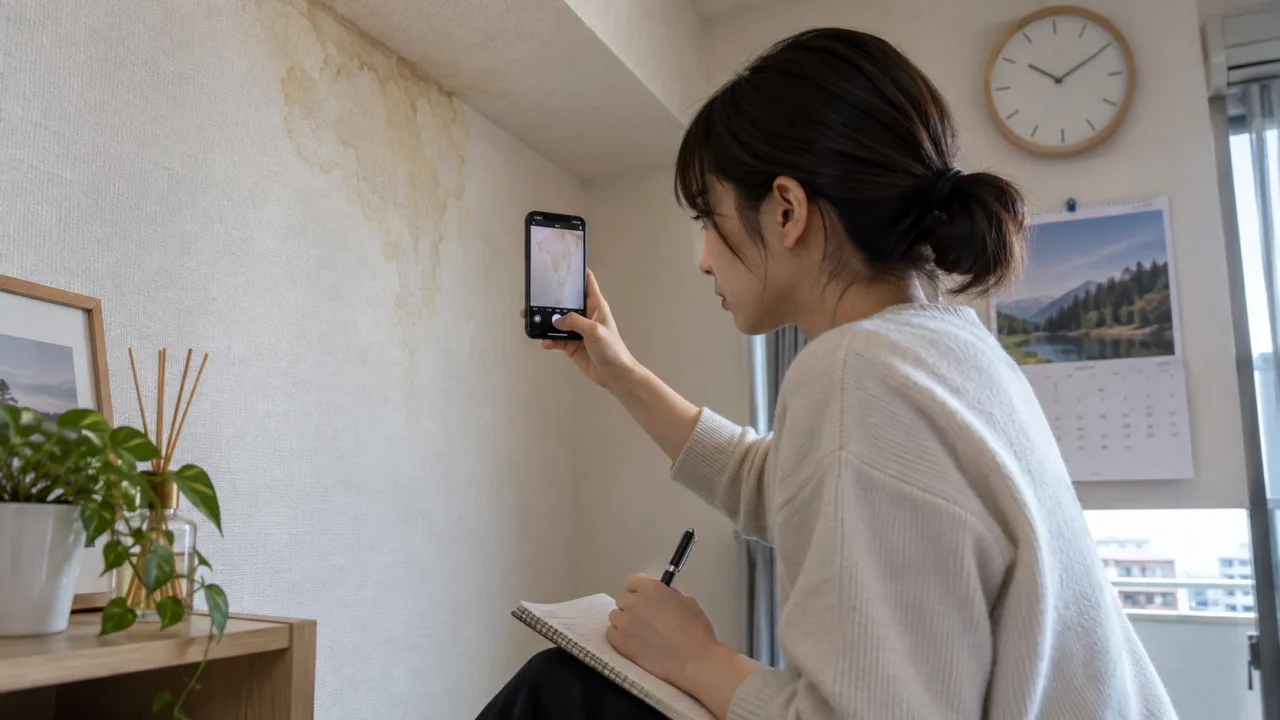
Water can be held by paper, adhesive, gypsum board, wood or insulation even when the exposed wallpaper feels less wet. Do not puncture a bubble simply to release water; this changes landlord-owned material and can disturb contamination. Ask the repairer or manager what area was wet, whether there is an accessible moisture check, what material needs drying or replacement, and when the wall is considered ready for finishing. If you were told only that “the pipe is fixed,” ask what will happen to the already damaged material.
The US Environmental Protection Agency's water-damage response table emphasizes prompt response to clean-water damage in a 24–48-hour window as a mold-prevention principle. That table was written for US schools and commercial buildings, so it is not a legal deadline for a Japanese home and does not establish the condition of your wall. It does support the practical point that delay and absorbent material matter. Water from sewage or an unknown source requires a different, more cautious response. Do not use a household fan to blow across suspected contamination without professional advice.
EPA's flooded-home guidance likewise warns that material not dried promptly may develop mold. It is written for flooding, not a small pipe drip, so apply its message proportionately: confirm drying instead of assuming a white surface is safe. A wet wall after a typhoon may involve rain entry; a wet area after a shower may involve plumbing; condensation around a cold pipe is another possibility. The correct repair depends on evidence and inspection, not a generic “mold treatment” alone.
For a rental, avoid stripping wallpaper or using strong bleach on a wall without permission. These actions can damage the finish, complicate evidence and fail to treat a wet backing. Keep movable furniture away from the wall if safe, document affected belongings and follow the manager's drying instructions. A dehumidifier may help room air, but it cannot prove the inside of a wall is dry or stop a leak. Do not run electrical equipment next to active water. If the room cannot be used safely, ask the manager about their immediate instructions and obtain independent legal or housing advice when needed.
3. Distinguish building repair from mold-scope assessment
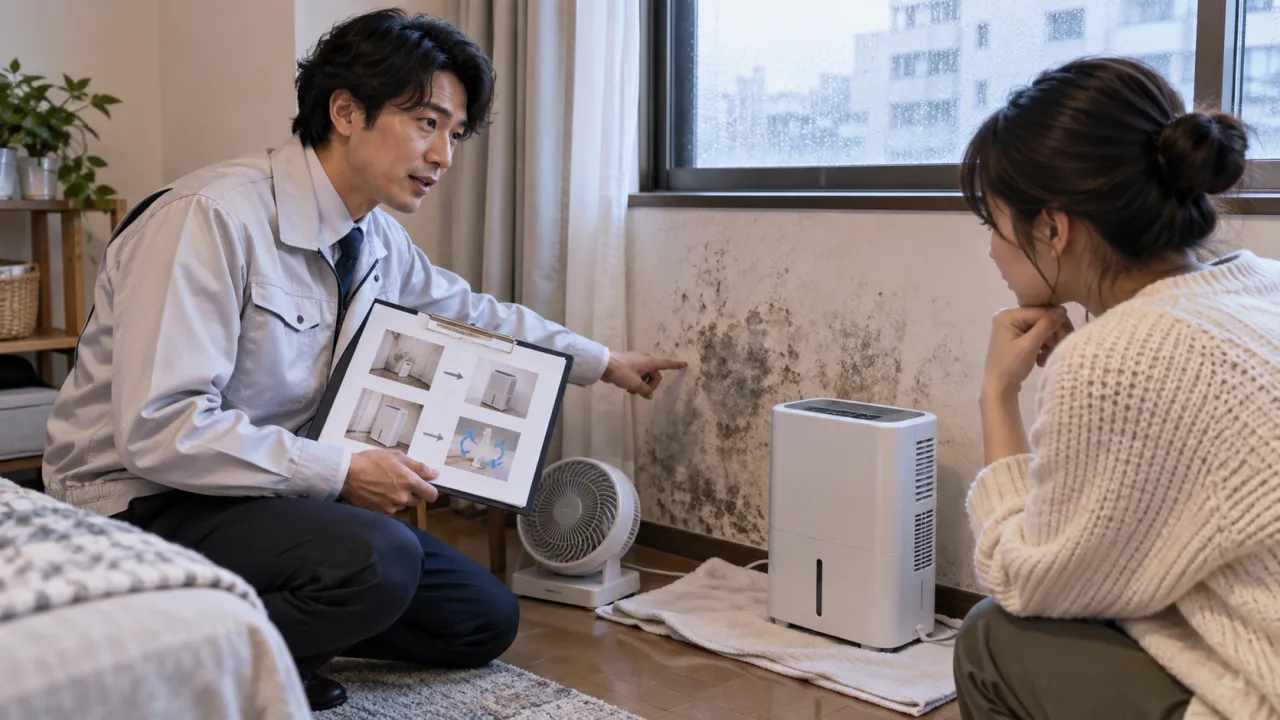
Three questions should be kept separate: where the water came from, whether the construction material is dry and sound, and whether mold-related cleaning or remediation is needed. The first two typically require management and appropriate plumbing, roofing or building trades. An indoor mold specialist is useful when staining, odor or spread remains, when multiple surfaces were affected, or when the material scope is unclear after the source is handled. The specialist should not promise that surface treatment will compensate for an unrepaired leak. If the manager has a contractor, ask for the work scope and any drying evidence in writing.
MLIT's English restoration leaflet tells renters to report existing problems and notes that letting mold and stains expand can matter in restoration discussions. It does not say every water-damage bill belongs to a tenant. The actual event, notice, lease and repair record matter. If responsibility is disputed, Houterasu's English housing information is a route to general legal information. A mold company should not adjudicate liability. Early, factual reporting helps all parties understand the sequence.
Kabibusters Yokohama's service page describes mold-related support, and the team can answer an English inquiry. Use the contact form to provide your city and prefecture, wall location, what happened, dates, whether water remains, the manager's plan and photographs. Ask whether assessment is possible without opening fixed materials and what prerequisites apply. Do not assume a guaranteed visit, price or treatment outcome. If there is active water, tell management first. If the issue is legal allocation of charges, ask a qualified housing adviser rather than requesting a mold diagnosis to settle liability.
For residents in Tokyo, Yokohama or elsewhere in Kanagawa, and Chiba, the practical sequence is consistent even though buildings differ: safety, urgent notification, source repair, drying assessment, then mold scope if needed. This order protects the resident and prevents an attractive repaint from hiding unresolved moisture. After any work, keep final photos and written records. If marks or odor return, report the recurrence and the previous repair history rather than restarting with an unexplained cleaning request.
4. FAQ: what to ask before a wall is closed or repainted
Does bubbling wallpaper mean mold is already growing? Not necessarily. Bubbling can indicate wet adhesive or material damage, but a visual inspection alone cannot establish whether or where mold is present. Report the water event and request appropriate assessment.
Can I cut the bubble open to dry it? Do not cut or peel fixed rental material without permission. It can spread material, change evidence and create a repair dispute. Ask the manager how the wall will be checked and dried.
Is 24–48 hours a legal deadline in Japan? No. EPA's table is a US prevention guideline for a different building context, not Japanese tenancy law. Its useful lesson is to respond promptly to wet absorbent materials, not to assume a specific deadline or outcome for your case.
What if the leak has stopped but the room still smells? Tell the manager that odor persists after repair. Ask what was checked for moisture and whether damaged materials need further work. Then discuss an indoor mold assessment if the source and access permissions are clear.
Who pays for restoration? This article cannot decide. Preserve the timeline, lease, photos, messages and repair reports. MLIT's examples and an independent housing adviser can help frame questions, but a specific case needs its facts reviewed.
Can Kabibusters Yokohama reply in English? The team can receive English mold inquiries. Describe the affected material and your city, and be explicit about what the manager has already arranged. For urgent water or electrical repair, use the property's emergency route first.
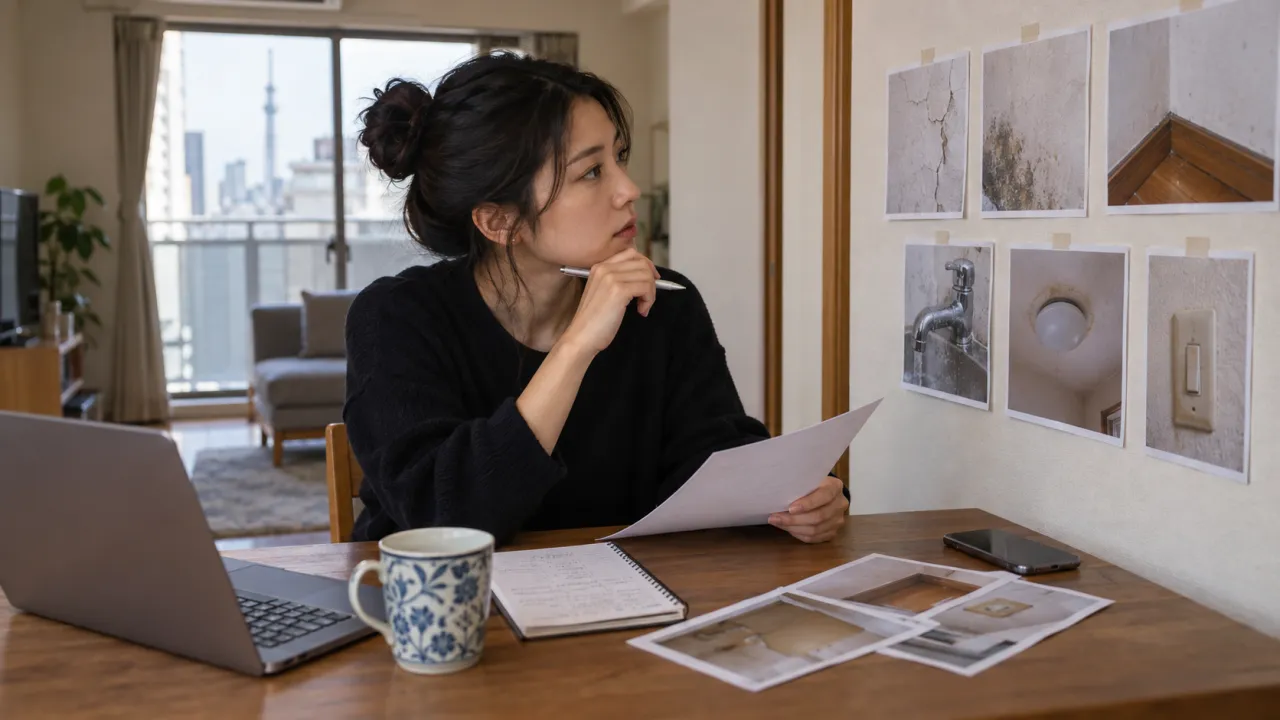
Before the wall is repainted, ask: Was the source found and stopped? Which surfaces were wet? How was drying assessed? Was any damaged backing replaced? Who authorized the work? What should you monitor afterward? Keep these answers with the photographs. If you still need to define the mold-related scope, send an English inquiry to Kabibusters Yokohama rather than waiting for the smell to become severe.
Primary sources: MLIT's restoration FAQ, MLIT's English restoration leaflet, US EPA's water-damage response table, US EPA's flooded-home guidance, and Houterasu's English housing information. US material is prevention context, not Japanese law.
----------------------------------------------------------------------
カビバスターズ横浜
住所 :
〒221-0056
神奈川県横浜市神奈川区金港町5-14 クアドリフォリオ8階
電話番号 :
0120-133-199
----------------------------------------------------------------------