浴室天井の黒ずみと安全なカビ相談
2026/10/15
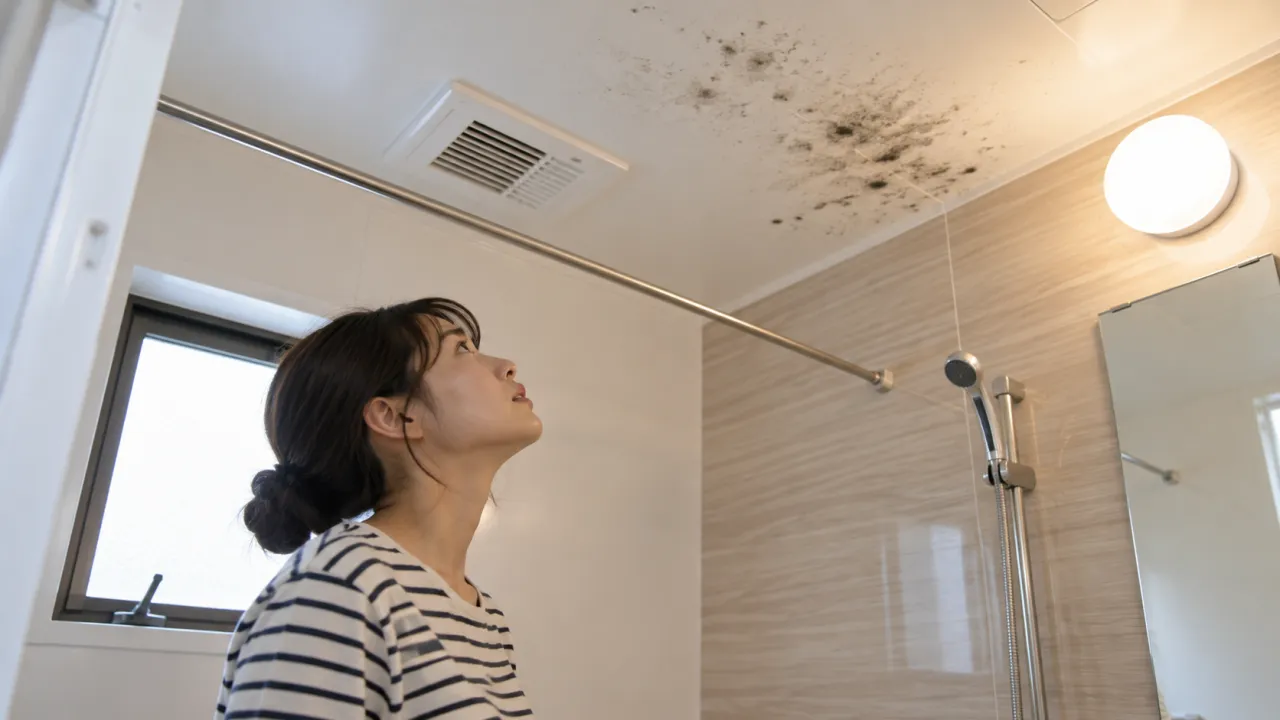
Quick answer. If you see black marks above the bath or shower in a Japanese rental, photograph the ceiling from the floor first. Do not stand on a tub rim or spray chemicals overhead. Check whether the surface is simply damp after bathing, whether the ventilation fan runs as intended, and whether paint, ceiling panels or sealant are damaged. Tell the property manager promptly if marks spread, the ceiling is soft, water drips, or the exhaust fan fails. An English-speaking mold specialist can discuss an appropriate assessment after a leak or ventilation fault and access permission are addressed. This article serves residents in Tokyo, Kanagawa and Chiba.
日本語の要点: 浴室天井の黒ずみは、無理に高所で薬剤を使わず床から撮影してください。換気扇の不具合や天井の濡れ・変形があれば管理会社に報告し、カビの範囲と対応に迷う場合はカビバスターズ横浜へ英語で相談できます。
1. Identify the surface and the moisture pattern
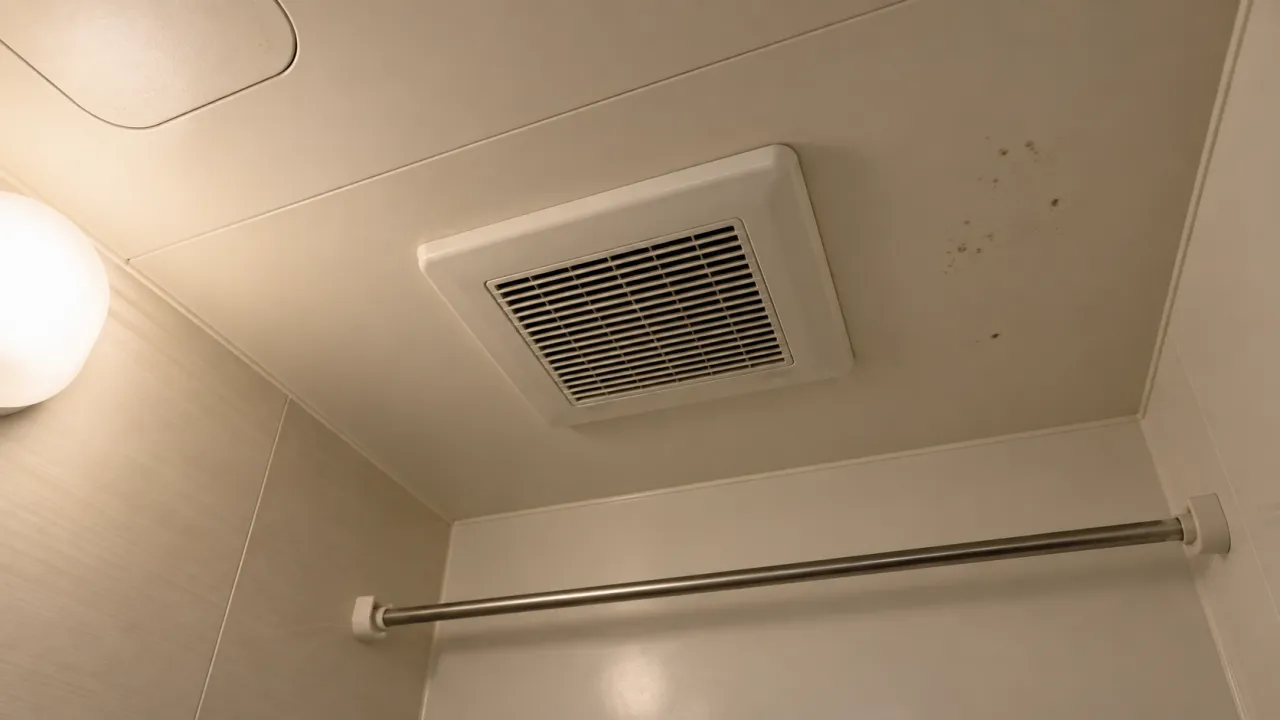
Bathroom ceilings collect warm, moist air. Tokyo Metropolitan Government's indoor-environment guidance advises controlling dampness and ventilating bathrooms; its Japanese detailed mold-prevention guidance mentions removing moisture and residue from bathroom walls and ceilings. These are general prevention measures, not a diagnosis of every dark ceiling spot. Dust on a ventilation grille, shadow at a panel seam and visible mold can look similar in a phone photo. Avoid confidently naming a species by color.
From the floor, take a wide view showing the fan, light, shower and marked area. Photograph any swollen panel, peeling paint, droplet or stain line without climbing. Record the date and whether the mark follows a shower, heavy rain or a leak from the floor above. If a light fitting or fan housing is wet, turn off the fixture as safely instructed and contact the building's repair service. Do not touch wet electrics or open a ceiling hatch. A ceiling stain outside the shower footprint might indicate plumbing or building moisture rather than ordinary bathing.
Consider whether the fan is actually moving air. The switch may be a dedicated bath fan, a dryer mode, or part of a 24-hour ventilation system. A manual or manager can identify the exact setup. Do not block the grille or shut down a required whole-home ventilation mode to save electricity without checking the building instructions. Our English guide to 24-hour ventilation explains common controls, but the correct operating mode depends on the unit. If the fan is noisy, dead or dripping, report that as equipment maintenance, not merely a mold-cleaning request.
| Observation | Why it matters | First action |
|---|---|---|
| Small marks on an intact, reachable surface | Surface care may be possible if approved and safe | Read bathroom maker and cleaner labels |
| Widespread ceiling marks or recurring odor | Surface cleaning may miss moisture or material problem | Photograph and request manager inspection |
| Droplets at fan, lamp or ceiling seam | Equipment or leak issue may be present | Stop unsafe use and contact repair route |
| Soft, swollen or peeling ceiling panel | Building material may need evaluation | Do not scrape or dismantle; report promptly |
2. Why overhead chemical cleaning can be unsafe
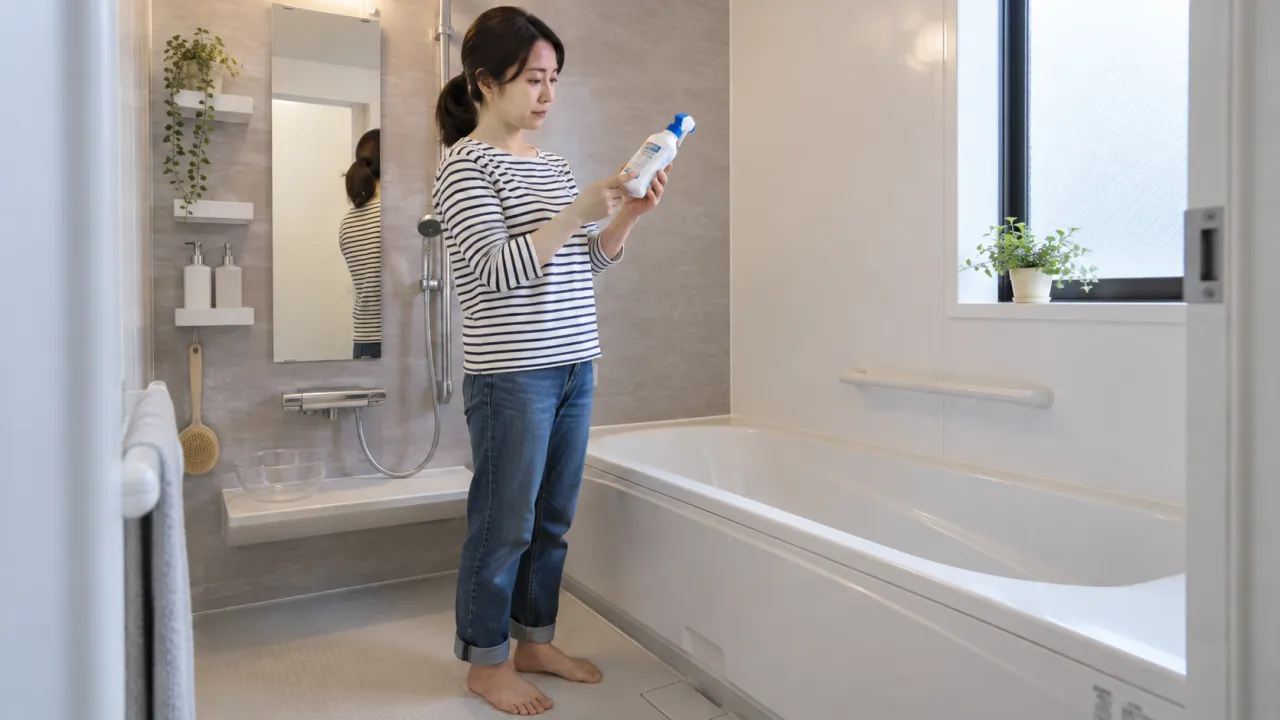
A high ceiling invites an improvised stool or an overhead spray. Neither is a good default. A slip in a wet bath can be serious, and a mist sprayed above the face can reach eyes or lungs. Follow the actual cleaning product label, the bath manufacturer's instructions and any tenancy rules. If safe reach and ventilation are not possible, do not attempt the task yourself. A long-handled tool does not remove the chemical exposure question. If the ceiling material is painted, wallpapered, porous or already damaged, ask the manager before applying a strong product or scraping.
Kao's official explanation of “Do not mix” labeling says chlorine-based cleaners and acidic products can release dangerous chlorine gas when mixed. Kao's advice on feeling unwell from chlorine cleaner also notes eye and respiratory risks. Do not combine cleaners, reuse a container with unknown residue, or follow an unverified online recipe. If a product has already caused irritation, leave the area and follow its label and medical or emergency advice as appropriate. This article intentionally does not give an improvised chemical mixture, concentration or exposure time.
Panasonic's official bathroom care booklet describes different treatments for different bathroom materials and the importance of washing away residues and ventilation. It does not mean Panasonic's instructions fit every bathroom. Locate the equipment or bath manual for your particular product. Do not scrub a seal so hard that it opens a gap, and do not remove a fixed panel in a rental without approval. If someone else cleans, ask how fixtures, adjacent materials and ventilation will be protected.
Avoid turning a black mark into a single-number fear claim. Its area and appearance are useful for documenting change, but neither alone identifies hidden damage or health exposure. Some marks may remain as discoloration after appropriate treatment. Conversely, making the surface look white does not prove the material is dry. The real question is whether water is still entering or lingering. A recurrence after an approved clean, especially at a fan housing or seam, justifies inspection rather than repeated spraying.
3. Contact the manager first, then define a mold consultation
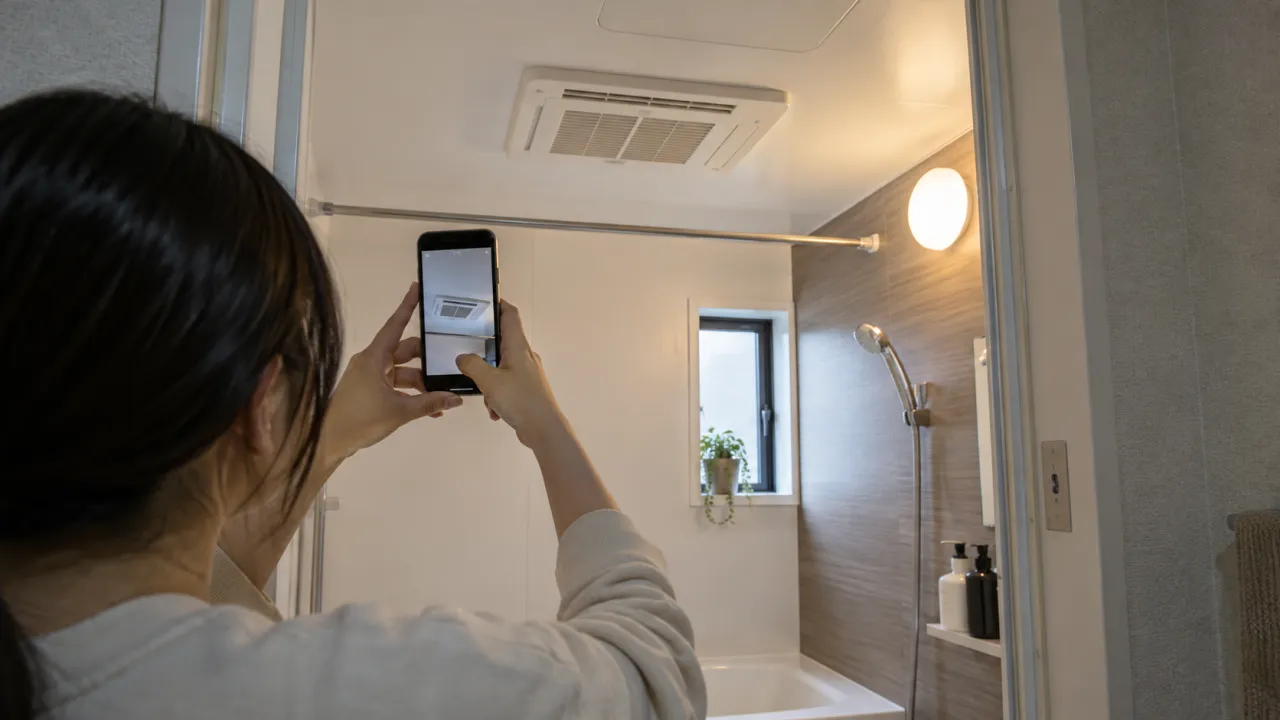
If the ceiling, fan or light belongs to the rental property, a property manager should know about damage and authorize work on fixed surfaces. A useful English report says: “I found dark marks on the bathroom ceiling on [date]. They are near [fan/light/seam/shower]. I also observed [dripping/no dripping] and the fan [works/does not work]. I have not opened the ceiling or applied strong cleaner. Please advise on inspection and safe cleaning.” Attach wide and close photographs taken from the floor. Keep a copy of the response and follow up if the area changes.
For a mark that is small, on an intact and safely reachable surface, ordinary maintenance may be adequate if the maker, label and manager allow it. For a high ceiling, repeated spread, persistent musty smell, damaged material or uncertainty about the extent, ask whether a specialist should assess the indoor mold issue. Building leak repair, ventilation repair and mold assessment are separate scopes. A surface service cannot fix a defective exhaust fan or water from the upstairs unit. Ask for the moisture source to be corrected and for drying to be confirmed before cosmetic finishing.
Kabibusters Yokohama's service information describes its mold consultation. The team can respond in English. When using the contact form, say your city in Tokyo, Kanagawa or Chiba; whether the home is rented; the ceiling material if known; height and safe access; whether the fan works; and whether the manager has approved assessment. Do not assume an inspection or treatment is guaranteed at every address. If the manager has not yet agreed to access fixed parts, say that plainly. The inquiry can help clarify whether the mold issue is within the service's scope and what must happen first.
Ask any provider how they will protect the resident, floor, fan and lights; what they will do with a damaged ceiling material; and which work requires the owner or a licensed trade. Request a written scope, not a promise that one application permanently prevents all future mold. If a leak or electrical problem is active, use the building repair or emergency pathway immediately. Do not delay a repair while waiting for a mold quote. For health symptoms, consult a medical professional; neither a blog nor a cleaning estimate is medical advice.
4. FAQ and a simple decision checklist
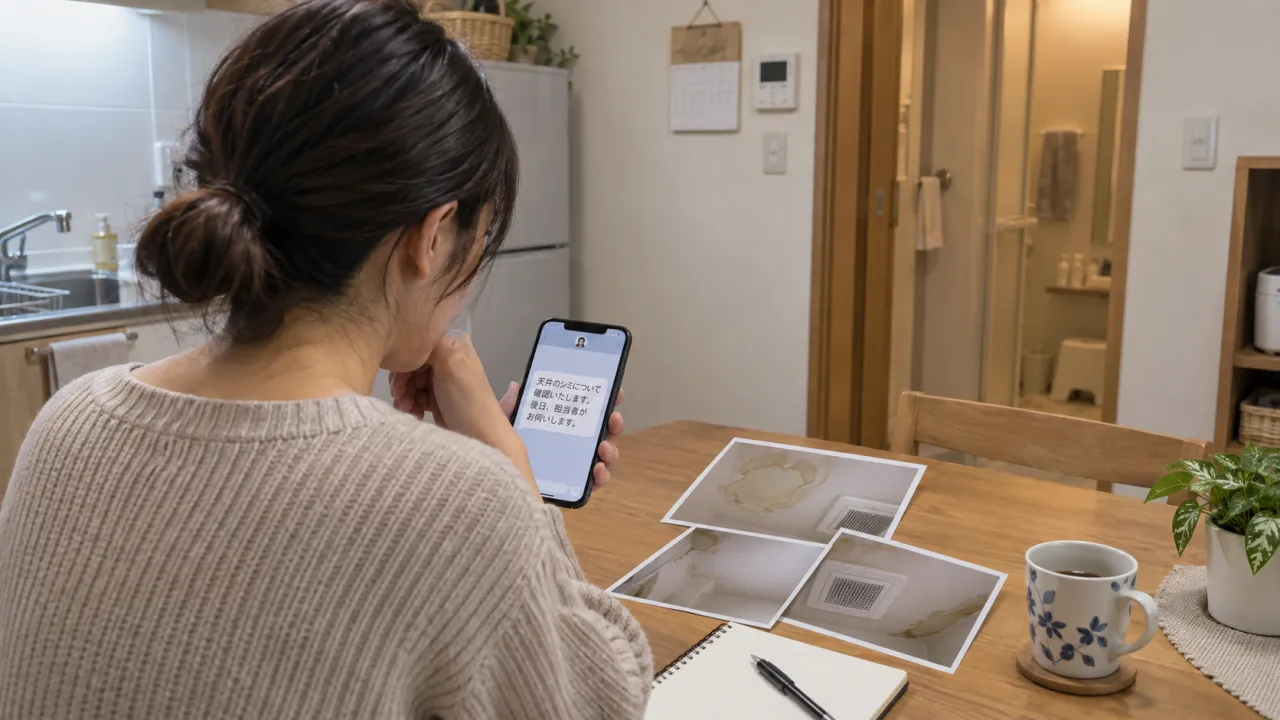
Is every black ceiling spot mold? No. Dust, staining and other materials can look dark. Photograph the pattern and ask for an assessment when it persists or spreads. Color alone does not identify a mold species or determine health risk.
Can I stand on the bath edge to wipe it? Do not use an unstable position. Wet bathroom surfaces are slippery, and overhead chemical use adds eye and breathing exposure. If safe access is not possible, ask the manager or a qualified provider.
Can I mix a mold remover with bathroom descaler? No. A chlorine-based cleaner mixed with an acidic product can release harmful gas. Follow each label, ventilate, and do not make improvised mixtures.
Does turning on the fan once solve it? Ventilation helps moisture control, but a failed fan, a leak or damaged ceiling needs inspection. Follow your exact fan or 24-hour ventilation instructions and report faults.
Should I repaint the mark before moving out? Do not conceal or alter a fixed rental ceiling without permission. Record the condition and ask the manager for repair and cleaning guidance. Responsibility for costs depends on facts and contract terms, not a blog article.
When is a mold specialist useful? When marks recur, the affected area is difficult or unsafe to reach, materials seem damaged, or the mold scope remains unclear after moisture and building repairs are addressed. Give the specialist photographs and the manager's status.
Before you decide, note four things: the ceiling's condition; any active water or electrical hazard; ventilation performance; and permission to work on rental property. Then choose the correct first contact. Small, intact and safely reachable surface care is different from overhead work, failed equipment and a wet ceiling panel. Tokyo, Kanagawa and Chiba renters can ask Kabibusters Yokohama about an English mold consultation when the mold question remains after the building side is engaged.
Primary sources: Tokyo's English indoor-environment advice, Tokyo's detailed Japanese bathroom mold advice, Panasonic's bathroom care booklet, Kao's “Do not mix” warning, and Kao's cleaner-exposure advice. General advice does not replace an inspection or product label.
----------------------------------------------------------------------
カビバスターズ横浜
住所 :
〒221-0056
神奈川県横浜市神奈川区金港町5-14 クアドリフォリオ8階
電話番号 :
0120-133-199
----------------------------------------------------------------------