Tokyo rental mold handover evidence
2026/10/15

Direct answer: If mold-like marks, dampness or a musty odor are noticed before moving into, during occupation of, or when leaving a premium rental in Tokyo, create a dated, bilingual condition record and notify the designated property manager promptly. Photograph the whole room and the affected building element without altering it, record when the symptom appeared and whether water or condensation was present, and keep copies of messages and repair responses. The manager should arrange the right building or equipment trade for an active source; a mold specialist can assess affected materials when growth or persistent dampness is suspected. Do not decide from a photograph that the tenant or landlord is financially responsible. In Japan, the contract, facts and applicable guidance matter, and a technical report is not a legal judgment.
This guide is written for international executives, overseas landlords and estate managers dealing with a Tokyo premium apartment or house. The evidence method can also help rentals in Kanagawa and Chiba, but local contacts and contracts differ. It is deliberately distinct from a general “mold when moving out” article: its focus is the handover record at each transition, English/Japanese terminology and the division between technical diagnosis and allocation of responsibility. A high rent does not change how moisture enters a wall. It may, however, make bespoke finishes, shared building systems, furnished inventory and relocation deadlines especially important to document accurately.
We compared three primary resources that commonly answer parts of this search intent. The Tokyo Metropolitan Government's multilingual tenant–landlord dispute guide provides accessible contract and handover context for foreign residents. Japan's MLIT restoration-dispute guideline explains general distinctions between ordinary wear and certain tenant-caused damage but says actual contracts and circumstances matter. The US EPA guide to mold and moisture in homes prioritizes correcting water sources and drying affected areas; it does not allocate Japanese tenancy costs. Search rankings vary. Taken together, these sources support recording facts, repairing the source and handling contractual questions separately. This article does not replace a lawyer's advice or the specific lease.
1. Capture a fair condition baseline at key handover moments
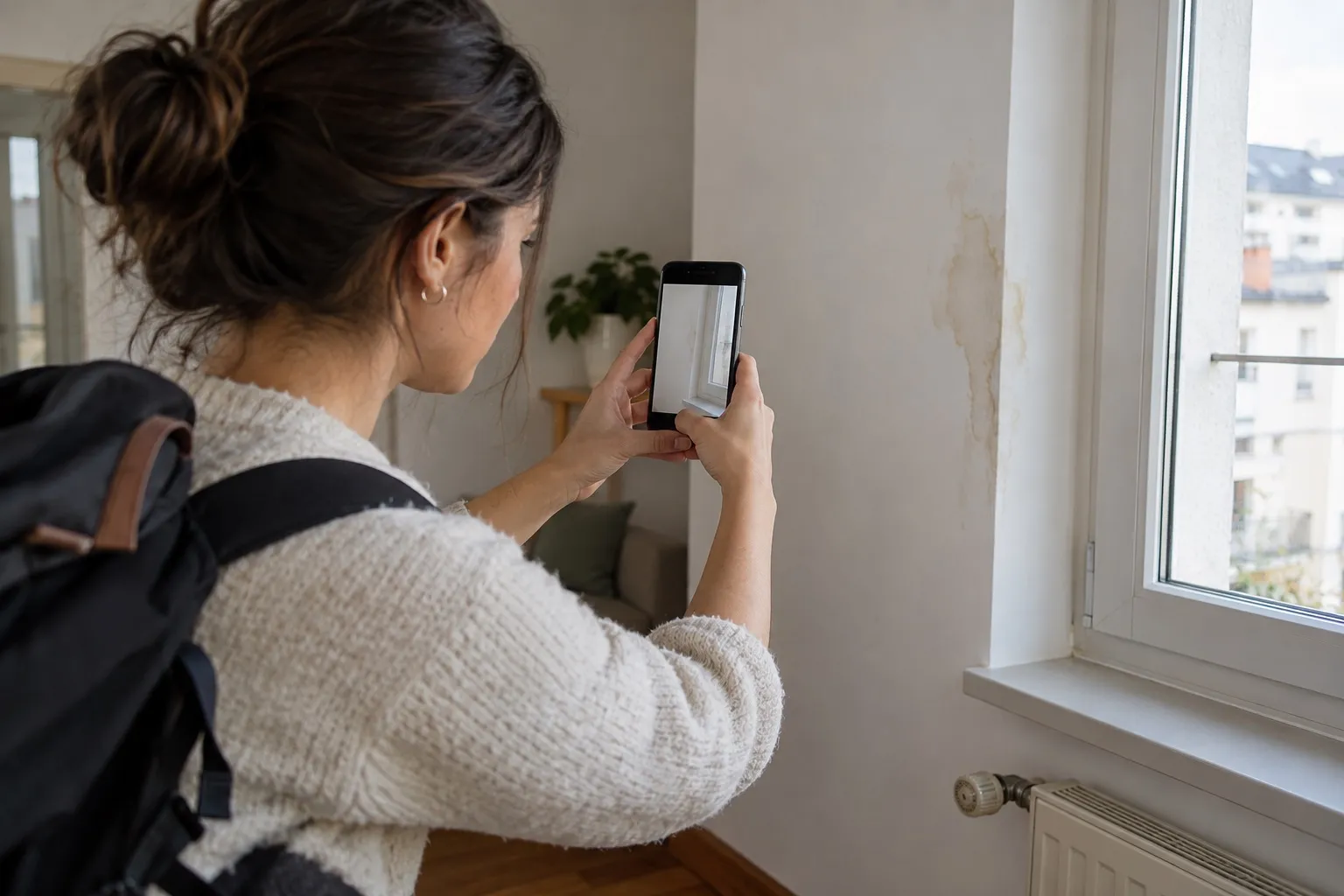
At initial move-in, inspect the agreed rooms with the manager or agent before furniture hides walls and floors. Record the date, people present, room, surface, mark size and whether it is dry, damp, stained or odorous. Take a wide photo for location and a close photo for condition. Check accessible window reveals, under-sink cabinets, bath edges, air-conditioner surroundings and external-wall wardrobes without dismantling any part. If the property is furnished, distinguish marks on building finishes from marks on landlord-owned furniture. Ask whether earlier leak repairs or cleaning were completed and for copies of relevant records. A “newly painted” surface is not proof the substrate is dry.
At an interim inspection during the lease, document the first appearance of a change. Write “south bedroom corner, faint staining seen on 12 October after rain,” not “landlord's leak” unless the cause is established. Note whether there was unusual cooking, bathing, laundry drying, a closed ventilation grille, a known water incident or a building-system fault. The objective is not to assign fault by self-report; it is to preserve a timeline that the appropriate professional can test. Tell the manager promptly when active moisture is observed. A tenant should not wait until move-out if a surface is wet and worsening, and a manager should not postpone source investigation simply because the occupant can wipe the visible mark.
At move-out, compare the same locations and retrieve the original entry record and correspondence. Photograph both apparent resolution and outstanding uncertainty. A stain may remain after a repaired leak; a room may look clean while an inaccessible cavity is still damp. A before-and-after comparison is strongest when lighting, angle and location are similar. Keep original files and dates. Avoid editing an image to “make mold visible”; if a crop or annotation is useful, retain the original alongside the derivative. The Tokyo government's multilingual dispute guide is a useful starting point for understanding the rental context, not evidence that any specific tenant or landlord has complied.
Privacy matters in an executive home. Crop photographs to the wall or fixture under review; do not circulate passports, family photos, security controls, confidential documents or the tenant's work materials. Identify the person authorized to send records to the landlord, insurer, relocation company and contractor. The written condition sheet can use room codes, with the full address held by the manager. For an overseas owner, a local representative with access and repair authority prevents a small water incident from waiting across time zones. Ask for a neutral acknowledgment of receipt rather than a premature statement of blame.
2. Separate an urgent water repair from a mold-scope question
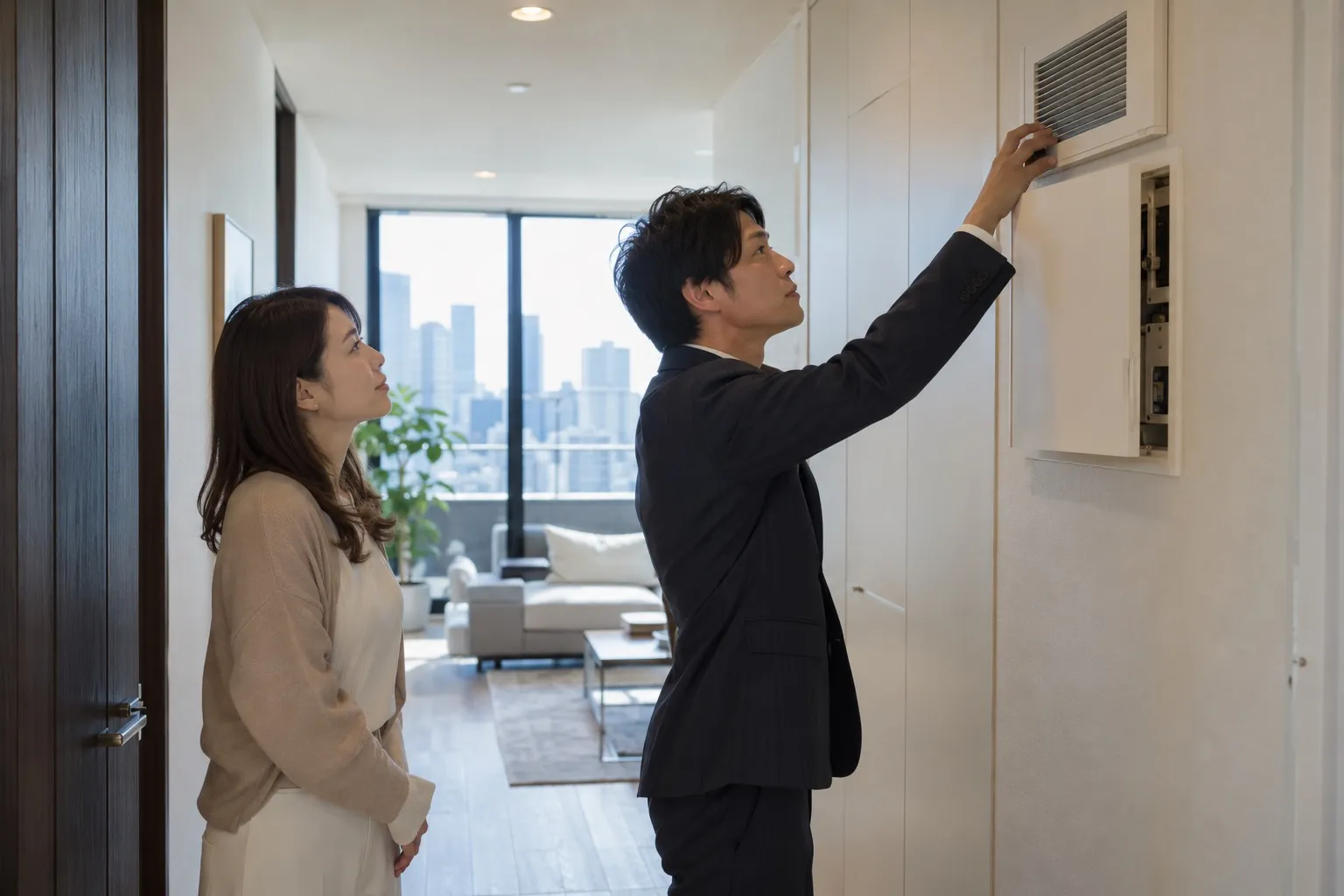
Water near electrical fittings, an active pipe leak, a ceiling at risk of falling or an unsafe wet floor calls for the property's emergency process and the appropriate licensed trade. Keep people away from danger. A mold consultation is not a substitute for stopping water. If the source is in a shared riser, roof, facade or neighboring unit, the manager may need to coordinate building ownership boundaries before works. Do not open a ceiling or remove bespoke wall panels merely to obtain a photo without approval and a protection plan.
For non-emergency conditions, trace plausible routes: plumbing, rain entry, air-conditioner condensate, local surface condensation or a historic leak. An interior mold specialist can assess affected building materials and propose a scope; the plumber, waterproofing contractor or HVAC maintainer must repair the source within their discipline. When the source is uncertain, record hypotheses as hypotheses. An infrared image, surface moisture reading or air sample only answers a limited question under the circumstances of measurement. The EPA home guidance says that mold control depends on moisture control; it does not say one test certifies the apartment as mold-free.
If the tenant reports symptoms, building personnel should not give an individual medical diagnosis. A healthcare professional handles health questions, while the manager addresses building conditions. Discuss temporary access or room-use arrangements with the authorized party if a major repair disrupts occupation. Do not promise that a fixed calendar date will be safe before the scope, source and drying are known. Document what was inspected, what was inaccessible and what follow-up is required. The exact use of sampling depends on a defined purpose, not a marketing promise that one number can settle a dispute.
The MLIT restoration-guideline Q&A notes that allowing condensation damage to expand may matter in responsibility discussions, while building characteristics can also contribute. That is a nuanced example, not a universal rule that “condensation equals tenant fault.” A technical expert can report condensation conditions and building defects; the parties or their advisers assess responsibility under the contract and relevant law. An immediate cleaning quote and a later cost-allocation question should be kept as separate decisions.
3. Use an English/Japanese record that does not inflate certainty
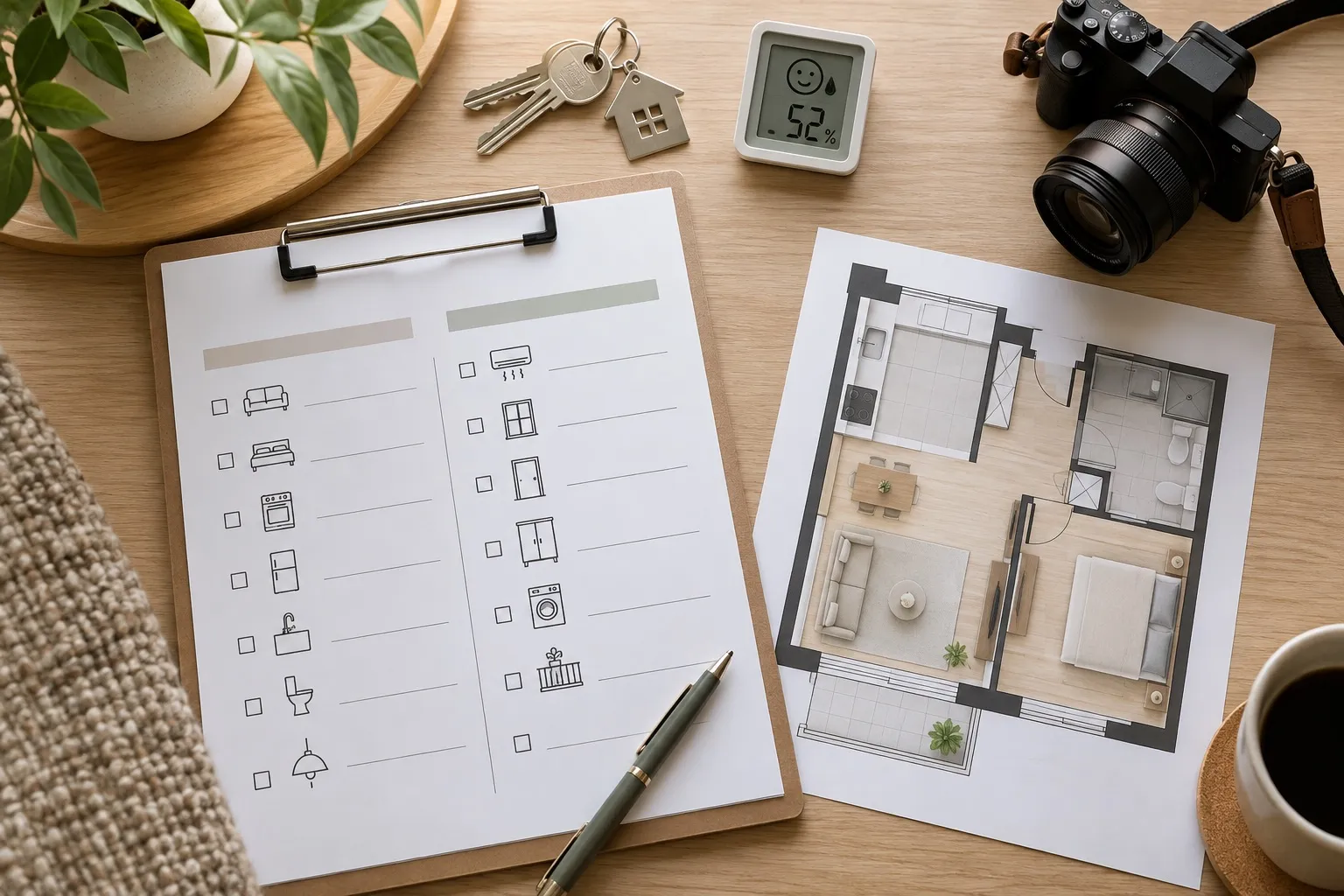
The most useful handover document has a short decision page plus a factual appendix. On the first page put the property code, room, date, issue class (active leak, recurrent dampness, visible growth-like mark, odor only), urgent safety steps, current access status, assigned manager and next decision date. In the appendix put original photo references, repair history, relevant equipment, inspected and uninspected areas, moisture measurements with location and method, and the specialist's uncertainty. A tenant, owner and local repair contractor may read different languages; make sure the same observation is expressed consistently in English and Japanese.
Terminology can change a dispute. “Mold-like growth” is not a laboratory species identification. “Surface condensation observed” is not automatically “tenant failed to ventilate.” “Water staining” is not a confirmed active roof leak. “No visible growth in inspected area” does not mean “whole residence mold-free.” If the Japanese contractor uses a tentative phrase, the English summary should stay tentative. Conversely, if there is active dripping or a safety hazard, do not soften it into “some humidity.” Ask the technical author to confirm crucial translations. Record who translated the report and whether it is a working translation or a certified document, if that distinction matters to a contract or insurer.
| Record item | Why it helps | What it does not decide |
|---|---|---|
| Dated wide and close room photographs | Location and visible change over time | Species or contractual fault |
| Written notice to property manager and reply | When the issue was reported and what was requested | Whether the source is repaired |
| Plumbing/HVAC/building repair note | Work performed and remaining checks | Whether all affected finishes are dry |
| Mold or moisture assessment | Building-material condition within its scope | Rent reduction, deposit or legal liability |
| Entry and exit condition sheets | Comparison at handover milestones | Automatic acceptance of a charge |
Do not sign a broad statement such as “all damage is tenant-caused mold” merely to receive a key or settle an inspection appointment. Equally, do not refuse to document a condition because its cause is unknown. The MLIT restoration guideline provides general examples and emphasizes that it was prepared to help prevent disputes; it is not a substitute for reading the specific lease and special clauses. A neutral photo log helps both parties preserve the evidence needed for a fair discussion.
4. Decide who to contact and what to ask before a deadline

If moving in soon, ask the manager what has been investigated, when the source repair was completed, whether affected materials were dried or replaced, and which spaces were not inspected. If moving out soon, give prompt written notice of an active issue and request the manager's inspection rather than applying chemicals to make the room appear clean. If a mark has recurred after prior treatment, request the original water-source record and the follow-up plan. If the owner is overseas, nominate one local person to authorize access and receive both English and Japanese findings. Delayed decision-making can allow a repair to remain unresolved; speed does not justify asserting a cause without evidence.
The manager or landlord-side representative is the first contact for access, fixtures and building-system coordination. Plumbing, roofing, facade or HVAC contractors address their respective source faults. A mold specialist is useful when affected building materials, recurring growth, hidden dampness or persistent odor require technical evaluation. A conservator handles expensive furnishings or artworks. A lawyer or public consultation service handles contractual disputes. The Tokyo government publishes multilingual guidance on preventing rental disputes, while MLIT offers resources for foreign nationals seeking rental housing. They are information sources; they do not inspect the property for you.
FAQ: Does a dark spot at entry prove the landlord owes for treatment? No. It proves a visible condition existed at a recorded time if the photograph and handover are reliable. Source, scope and responsibility require further facts and the contract.
FAQ: Does signing a condition report mean accepting all future charges? Not necessarily. The wording and circumstances matter. MLIT's Q&A discusses differences between confirming a condition and agreeing to a cost allocation. Obtain advice on a real dispute.
FAQ: Should the tenant clean the mark before telling the manager? If active water, repeated growth or material damage is suspected, document and notify first. Ordinary housekeeping and urgent safety steps are separate from concealing an unresolved water problem.
FAQ: Can the landlord claim every condensation stain is tenant negligence? No blanket conclusion is appropriate. Building design, ventilation, occupant actions, notice and the lease may all matter. A technical record should describe what happened, not allocate legal blame.
FAQ: Is an English-only report enough for local repair work? Often a concise English summary helps an overseas decision-maker, but Japanese technicians may need Japanese location labels and precise work instructions. Confirm report language and translation responsibility before commissioning.
FAQ: Can a single test show the unit is safe to occupy? No single mold test certifies all spaces or health outcomes. The investigation should be scoped to the water source, materials, access and relevant conditions; health advice is personal to a clinician.
For an English-language building-side inquiry in Tokyo, Kanagawa or Chiba, review Kabi Busters Yokohama's service scope and contact the team with a short description and dated photographs of the affected building element. Confirm address coverage, access, inspection scope, reporting language and timing before work. A useful first message is: “We are approaching handover of a Tokyo rental. A dated photograph shows a recurrent damp patch on the exterior-wall skirting. The manager is checking the building source. Can you advise what building-material assessment would be useful and how findings can be summarized in English?” For an active leak or electrical hazard, use the property's emergency contact first.
日本語の要点: 高級賃貸住宅の入居・居住中・退去時にカビ様の跡や湿りを見つけたら、日時と場所を記録し、全景と近接写真を残して管理者へ早めに連絡します。建物の水分源の調査・修理と、建材へのカビ影響の調査を分けて依頼します。技術報告は状態と不確実性を記すもので、借主・貸主の費用負担を自動的に決めるものではありません。契約書と国土交通省・東京都の資料を確認し、必要なら法律相談を利用してください。
----------------------------------------------------------------------
カビバスターズ横浜
住所 :
〒221-0056
神奈川県横浜市神奈川区金港町5-14 クアドリフォリオ8階
電話番号 :
0120-133-199
----------------------------------------------------------------------