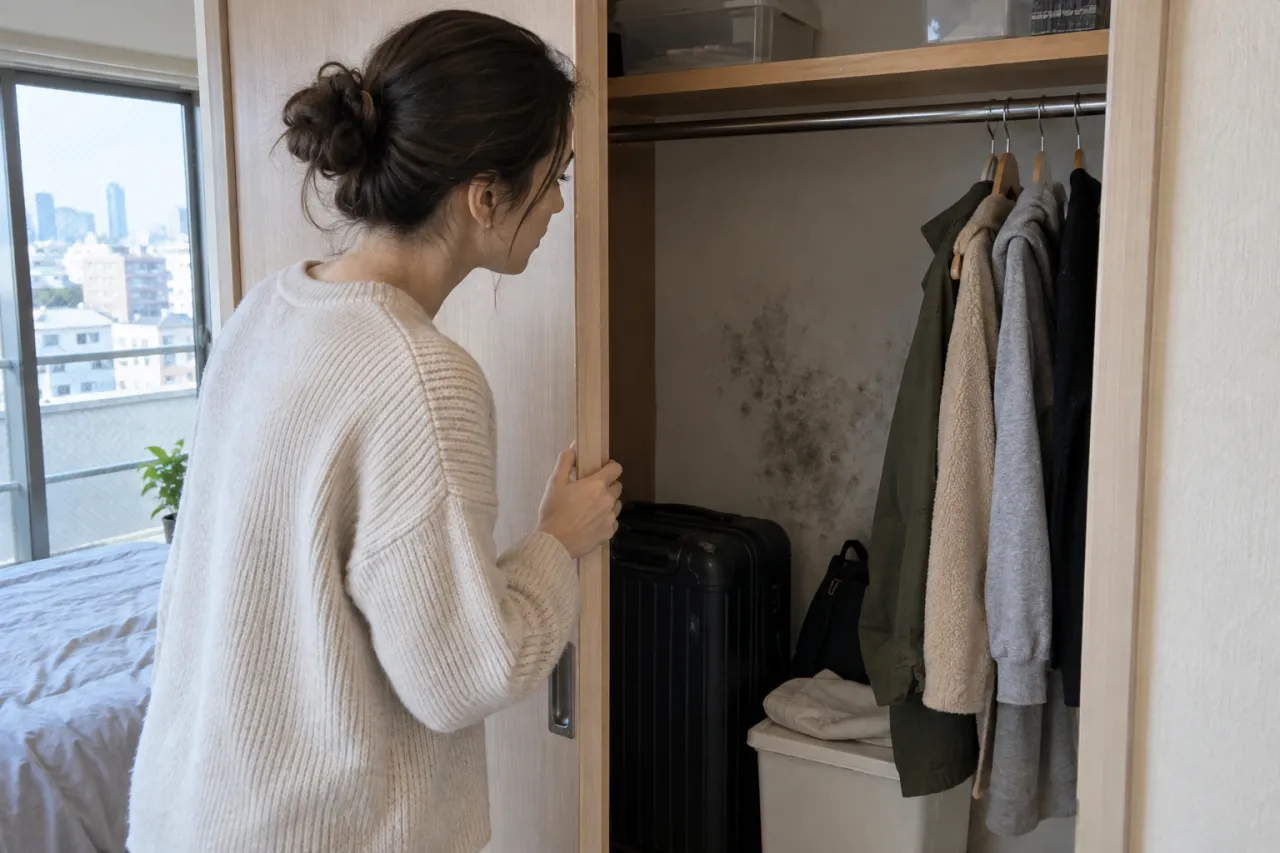
Imported furniture mold or finish damage
2026/10/14

Direct answer: Do not treat every pale bloom, dark spot or musty odor on imported furniture as the same problem. First stop any active water and document exactly where the mark is: on the coating, in the wood, on fabric, on a built-in cabinet back or on the adjacent wall. A cloudy ring may be a finish response to moisture; fuzzy growth or a recurring odor may call for mold assessment; swelling, loose veneer or a softened substrate may indicate water damage even without visible growth. A building specialist investigates the water route and affected construction; the maker, a qualified furniture restorer or conservator assesses a valuable object and its original finish. Avoid an unapproved chemical, abrasive, steam treatment or dismantling. No online photograph can guarantee identification or restoration.
This guide is for an overseas owner, international executive or estate manager with high-value furnishings in Tokyo, Kanagawa or Chiba. It is also relevant when an imported wardrobe, library cabinet or kitchen joinery is fixed to the building. It differs from a generic closet-mold article: the central decision is whether the defect belongs to a movable object, a bespoke finish, a wet building assembly or more than one of these. “Luxury” does not make mold biology different, but it does make irreversible cleaning, replacement and chain-of-custody mistakes more consequential. Kabi Busters Yokohama can be asked about building-side mold and moisture; the company should not be presented as guaranteeing conservation of valuable furniture.
In a review of search results for this question, three primary sources provide complementary answers. The Canadian Conservation Institute's note on furniture finishes explains that coating type and condition should be understood before cleaning. Its basic-care guidance for wooden furniture distinguishes humidity movement, cloudy water marks and mold risk. The US EPA's basic mold-cleanup guidance prioritizes moisture-source repair and suggests a specialist for expensive or sentimental objects. Search order varies by user and date. Those documents are not a diagnosis of your particular lacquer, veneer or wall, and an imported manufacturer's care instruction can take precedence for a specific product. The article below connects the sources to a practical Japanese-home workflow.
1. Read the symptom before touching the finish
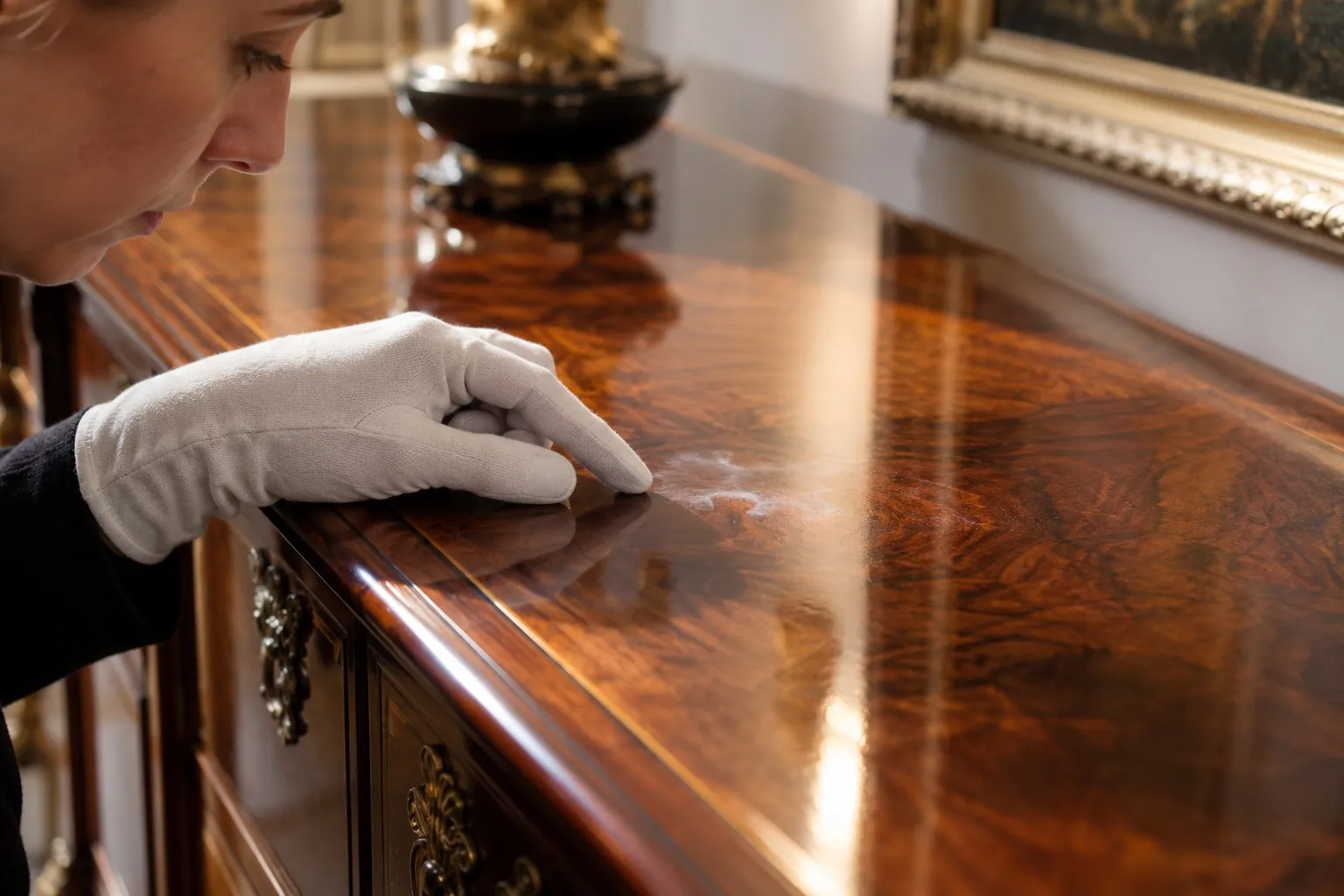
Begin with the surface and the history. A white or milky patch in a polished top can be a moisture-related change within a coating, while an old wax residue, mineral deposit, abrasion or discoloration can look similar in a quick photograph. A fuzzy or powdery deposit, especially where there was sustained dampness, raises a different question. A dark area on unfinished wood may be absorbed staining, biological growth or a previous treatment. None of these can be settled by color alone. The CCI furniture-finish note emphasizes identifying the coating and its stability before choosing a cleaning method. A valuable original finish may itself carry historical or financial value; stripping or polishing it away to make a mark disappear can be a loss, even if the surface looks brighter afterward.
Record whether the mark is on a free-standing sideboard, upholstered chair, rug, built-in cabinet door, inner shelf, back panel or adjacent wall. Note whether the object was moved from a different climate, recently unpacked, stored against an exterior wall, placed under an air-conditioning outlet or exposed to a plumbing incident. Those details direct the inspection but do not establish causation. A movable piece can have an object-care problem and still sit beside a wet wall. Conversely, a cabinet door may have a damaged coating while the wall behind it is dry. Keep the possibilities separate until evidence connects them.
Look for changes that do not require cleaning: swollen edges, a door that no longer closes, loose veneer, lifting coating, damp packaging, water rings on the floor, condensation at nearby glazing and an odor that is stronger when the cabinet opens. Photograph the whole item, the affected panel and a close-up under gentle side lighting. Use a ruler only if it can be placed without scratching. Record date, room and whether the HVAC or plumbing was running. Do not brush, scrape or wipe a powdery area merely to improve the photograph. If a suspected patch is extensive, occupants are vulnerable or contaminated material may become airborne, restrict handling and ask for professional guidance.
For a valuable object, obtain the maker's model, material and finish data if available. A care label may distinguish oil, lacquer, wax, shellac or a factory-applied coating, but do not assume that all pieces from one brand have the same treatment. Ask the owner before moving the piece. If it is a listed antique or artwork-like item, a conservator is better placed to evaluate original material and treatment choices than a general house cleaner. The CCI wooden-furniture care page cautions that wood responds to humidity changes and that original finishes should be preserved where possible. This is guidance for careful decision-making, not a promise that every damaged item can be restored.
2. Separate movable-object damage from a wet built-in assembly

The physical boundary matters. A stand-alone cabinet may be pulled away from a wall by an authorized handler to inspect both surfaces. A built-in cabinet may be connected to a wall, pipe chase, floor, HVAC return or balcony door in ways that are not visible from the front. Do not force it away. Ask the property manager for installation drawings and the joinery supplier's details. A moisture mark low on a built-in carcass beside a sink may warrant plumbing assessment. A recurring mark on the back of a wardrobe against an exterior wall may involve condensation, rain entry or a concealed pipe; a room-average humidity reading cannot distinguish them.
Describe the route from water to material. Is there a known spill, supply or drain leak, air-conditioner condensate, wet exterior wall, window condensation or a previous flood? The EPA's general mold-cleanup steps stress fixing water problems, drying materials and treating porous materials differently from hard surfaces. That general page is not an instruction to scrub a fragile lacquered cabinet. Furniture veneers, adhesives, textiles, leather, gilding and original paint can react badly to a technique that is acceptable on a robust building surface. An object conservator and the maker can advise what should be tested on that item.
The building assessment should record where it inspected, surface conditions, water history and any instrument limits. Moisture meters can be useful, but a single numerical reading is not a species test and can be distorted by metal fittings, dense hardwood or different substrates. An investigator should compare appropriate reference areas and explain the measurement method. A visual check of the wall beside the cabinet cannot rule out the wall cavity. If an opening is warranted, obtain permission for location, size, dust containment, object protection and reinstatement. Protect the furnishing separately before building work begins, under its owner's or conservator's direction.
It is tempting to order “one company to clean everything.” That can blur important responsibilities. A plumber or envelope contractor repairs the water source; a mold specialist evaluates affected building material and safe scope; a joinery supplier advises on fitted cabinet components; a conservator assesses valuable movable objects and sensitive finishes. The property manager coordinates access, approvals, documentation and any insurance or lease notifications. The owner decides acceptable risk and treatment for personal property. If the building and object teams disagree, have them document the specific observation and uncertainty rather than declaring one party responsible from a photograph.
3. Build an evidence pack that protects the piece and the property

For an English-language consultation, create a two-page summary before sharing a large photo archive. Page one identifies the broad location (Tokyo, Kanagawa or Chiba), property type, room and object/building element, first observed date, whether water is active, and any safety issue. Page two shows dated photographs with a caption for each: wide context, affected finish, adjacent wall and floor, and any visible leak source. Add the maker's care sheet, construction drawing, purchase or installation date and relevant prior repair report if available. Avoid sending a full collection inventory, security footage or personal documents in a general enquiry.
Use neutral words in the record. “White cloudy patch on polished table top after a water spill” is clearer than “white mold,” unless a qualified assessment has established growth. “Musty odor at wardrobe back after rainy weather” is useful, but not proof of wall penetration. “Dark speckles on adjacent gypsum board, photographed on two dates” records change without a species claim. The aim is to preserve the option of a correct diagnosis. A maintenance team that wipes everything first may erase the pattern that shows where water entered. The CCI's guidance for furniture finishes supports this caution by stressing evaluation of finish type and stability before a cleaning choice.
| Observation | Building-side question | Object/finish question | Sensible first contact |
|---|---|---|---|
| New dampness behind fixed wardrobe after rain | Is the exterior assembly admitting water? | Has the back panel or veneer changed? | Property manager and building specialist; joinery maker as needed |
| Cloudy ring on polished imported table after a spill | Is there any ongoing room or floor moisture? | Is the coating stable and what finish is it? | Owner's furniture maker or conservator |
| Musty odor inside cabinet beside sink | Is a pipe or drain leaking? | Are shelf materials or stored objects affected? | Manager and plumber; mold specialist if building material remains affected |
| Dark spot on upholstered chair near wet wall | Was the surrounding wall or floor soaked? | Is the textile cleanable without loss? | Building team plus textile conservator or qualified specialist |
| Loose veneer and swollen cabinet edge | Has a moisture source been stopped? | Can original material be stabilized? | Manager, joinery maker and conservator according to value |
Do not put a “mold-free” or “fully restored” label on an object because a visible spot is lighter after treatment. A finish can remain damaged; a hidden water source can remain active; or cleaning may remove a stain without resolving why it formed. Write what was done and what remains uncertain. For an imported item, the manufacturer may provide approved care steps or replacement components, but shipping, customs, guarantee and restoration terms are product-specific. This article does not make a claim about warranty coverage or insurance reimbursement. Ask the relevant parties directly with the actual purchase and policy documents.
4. Choose the right specialist and decide what not to promise
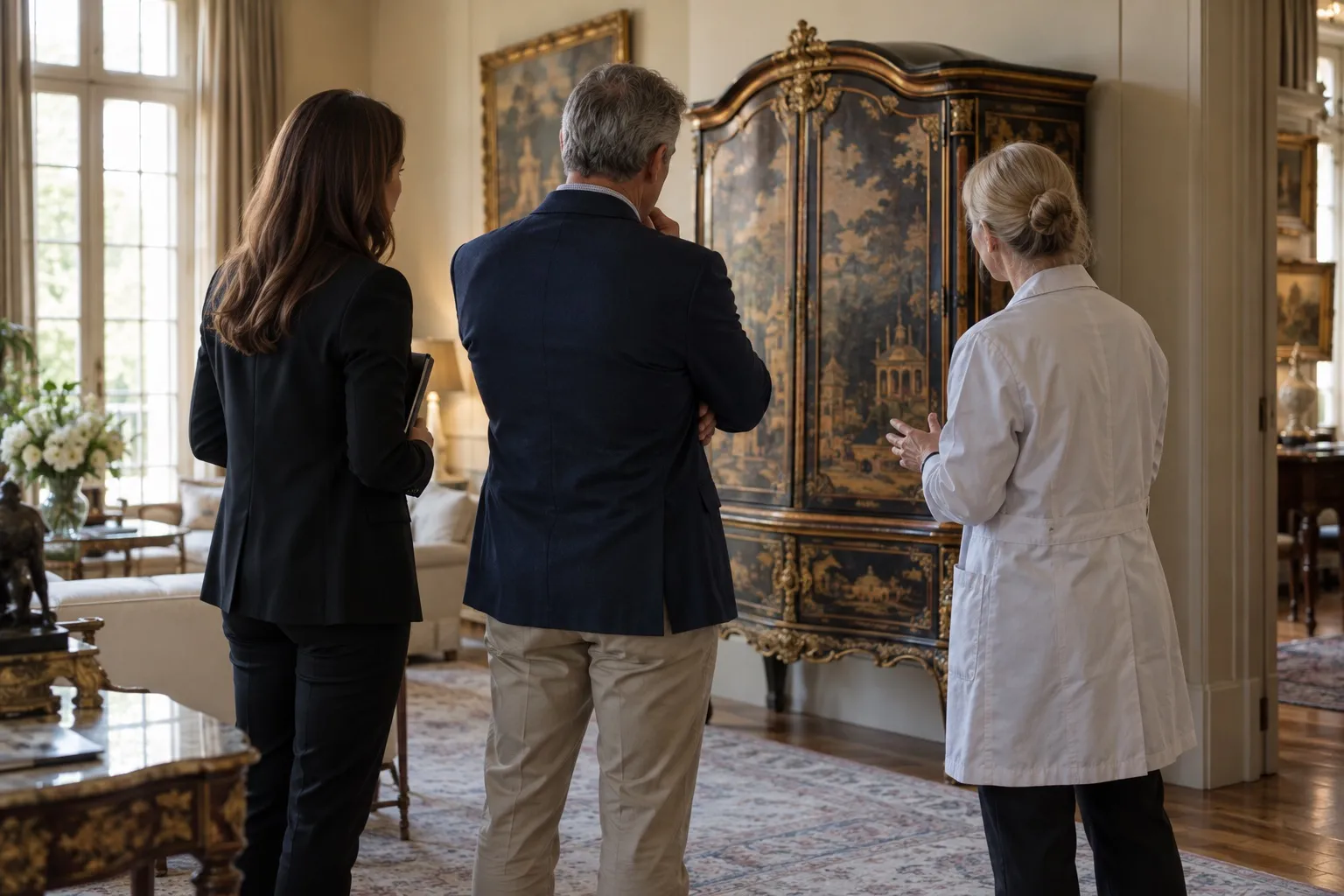
If water is flowing, a ceiling is unsafe or electrical fittings are wet, the manager and appropriate emergency repair trade come first. Keep people clear of hazards. If a built-in cabinet or adjacent wall repeatedly smells musty, feels damp or shows growth-like marks, request a building-side moisture and mold assessment after immediate source control. If the mark is solely on a movable, valuable object and there is no evidence of building dampness, the maker or a qualified conservator may be the best first technical contact. If both object and building are affected, coordinate both routes. Do not ask a mold specialist to certify the condition of an antique finish, and do not ask a conservator to diagnose a hidden plumbing leak.
Before any treatment, agree on a small written scope: location, materials, photographs allowed, protective wrapping or movement, tests proposed, whether samples will be taken, who approves opening a panel, and what outcome can realistically be checked. The EPA guidance on basic mold cleanup explicitly notes that expensive or sentimental items may merit a specialist. That is a reason to pause before cleaning, not a recommendation for a particular product or a guarantee that an item can be saved. The CCI basic-care page for wood furniture likewise distinguishes preventive environmental care from extensive repair best left to a conservator.
FAQ: Does a white bloom on wood mean white mold? No. Finish clouding, residues and other changes can appear pale. Record the context and ask a suitable specialist if the answer affects treatment.
FAQ: May staff use alcohol, bleach or a household mold spray on an imported cabinet? Do not assume compatibility. The finish and substrate may be sensitive, and the maker or conservator should advise on an item-specific method. Water-source repair remains separate.
FAQ: Should we throw away a costly upholstered item immediately? Not solely from one photograph. Porous materials can be difficult to clean if moldy, as the EPA explains, but the decision depends on the material, contamination, value, health and specialist assessment. Avoid promising salvage.
FAQ: Is a built-in cabinet the landlord's property? It depends on the lease, installation and ownership records. A technical inspection can document condition but does not decide legal responsibility. The manager should check the applicable agreement.
FAQ: Can a clean room humidity reading rule out a wet wardrobe back? No. Local wall conditions can differ from air in the center of the room. Investigate the specific location and water history.
FAQ: Can one contractor guarantee that both building and furniture are restored? Do not rely on that without item-specific expertise, a defined scope and acceptance criteria. Separate the building repair and object-conservation decisions.
For a building-side concern, review Kabi Busters Yokohama's services and send an English inquiry with a limited description of the affected wall or cabinet. Ask whether the team can assess that address and material, how it coordinates with the manager and furniture specialist, and what report can be provided. The initial message could read: “We have a recurring musty odor behind fitted cabinetry in a Tokyo residence and a separate cloudy mark on an imported sideboard. We need the wall-moisture question assessed without cleaning or moving the sideboard until its conservator advises.” That single sentence keeps two scopes distinct and gives the right professionals a better starting point.
日本語の要点: 輸入家具の白濁・変色・臭いを写真だけでカビと断定しないでください。家具の塗装や突板の問題と、造作収納の背面・隣接壁の湿りを分けて記録します。漏水の修理は管理者と設備業者、建材のカビ・水分経路は建物側の専門業者、価値の高い家具の仕上げはメーカーや保存修復家へ相談します。薬剤や研磨、解体を先に行うと判断材料や元の仕上げを損なう場合があります。復元や費用負担を保証せず、作業範囲と承認者を先に決めます。
----------------------------------------------------------------------
カビバスターズ横浜
住所 :
〒221-0056
神奈川県横浜市神奈川区金港町5-14 クアドリフォリオ8階
電話番号 :
0120-133-199
----------------------------------------------------------------------