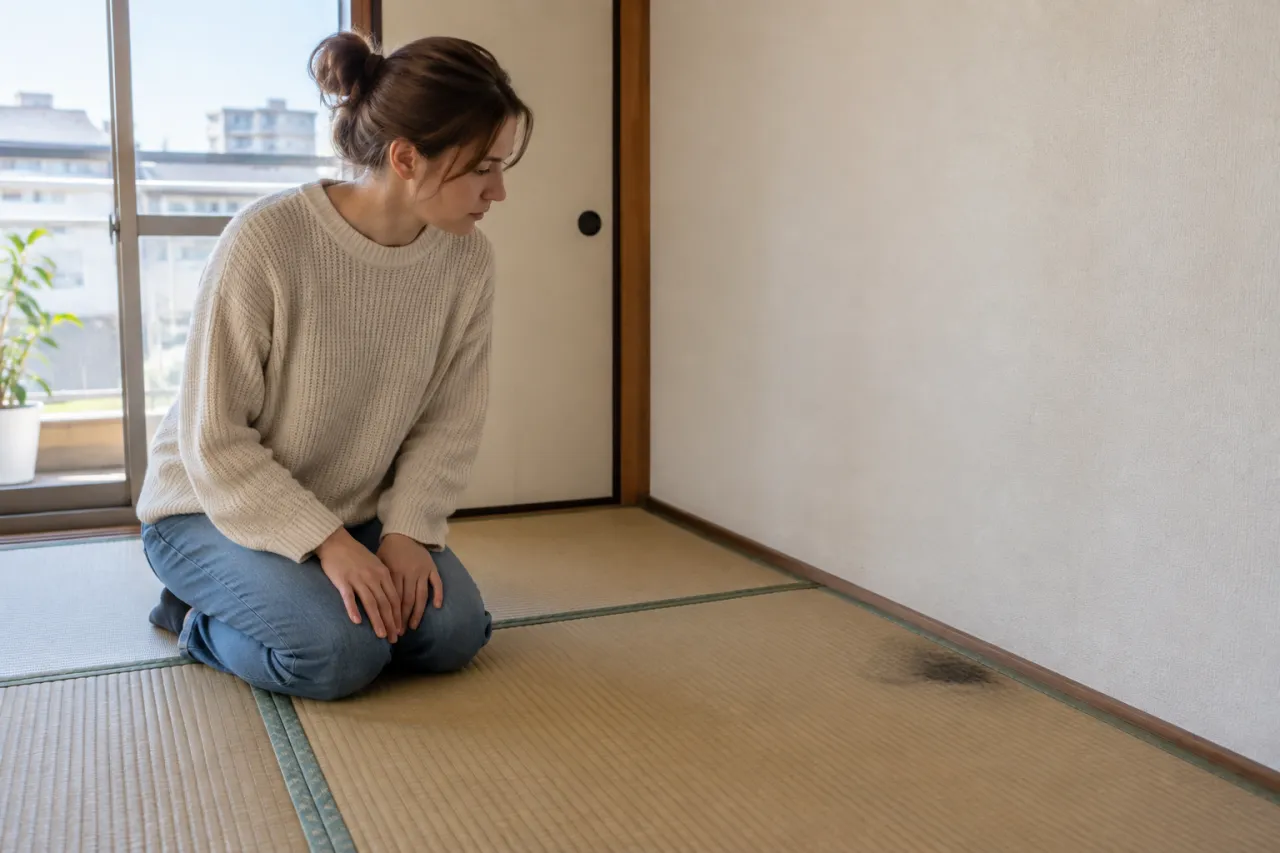
Chiba villa caretaker mold log
2026/10/13
Direct answer: If you own a second home in Chiba but live overseas, ask the local caretaker for a dated, repeatable moisture-and-condition log, not a reassuring message that the villa “looks fine.” The record should identify the room and exact location, weather or recent rainfall, photographs from consistent positions, any leak or odor, relevant indoor humidity readings and what action was taken. Agree in advance who may enter, isolate a leak, call the building manager, authorize a specialist and approve intrusive work. An active leak or water near electrical equipment is an immediate building-safety matter; recurring dampness, visible growth or a persistent musty smell merits a building-side mold assessment after the water source is addressed. The record helps you make decisions remotely, but a thermometer or photograph cannot diagnose a concealed wall.
This article serves an overseas owner of a high-value villa in Chiba, whether the home is on the coast, near a golf course or inland. The same reporting framework can help a second-home owner in Kanagawa or Tokyo, but the property conditions and access arrangements will differ. It is deliberately different from a general guide to coastal villa odors and management: here the question is what evidence a caretaker should send, which decisions can be made at a distance and when to stop routine housekeeping and commission technical work. It does not claim that every coastal house has mold, that one humidity figure certifies a room, or that Kabi Busters Yokohama already manages any particular estate.
The search results we reviewed show three common approaches. The Japan Meteorological Agency's historical observations for Chiba are useful for checking local rainfall and outdoor conditions, but cannot tell whether a specific wall is wet. The US EPA homeowner guide to mold and moisture prioritizes finding and fixing water sources and drying affected material, but is not an owner-to-caretaker reporting template. The Japanese Ministry of Land, Infrastructure, Transport and Tourism's housing-history guidance explains why inspection and repair records matter for later maintenance, but does not prescribe the access rules of a privately held villa. Search position changes by date and user. We combine these primary-source principles with an operational checklist; the checklist is practical guidance, not a government-mandated standard.
1. Set a baseline that a distant owner can actually compare
Start with a simple property map rather than a folder full of unrelated photographs. Give each room and building element a stable label: “north guest room, exterior wall beside the window,” “main bedroom wardrobe back,” “lower-level plant room,” or “east bathroom under-basin cabinet.” Avoid sending room names that reveal private schedules or guest identities. A caretaker should photograph a wide view to locate the building element, then a close view of any mark or moisture. On later visits, stand in approximately the same place and use similar lighting. This makes a new stain, spreading edge or changed condition more apparent without relying on memory.
Record the visit date and time, who attended, whether the house was occupied, recent HVAC operation, window position and any unusual event such as heavy rain or a plumbing repair. The JMA past-weather search can provide regional weather context; a station reading is not a measurement at the villa. For a seaside property, wind-driven rain, roof junctions, balconies and drainage may be relevant hypotheses, but a coastal location alone does not identify the source. Note what was seen rather than writing “salt air caused mold” without a building investigation.
If the caretaker uses a portable hygrometer, record the device location, time, temperature and relative humidity along with the reading. Compare like with like: a reading immediately after a shower, next to an open door or in direct sun is not a stable whole-room baseline. The EPA advises keeping indoor relative humidity below 60 percent where possible, ideally 30–50 percent, as a general moisture-control measure; this is not a pass/fail threshold for a particular Japanese villa or a way to exclude wet material behind joinery. A local patch can be damp while the center of a large room reads normally. Ask the caretaker to describe condensation on glass, cool surfaces and any water droplets separately from the instrument number.
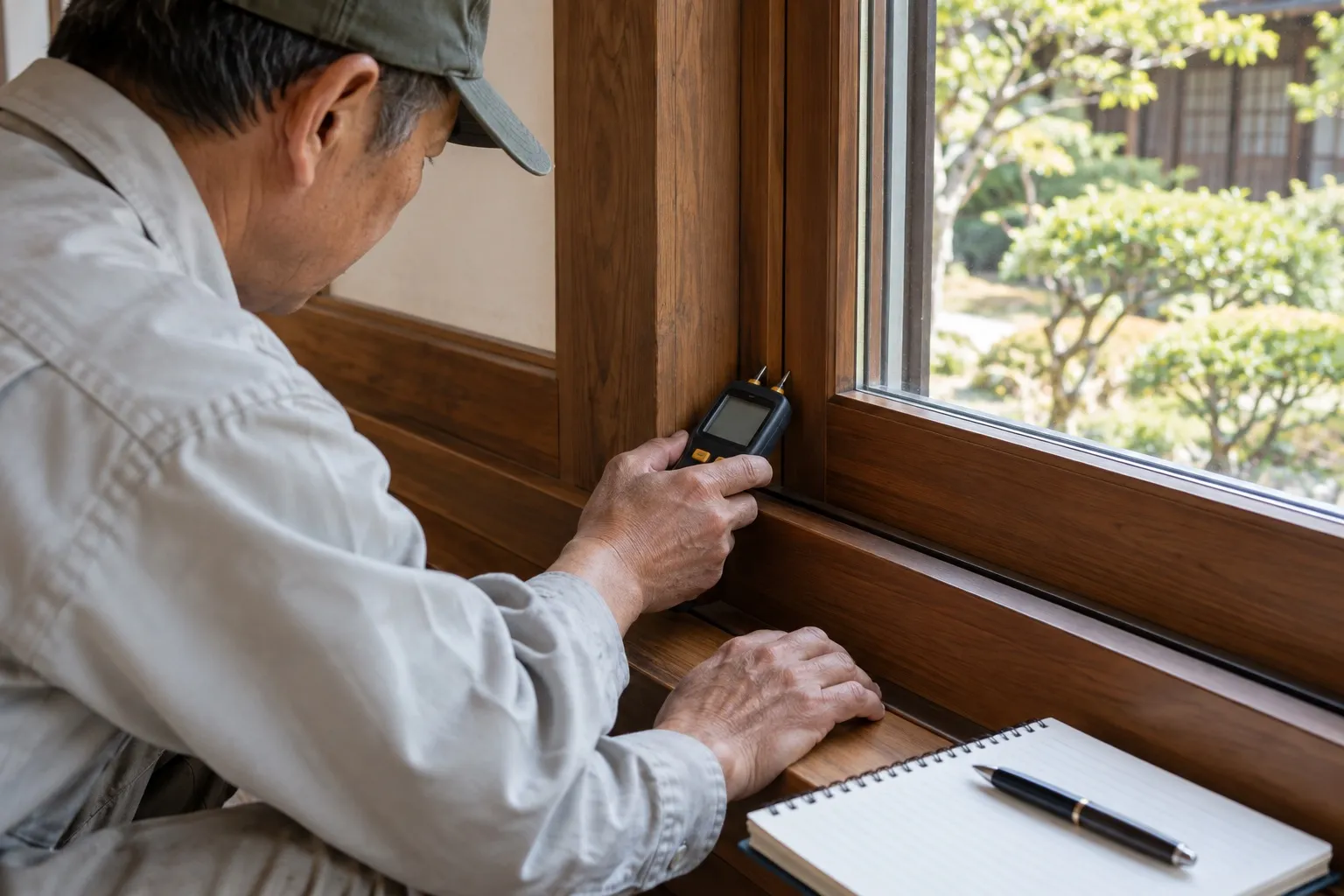
The baseline should include the outside as well as the interior: obvious blocked gutters, standing water near the foundation, broken seals around openings, damaged roof or balcony areas and vegetation obstructing drainage. The caretaker must not climb a roof or open electrical equipment to complete a checklist. If a feature cannot be inspected safely, mark it “not inspected,” not “normal.” The MLIT explanation of housing-history information supports retaining prior inspections, specifications and repair records so future checks can be more accurate. Put those documents under controlled access; a contractor may need relevant drawings and past leak records, not the owner's full personal archive.
2. Make the photo and moisture log useful without oversharing
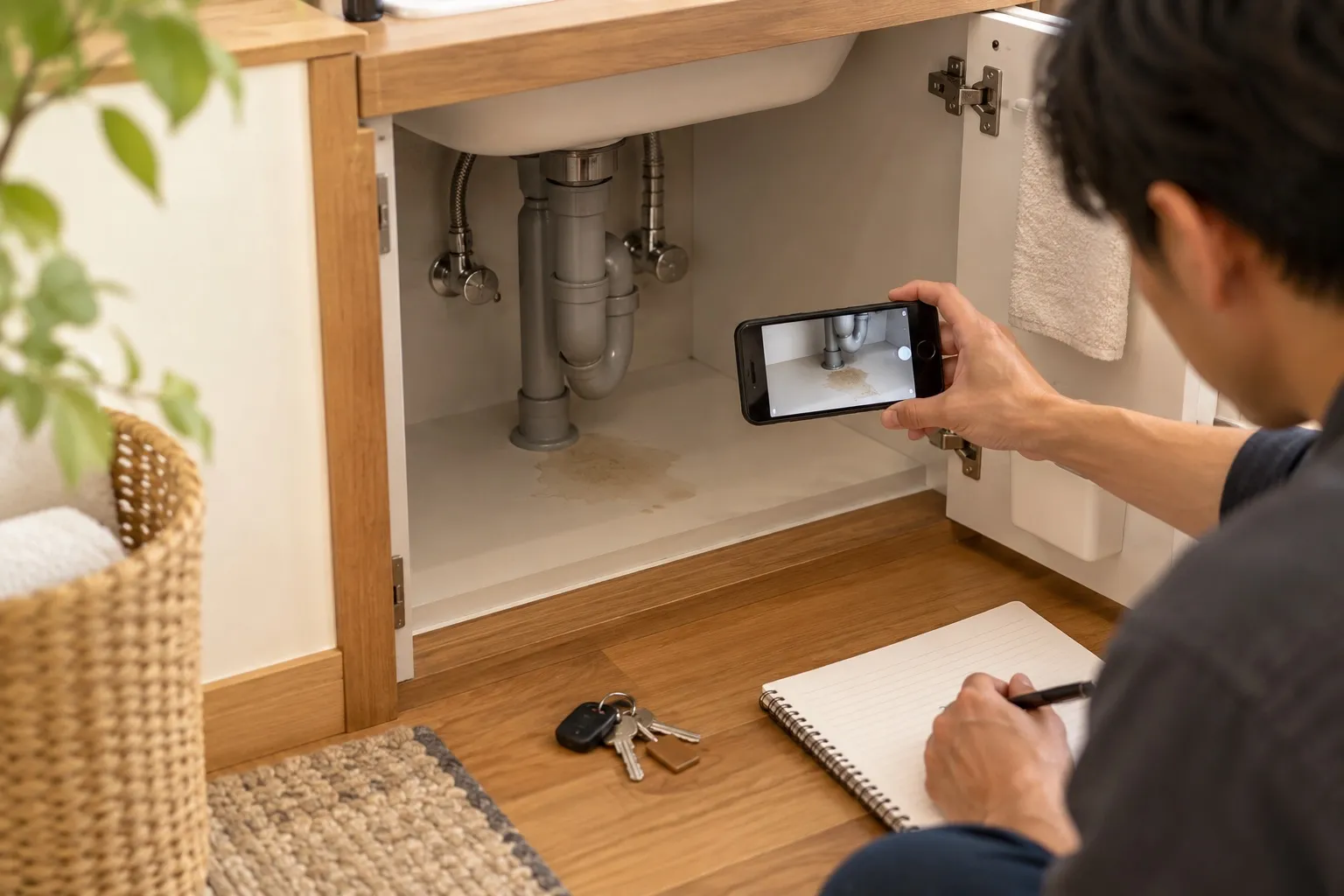
A good routine entry answers six questions in a few lines: when, where, what was observed, what changed since the last visit, what action was taken and who must decide next. Example: “13 October, 10:20; west guest-room skirting; faint musty odor when door opened, 15 cm discoloration photographed from the agreed position; no visible dripping; window shut, cooling off; manager informed; recheck requested after plumber inspects nearby supply line.” This is a model of clear reporting, not a diagnosis or a claim about an actual property. Use measurements only when the instrument and location are known. A photograph should include a contextual view and a close-up without moving valuable objects.
The entry should distinguish observation, explanation and decision. “Damp to the touch after rainfall” is an observation. “Rain penetrated the terrace waterproofing” is a possible explanation. “The manager will ask the waterproofing contractor to inspect” is a decision. Combining the three into “terrace leak confirmed” can send the wrong specialist or cause premature work. A dark mark may be dirt, corrosion, an old stain or microbial growth. A musty odor suggests a question for investigation; it does not pinpoint the source or establish the species of organism. Avoid a one-photo remote verdict.
If the owner requests video, obtain consent from occupants and staff before recording. Keep cameras away from documents, security controls, artwork labels and private living areas unrelated to the defect. Send cropped building-condition images through the agreed channel, not a public messaging group. Record the original file date and preserve an untouched version when the image may later be used to explain a repair to a landlord, insurer or estate manager. This is an information-management recommendation, not a legal assertion about retention periods or insurance coverage. The estate's contract and policies determine the actual obligations.
An owner can ask for a short English summary followed by a Japanese technical note for local repair teams. A bilingual handover is most valuable when it translates uncertainty faithfully: “suspected condensation at an exterior wall” is not “confirmed structural leak.” Include a concise property code, not a public-facing full address, until an authorized recipient needs it. The caretaker's role is to observe and escalate, not to guarantee that the building is safe or mold-free. If the report is delayed, the owner should know the date of the last completed visit rather than seeing a stale photograph presented as current.
| What the caretaker sends | What it helps decide | What it cannot prove |
|---|---|---|
| Dated wide and close photographs from fixed points | Whether a visible mark or leak has changed | The organism species or source inside a wall |
| Room-level temperature and humidity with device location | Whether indoor conditions merit a closer look | That every hidden surface is dry |
| Rainfall and maintenance-event note | Which water routes a contractor should test | That regional weather caused this defect |
| List of HVAC and plumbing operations | Whether an equipment specialist should attend | Whether a machine is operating safely inside |
| Prior repair and inspection documents | Whether a known problem has recurred | That a past repair remains effective today |
3. Agree on escalation triggers before the owner flies back
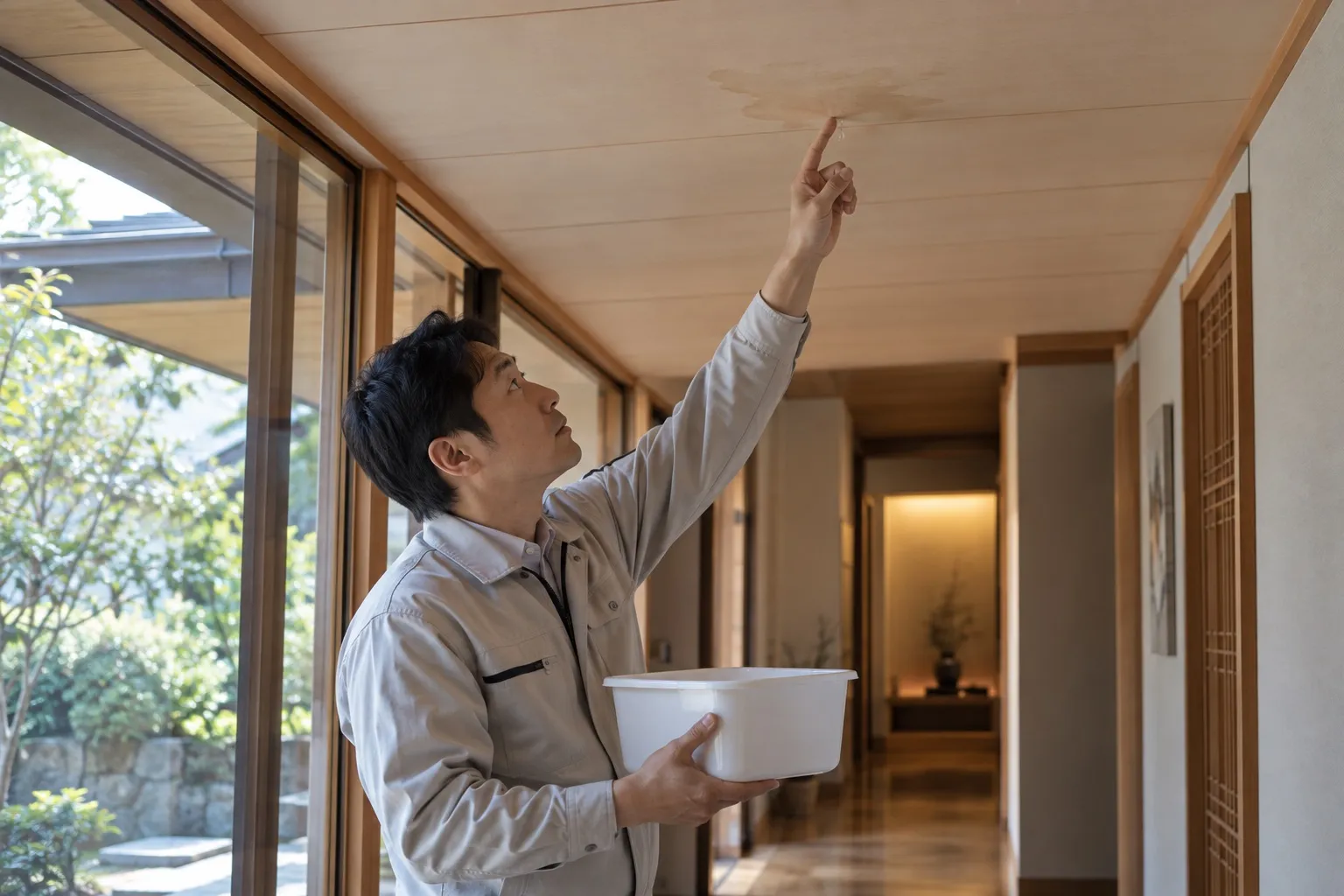
The log only helps if it leads to an action. Write down three channels: urgent building hazard, prompt technical review and routine monitoring. Active water flow, water touching electrical fittings, a sagging ceiling or unsafe flooring requires the caretaker to use the property's emergency contact, keep people away and arrange an appropriate licensed trade. An overseas owner should not be the only person who can authorize a safe shutoff or emergency call. Define the local decision-maker and spending boundary in writing with the property manager. Do not tell a caretaker to open a live electrical cabinet, climb a roof or disturb a potentially contaminated cavity.
Prompt review is appropriate when a stain expands, the same place is repeatedly wet, an odor persists despite ordinary ventilation, visible growth appears on building material, or a leak has soaked absorbent material. The EPA mold-and-moisture guide says to fix the water problem and dry water-damaged areas promptly; it gives 24–48 hours as a general aim for drying wet items to reduce mold growth. That is not a promise that a material becomes safe after 48 hours or that all mold arises in exactly that period. A plumber, roofer, waterproofing contractor or HVAC technician may be needed to repair the source. A mold specialist can assess affected building materials and the moisture route, ideally coordinated with the source repair rather than used as a substitute for it.
Routine monitoring is suitable only when the surface is currently dry, the mark is stable, no odor or new water is present, the source has been explained and the manager has a plan. A single “no visible mold” note after a rainy month is not a complete inspection of a closed villa. Set a visit cadence based on the property's occupancy, weather exposure, equipment and contract, and add event-based checks after a reported storm or leak. Do not invent one fixed cadence for every home. The caretaker should flag a missed visit and the reason, so silence is never mistaken for a clean report.
No one should remove wall coverings, open bespoke cabinetry or use chemicals around stone, timber, art or fabrics just to obtain a better picture without authorization. Record the proposed opening location, protection plan, the professional responsible and how the finish will be reinstated. An owner abroad can approve a limited survey while withholding approval for destructive work until drawings, photographs and cost scope are reviewed. If an expensive furnishing is wet, consult the owner's designated handler and an appropriate conservator; a building mold contractor should not promise object restoration. If occupants have health concerns, a clinician is the right person for individual medical advice.
4. Turn remote evidence into an English-language consultation and handover

When contacting Kabi Busters Yokohama, send a short building-focused package: municipality in Chiba, property type, affected room and material, first observed date, whether water is actively entering, a cropped wide view plus close view, maintenance history and the local authorized contact. Ask whether an assessment is available at that location, in English, and what the scope, access conditions and reporting format would be. English correspondence is possible, but the exact visit arrangements, timing, language of every technician and fees should be confirmed; no service outcome is guaranteed. If the immediate issue is an active pipe, electrical risk or roof leak, contact the manager and appropriate repair trade first.
Before commissioning a visit, the owner and caretaker should agree who hands over keys, attends the inspection, signs an access log, receives photographs, approves sampling and approves any opening of finishes. A written “no opening without owner approval” instruction is reasonable for a remote owner, provided the emergency safety route remains clear. Give the specialist relevant plans and earlier repair notes, then ask for observations separated from hypotheses. The final report should list inspected and inaccessible areas, instrument limitations, suspected water routes, source-repair referral, affected material assessment and a practical recheck plan. A statement that one room is clean must not become a certificate for the whole property.
FAQ: Can the caretaker simply run air conditioning or open windows and wait? Ventilation and conditioning may help ordinary moisture control when used correctly, but they do not repair a leak or dry a hidden wet assembly by themselves. Ask a qualified HVAC or building specialist about safe operation if equipment is involved.
FAQ: Should the owner ask for an air test before any building inspection? Not automatically. A test should answer a defined question. Photographs, water history and material condition may first indicate where to inspect. A single air sample cannot guarantee that a villa is mold-free.
FAQ: Is a regional JMA humidity or rainfall reading proof of a villa defect? No. It is environmental context. The property-specific diagnosis requires observations of the villa and, where appropriate, measurements by a competent professional.
FAQ: Can the caretaker wipe away a small mark before taking pictures? If a mark is new or linked to wet building material, document it first and seek the manager's instructions. Cleaning without fixing water can hide recurrence, and sensitive finishes may be damaged by an unsuitable chemical.
FAQ: What if the caretaker finds moisture on an object rather than the building? Protect the item without unapproved handling, notify its authorized custodian and separate object-conservation advice from the building moisture investigation. Do not assume a building service restores valuable possessions.
FAQ: What if there is no local person authorized to make decisions? Appoint one before a problem occurs. Define access, emergency calls, limited spending and approval for intrusive work in a way consistent with the management contract. A contractor should not infer authority from possession of a key.
For help planning a building-side moisture investigation, review Kabi Busters Yokohama's services and send the team an English-language inquiry about the affected area. To understand the separate question of general coastal-villa odors, see our guide to seaside second-home management. A useful first message can say: “I own a villa in Chiba and live overseas. Our caretaker has dated photographs of recurring dampness in one room. Can you advise on the inspection scope, English communication and access arrangements?” Share sensitive address and security details only through an agreed process.
日本語の要点: 海外在住の所有者は、別荘の点検を「異常なし」の一言で終わらせず、日時・場所・天候・写真・水の有無・対応者を同じ形式で残してください。気象庁の観測値は周辺気象の参考であり、住宅内の湿りを証明しません。漏水や電気設備の濡れは管理者と適切な修理業者に直ちに連絡し、繰り返す湿りやカビ臭は建材と水分源の専門調査を相談します。入室、写真、開口、費用承認の権限を事前に決めることが重要です。
----------------------------------------------------------------------
カビバスターズ横浜
住所 :
〒221-0056
神奈川県横浜市神奈川区金港町5-14 クアドリフォリオ8階
電話番号 :
0120-133-199
----------------------------------------------------------------------