賃貸住宅の畳のカビ相談
2026/10/12
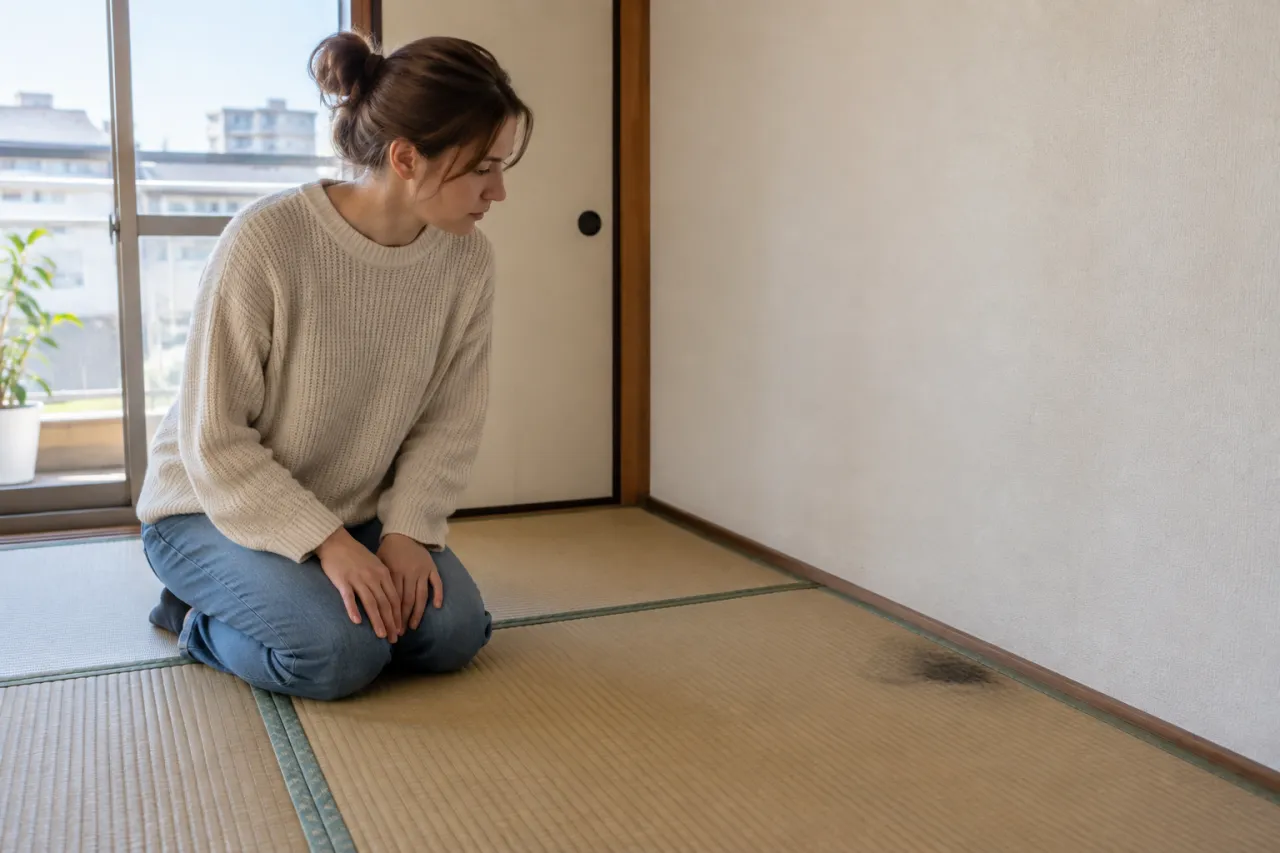
Quick answer. If a tatami mat has a new patch, musty smell or damp feel, photograph it in place, remove belongings that trap moisture, and ask your property manager what kind of mat it is and what cleaning is permitted. Do not soak it, steam it, lift a fitted mat, or assume that a dark color alone proves mold. If the mat stays damp, the mark spreads or returns, or a wall or floor nearby is wet, ask for an inspection of the moisture source. An English-speaking mold specialist can discuss assessment of the affected indoor area once rental permissions and any building repair are clear. This guide is for international residents of Tokyo, Kanagawa and Chiba.
日本語の要点: 畳の変色や臭いを見つけたら、まず写真を撮り、湿気をためる荷物を離し、畳の種類と清掃可能な範囲を管理会社に確認します。濡れや黒ずみが広がる・戻る場合は建物側の点検を優先し、必要に応じてカビバスターズ横浜へ英語で相談してください。
1. Identify the mat and the moisture before choosing a cleaner
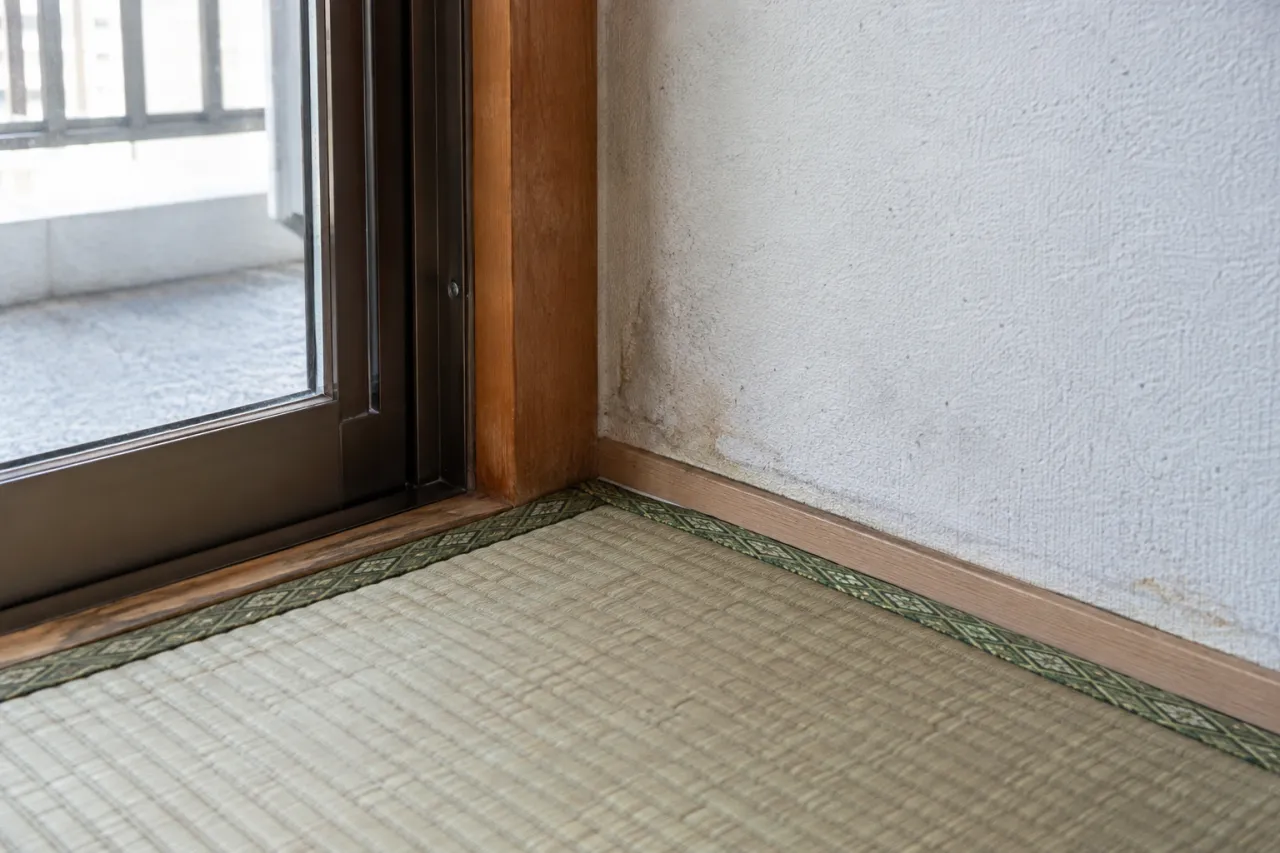
For a newcomer, a washitsu (Japanese-style room) may be unfamiliar. Tatami can be made with traditional rush-grass facing or other materials, and the instructions are not identical. The UR Housing English residents’ guide describes tatami care and the wider relationship between condensation, damp rooms and deterioration. DAIKEN’s manufacturer maintenance page provides instructions for its own engineered washi tatami. Do not apply a manufacturer’s advice for one product automatically to a traditional straw-faced mat or a mat of unknown construction. Ask the manager or check your handover documents if you cannot identify the floor.
Look at the pattern. Is the mark directly under a futon left down for days, under a suitcase, next to a window with morning condensation, or along a wall that becomes wet after rain? Does it feel dry and stable, or damp and soft? Is the odor noticeable only when the room is closed or whenever you enter? Dust, aging, a spill stain and possible growth can look similar. A photo does not identify the organism or depth. Record the entire room, the mat’s position and a close-up, using normal light. Take a second photo after moving only the loose belongings you are allowed to move. Do not pull up the tatami to “check underneath”: rental floors may have a specified maintenance procedure, and disturbing fitted material can damage it or interfere with evidence.
The Chiba Prefecture English apartment guide advises residents to ventilate and wipe condensation because leaving moisture can lead to mold. The UR guide names tatami among materials that can be affected if condensation is ignored. These are reasons to look beyond the visible patch: a wet exterior wall or window may be supplying moisture to the floor, while bedding and stored items may restrict drying. The practical goal is to describe what is wet, when it became wet and whether the source is still active.
| What you find | First safe step | Next contact |
|---|---|---|
| Small dry discoloration with no odor | Photograph; ask which tatami material and cleaning method apply | Manager if new or uncertain |
| Damp patch under futon or luggage | Move loose items; allow air movement; photograph | Manager if not drying or recurring |
| Mat plus adjacent wall or skirting wet | Protect belongings; do not lift fitted mat | Manager for moisture-source inspection |
| Extensive marks, persistent odor or damaged mat | Avoid aggressive DIY treatment | Manager, then mold specialist with permission |
2. Gentle care without soaking or hiding the problem
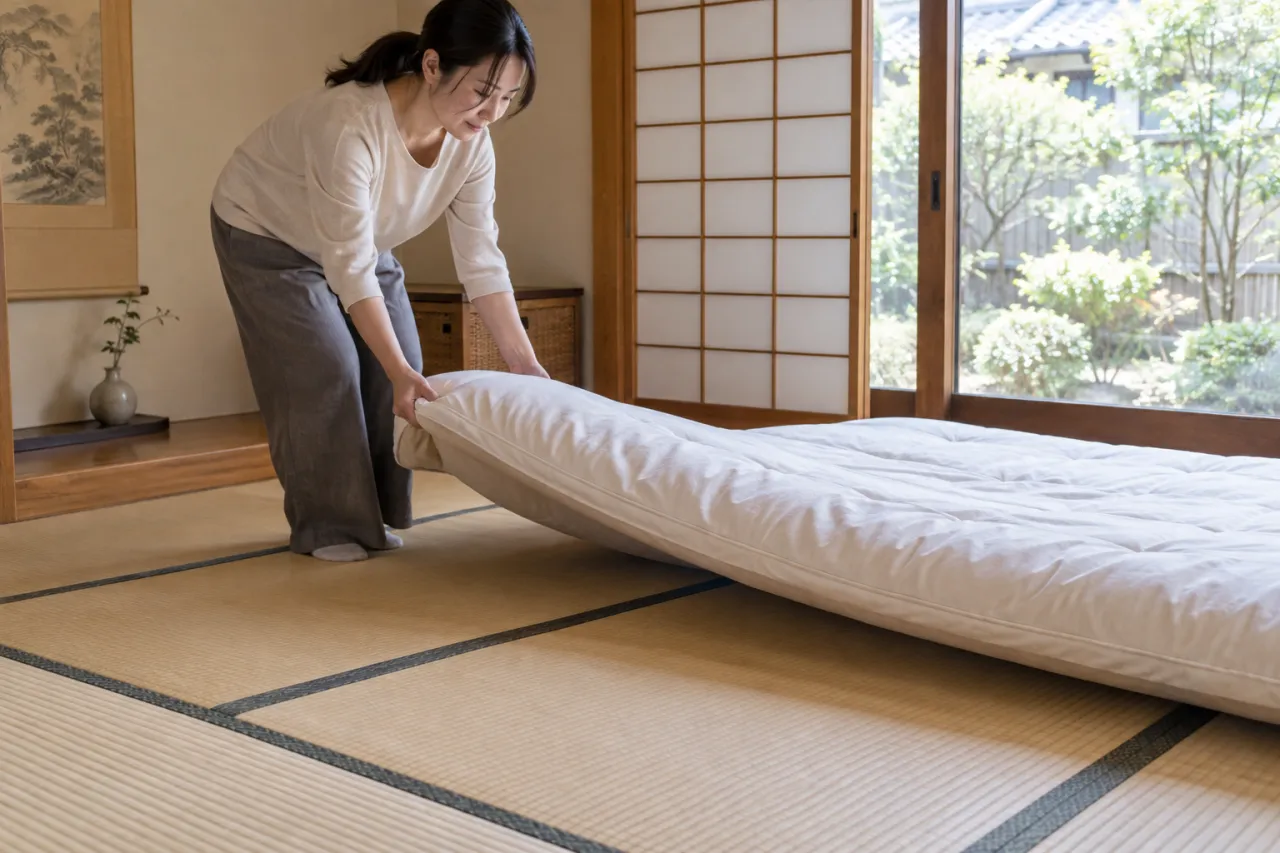
Routine care starts with keeping loose surfaces free of dust and allowing air to circulate. Follow the mat supplier’s directions: for example, DAIKEN describes specific cleaning methods for its washi tatami products. A traditional mat may need a different approach. If a surface is dry and the manager confirms the material and permitted care, use only the recommended gentle method. Avoid broad instructions such as “spray every tatami with bleach” or “scrub hard with a wet brush.” Excess water can enter seams or backing, and strong cleaners may discolor or damage the face.
If a futon lies on tatami, give both materials opportunities to dry according to the bedding maker’s instructions. Do not leave a wet towel, laundry basket, plant pot or suitcase on the same patch for a prolonged period. Keep furniture and storage arranged so you can see the floor edge and wall. A dehumidifier can help room-air conditions if used safely, but it cannot repair a roof or plumbing leak and cannot prove that a mat’s interior is dry. Record if a spot remains wet even after the room has been used normally and ventilated appropriately. The symptom may require a building inspection.
Do not try to make the room “look clean” before documenting a disputed condition. In a lease, early factual reporting protects a clear repair process. MLIT’s English explanation of move-out restoration distinguishes ordinary wear from damage attributable to neglect or breach of care; it also lists tatami resurfacing as a landlord example in the general guide. That is not a guarantee about every lease or every mold patch. The cause, timing, tenancy agreement and property-specific evidence matter. Avoid online claims that a foreign tenant automatically pays, or never pays, for replacement.
If anyone in the home has breathing symptoms or other health concerns, ask a healthcare professional rather than asking a cleaning article for a diagnosis. The environmental question—where moisture is entering and which materials are affected—is separate. If there is active water near power or a structural hazard, use the building’s urgent repair route first. Keep children and pets away from cleaning chemicals, and never mix chlorine products with acidic cleaners.
3. The message to the landlord and the specialist question
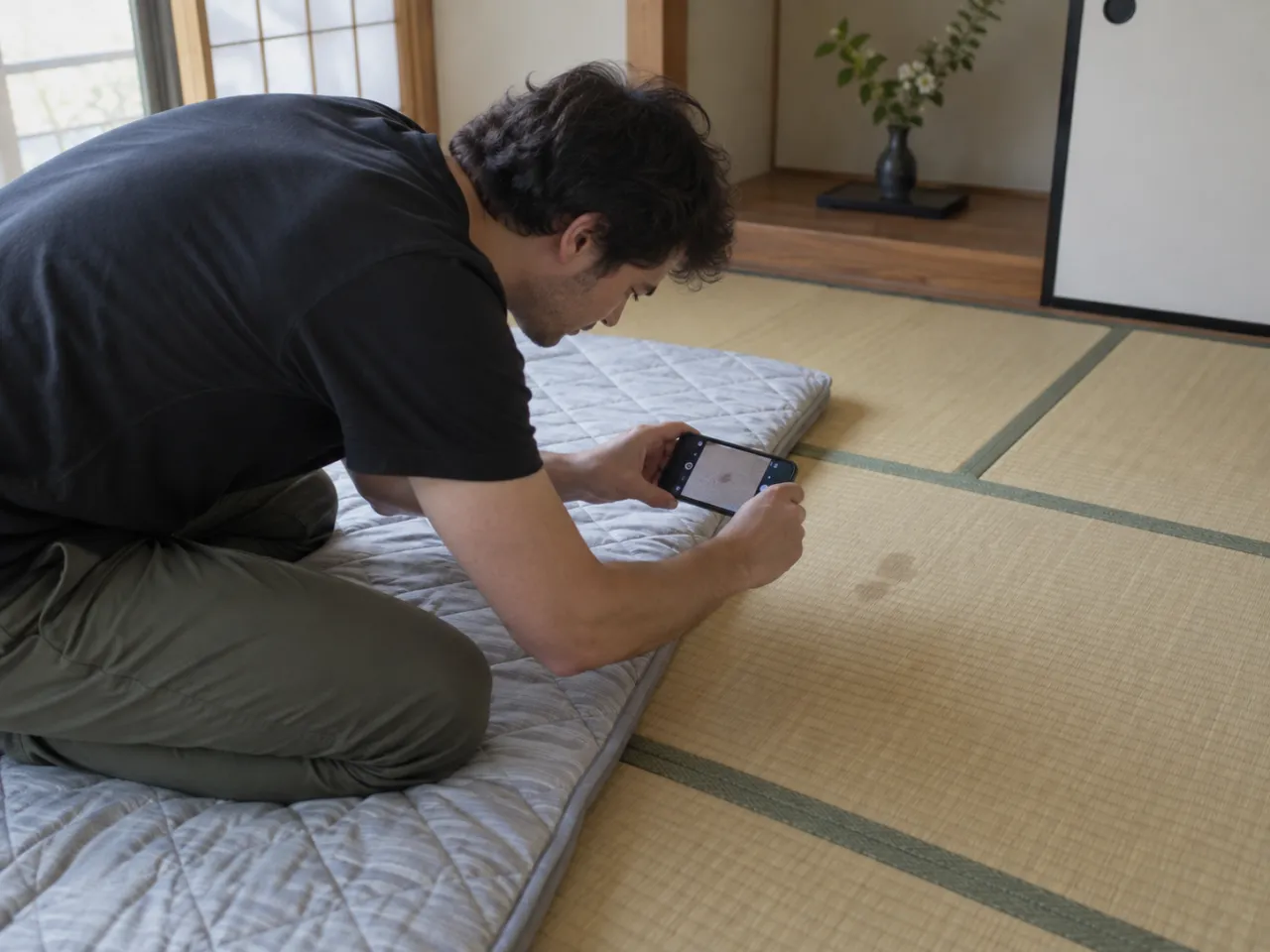
Tell the property manager where the mat is and what changed. A concise English note can say: “I live in [unit, city]. I noticed a new [dark patch / musty odor / damp area] on the tatami in the [room] on [date]. It is near [window / wall / bedding]. I moved loose belongings but have not lifted or chemically treated the mat. Photos are attached. Please tell me the tatami type, approved cleaning method and whether a moisture inspection is needed.” Add any water event, such as rain penetration or a leak, without presenting a guess as a fact. Ask when you can expect a response and keep the reply.
The manager may coordinate a building repair, a tatami supplier or a mold assessment. These roles are different. A tatami installer can advise on the material and replacement; a building contractor can investigate a leak or condensation pathway; a mold specialist can consider visible or suspected contamination and treatment scope. Kabibusters Yokohama’s service information describes its mold consultation. The Yokohama team can communicate in English. Send the city and prefecture, whether this is a rental, what the manager has approved, the mat type if known, and photos through the contact form. Ask whether an indoor assessment is appropriate and confirm location, timing and quote. Do not assume it can authorize removal of a landlord’s floor.
There is a genuine difference between a small surface concern and a room problem. A single old dry stain may require identification and routine care. Repeated dampness, multiple mats affected, a wet wall, lifting floor edge or strong persistent odor calls for a broader investigation. If the visible mark keeps returning after cleaning but a water source has not been fixed, a repeat chemical treatment is unlikely to be a complete plan. Document the recurrence and coordinate the sequence—building repair, drying, assessment, then any restoration—with the manager. This sequence also helps avoid a move-out dispute over what was done to the tatami.
Tokyo, Kanagawa and Chiba renters may have different landlords, house rules and floor specifications. The public documents cited here are general guidance, not a local guarantee of responsibility. If a dispute emerges, use a rental-housing advice service or legal adviser; Houterasu’s English housing guidance is one place to understand general legal concepts. A mold-treatment company should not replace that role. Our goal is to help you communicate clearly and take a sensible environmental next step.
4. FAQ and a short checklist before you make contact
Is a dark tatami spot definitely mold? No. A photograph cannot identify its cause. Note whether the area is damp, spreading, odorous or linked to water, and ask for the right inspection. Do not claim a species without appropriate evidence.
Can I lift the tatami to see the floor? Do not lift a fitted rental mat without manager permission. The floor assembly and repair responsibility may be affected. Move only your own loose belongings first and take photos in place.
Should I bleach or steam-clean a mat? Not without confirming the material and supplier’s instructions. Strong chemicals and excess water can damage a mat or leave moisture inside it. A dry or gentle method may be appropriate for a verified material, but a wet or damaged mat needs a source assessment.
Does a new mat guarantee no mold issue? No. A clean-looking face does not prove that the room has no damp wall, leak or condensation. Equally, a musty smell does not prove that tatami itself is the source. Identify the moisture pathway before promising a treatment outcome.
Who should pay to replace tatami? This article cannot decide. The lease, age and type of mat, cause of damage and documented history matter. MLIT’s general English guide provides examples, not an automatic invoice for your unit. Ask for an itemized explanation and seek tenancy advice if needed.
Can I write to Kabibusters Yokohama in English? Yes. Include your city, property type, manager’s response, room and mat location, whether the area is wet, and two photos. Use the inquiry form and ask for an assessment, not a promised diagnosis from an image.
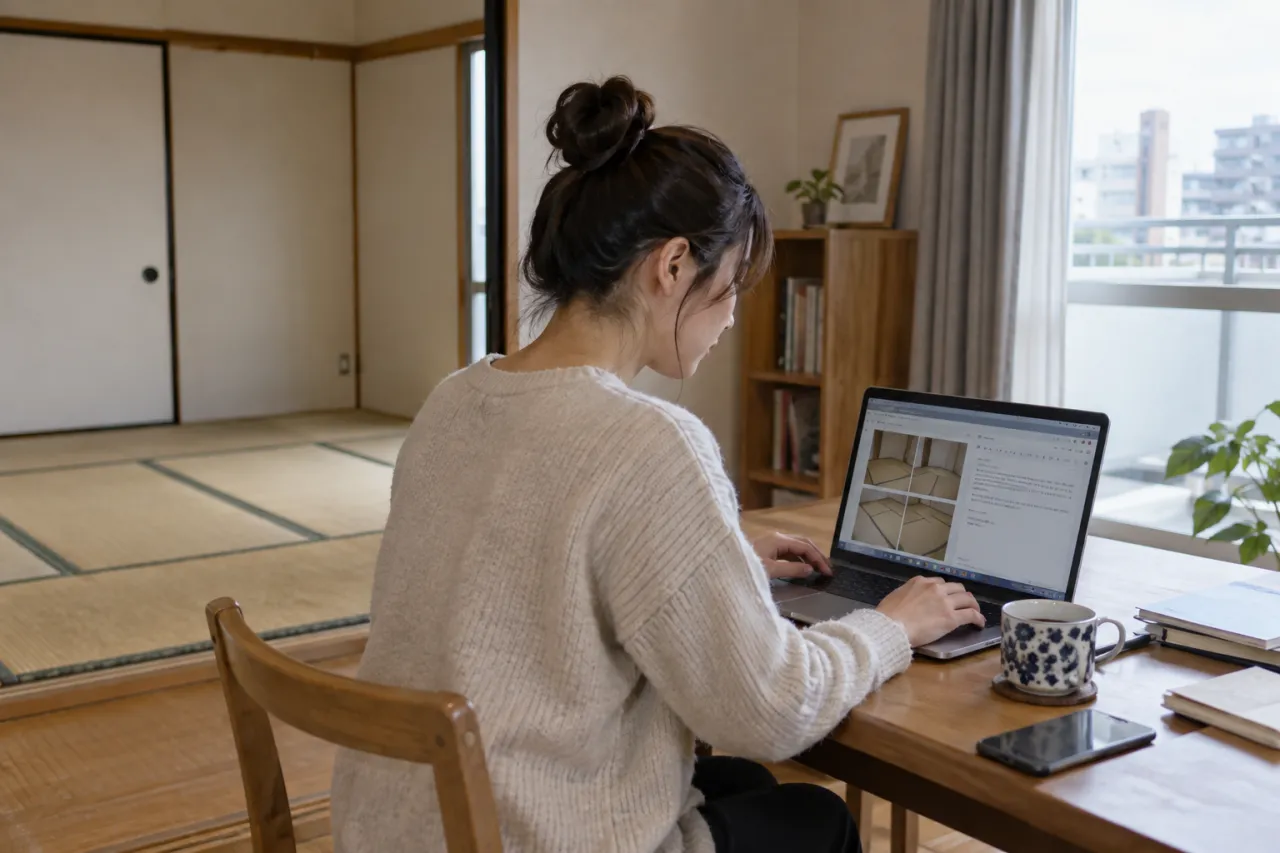
Before contacting anyone, put the photos and dates in one folder, note the mat’s location and material if known, the recent water or ventilation history, your gentle steps, and the manager’s instructions. This makes an English-language conversation easier and reduces repeated explanations. For a different problem centered on window glass, see the window condensation guide after its publication. For a tatami-specific mold concern, start with the property manager and then ask Kabibusters Yokohama whether specialist assessment is suitable.
Primary sources: UR Housing English residents’ guide, DAIKEN’s tatami maintenance instructions, Chiba Prefecture English apartment guide, and MLIT English restoration guidance. Manufacturer directions apply to the specified product, not all tatami.
----------------------------------------------------------------------
カビバスターズ横浜
住所 :
〒221-0056
神奈川県横浜市神奈川区金港町5-14 クアドリフォリオ8階
電話番号 :
0120-133-199
----------------------------------------------------------------------