窓サッシの結露と黒ずみ
2026/10/10
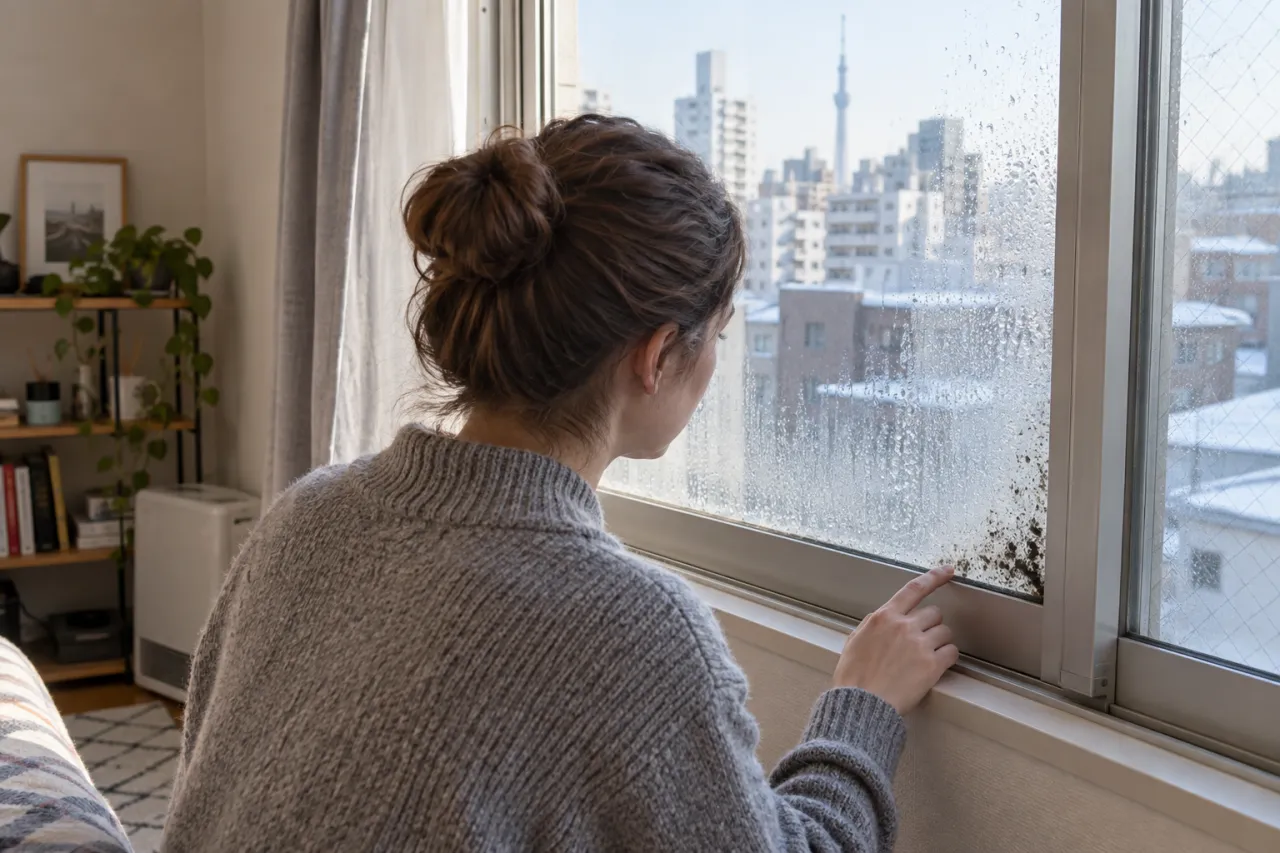
Quick answer. If you notice droplets on the inside of a window and dark marks around the sash, first photograph the area, wipe away standing water with a dry cloth, and check whether the same place becomes wet again. Condensation is common where warm indoor air meets a cold surface, but color alone cannot confirm that a mark is mold. If the stain spreads beyond a small accessible surface, returns after gentle cleaning, reaches wallpaper or wood, or the water seems to come through the building, contact your landlord or property manager promptly. An English-speaking mold specialist can help assess the indoor environment after the source of moisture has been identified. This guide is for people renting in Tokyo, Kanagawa and Chiba; it does not assign legal responsibility or diagnose a health condition.
日本語の要点: 窓枠の水滴は早めに拭き取り、写真と発生日を残してください。黒ずみの原因を見た目だけで断定せず、壁紙まで濡れる・繰り返す・広がる場合は管理会社に連絡し、必要に応じてカビバスターズ横浜へ英語で相談できます。
1. Why a Japanese rental window gets wet—and what the dark mark may mean
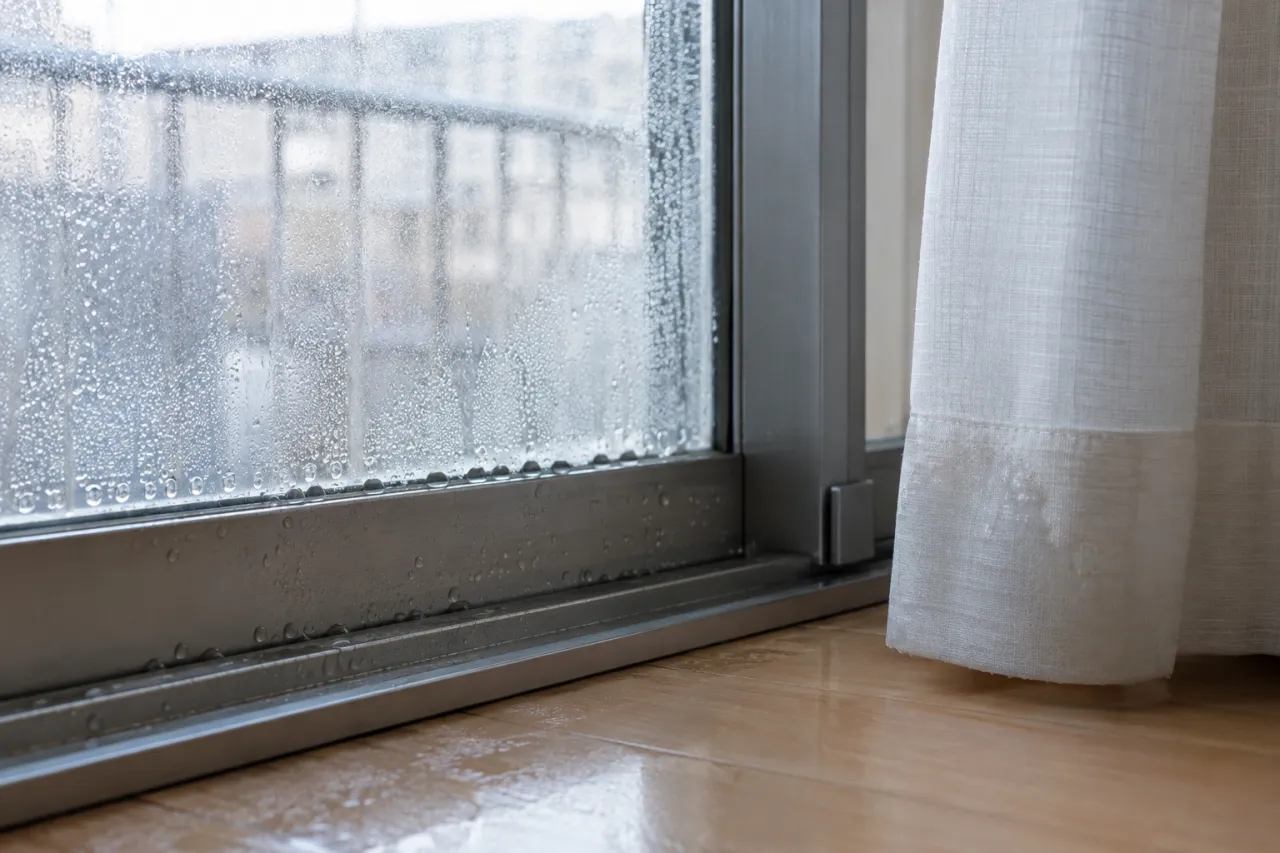
Many people who have recently moved to Japan are surprised to find a wet window on a clear winter morning. The glass and metal frame may be colder than the air in a heated room. Moist air touching that cold surface can release water as droplets. Window manufacturer YKK AP explains the basic mechanism of condensation, while the Chiba Prefecture English apartment guide advises residents to wipe away condensation because leaving it can lead to mold and mildew. The underlying issue is moisture, not simply whether the room feels cold.
Look carefully at where the water and darkening occur. Droplets on the glass and a small pool in the lower track suggest surface condensation. A damp wallpaper seam beside the frame, soft wood below it, or wetness after rain even when the room is not humid may need a different investigation. A dark line can be dirt caught in an old sealant, staining, or possible microbial growth. You cannot identify its species, origin, or depth from a smartphone photo. Avoid advertising language that promises that every black mark is “black mold.” The practical question is whether the material remains wet and whether the affected area is expanding.
The UR Housing English residents’ guide lists windows and cold north-facing walls among places prone to condensation and describes damage that can follow if it is ignored. A manufacturer’s account and a housing provider’s guide are different kinds of sources; together they support a modest conclusion: reduce the moisture you can reach, and report a persistent building issue. Neither source can tell you who must pay for work in your particular tenancy. Your lease, facts on the site, and communication history matter.
For a first inspection, note the date and weather, whether the heater or humidifier was running, whether the curtain touched the glass, and whether there was cooking, bathing or indoor laundry nearby. Take one wide photo showing the whole window and one close photo showing the sash and adjacent wall. Repeat from the same angle the next morning. This is more useful than sending a single dramatic close-up without context. If water is reaching an electrical outlet or you see active water entry, stop using the affected area and report it urgently through the building’s emergency contact. Do not remove panels or disturb a seal without permission in a rental home.
| What you observe | Reasonable first step | Who to contact |
|---|---|---|
| Clear droplets confined to accessible glass or track | Photograph, wipe, dry, review ventilation and humidity | Property manager if repeated or excessive |
| Dark marks that return quickly or cross onto wallpaper | Record the change; avoid painting over it | Property manager, then indoor mold specialist if needed |
| Water after rain, swollen wall, soft wood or active dripping | Protect belongings and report immediately | Building emergency contact or property manager first |
| Cough or other symptoms you think may be related | Seek an appropriate medical assessment | Healthcare professional; building contact for the environment |
2. A safe first-day routine: record, dry and reduce moisture
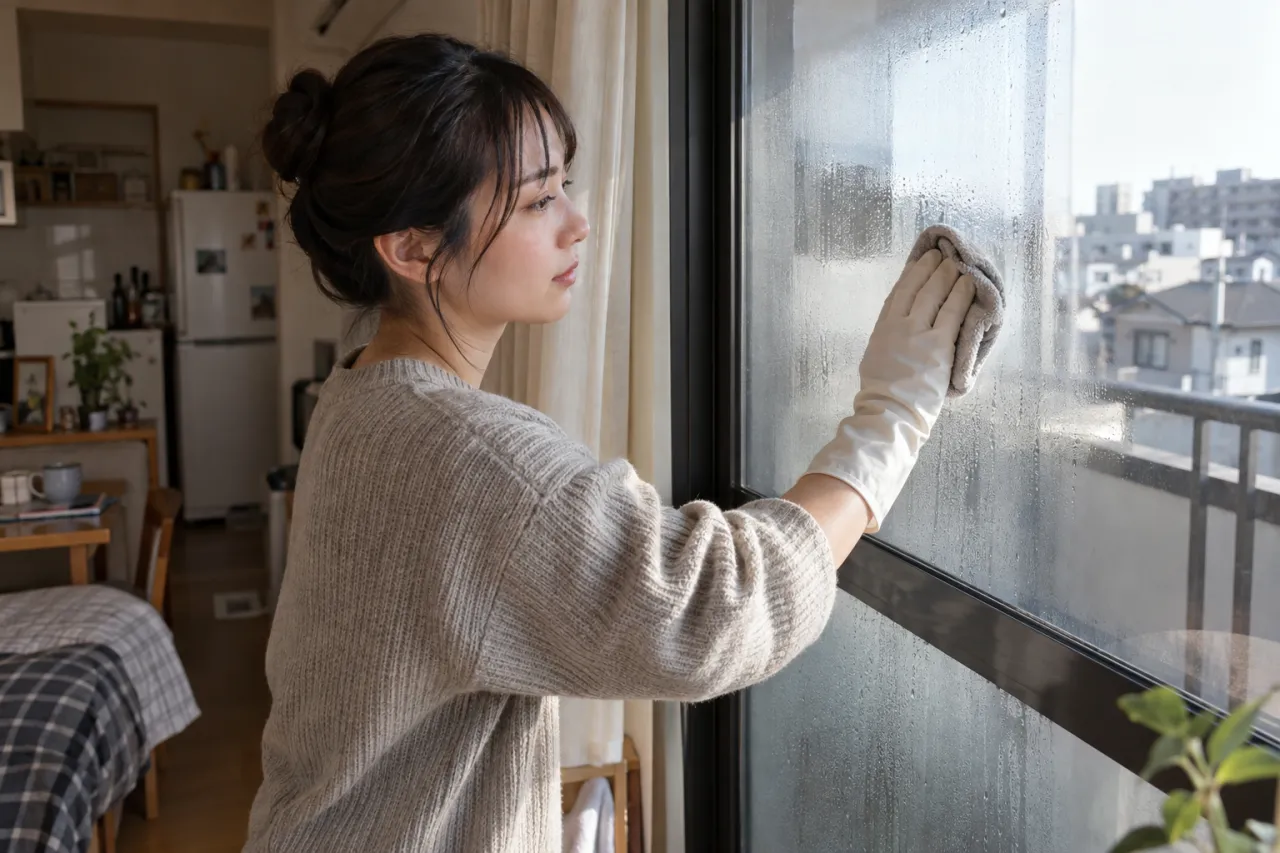
Begin with the least invasive action. Use a dry absorbent cloth on reachable glass and track surfaces, then dry the cloth outside the room or wash it. Put on gloves if you are handling a dirty area. Do not scrub a crumbling seal, scrape paint, or direct water into the frame. Leave a curtain open enough for the window to dry; do not let wet fabric remain pressed against the glass. Do not promise that one cleaning removes growth inside porous wallpaper or under a frame. If you are uncertain about the material or it is damaged, stop and ask the manager what may be cleaned.
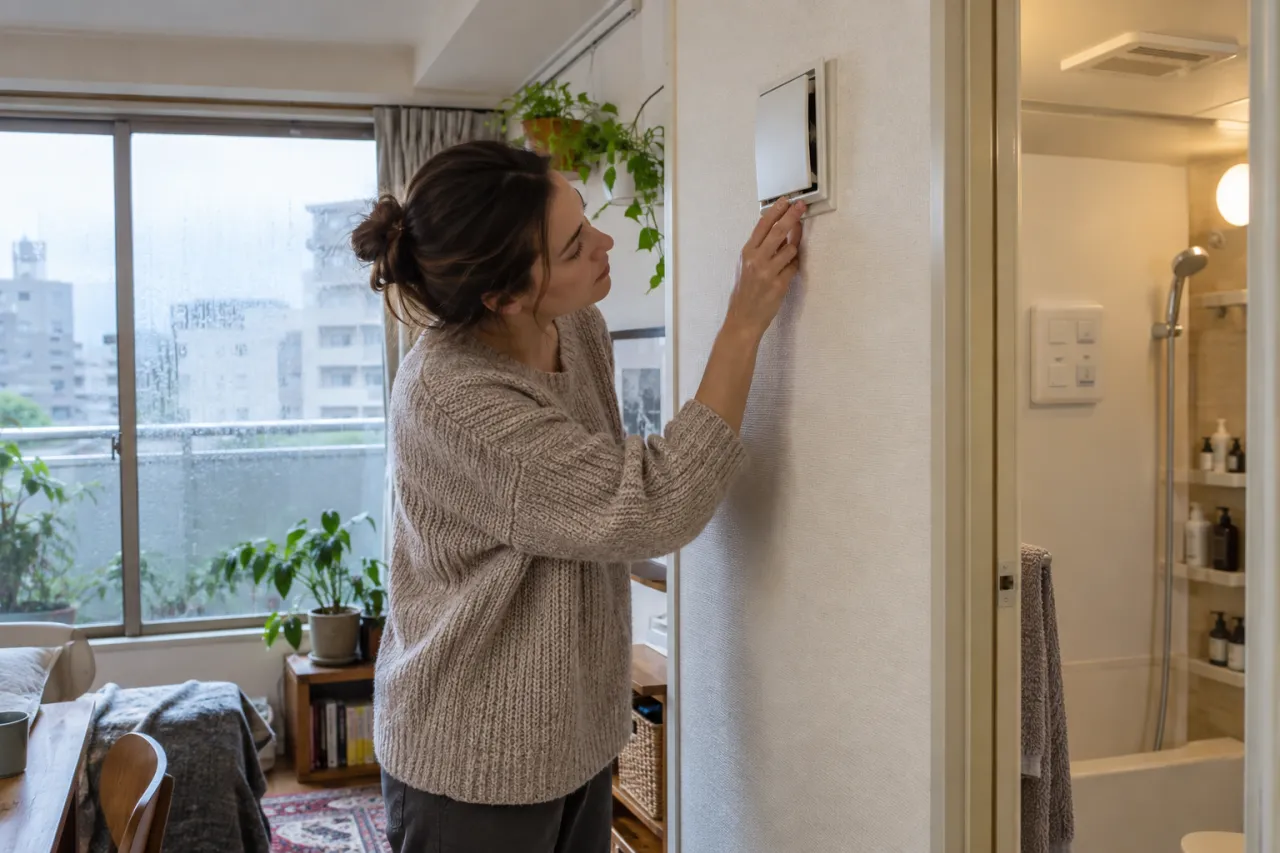
Ventilation is part of the picture, but “open every window all day” is not a universal answer. In a Japanese apartment, check the installed ventilation system and its intake vents. Use kitchen and bathroom extraction when those rooms release moisture. If the outdoor air is wet or cold, short controlled airing and an appropriate dehumidifying option may make more sense than leaving a window open continuously. Do not block vents to keep a room warm. The UR residents’ guide recommends ventilation and wiping droplets, and YKK AP notes that better window insulation may reduce condensation; an insulation change is a landlord decision in a rental, not a renter’s DIY project.
Consider moisture added by daily life. A humidifier beside the window, indoor laundry drying in a small bedroom, an uncovered bath, and cooking without extraction all put water into the air. You need not eliminate normal living: move the activity away from the cold surface where possible, use existing extraction correctly, and observe whether the window stays drier. A hygrometer can help you compare conditions over time, but one number does not establish why a wall is wet. Do not invent a single “safe” reading for every construction type. Record the room, time and what was happening when you checked it.
If you consider a cleaning product, read the manufacturer’s instructions and check compatibility with the frame, seal and surrounding wall. Never mix chlorine bleach with an acidic cleaner. Do not spray a chemical into a narrow hidden joint, behind wallpaper, or near an outlet just to make the stain disappear from sight. A cleaner may change the appearance of a surface without solving recurrent wetness. For a large, porous or repeatedly wet area, a more careful assessment is usually more useful than repeated strong chemicals.
3. When to notify management and when to request a mold assessment
Send the manager a short factual message as soon as you see recurring water, damage or a possible leak. Include your address and unit, the location (for example, “lower left corner of bedroom window”), when it first appeared, when water accumulates, what you have done, and photos. Ask whether the window, sealing or adjacent wall should be inspected and what cleaning they permit. Keep the original message and any response. If language is a barrier, simple English and labeled photos are better than waiting for a perfect Japanese translation. A property manager may have an English channel or can tell you whom to contact.
The Japanese Ministry of Land, Infrastructure, Transport and Tourism’s condensation FAQ distinguishes ordinary use from cases where a tenant notices condensation but neither notifies the landlord nor performs reasonable care. It also says that condensation has various causes and recommends discussion. This is not a verdict about your deposit. It is a strong reason to notify early, keep records and avoid silently letting damage grow. The Ministry’s English guide to move-out restoration likewise lists enlarged mold or stains from neglected condensation as a possible tenant-burden example, while ordinary deterioration is treated differently. A case-specific agreement requires the actual facts and lease.
When should you ask a specialist in addition to management? Consider it when the area keeps returning after the obvious water source is addressed, when several surfaces or rooms are affected, when an odor persists behind finishes, or when you need help identifying the scope before any restoration. The service question should be precise: “Can you assess the affected room and advise on moisture cause and cleaning scope?” The landlord or manager still needs to authorize work on building materials in a rental. Kabibusters Yokohama’s service information explains the available consultation route; confirm the visit location, timing, method and quote directly rather than assuming coverage throughout Tokyo, Kanagawa or Chiba.
An English inquiry can be practical and short: “I live in [city, prefecture]. Water appears at my bedroom window each morning, and a dark mark is spreading onto the wallpaper. I have informed my property manager on [date]. Could you advise whether an indoor mold assessment is appropriate? I can send photographs.” Do not attach more personal information than necessary. The site’s contact form for Kabibusters Yokohama can receive the location and photos. If you have an active leak or electrical hazard, the building emergency contact comes first.
4. FAQ, next steps and evidence to keep

Is every black line on a window sash mold? No. Color by itself does not establish the material or organism. The location, repeated moisture, spread and the condition of adjacent finishes guide the next step. If the mark is persistent or inaccessible, request an assessment rather than claiming a diagnosis from a photo.
Can I replace the seal or paint the wallpaper myself? In a rental, check the lease and get written permission before altering fixtures or finishes. Covering a damp surface can obscure evidence and may leave the cause untouched. A manager can coordinate a window or building repair, while a mold specialist may advise on the contamination scope.
Should I keep the heater off? You do not need to accept an unsafe or unlivable room. Indoor warmth, moisture generation and cold surfaces interact. A sensible response is to manage moisture sources and ventilation, wipe water promptly, then report condensation that persists under ordinary use. Ask the building side about the window or wall if the room remains wet.
Do I need to prove the mold species before contacting anyone? No. For building decisions, a clear timeline and photographs of moisture, damage and location are usually a better first communication. Sampling, if considered, should answer a defined question and not replace investigation of the water source.
Will Kabibusters Yokohama decide who pays for repairs? No. Cost responsibility depends on the lease and facts and should be discussed with the manager or a suitable advice service. The specialist can discuss the indoor environment and whether a mold assessment is appropriate; do not treat a service estimate as a legal ruling.
Before you send an inquiry, collect a wide photo, close photo, dates, the room and window orientation if known, the times water appears, your ventilation and humidifier use, and any manager response. Note if curtains, furniture, carpet or wallpaper are damp. This small record helps distinguish a one-off wet morning from a continuing problem. In Tokyo, Kanagawa and Chiba the same basic sequence applies, but the building’s construction and the lease differ. For an English consultation after notifying the rental manager, use Kabibusters Yokohama’s contact page. For the separate question of the home’s ventilation system, see our English guide to 24-hour ventilation in Japan, available after its scheduled publication.
Primary sources: Chiba Prefecture’s English apartment guide, UR Housing’s English residents’ guide, YKK AP’s condensation explanation, and MLIT’s condensation and restoration guidance. The guidance is general and the article does not replace building inspection, medical advice or legal advice.
----------------------------------------------------------------------
カビバスターズ横浜
住所 :
〒221-0056
神奈川県横浜市神奈川区金港町5-14 クアドリフォリオ8階
電話番号 :
0120-133-199
----------------------------------------------------------------------