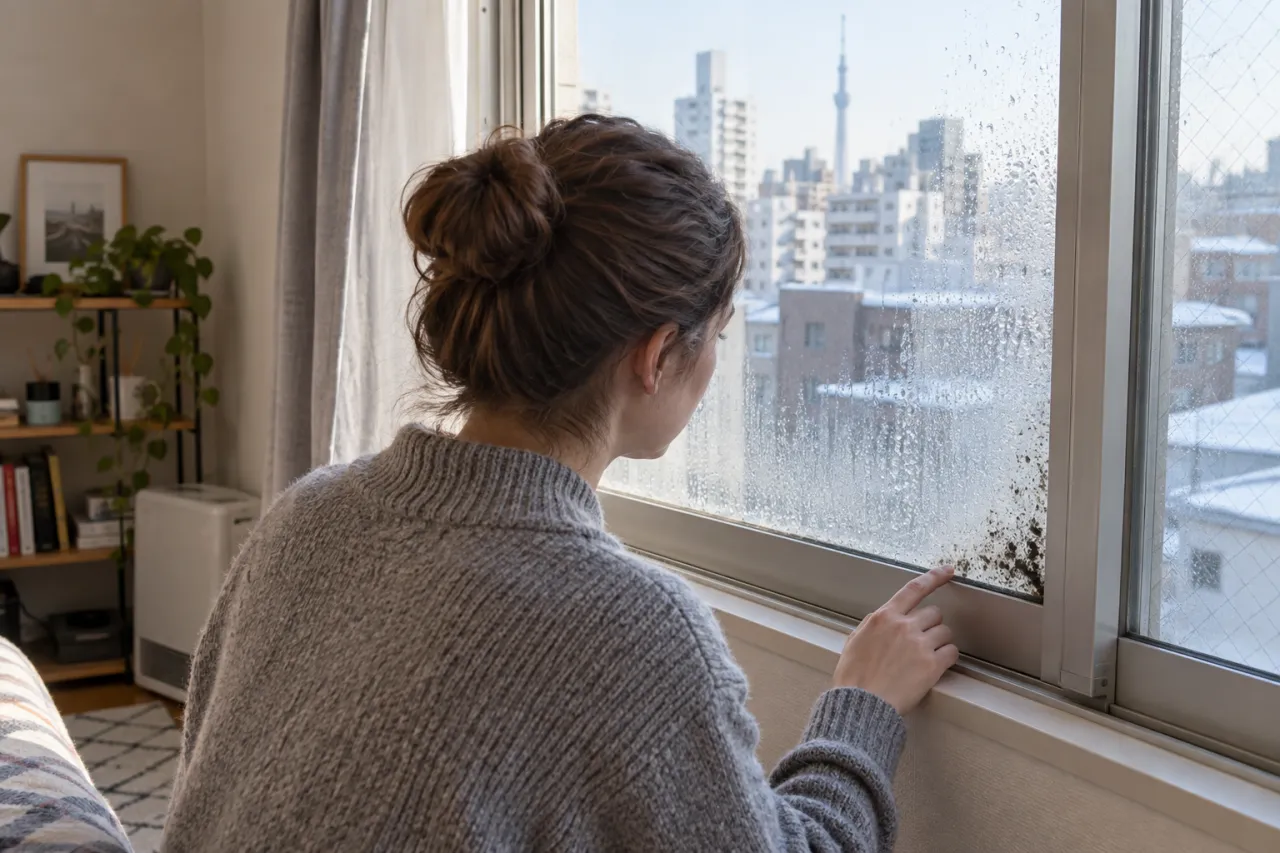
VIP wall panel mold consultation
2026/10/11

Direct answer: If a musty smell or discoloration appears around bespoke wall panels in a furnished serviced residence, do not assume the decorative face is the source or authorize immediate demolition. Record the exact location, time and water history; ask the residence manager to investigate plumbing, exterior rain entry, condensation and HVAC drainage. Stop any active water leak first. A specialist can then evaluate whether concealed backing or adjacent building materials may be affected. The panel installer should advise on safe access and reinstatement, especially where finishes cannot be easily replaced. A visual inspection or one moisture-meter reading cannot promise that the cavity is free of mold.
An international executive staying in central Tokyo, Yokohama or another Kanagawa business hub, or a premium Chiba residence may occupy a fully furnished unit with timber veneer, fabric-covered panels, stone trim and integrated lighting. Service staff may be able to wipe a surface, but they may not have authority to open a wall, stop a concealed leak or decide who pays for a repair. The right first question is not “Which chemical removes the stain?” It is “Where is the water coming from, and which material has stayed wet?” This article helps residents and property managers establish a discreet, evidence-based route to an answer. It does not identify a specific property or guarantee restoration of a finish.
Three kinds of search result are useful but incomplete on their own. The US EPA's guidance on looking for hidden mold discusses leaks, paneling and concealed surfaces. The EPA's building moisture-control guidance organizes the roles of walls, plumbing and HVAC. The UK government's guidance on damp and mold in homes emphasizes repairing building deficiencies rather than treating surface growth alone. Search ranking changes over time and location. This article narrows those general principles to the distinctive problem of a valuable, removable-or-nonremovable panel in a managed furnished residence in Japan; UK tenancy rules do not automatically apply to a Japanese contract.
1. Record the signal without damaging the panel
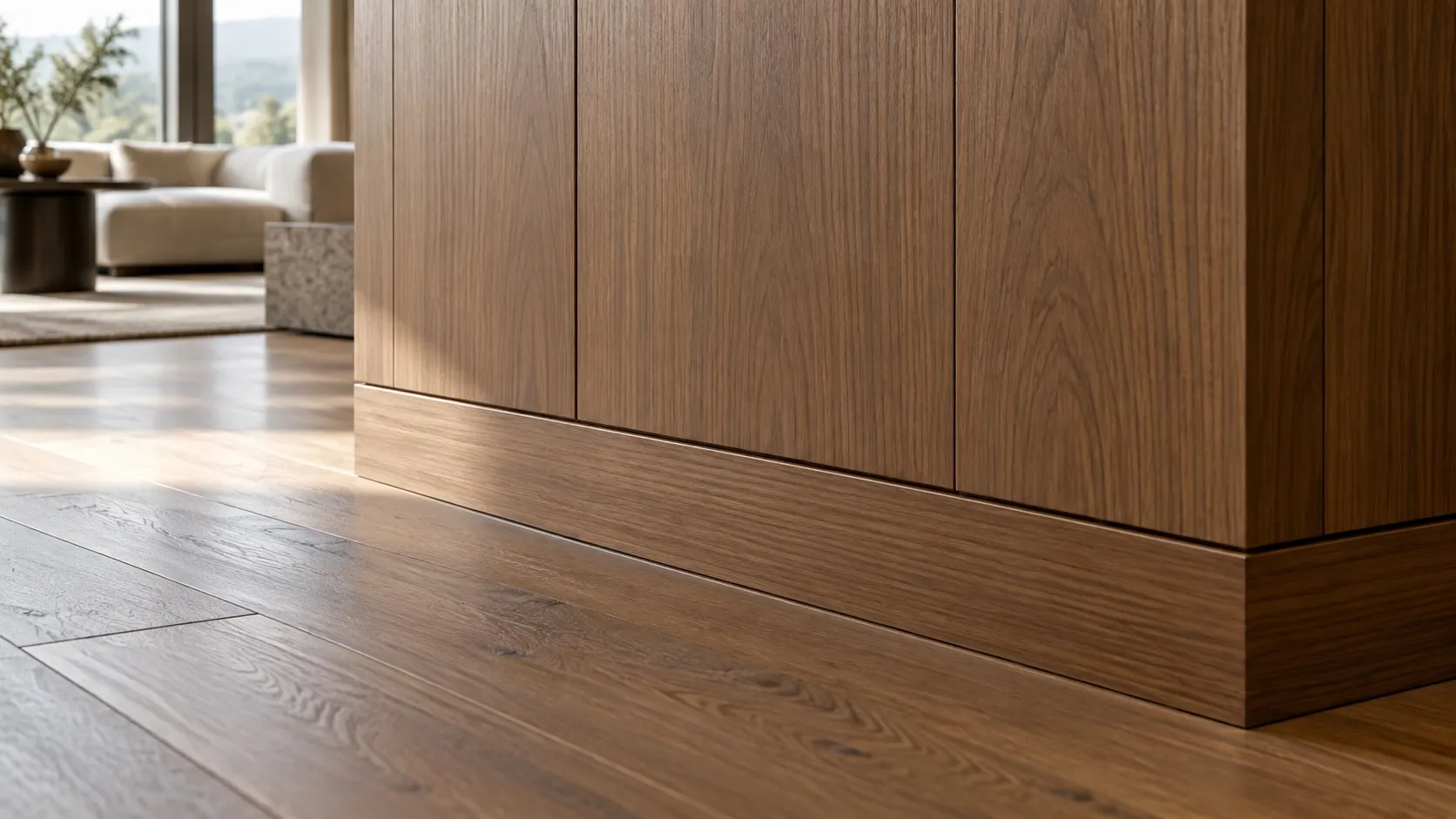
Start with an annotated floor plan and dated photographs. Identify the panel, its seam, the floor line and the nearby ceiling or window. Is the smell strongest at an edge, an outlet, a return-air grille or a cabinet? Does it follow rainfall, shower use, air-conditioning operation or housekeeping? A stain can come from water, metal, adhesive or finish aging as well as microbial growth. A surface may be dry when examined even though the backing was repeatedly damp. The pattern over time is more informative than one dramatic close-up.
Do not rub hard, bleach, sand or lift a veneer corner as a diagnostic test. The visible finish may be one part of a bonded assembly, and the panel may have a fire-rating, acoustic treatment, access hatch or electrical wiring behind it. Strong chemicals can permanently alter lacquer, textile, stone or metal and can erase evidence of a leak. If there is water near a socket, low-voltage control panel or integrated lighting, keep people away and ask the building manager and qualified electrical contractor to assess safety. If the panel is bulging or loose, prevent anyone from leaning against it.
Ask for the residence's original fit-out record: wall elevation, panel supplier, substrate, access points and previous repairs. Serviced residences often have a building maintenance team and a separate interior contractor. The manager should confirm who has authority to inspect common pipes or an adjacent unit, who may move furniture and whether a resident must approve opening the finish. Sensitive items in an executive suite should not appear in a work report unless essential. Crop or mask unrelated belongings, and use a named contact list for distribution.
The EPA's hidden-mold course chapter notes that mold can exist on concealed surfaces without light and that a leak history is central to investigation. It gives examples of checking paneling and drywall after a water event. This does not mean every musty panel conceals growth. It does mean that painting or wiping the visible face is not a complete diagnosis where water has reached a backing material. An investigator may use a moisture meter, thermal imaging or a small camera, but each tool has limits and requires interpretation in light of the assembly. A thermal image alone does not identify mold or distinguish every moisture source.
2. Trace water from outside, above, pipes and HVAC
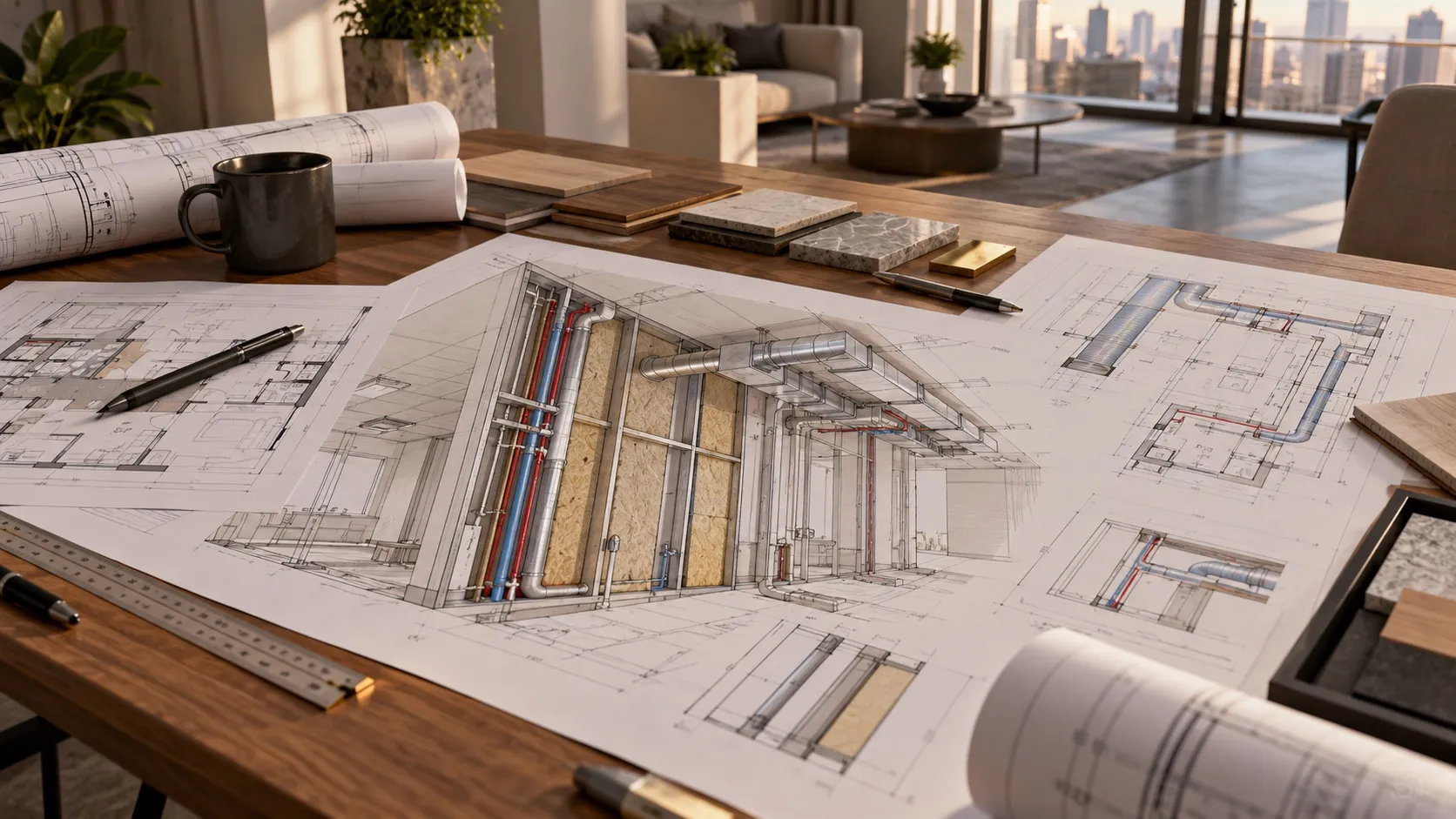
There are several plausible water paths. Rain may enter at a facade joint or window and travel to a panel below. A supply or drain pipe may leak inside a service riser. Condensation may occur where humid room air meets a cooled pipe or a colder part of the wall. An HVAC drain pan may overflow or a duct may sweat. Even a neighboring unit's plumbing can affect a wall. The inspection should test these hypotheses in the order suggested by drawings, weather and use history. Do not blame a resident's ventilation habits by default when a building deficiency has not been ruled out.
Compare dates: stain after heavy rain, odor after cooling starts, moisture following bathroom use, or a mark that persists regardless of use. Ask the manager for relevant maintenance and alarm records. A humidity reading in the center of the room describes the air at that moment, not the relative humidity at the colder panel backing or the water content of gypsum board. The EPA's moisture-control guidance for buildings treats walls, plumbing and HVAC as separate systems that can contribute water. A qualified building professional should determine which system actually failed before any cosmetic repair is specified.
If there is active water, the response is urgent: contain the affected area, protect electrical systems, stop the source through authorized building personnel and document the condition. The EPA homeowner mold-and-moisture guide advises acting quickly after leaks and drying affected material promptly. It is a general public-health guide, not a promise that every premium material can be saved within a fixed number of hours. A textile-covered panel, particle board, timber batten and painted plaster may require different decisions. The installer and restoration specialist should state what can be dried and what may need replacement.
Air movement can carry an odor from elsewhere. A smell at a panel seam may originate in a service cavity or air-conditioning zone rather than immediately behind that seam. Conversely, a localized visible mark may have no room-wide odor. Consider the path of air and water separately. An HVAC contractor can inspect condensate and airflow, while a plumbing or facade contractor addresses a leak. A mold specialist can assess affected building materials. None should be asked to certify an expensive decorative finish's value or conservation outcome beyond their own expertise.
| Observation | More likely first investigation | Responsible lead | Do not assume |
|---|---|---|---|
| Patch worsens after rainfall | Facade, roof, window junction | Building manager and envelope contractor | The stain is only surface dirt |
| Wetness follows plumbing use | Supply or drain behind wall | Manager and plumbing contractor | Dehumidification fixes a pipe leak |
| Odor follows HVAC start | Drain, duct, return-air route | HVAC maintainer | The visible panel is the source |
| Panel bulges or delaminates | Substrate moisture and bond | Panel installer plus building specialist | It can be polished back to original |
| Recurring musty smell after repair | Remaining damp backing or another water route | Mold specialist and building manager | Absence of visible spots proves clearance |
3. Investigate with an agreed protection and reinstatement plan
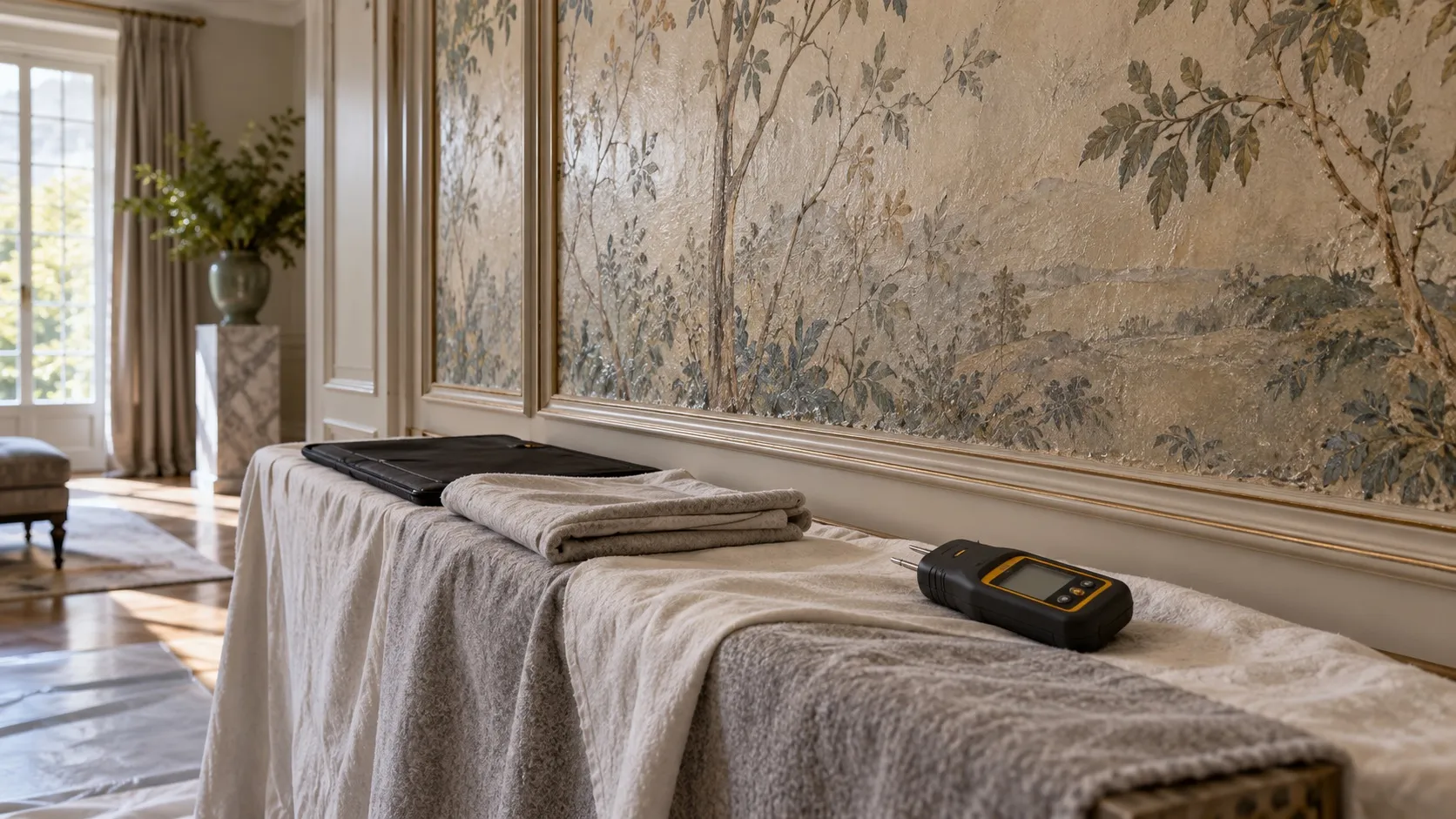
“Non-destructive” should mean a reasoned first stage, not a promise that nothing will ever need to be opened. Collect drawings, maintenance records, photographs and measurements. Look for existing inspection hatches or removable trim. If a cavity must be checked, agree with the owner and manager on the smallest appropriate opening, dust protection, material handling, security and reinstatement. A probe inserted through a small hole sees only a limited field, and a dry accessible patch cannot rule out moisture elsewhere. The scope should change only as evidence justifies it.
With high-value interiors, the inspection plan should include the provenance and replacement availability of each panel. Is the veneer book-matched? Is there a spare section? Can the same fabric or lacquer be obtained? Could removal affect an adjoining stone slab or concealed wiring? The fit-out contractor is best placed to advise. A mold specialist can explain whether the water-damaged backing requires cleaning, removal or further testing; the panel contractor can plan careful dismantling and reconstruction. Get permission before applying any chemical to a visible premium finish, and record the test area and expected limitations.
The UK government's damp-and-mold guidance describes repairing leaks and removing materials that cannot be fully cleaned or dried. Its policy framework is specific to the UK, but the physical principle is relevant: covering a damp layer with a new decorative face may conceal an unresolved problem. For a Japanese serviced residence, decisions about access, expense and occupancy depend on the local building, management agreement and contract. Ask the manager to document those decisions rather than importing a foreign legal rule.
After source repair, keep a record of drying and reassessment before a panel is closed. Surface appearance alone is not a verification method. Compare measurements in the same material and location, note instrument type and observe whether odor returns under normal HVAC operation. If an intrusive step reveals unexpected water, stop and revise the scope. Photographs should show the condition at opening, the repaired source, the dry state and the reinstated finish. A specialist's report should distinguish what was actually observed from what remains inferred.
4. Build an English-speaking response team and decide when to escalate

The resident should report active leaks, a loose panel or wet electrical fittings immediately to the front desk or building manager. Ask for a reference number and the name of the person who will coordinate trades. For persistent odor, repeated staining or suspected damp backing, request a building-side mold assessment in addition to the maintenance visit. For textile wallcovering, antique timber, artwork or a collection, involve the relevant supplier or conservator before treatment. The owner may designate an assistant or estate manager to approve access; that authorization should be explicit and limited.
An effective English-language request can be concise: “A musty odor is strongest at the lower edge of the west living-room panel. It became noticeable after the September rain. Please record the leak investigation, confirm whether plumbing or HVAC drainage is involved, and advise before opening the finish.” Include the room, date, photographs that show only the affected area and any immediate hazard. Do not send access codes, passport scans or images of valuables through a general contact form. Confirm the secure exchange method and expected reporting language when booking.
Ask for a scope that separates the building defect, the moisture and mold evaluation, and the restoration of the designed interior. A single attractive all-inclusive price may hide which company is responsible for drying the backing or matching a unique finish. The manager, installer and specialist should agree on a handover point: source fixed, affected material assessed, any necessary removal or treatment completed, then finish reinstated. If the unit remains occupied, also discuss access, containment, noise, cleaning and whether an alternative room is needed; the manager makes the accommodation decision under the specific agreement.
FAQ: Is a musty smell proof of mold behind the panel? No. The smell may travel from another cavity or HVAC route. It is a reason to investigate moisture and airflow, not a species identification.
FAQ: Can a thermal camera find the leak without opening anything? It may show temperature patterns that guide investigation. It cannot by itself identify mold, prove a leak source or establish that every layer is dry.
FAQ: May housekeeping remove the stain before the manager visits? Record it first and ask the manager and panel supplier about the material. Abrasive or chemical cleaning can change a valuable finish and obscure evidence.
FAQ: Who repairs the wall after a specialist investigates? Agree this before opening. The original interior installer or an appropriately qualified finish contractor may be needed; mold investigation does not automatically include restoration of a bespoke panel.
FAQ: What if no leak is visible? Review water history, HVAC, exterior-wall and adjacent-unit possibilities. Hidden moisture can be localized, and one dry reading is not conclusive. Escalate based on recurring symptoms and evidence.
FAQ: Does the English report determine who pays? No. It should describe observations and actions. Responsibility depends on the residence's contract, building rules and cause, which need separate review.
For executives and property managers in Tokyo, Kanagawa and Chiba, Kabi Busters Yokohama's building mold service overview explains the available consultation route. Contact Kabi Busters Yokohama with the room location and documented symptoms to discuss an English-language inquiry. If water is actively entering or electrical fittings are wet, first use the residence's emergency maintenance channel. No company can responsibly guarantee full restoration of an irreplaceable finish before the material and cause are assessed.
日本語の要点: 高級サービスレジデンスの造作壁から臭いがするときは、表面をこすったり剥がしたりする前に、管理者へ水漏れ・外壁・空調ドレンの調査を依頼します。水分源の修理、下地のカビ疑い、意匠材の復旧は担当を分け、開口や薬剤使用は所有者と施工会社の合意後に行ってください。写真だけでカビの種類や修復可能性は断定できません。
----------------------------------------------------------------------
カビバスターズ横浜
住所 :
〒221-0056
神奈川県横浜市神奈川区金港町5-14 クアドリフォリオ8階
電話番号 :
0120-133-199
----------------------------------------------------------------------