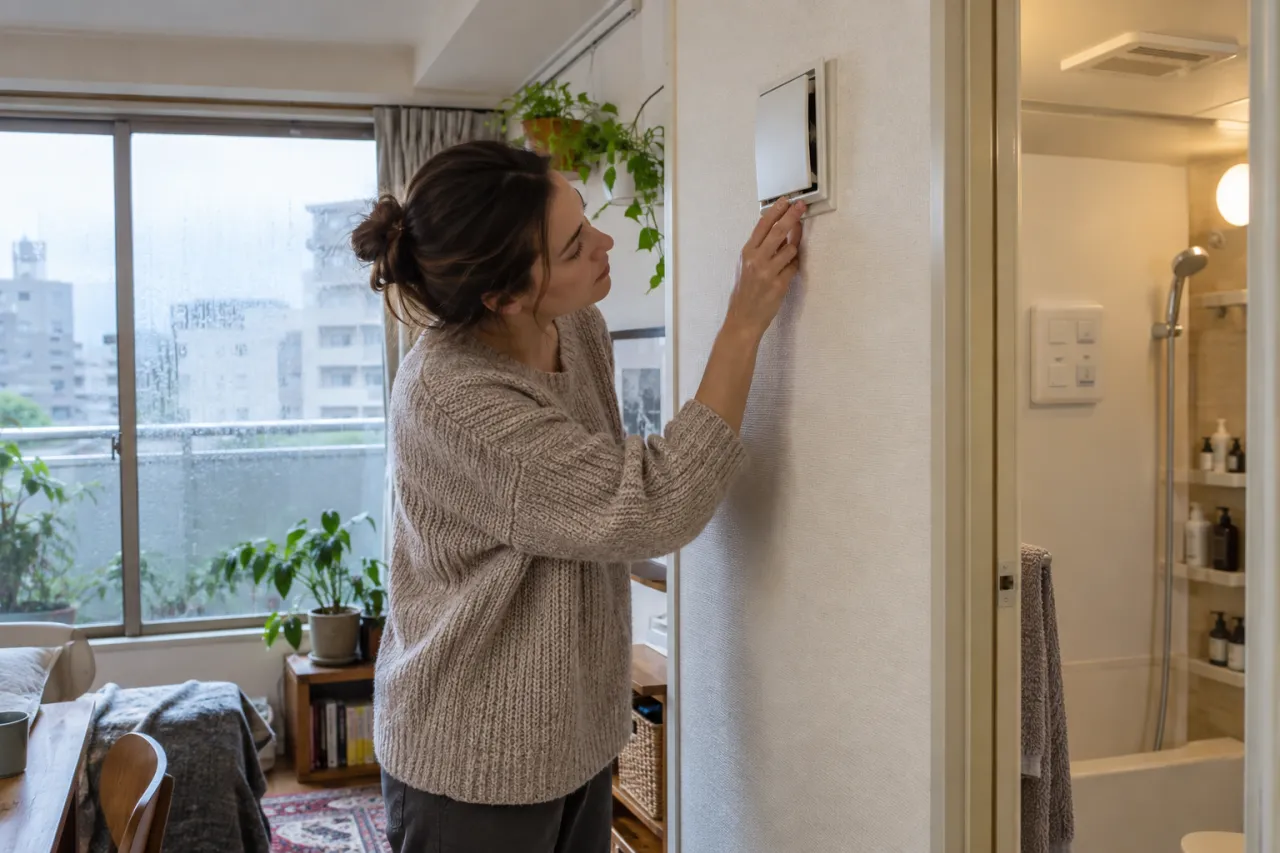
VIP pre-arrival mold check
2026/10/10

Direct answer: If a premium residence in Tokyo has been vacant while its owner was overseas, arrange a documented moisture and odor check before arrival, not simply a last-minute fragrance or cleaning visit. Ask the property manager to confirm any leaks, air-conditioning operation, visible condensation, and damp areas at windows, exterior walls, built-in closets, bathrooms and HVAC equipment. If water is actively entering, the building or equipment contractor must address that first. If staining or musty odor persists or the source is uncertain, ask a mold specialist to assess the building materials and moisture route. A photograph alone cannot establish the species of mold or guarantee a room is safe.
This article is for overseas owners, executive households and representatives managing high-value homes in Tokyo, Yokohama and other parts of Kanagawa, or Chiba. A penthouse with large glazing, bespoke joinery and zoned air conditioning may appear pristine during a video walk-through. That does not reveal what happened during a rainy period, whether a drain pan overflowed, or whether the back of a cabinet stayed damp. The aim is to make the first site visit efficient and discreet. It is not a claim that a particular building has a defect, nor a promise to restore valuable finishes or possessions.
Search results for a pre-arrival mold check commonly fall into three groups. The US EPA homeowner guide to mold and moisture explains why removing the water source comes first. The EPA guidance on humidity, condensation and HVAC helps explain why an apparently dry central room measurement does not settle a localized problem. The Tokyo Metropolitan Government's English housing condition checklist demonstrates the value of recording condition at handover. Their ranking varies by location and date. None is a substitute for an access-controlled, property-specific inspection of a furnished luxury residence. This guide joins those ideas into an arrival workflow and keeps building diagnosis separate from lease or ownership decisions.
1. What should be checked before the owner enters?
Start with authorization. Identify who may enter the home, when, which rooms are included, whether photographs are allowed, and where the report will be stored. For a VIP household, a contractor should not assume that art, documents, security systems or private rooms can be photographed. The manager can provide a limited floor plan identifying the zones to inspect without sharing sensitive details beyond the work scope. A brief written protocol avoids a rushed visit that overlooks the dampest corner while collecting unnecessary personal information.
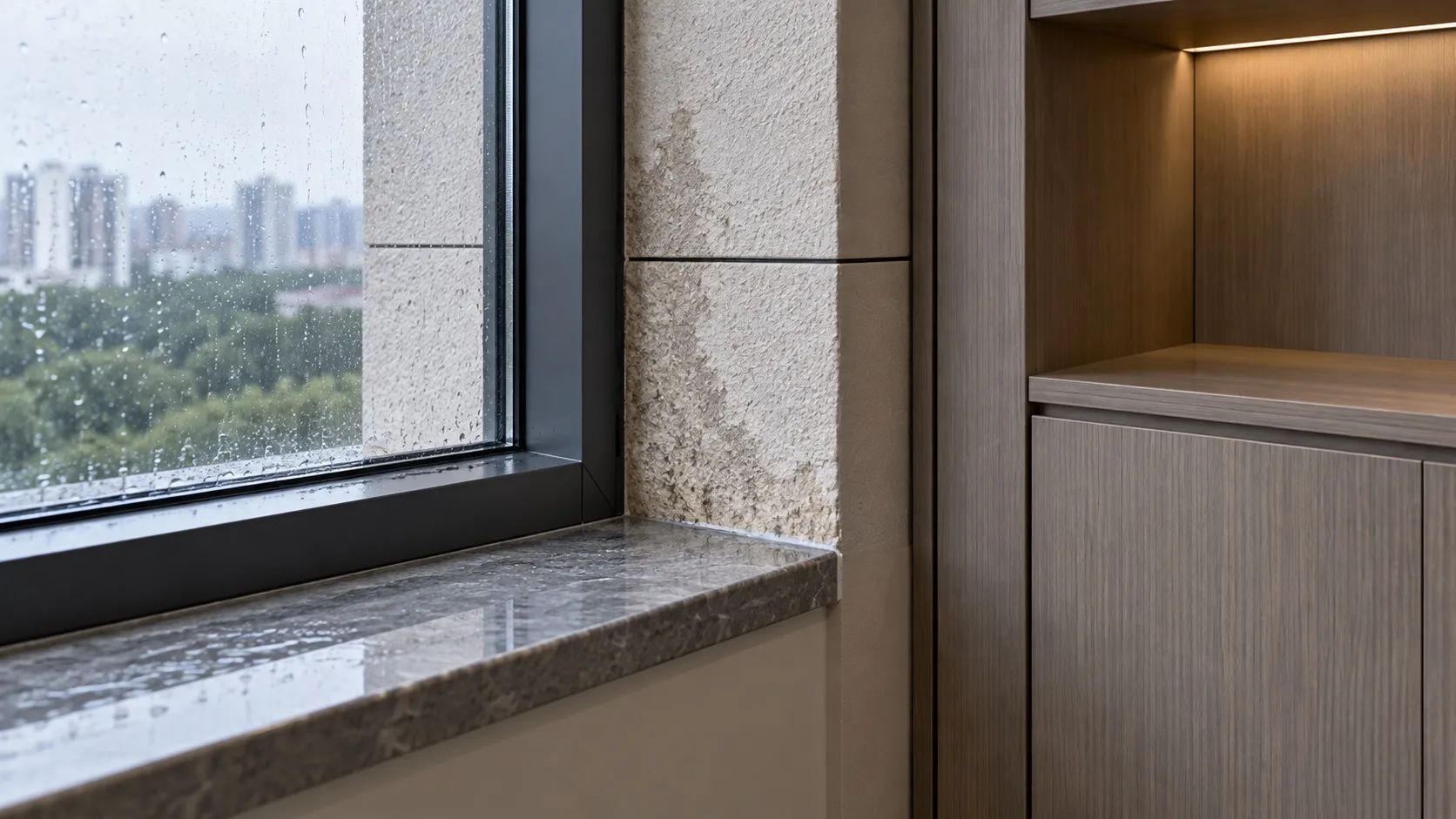
Request a walk-through that compares the room's visible condition with earlier dated photographs. Focus on the perimeter of glazing, ceiling edges below roof or terrace areas, exterior-wall cabinets, bathroom thresholds, laundry equipment, HVAC access points and floor transitions. A dark mark can be dust, dye transfer, finish aging or mold; do not label it from a phone image alone. Record whether the surface is actually wet, whether a stain has expanded and whether the same smell appears when a particular HVAC zone starts. If a ceiling is dripping, a floor is soft, or an electrical fitting is wet, isolate the area and contact the building manager and appropriate contractor rather than continuing a routine tour.
Vacancy changes the evidence. An odor that appears only when air conditioning starts may point toward a different inspection path than a stain that follows rainfall. A mark behind a fitted wardrobe on an exterior wall differs from a water line below a plumbing fixture. Ask the caretaker for dates of storms, equipment alarms, drain cleaning, housekeeping visits and any previous leak repair. If no history exists, say so; an empty log is not proof that nothing happened. Compare broad room photographs with close views and include a scale, location and date. The owner should be able to understand the finding without identifying a particular person's belongings or movements.
The EPA's mold-and-moisture guide says moisture control is the key to mold control and advises prompt drying after leaks. It also gives a general indoor relative-humidity target below 60 percent, ideally 30–50 percent where possible. That is general home guidance, not a certification threshold for every artwork, timber finish or occupied luxury unit. One reading in the center of a living room cannot exclude dampness behind joinery or at a cold glazing edge. Where conservation-sensitive items are present, consult the relevant conservator; the Canadian Conservation Institute's discussion of incorrect relative humidity emphasizes material-specific risk and localized conditions.
2. Separate HVAC records from moisture at finishes

An overseas owner may request that cooling or dehumidification remain on during an absence. Before altering settings, obtain the installed system's operating instructions and the building manager's approved plan. Check whether each zone was running, whether filters and condensate drainage were serviced, whether an alarm occurred, and whether an exhaust or fresh-air system was disabled. An air-conditioning display showing a comfortable set point does not establish what happened inside a cabinet or below a chilled pipe. If the HVAC system itself appears wet or musty, its licensed maintenance contractor should inspect it; a general cleaner should not open electrical equipment or ducts without appropriate expertise.
The EPA explanation of humidity and condensation notes that warm humid air can condense on cooler surfaces, and that HVAC equipment may be part of a moisture problem. In a top-floor residence, large windows, shaded corners, balcony doors and cold service pipes may each create different local conditions. Keep temperature and relative-humidity readings with their location and time, and photograph visible droplets. Avoid a made-up universal number for how many hours an empty home must run a dehumidifier. The relevant evidence is whether wet surfaces dry, the water source is controlled and the equipment is operating as designed.
Materials also need separate treatment. An expensive timber floor, stone wall, lacquered panel and fabric wallcovering do not tolerate the same cleaning chemical or moisture level. The owner or manager should identify product names, finishing specifications and installer warranties before any cleaning trial. A surface may dry while a paper-faced board or timber backing remains wet. If an investigation may require opening a bespoke panel, agree first on the least disruptive access point, protective covering, documentation and restoration responsibility. A mold service can assess building-side contamination, but should not promise conservation of art, complete color matching or restoration of market value.
| Observation | First action | Lead contact | Avoid |
|---|---|---|---|
| Active dripping or wet electrical area | Restrict access and stop the water source | Building manager and qualified contractor | Routine cleaning before safety check |
| Musty odor when HVAC starts | Record zone, time and drain history | HVAC maintainer; mold specialist if material impact is suspected | Spraying fragrance into ducts |
| Mark behind fitted cabinetry | Photograph and trace adjacent wall or pipe conditions | Manager, installer and mold specialist | Abrasive or bleach test on premium finish |
| Condensation at glazing | Note weather, surface and ventilation | Building envelope or HVAC contractor | Assuming every black mark is mold |
| Valuable collection near a damp wall | Move only under owner's handling instructions | Conservator plus building specialists | Using a building cleaner as an art restorer |
3. Create an English-language report that protects privacy

The useful report is not a gallery of dramatic close-ups. It identifies the property zone, date, who observed it, what was visible or measured, what remains uncertain and the next decision. Distinguish facts from hypotheses: “water droplets on the inside of the west window at 09:00” is an observation; “failed wall insulation” is a possible explanation requiring investigation. Label photographs consistently and keep an original set. If surface moisture meters are used, note the material and instrument because readings across stone, timber and plasterboard are not directly interchangeable.
For a rented residence, send the relevant condition record to the landlord or management company through the agreed channel. The Tokyo Metropolitan Government's English housing-condition checklist illustrates how dated room-by-room observations can be organized, but it does not decide liability in an individual contract. Ownership, condominium management rules, lease terms and insurance responsibilities must be checked separately. Do not make a legal conclusion from a mold photograph. If the owner is abroad, record who is authorized to approve investigation, repairs and any opening of finishes, and what spending threshold requires additional approval.
Private residences may contain security panels, keys, documents, family photographs and irreplaceable collections. Crop reports to the affected building area, remove unrelated personal details and share only with named recipients. Decide whether a concierge, estate manager or legal representative receives the report. An English summary can say where water was found, which contractor is responsible for the immediate hazard and which questions need a site assessment. If interpretation is needed, the technical terms should be checked by the person who performed the work, not improvised in a marketing message. English-language consultation may be available through Kabi Busters Yokohama; confirm the specific visit and reporting arrangements when contacting the team.
The report should also carry a decision log. For example: the manager confirms no active leak, the HVAC contractor checks the condensate line, the mold specialist examines recurring staining and the panel installer advises on any opening and reinstatement. Each action should have an owner and date. A return visit after repair should compare the same photo positions, odor observations and moisture conditions. This is more reliable than declaring the home “mold-free” from one negative sample or a single dry afternoon. The EPA's advice on recognizing a mold problem stresses the importance of correcting water problems rather than treating spores as something that can be removed entirely from the environment.
4. When to contact the manager, a specialist or a conservator

Contact the building manager or emergency maintenance route first for active leaks, a wet ceiling, electrical hazard, drainage failure or possible exterior-water entry. Ask the HVAC contractor about equipment alarms, condensate and ventilation defects. Consult a mold specialist when odor or suspected growth persists, a hidden damp layer is possible, several locations are affected or a water source has been fixed but the symptom continues. Consult a qualified conservator separately if paintings, books, textiles or other collections may have been affected. These roles are complementary, not interchangeable.
At the inquiry stage, send the property's general location in Tokyo, Kanagawa or Chiba, the affected rooms, whether the residence is occupied, the date of arrival, the current safety issue and a small set of relevant photographs. Do not send passports, access codes, addresses visible on key tags or images of private collections unless truly needed and an agreed secure channel is in place. Ask for the scope of inspection, who will attend, whether equipment or finishes may be touched, whether an English explanation can be provided, and what the written findings will contain. A quote should distinguish investigation, source repair, cleaning or remediation, and finish reinstatement.
FAQ: Is a clean-looking penthouse automatically ready for arrival? No. A visual tour is useful but does not reveal every leak history or hidden damp area. A targeted, dated checklist makes uncertainty visible.
FAQ: Can a humidity reading prove there is no mold? No. It reflects the air at one point and time, not necessarily a cool wall surface, cabinet back or damp construction layer. Combine it with water history and a physical inspection.
FAQ: Should the caretaker bleach a stain before the owner arrives? Not before the material and cause are known. Bleach or abrasive cleaning can damage valuable finishes and remove evidence needed to identify a leak.
FAQ: Does a mold specialist repair artwork and bespoke furniture? Building mold investigation and conservation are different specialties. Discuss a valuable item's handling and restoration with the appropriate conservator or manufacturer.
FAQ: Who can authorize opening a wall if the owner is abroad? Follow the owner's written authorization, building rules and any lease or insurance process. Agree on scope, documentation and reinstatement before intrusive work unless an immediate safety emergency requires action.
FAQ: What if arrival is tomorrow? Prioritize water and electrical safety, an accessible room assessment and transparent communication about what remains unverified. Do not promise complete investigation overnight. If a room is unsafe or wet, arrange an alternative plan through the property manager.
The value of a pre-arrival check is a calm, evidence-based decision. For a Tokyo penthouse or a high-value residence in Kanagawa or Chiba, review Kabi Busters Yokohama's building mold services and request an English-language consultation with the relevant observations. An inquiry is the beginning of a scoped assessment, not a guarantee that every finish or object can be restored. For active water or electrical hazards, contact the property manager and qualified repair contractor first.
日本語の要点: 海外からの到着前には、管理者が漏水・結露・空調・造作収納の背面を記録し、水分源を先に確認します。継続する臭いや変色は建物側のカビ専門業者に相談し、美術品の保存修復は別の専門家へ。写真と確認日時、未確認事項を英語で共有し、所有者の承認なしに高価な仕上げを開けたり薬剤を試したりしないでください。
----------------------------------------------------------------------
カビバスターズ横浜
住所 :
〒221-0056
神奈川県横浜市神奈川区金港町5-14 クアドリフォリオ8階
電話番号 :
0120-133-199
----------------------------------------------------------------------