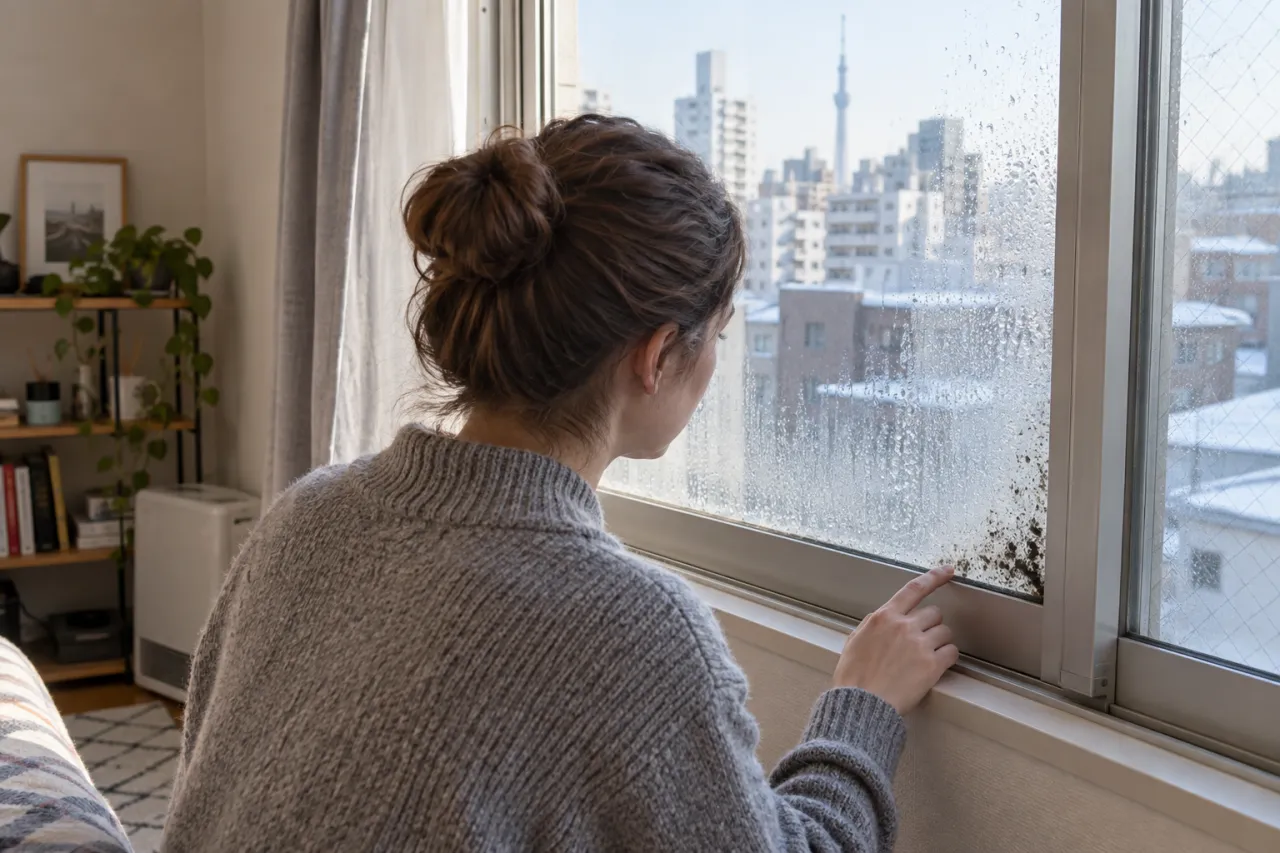
室内干しで壁と衣類が湿る
2026/10/11
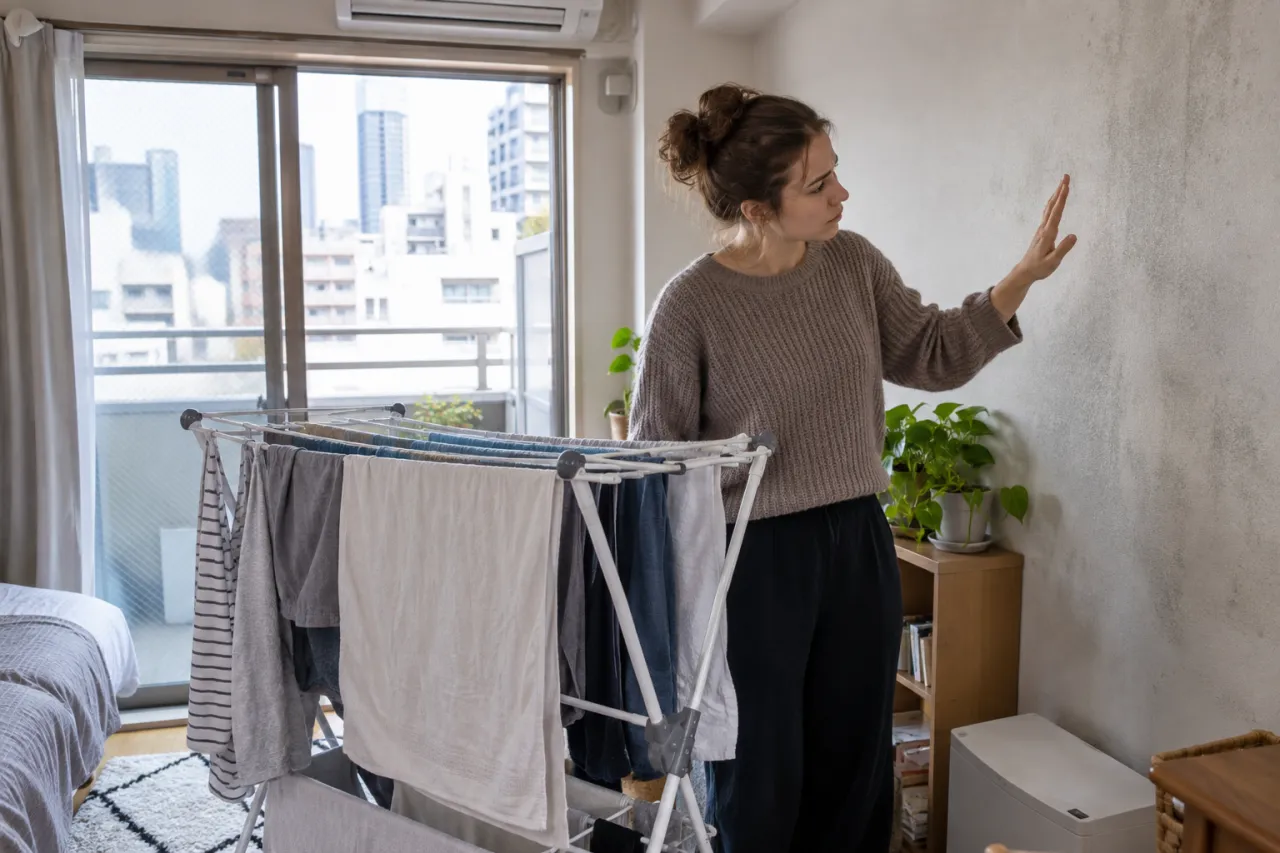
Quick answer. Indoor laundry adds moisture to the room. If clothes remain damp, a wall feels clammy, or a musty smell appears, first give the laundry space to dry, use the home’s appropriate ventilation or dehumidification, and keep wet fabric away from walls and windows. Photograph any wall stain and check it again after the laundry is dry. If a patch stays wet, spreads, or recurs despite ordinary use, tell your landlord or property manager; an English-speaking mold specialist can then assess the affected indoor area if needed. This guide is for renters in Tokyo, Kanagawa and Chiba, where building layout and lease conditions differ.
日本語の要点: 室内干しの湿気が壁や窓にたまる場合、洗濯物と壁を離し、換気・除湿・送風を確認します。壁紙の濡れや臭いが残るときは写真を記録して管理会社へ連絡し、必要に応じてカビバスターズ横浜に英語で相談できます。
1. The moisture route from wet fabric to a cold wall
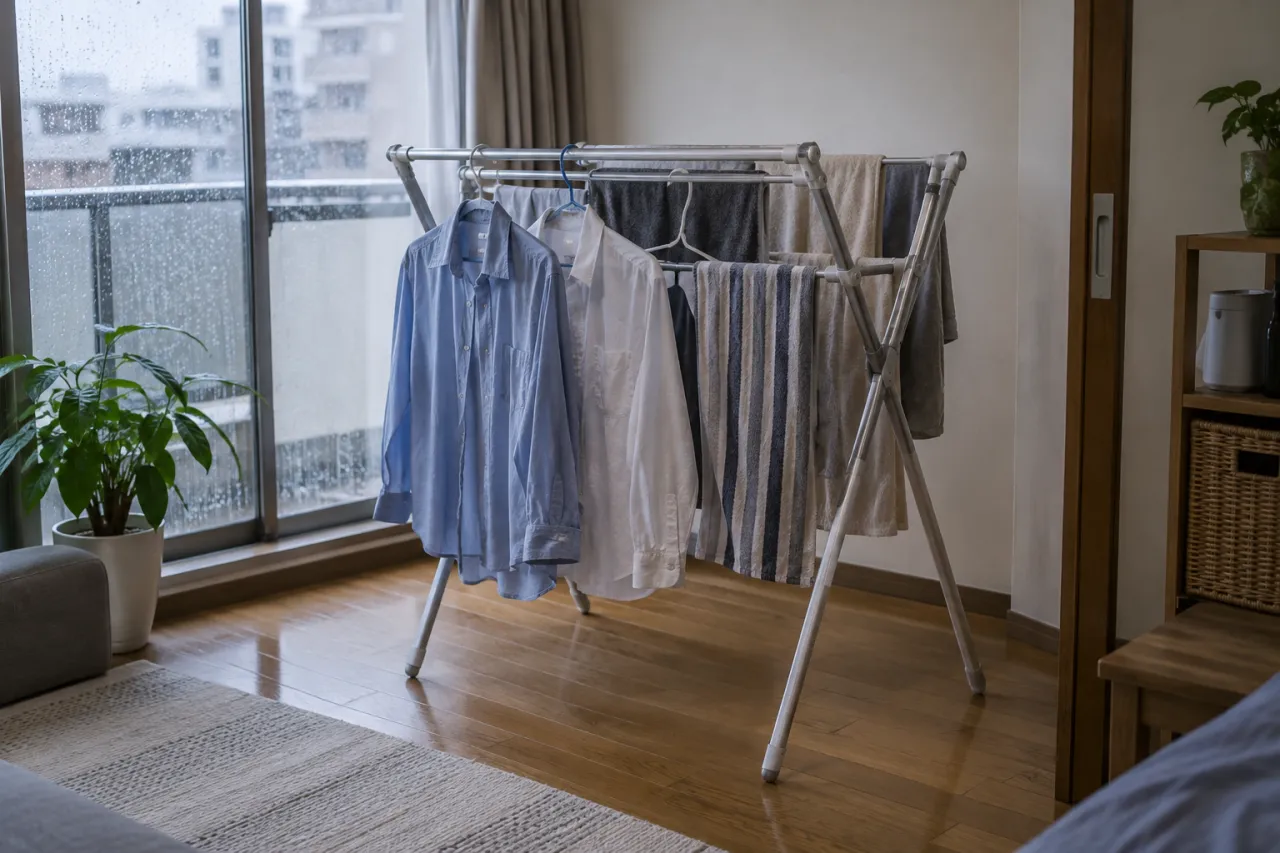
In a compact one-room apartment, a full load of wet laundry may be only a few steps from a cold exterior wall, a closed window or a wardrobe. Water leaving the fabric enters the room air. If that air is not moved or dried effectively, the fabric can dry slowly and moisture can settle on cooler surfaces. Panasonic’s official indoor-drying guidance notes that humid air can remain around hanging laundry and slow evaporation. UR Housing’s English residents’ guide explains that condensation is not limited to where water is produced; it can affect windows, north-facing walls and storage spaces elsewhere in the home. Neither source means that every damp patch is caused by laundry. The observation needs to be tested against time and location.
Ask four questions before you buy equipment or apply chemicals. Is the wall wet only while laundry dries, or also when no laundry has been indoors for a day? Is the patch on an exterior wall, below a pipe, or beside a window? Does a wet smell come from the fabric itself, the washing machine, or the room? Does the wall surface remain firm, or is wallpaper lifting and substrate soft? A musty odor is a clue to investigate, not a diagnosis of one organism. A wall that stays wet when the laundry source has stopped may indicate a ventilation problem, condensation at a cold surface, or water intrusion that the property manager must check.
The Tokyo Metropolitan Government’s English guidance on indoor environmental management emphasizes airflow around furniture and controlling household conditions. Rental provider Leopalace21’s English notices also caution against hanging wet items from curtain rails and note that wet curtains may develop mold. This matters in a leased home: a convenient rail is not necessarily a designed laundry bar. Follow the building’s equipment instructions, weight limits and house rules before using a bath dryer, indoor rack or rail. Avoid turning a damage-prevention guide into a claim that renters must never dry indoors; many homes are designed with indoor drying options.
| Observation | Possible moisture pathway | Sensible next check |
|---|---|---|
| Wet clothes after a long drying period | Air around fabrics may be humid or still | Increase spacing and permitted air movement |
| Window droplets during laundry | Moist indoor air meets cold glass | Dry the sill; note time and ventilation setting |
| Wallpaper damp behind a rack | Rack may be too close to a cold wall | Move rack; document wall after fabric dries |
| Persistent spot with no laundry nearby | Other source cannot be ruled out | Notify manager for building inspection |
2. A renter-friendly drying routine without overpromising a gadget
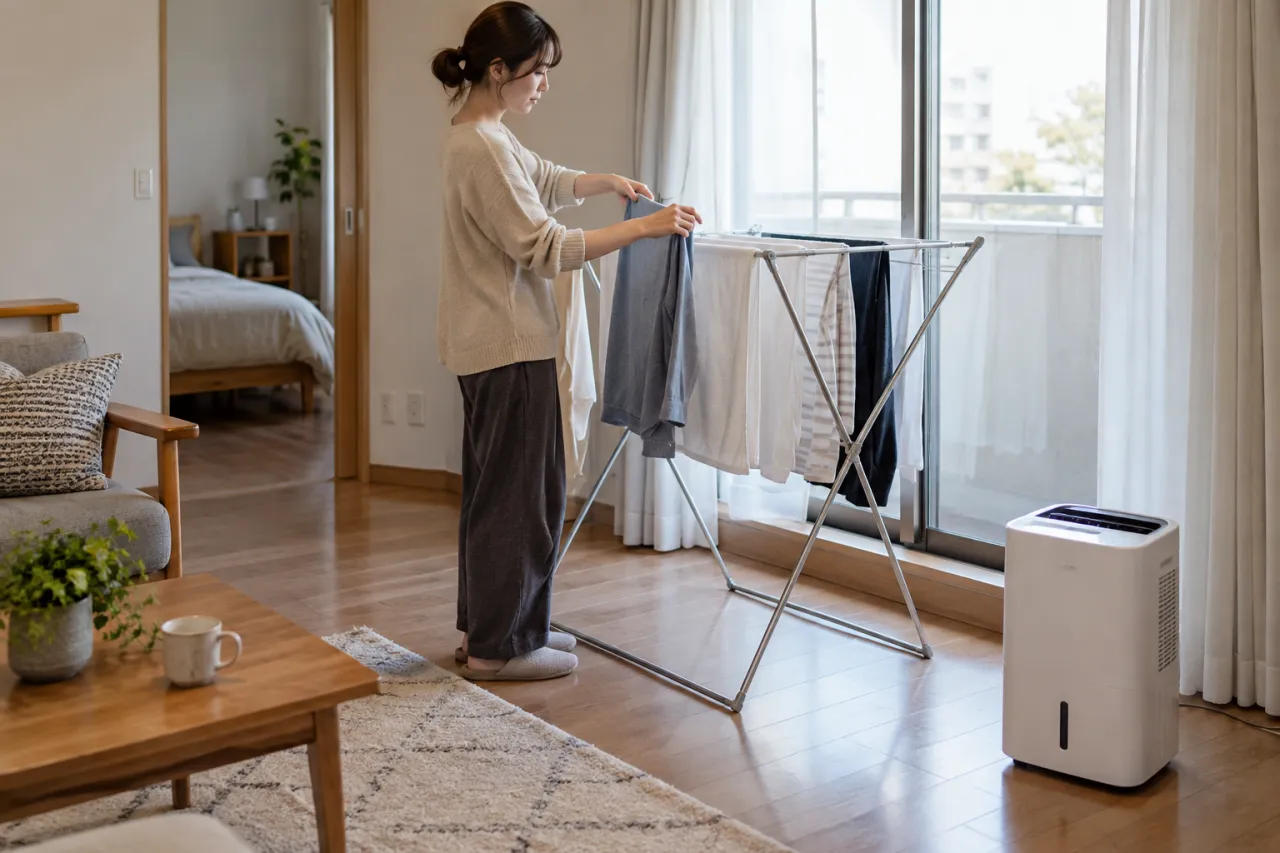
Keep the first response reversible. Do not pack garments together tightly or let them rest against wallpaper, a wooden door, curtains or the ceiling. Use the proper indoor rack or approved bathroom drying rail, with space for air to move around fabric. If the apartment has a bathroom dryer, read the actual control panel or manual to distinguish ventilation from drying mode; the terms and power use depend on the model. If it has a 24-hour ventilation system, do not assume that switching it off saves the wall from moisture. Our English guide to 24-hour ventilation explains what to check before changing settings.
When using a dehumidifier or air conditioner, follow the manufacturer’s placement, drainage and electrical instructions. Panasonic explains a room-drying approach that combines airflow and dehumidification, but its own tests and products do not prove that a particular rented room will dry in the same time. One unit may work well in one layout and poorly in another. A portable dehumidifier also needs its water tank emptied and its filter maintained. Check the live manufacturer instructions for the exact product you own and keep electrical devices away from splashing water.
There is no benefit in trying to hide a wet wall behind a rack. Move possessions away so the surface can be seen and so you can photograph it in normal light. If you find droplets, wipe accessible water gently. Do not steam-clean, soak, bleach or paint wallpaper. A wet, lifting finish can be damaged by repeated scrubbing and may conceal moisture underneath. Consider whether a coin laundry or another permitted drying location is a practical temporary option while the building side investigates, but it is not a substitute for fixing a leak or faulty ventilation.
Use a brief observation log for one ordinary cycle: when garments were hung, where the rack stood, which fan or mode was used, whether the window or wall became wet, when the clothing felt dry, and whether the odor was present before and after. Avoid turning the log into a home experiment with artificial extremes; it is simply a way to communicate facts. A hygrometer may show trends, but a single humidity reading should not be promoted as proof of mold or of a building defect.
3. Separate laundry odor, room odor and building damage
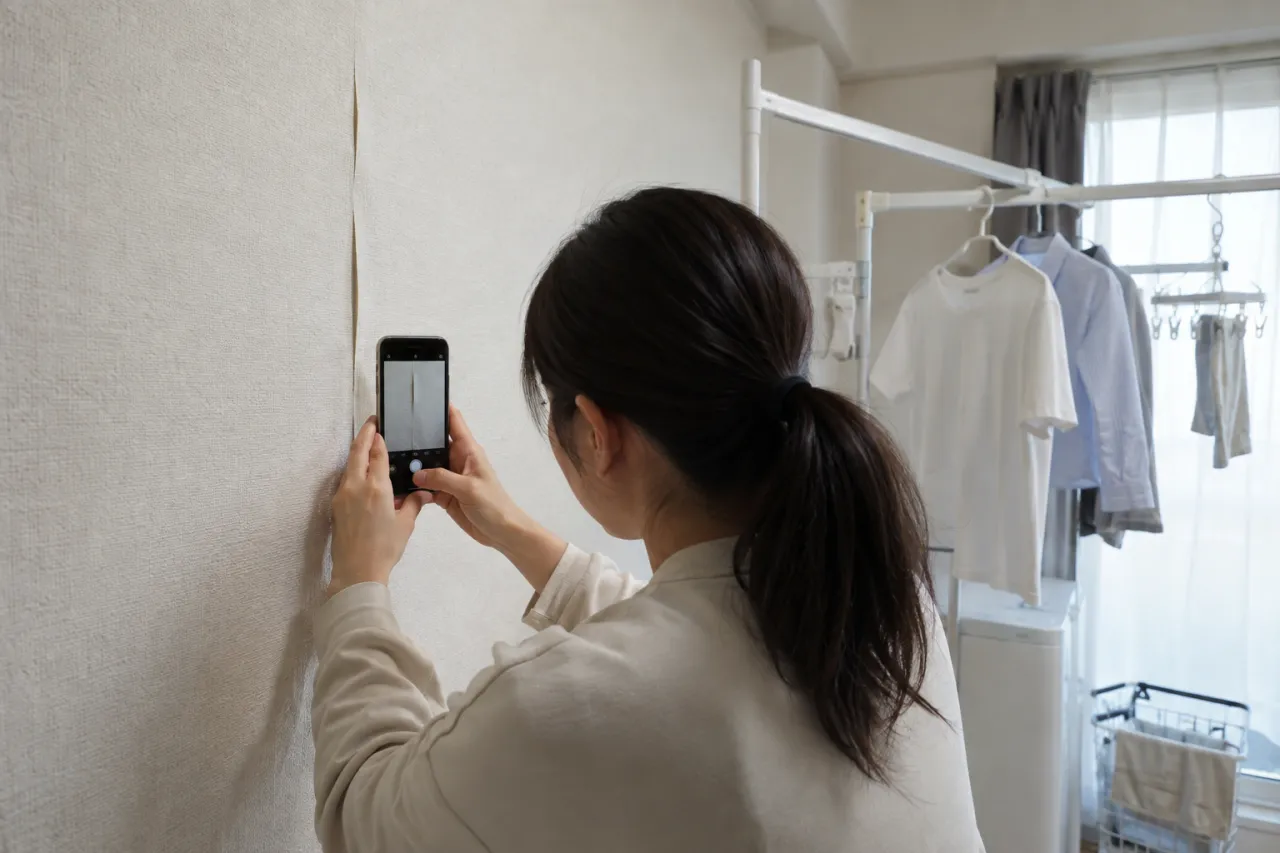
Clothes that smell musty immediately after washing may point toward laundry handling, a washing machine or slow drying. A smell that remains in the empty room after the washed items leave is a different clue. Likewise, a dark spot at the base of a window is not the same location as a damp patch below a ceiling pipe. Tell the manager what changed, rather than saying “the laundry caused mold” as a settled fact. A photograph of the wall before and after one load can help establish whether there is a repeatable link.
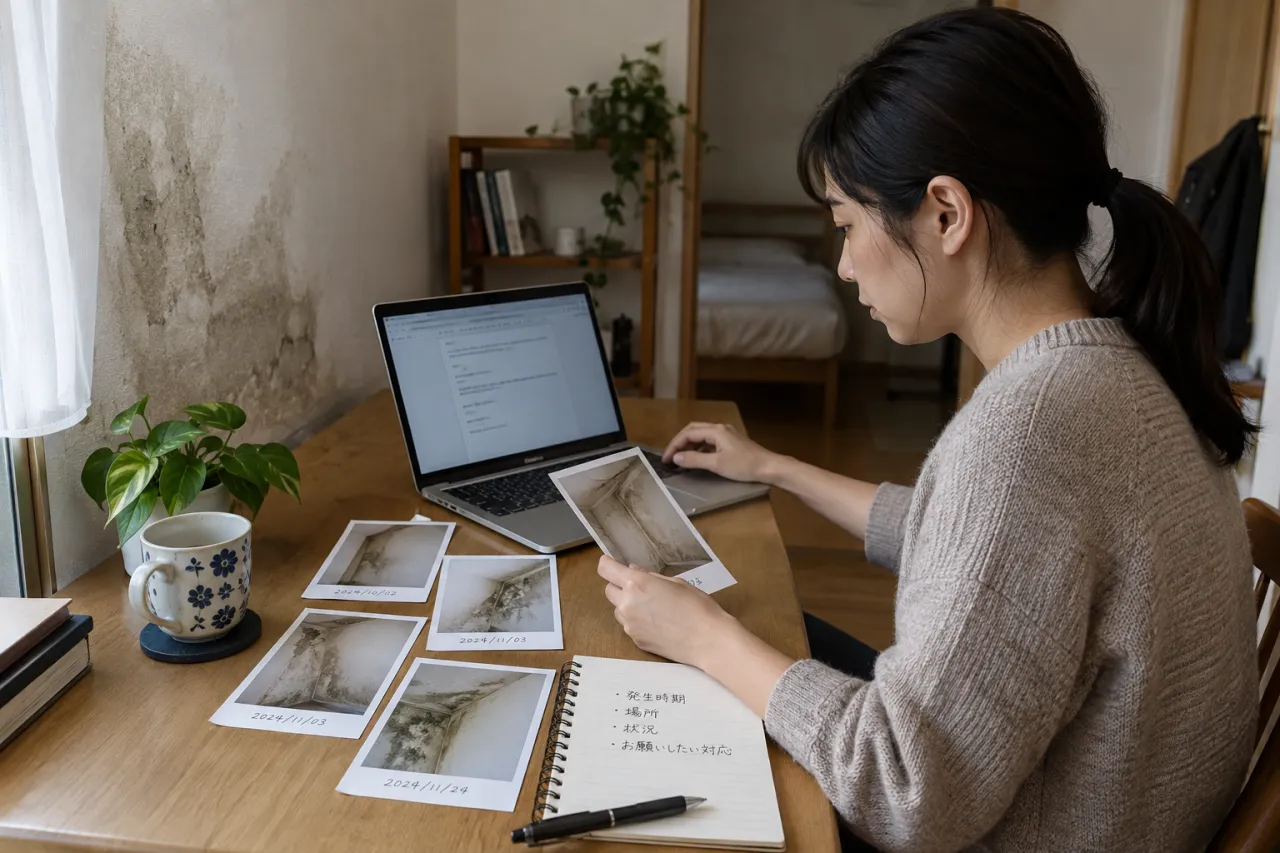
If the patch spreads, wallpaper lifts, a baseboard becomes soft, or a wet spot appears when you have not dried anything indoors, request a building inspection. In a rental, the owner or manager should be involved before anyone opens a wall or replaces a finish. MLIT’s condensation FAQ explains why early communication and ordinary care both matter in a rental; it does not settle a particular resident’s repair bill. Save dated photos and the manager’s response. If water is near an electrical outlet, follow the building’s emergency process and do not use affected equipment.
Mold assessment can be helpful after a recurring source is identified or when visible material and odor suggest that the scope is wider than a wipeable patch. Ask what can be observed without damaging leased materials, what authorization is needed, and how moisture recurrence will be addressed. Kabibusters Yokohama’s service page outlines the consultation route. The company can discuss a Tokyo, Kanagawa or Chiba address in English, but do not assume a particular visit area, price or result until the team confirms it. A mold treatment alone cannot guarantee that a wall stays dry if the upstream cause remains.
An English message to management can be simple: “Indoor laundry has been drying beside the bedroom wall. On [date], I noticed damp wallpaper at [location]. The rack has been moved and I used the installed ventilation as instructed, but the patch remained wet on [date]. Please advise whether the wall and ventilation can be inspected.” A second message to Kabibusters Yokohama’s English-capable inquiry channel can include the building’s response and ask whether a mold survey is suitable. There is no need to accuse a landlord or admit a cause you have not confirmed.
4. FAQ and a practical decision checklist
Does indoor drying always cause mold? No. The risk depends on moisture load, air movement, temperature, surfaces and time. A well-managed drying space may not wet walls, while one small cold corner can remain damp. Examine the actual room instead of relying on a slogan.
Should I run the bathroom fan and leave the door open? Follow the installed system’s instructions. In some homes, keeping a bathroom door positioned as the manufacturer specifies supports extraction; in others, a different arrangement is needed. Check the equipment, not a universal social-media rule. Keep the air inlet unobstructed where the system requires it.
Can I clean a musty wall with bleach? Do not begin with aggressive chemicals on leased wallpaper. Photograph it first and ask the manager about the material and permitted cleaning. Never mix chlorine cleaners with acid products. If the surface is porous, damaged or still wet, cleaning the visible face is not a full moisture solution.
Do I have to buy a dehumidifier? No single product is mandatory for every renter. Use the building’s ventilation and the manufacturer’s safe instructions; discuss persistent dampness with management. If you buy a device, check its room size, placement, electrical and drainage requirements. Product performance claims are not proof of the condition of your home.
When should I ask Kabibusters Yokohama? When odor or suspected growth persists, affects multiple surfaces, or a moisture episode has left damage that needs a measured response. If the water source or building defect is still active, tell the manager first. Ask the specialist for a scope assessment and confirm availability for your city.
Keep the laundry rack away from the affected wall, document the wall’s condition, check the room after fabrics dry, and report changes early. These steps are useful whether you live in an older Tokyo apartment, a new rental in Yokohama, or a Chiba property with a different drying system. If droplets appear mainly around a window, note that specific location in your inquiry. For direct help, contact Kabibusters Yokohama in English and attach the relevant photos if you wish.
Primary sources: Panasonic’s indoor-drying guidance, UR Housing’s English residents’ guide, Tokyo’s English indoor-environment guidance, and MLIT’s condensation FAQ. General guidance is not a property-specific inspection.
----------------------------------------------------------------------
カビバスターズ横浜
住所 :
〒221-0056
神奈川県横浜市神奈川区金港町5-14 クアドリフォリオ8階
電話番号 :
0120-133-199
----------------------------------------------------------------------