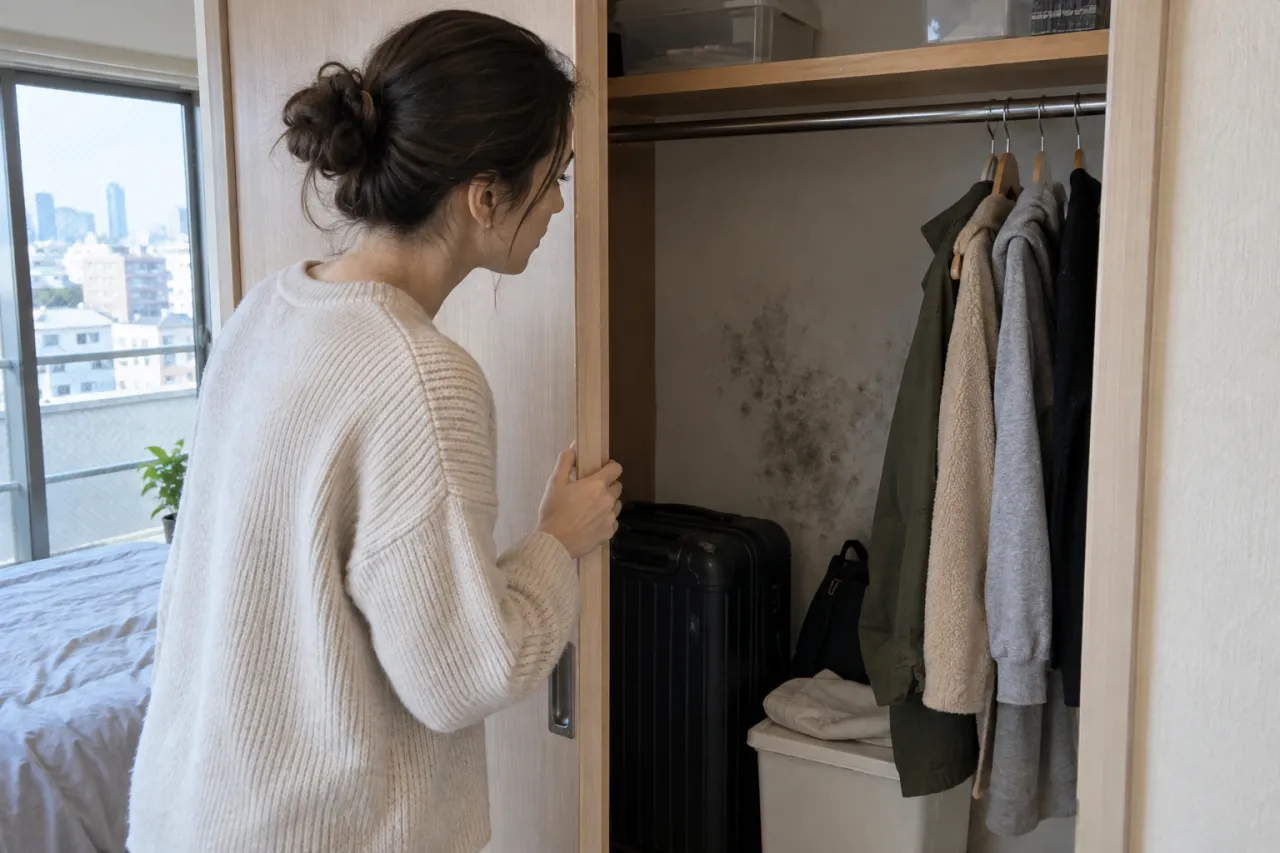
エアコン室内機のカビ臭と賃貸の相談
2026/10/14
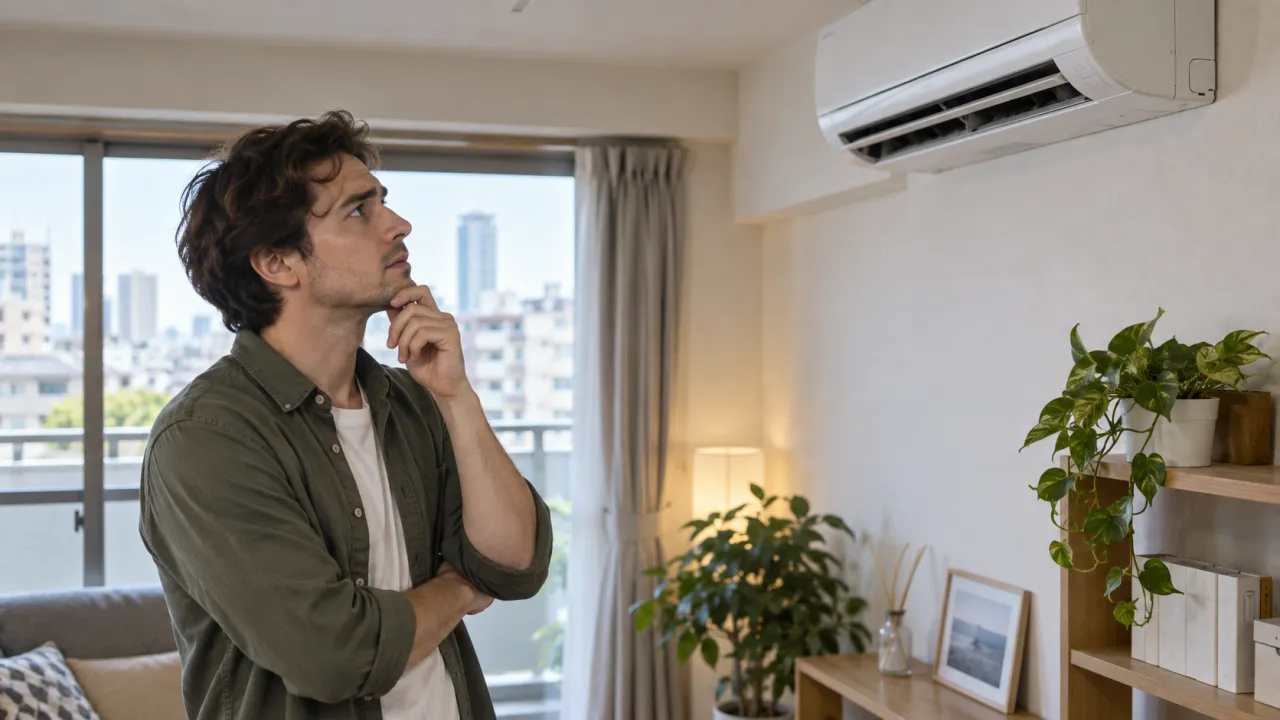
Quick answer. If the indoor air-conditioner smells musty when you switch it on, do not assume every smell proves mold, and do not spray chemicals deep into a rented unit. Note when the odor occurs, photograph accessible filters and any visible marks, check the maker's user instructions for safe filter care, and tell the property manager if the appliance came with the rental or there is water leakage. An English-speaking mold specialist can help assess the surrounding indoor environment and the scope of a suspected mold problem after equipment ownership, cleaning permissions and any repair needs are clear. This guide is for residents in Tokyo, Kanagawa and Chiba.
日本語の要点: 賃貸のエアコンからカビ臭を感じたら、内部へ洗浄スプレーを吹き込まず、臭いが出る状況と水漏れの有無を記録してください。備え付け機器なら管理会社へ連絡し、室内環境のカビ相談が必要ならカビバスターズ横浜へ英語で相談できます。
1. Separate a smell from a diagnosis
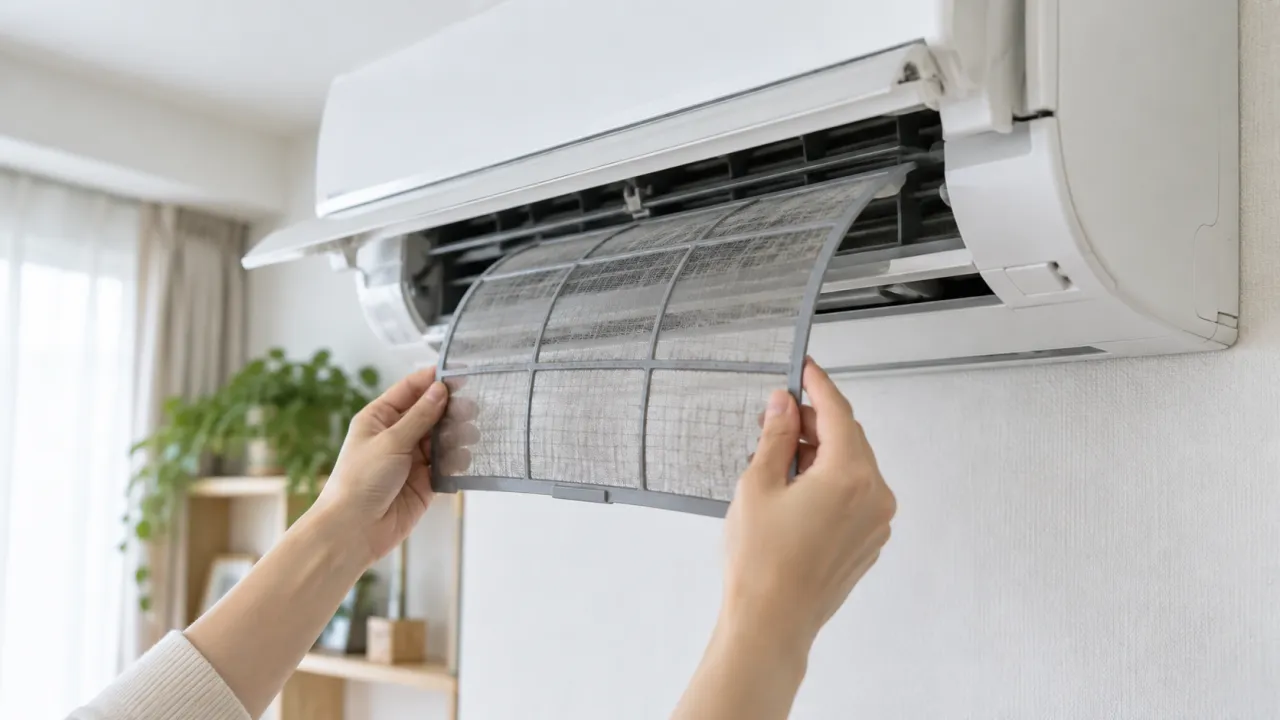
An indoor unit takes in room air. Dust, cooking smells and moisture associated with cooling can all affect how the air smells when the machine starts. Daikin's official indoor-unit odor FAQ describes accumulated room odors, dust and condensation-related mold as possible contributors. Its guidance is a useful mechanism, not a remote diagnosis of your machine. Daikin's English explanation of musty AC odors similarly explains why moisture and dust can create favorable conditions. A strong odor can also be connected to a drain, surrounding wall or another room source. Record observations before attributing the cause to one component.
Write down the model and manufacturer shown on the accessible label or remote. Note whether the odor happens on first start, throughout cooling, during heating, or only after switching off. Does it disappear when windows are opened, or does it remain in the room while the unit is off? Is a wall below the unit damp? Are there visible drops at the indoor housing or a blocked drain outlet? A photograph of a dark vent alone cannot confirm what is inside the machine. Avoid photographing private items if sending evidence to a service provider.
If you see dripping near a power socket, hear abnormal electrical sounds, or notice smoke or a burning odor, stop using the unit where safe and contact the manager or emergency repair route immediately. Mold advice is not a substitute for an electrical safety inspection. If water is actively entering a wall or ceiling, the building repair pathway comes before cosmetic cleaning. A renter should not remove covers, disconnect wiring or alter the drain simply to find the source.
| Observation | What it can and cannot establish | Next contact |
|---|---|---|
| Musty smell at start-up only | Odor is real; its exact source is unproven | Record timing, check user manual and manager |
| Visible dirt on a removable filter | Filter care may be possible within instructions | Follow the maker's procedure; do not wet electronics |
| Dripping onto a wall or electrical point | Water and safety issue may be urgent | Stop use if safe; contact building manager promptly |
| Odor returns after approved service | A wider moisture source may remain | Ask manager about unit and room assessment |
2. What a renter can check safely—and what to leave alone
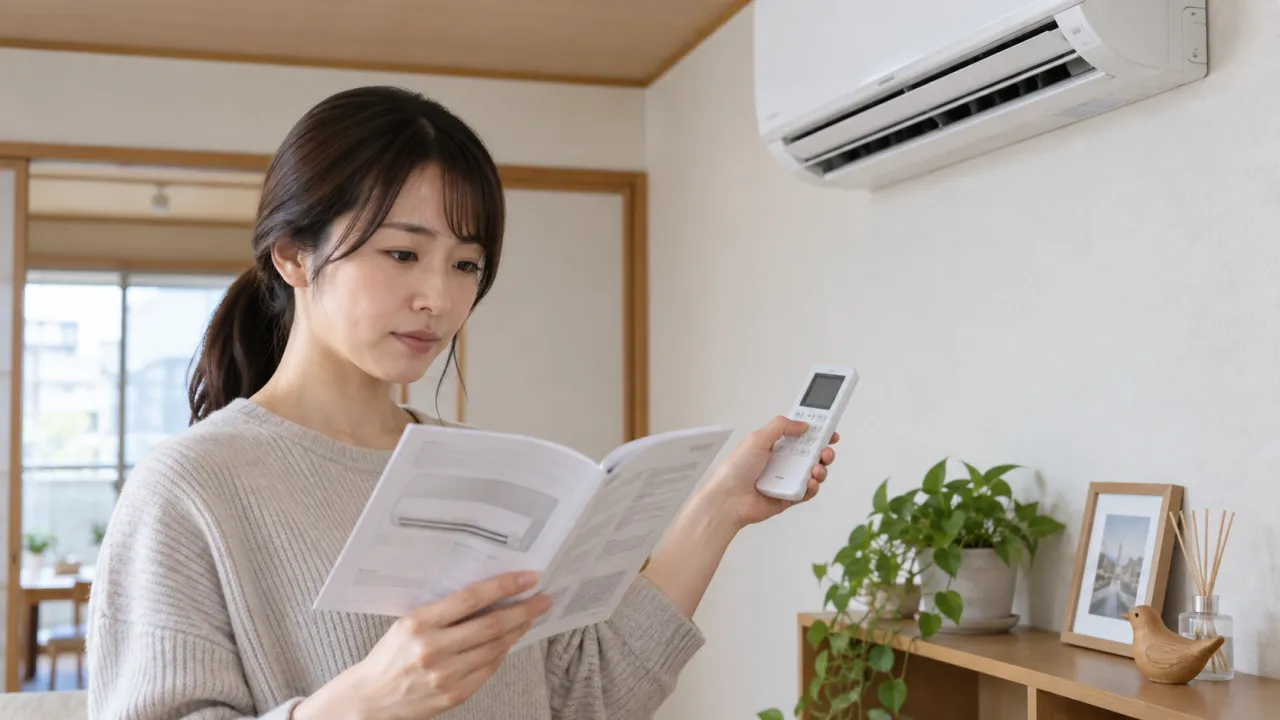
Start with the instruction manual for that model. If the manufacturer permits user filter cleaning, turn the unit off as directed, remove only the user-serviceable filter, and follow the stated drying method before reassembly. A general internet video for another model is not a substitute for the actual manual. Daikin's official FAQ distinguishes ordinary filter care from internal cleaning and warns against commercially sold wash sprays in the unit. Incorrect internal cleaning can damage parts and, in severe cases, create smoke or fire risk. Daikin's explanation of internal-clean operation says that drying after cooling can help suppress future mold and odor but cannot remove mold that already exists. Do not interpret a self-cleaning button as proof that the machine is clean.
Use the room's ventilation according to its design and keep air inlets free. If the room itself is humid or a window is regularly wet, the indoor unit may not be the only issue. Our English guide to 24-hour ventilation in Japanese homes explains basic checks. If the air conditioner was provided with the rental, read the lease and management instructions before booking any disassembly or paid cleaning. Ask who owns the appliance, whether the provider will inspect it, and which company is permitted to work on it. If you bought and installed it, responsibilities may differ; describe the facts rather than assuming one rule applies to every contract.
Do not use bleach, room disinfectant, essential oil, high-pressure water or a long brush inside the unit without the manufacturer's instructions and property approval. Masking the odor does not identify a moisture source. A leaking drain hose or damp wall will not be fixed by perfume or a surface spray. If a provider proposes treatment, ask exactly which parts are included, whether the electrical components are protected, and how the room will be left dry. Panasonic's official air-conditioner cleaning page directs users to authorized cleaning or consultation based on the unit's condition. This is a manufacturer service description, not proof that every renter needs that service.
If odor is associated with coughing, wheezing or another health concern, seek medical advice; an article cannot diagnose exposure or treatment. If there is visible growth extending beyond the appliance, send a photograph of both the unit and adjacent wall. In Tokyo, Kanagawa and Chiba, humidity and cooling seasons vary by building; location alone does not establish the cause. The useful evidence is where moisture occurs, how the equipment behaves and what maintenance has already been done.
3. Report the issue in English and decide which specialist is needed
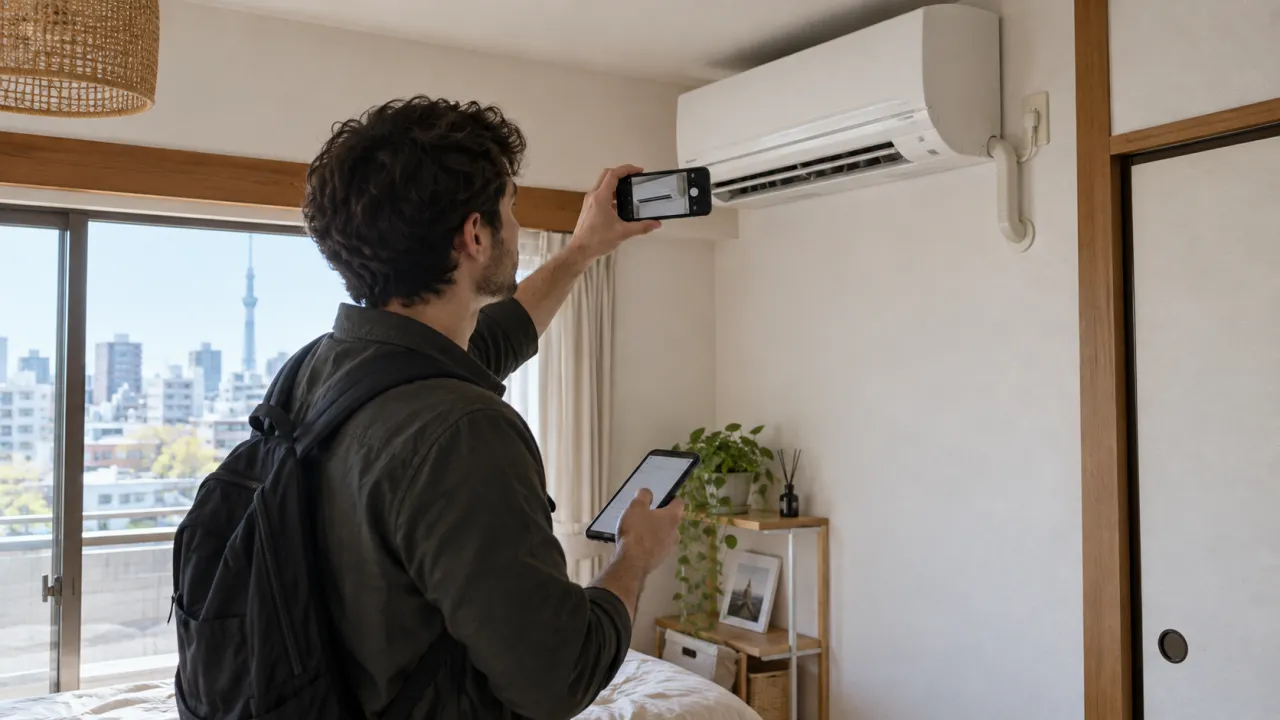
Send a short factual message to the landlord or management company: “The supplied air conditioner in [room] has had a musty smell since [date]. It happens during [cooling/heating/start-up]. I observed [no water/water at location]. I have not opened or sprayed the machine. Please advise whether you will inspect it and whether professional cleaning is permitted.” Attach a model photo, wide room photo and date-stamped images of any water damage. Ask for a reply in writing. This is clearer than a claim that “toxic mold” is proven by smell.
The roles are different. A maker or qualified AC technician is appropriate for internal appliance cleaning or mechanical faults. The building manager is the first contact for a supplied unit, leak, damaged wallpaper or permission to access fixed property. A mold specialist is relevant if surrounding wall, ceiling, closet or other materials show persistent staining or odor, or if the scope of environmental remediation is unclear after equipment and moisture issues are assessed. Kabibusters Yokohama's service information describes mold-related support, and the team can respond in English. Ask whether your specific address and material are within scope; this page does not promise a visit, price or result.
For an English inquiry, state your city and prefecture, rental or owned status, which unit is supplied, whether the manager has approved access, and the affected material. Send images using Kabibusters Yokohama's contact form. If the odor is only inside the appliance and no room material is affected, ask the manager or the manufacturer's service route first. If a wall stays damp after the appliance is off, ask about the building moisture source before any mold-surface treatment. This sequencing avoids paying for the wrong work and preserves a clear maintenance record.
Do not assume that an estimate for mold treatment includes mechanical AC repair, electrical work or a landlord's permission. Request a written scope in plain English if needed: surfaces, preparatory drying, restrictions, and whether an AC specialist is required separately. When comparing quotes, compare scope and exclusions, not just a headline number. If a contractor offers a guaranteed permanent fix without investigating water, ask how recurrence will be prevented. The critical result is a safe, dry indoor environment, not only a less noticeable smell on the day of cleaning.
4. FAQ and a practical decision checklist

Does a musty smell prove black mold? No. Odor is a reason to investigate, not identification of a species or a health-risk level. Record the pattern and seek a proper inspection if it persists. Avoid making a health diagnosis from a photograph or an online article.
Can I use a can of AC cleaning spray? Do not use it merely because it is sold in a store. Follow the particular manufacturer's advice. Daikin's official FAQ warns against commercial sprays inside its room units because incorrect washing can damage components. For a supplied rental unit, check approval as well.
Is the “internal clean” button enough? It may help dry the unit after cooling on models that have it, but the manufacturer says it does not remove established mold or odor. Use the model's manual and arrange appropriate inspection if the problem continues.
Who should I contact first? For an appliance supplied by the landlord, the manager; for water near electrics, the emergency repair route; for internal AC cleaning, an authorized or qualified appliance specialist as arranged with the owner; for persistent mold on surrounding indoor materials, discuss scope with a mold specialist after the source and access rights are clear.
What if I speak English more easily than Japanese? Give the manager a concise English timeline and photographs. Kabibusters Yokohama can take an English mold inquiry. Name the room and city, and state whether the manager has already been contacted. Do not assume that every third-party repair line offers English service.
Should I stop using the unit? If there is water near electricity, smoke, burning smell or abnormal operation, stop where safe and seek urgent equipment help. For an odor without a safety issue, follow the provider and manufacturer's instructions while arranging inspection; this article cannot evaluate your specific equipment remotely.
Before requesting mold work, confirm: the symptom and timing; any leak or electrical hazard; the model and ownership; what user maintenance the manual permits; what the manager has agreed; whether walls or ceiling are also affected; and which service is being requested. Tokyo, Kanagawa and Chiba residents can use the same checklist even though tenancy arrangements differ. For a suspected indoor-material mold problem, send an English-language inquiry to Kabibusters Yokohama with photographs and the manager's response. Keep the building and appliance repair questions separate.
Primary sources: Daikin's official odor FAQ, Daikin's internal-clean guidance, Daikin's English odor explanation, and Panasonic's official cleaning information. These explain general equipment behavior and safety; they are not an inspection of your rental.
----------------------------------------------------------------------
カビバスターズ横浜
住所 :
〒221-0056
神奈川県横浜市神奈川区金港町5-14 クアドリフォリオ8階
電話番号 :
0120-133-199
----------------------------------------------------------------------