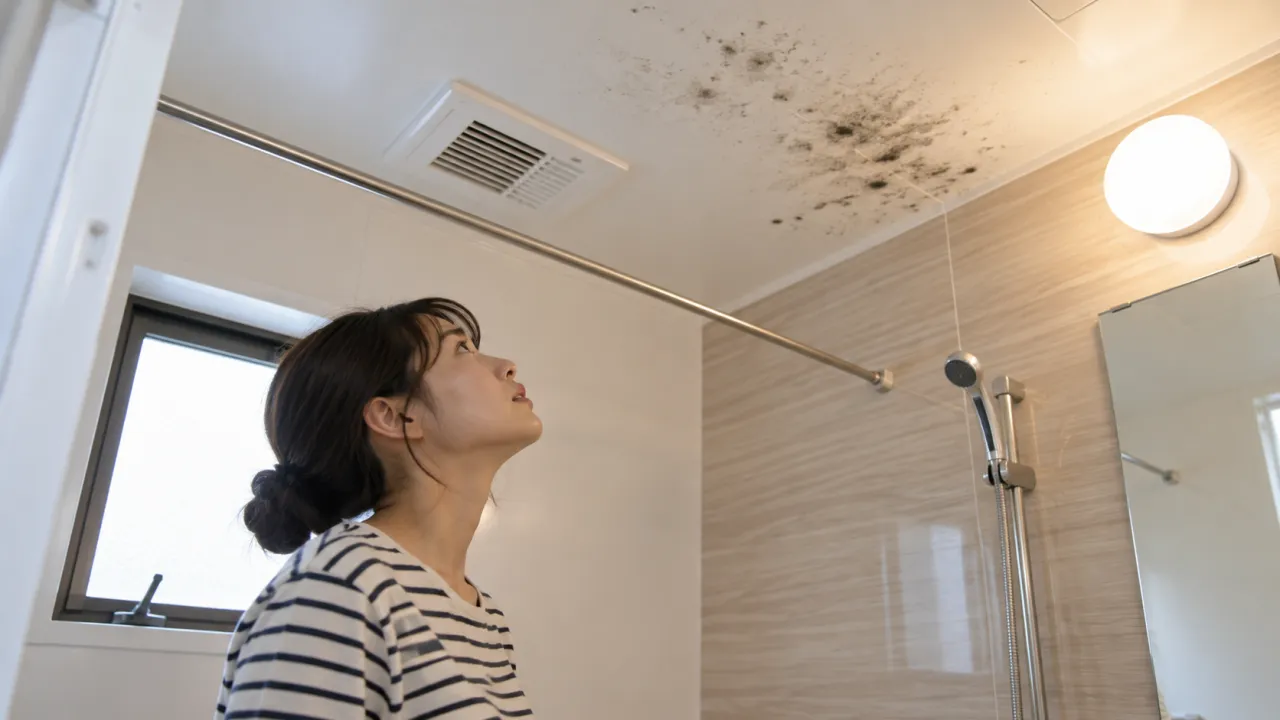
Private art storage room mold
2026/10/16
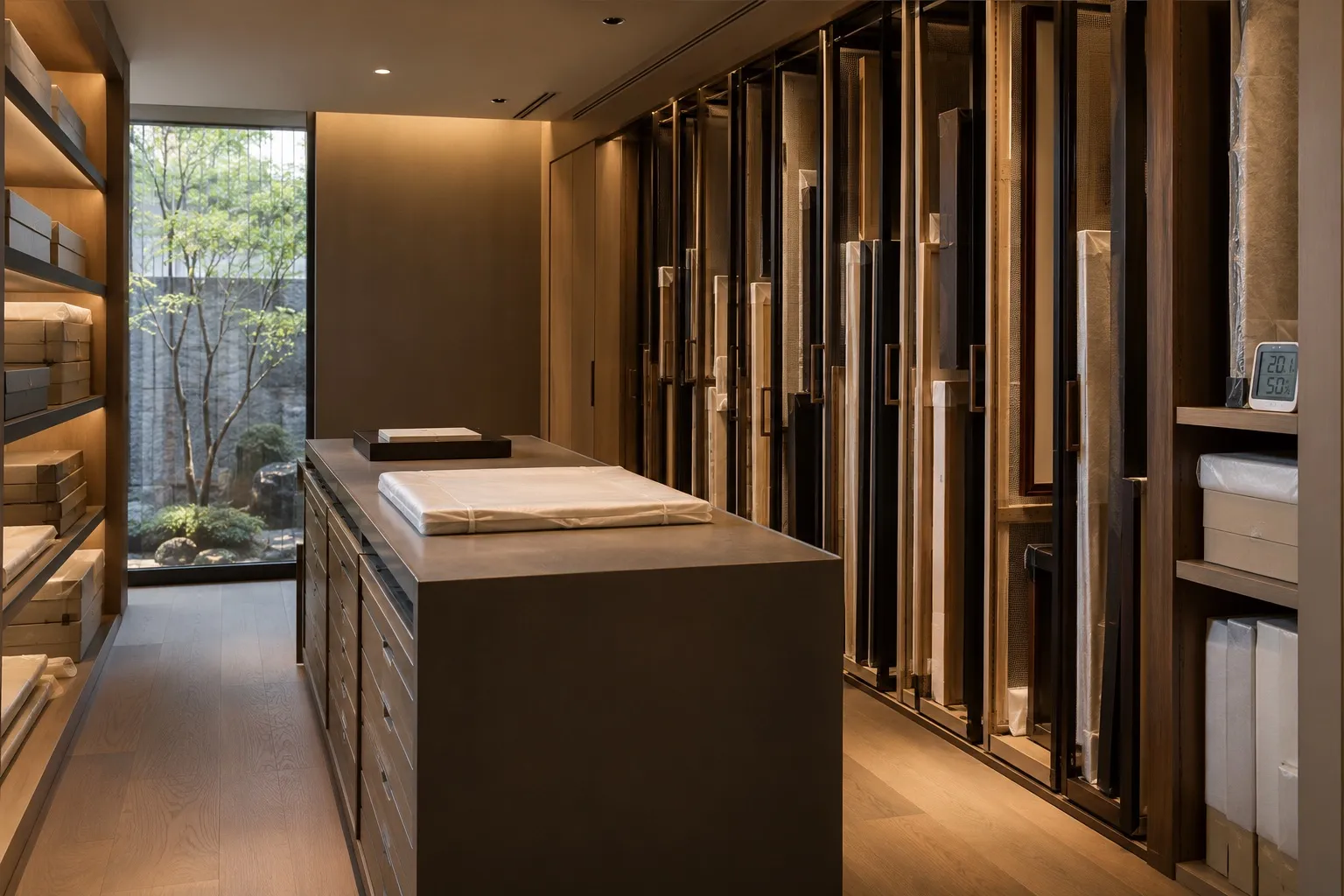
Direct answer: If a private art storage room in a Tokyo, Kanagawa or Chiba residence develops a musty odor, damp patch or growth-like mark, first protect people and stop any active water through the property manager and appropriate repair trade. Document the building location, the collection areas potentially exposed and the room's environmental history. A building mold specialist can assess wet walls, ceilings, floors and ventilation pathways; a qualified conservator should decide how a painting, work on paper, textile, photograph or valuable frame is examined, moved, stabilized or treated. Do not spray objects, unwrap works to “check for mold,” or assume that clearing a wall makes the collection safe. An artwork's condition requires its own assessment.
This is a narrow guide for a private collector, international executive or estate manager with a room used primarily to store art at home. It differs from a guide to mold behind a single displayed framed work: the issue here is the room as an environmental system, including storage racks, air-conditioning, adjacent plumbing, leak routes, access and a collection-wide incident plan. Art-value judgments, treatment priorities and insurance questions belong to the owner and qualified specialists. Kabi Busters Yokohama may be asked about a building-side mold and moisture concern, but it does not claim to conserve paintings or guarantee the recovery of any object.
Three primary sources frame the search question. The Canadian Conservation Institute's mould-prevention and collection-recovery bulletin discusses environmental control, contamination response and the special handling of heritage collections. Its guidance on incorrect relative humidity explains that different materials and enclosures respond differently, so a single “correct” number is not universal. The US Library of Congress guidance on wet or moldy collections stresses human safety and object-specific emergency care. Search rankings vary; these are complementary resources, not competing rules. None can diagnose an unseen wall in a private residence or authorize treatment of its collection remotely.
1. Identify whether the first problem is room air, a local wet surface or an active leak
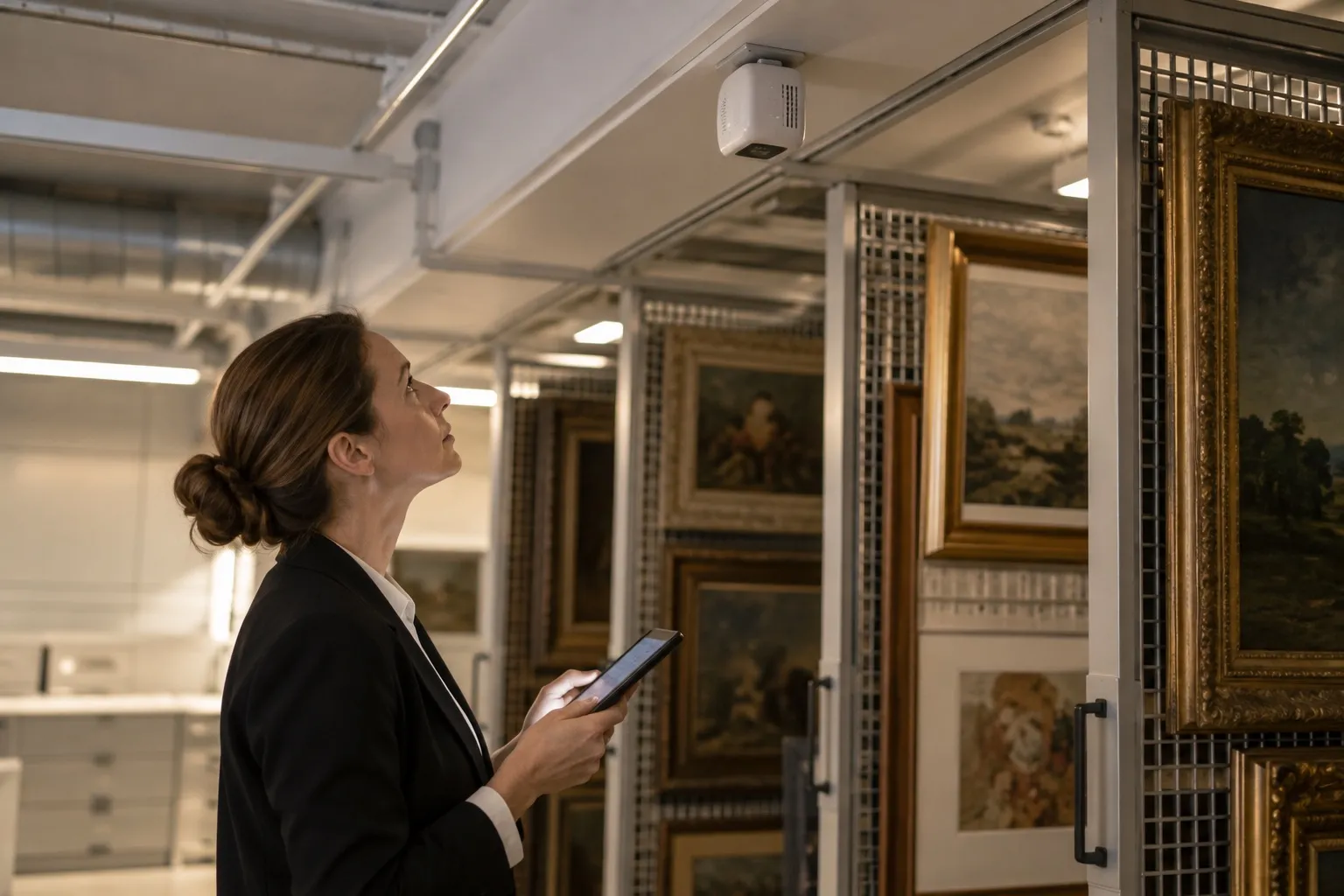
An art room can appear dry in the center while a ceiling edge, an exterior wall behind a rack or a cabinet back is wet. Start with a room map and dated observations: stained location, odor location, visible condensation, HVAC status, water alarms and relevant rainfall or plumbing work. Do not infer that “high humidity caused everything” from one reading. A logger at the door may miss a cooler microclimate behind a densely packed rack. Conversely, a localized leak can damage one building element even when room-average humidity appears controlled. Record where and when the instrument measured, whether it was calibrated and what it could not see. Keep artworks and personal details out of general photographs when possible.
The CCI humidity guidance explains that collection materials respond to relative humidity differently and that risk depends on exposure and vulnerability. The collection's conservator may set appropriate monitoring and targets for particular works or enclosures. Do not copy a museum number into every private residence as if it were a statutory threshold. High, prolonged moisture can support mold and other deterioration; rapid swings may also stress wood, paper, canvas or photographs. The relevant question is what the room, its microclimates and its individual objects have experienced over time.
Look for water sources before cleaning any patch. The property manager should coordinate safe checking of pipes, roof or balcony above, chilled-water or AC condensate, window edges and adjacent bathrooms. A building professional can test the likely route and determine whether an assembly must be opened. A mark on plaster is an observation; a failed waterproofing detail is a hypothesis until examined. Avoid moving racks or opening wall panels with collection items in the path without a protection plan approved by the collection custodian. If water is near electricity, a ceiling is unstable or contaminated water is present, use the property emergency process and keep people away.
Routine preventive care should make inspection possible: accessible aisles, no objects directly under known pipes or wet-prone openings, clean surfaces, and a record of HVAC and leak-alarm checks. But rearranging a valuable collection can itself cause damage. Ask the conservator how to create safe inspection access rather than telling housekeeping to shift works. The CCI mould bulletin treats prevention and recovery as collection-management decisions. It does not authorize a general building contractor to touch every work in a private store.
2. Control the building-side source without contaminating the collection
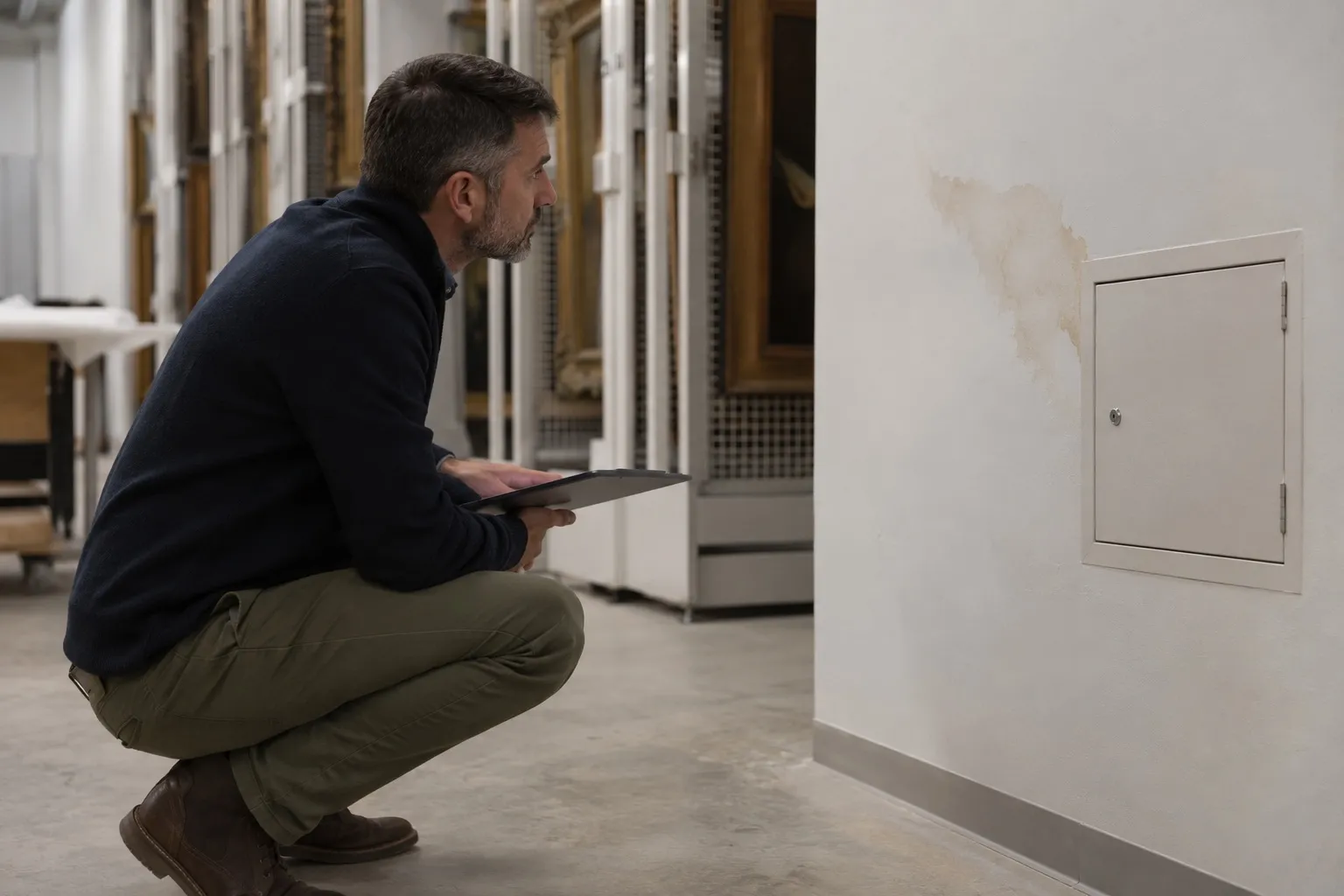
The immediate repair may be plumbing, roof, facade or HVAC work, depending on evidence. The estate manager should establish a restricted work zone and separate the collection route from the repair route. Specify where tools may be set down, which racks may be approached, whether air returns serve the storage room and who may change HVAC settings. A mold specialist can inspect affected building materials and discuss containment and scope; the repair trade fixes the source. If construction dust or water might reach objects, the custodian and conservator should approve protective measures before works proceed. A worker protecting a wet wall should not assume plastic wrapping is harmless for a damp painting or textile.
Distinguish immediate stabilization from final remediation. Stopping an active leak and securing an unsafe ceiling may be urgent; deciding whether a plasterboard lining is retained or removed requires material assessment. If a cavity is opened, the technical team should explain its location, dust control, objects to be moved, waste route and reinstatement. The conservator may need a clean temporary holding location for affected works. Do not let wet packaging or crates remain sealed solely to keep dust off. Such decisions depend on material and condition; the Library of Congress collection-emergency FAQ emphasizes object-specific action and safety precautions.
The phrase “treat the room” is too broad for a collector. Ask whether it means repairing water entry, drying an assembly, addressing affected building material, cleaning storage furniture, or treating objects. Each has a different lead professional and acceptance criterion. The CCI immediate response guide for a mould outbreak discusses isolating contamination and adjusting the environment. It is a specialist resource for collections, not a do-it-yourself instruction to seal any ventilation system or spray a residence. Building HVAC changes should be designed and performed with the relevant technical team.
Keep the initial building report factual: inspected areas, observed moisture, instrument methods, suspected source, source-repair referral, affected material, limitations and follow-up. “No visible growth on inspected wall after repair” cannot be shortened to “art room mold-free.” A clean-looking wall says nothing definitive about an unopened crate, reverse side of a canvas or paper inside a frame. Equally, a damaged object does not prove the current wall is wet. The two investigations need a shared timeline but distinct conclusions.
3. Protect the objects' conservation decisions and privacy
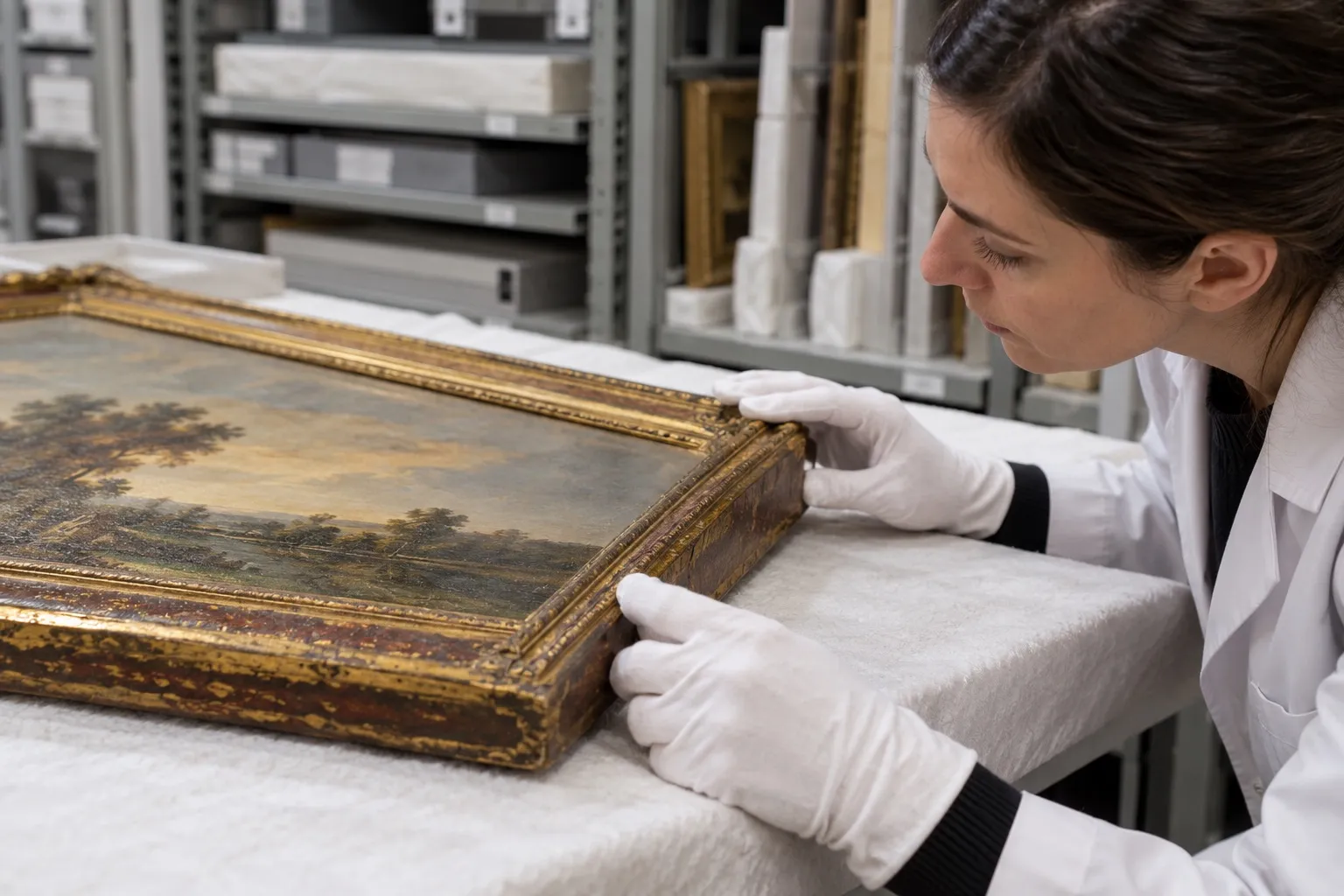
The collection custodian should create an item-location map without broadcasting valuations or ownership details to every contractor. For a building-side assessment, a rack code and approved access route may be enough. If a work is visibly wet or has active growth-like deposits, restrict casual handling and call a conservator with the appropriate material expertise. The Library of Congress guide to mold in wet collections warns against disturbing active growth. The way to stabilize paper is not necessarily the way to treat an oil painting, photograph or textile. A product that is safe on a wall could permanently alter pigments, coatings, adhesives or support material.
Do not ask a handyman to “dust the mold off every frame” or place works in direct sun to dry. Nor should an owner assume that freezing or bagging is universally safe. The CCI mould-prevention bulletin discusses techniques and limitations in a professional context; handling must reflect the actual object's material and condition. A conservator may choose different stabilization for paper, wood, photographic media and modern mixed media. The estate manager's role is to secure the environment and coordinate expertise, not to invent a treatment protocol.
Photography needs strict scope. A building specialist may need the damp ceiling and nearby rack position, not full-resolution catalog photographs, labels, insurance schedules or security devices. Agree on who may photograph, how files are stored, whether images can be shared with subcontractors and when access ends. If an insurer needs an inventory, let the owner and appointed broker direct that separate process. An English-language incident note should avoid naming individual artists or values unless required for the decision. This is good information minimization, not a claim about legal confidentiality or specialist credentials.
| Finding | Building-side lead | Collection-side lead | Do not infer |
|---|---|---|---|
| Active pipe leak above rack | Manager and plumber; building specialist for wet assembly | Conservator for exposed objects | That all objects are lost or all are safe |
| Persistent musty odor near exterior wall | Building moisture and mold assessment | Conservator if objects show changes | That odor identifies the organism or exact location |
| Growth-like deposit on a work | Manager secures room conditions | Material-specific conservator | That a wall-cleaning product belongs on the work |
| High room logger readings | HVAC/controls technician checks operation | Conservator interprets collection vulnerability | That one number diagnoses every microclimate |
| Dry wall after repair | Building team documents source control and drying | Conservator decides object return and monitoring | That the entire collection is certified clean |
4. Commission two coordinated scopes, then define return-to-use criteria

When the owner is abroad, name a local decision-maker before a technician arrives. Give the building team written authority for safe access and emergency source control, with separate permission for opening finishes. Give the conservator authority for object handling, packing and storage decisions. Define a single incident number and timeline so photographs, readings and repair notes can be reconciled, but keep the collection inventory restricted. The building specialist should not promise to return objects to display; the conservator should not sign off on a hidden building cavity. A clear boundary helps everyone work faster without overclaiming.
Before returning works, ask the building team what source was repaired, which assemblies were inspected and dried, how the room's HVAC and drainage were checked, and what remains inaccessible. Ask the conservator which works were evaluated, what stabilization was performed and what environmental conditions or monitoring are required. A successful wall repair does not guarantee that a previously wet work is undamaged. A treatment plan for an object does not guarantee that the storage room will stay dry. Both sides should record uncertainties and a follow-up trigger such as renewed odor, a fresh stain or a logger anomaly. Do not invent a fixed “safe for all art” humidity or a guaranteed restoration outcome.
FAQ: Should all art be moved out immediately? Not automatically. An active leak or unsafe room may demand urgent protection, but moving fragile objects can create new damage. Let the custodian and conservator prioritize items and a safe route while building hazards are controlled.
FAQ: Can the property manager spray anti-mold chemicals in the room? Do not approve that as a blanket response. A chemical may affect artworks and does not fix a leak. Agree on building-material scope and collection protection with the right specialists.
FAQ: Does a humidity monitor prove the room is safe? No. It records conditions at its location and time. Local damp walls, cabinets and crates may differ; conservation requirements vary by object.
FAQ: Should a mold contractor clean paintings or photographs? Building contractors should not assume that role. A qualified conservator for the relevant material should direct object assessment and treatment.
FAQ: Can a repaired wall be declared mold-free? A report can describe observed conditions within the inspected scope and source repair. It cannot guarantee the absence of all spores or hidden problems across a collection and building.
FAQ: What should an overseas owner share in the first enquiry? Broad location, affected room and building element, active water status, approved local contact and limited photos. Withhold collection valuations, floor plans and sensitive details until secure scope is agreed.
For a building-side moisture or mold question, review Kabi Busters Yokohama's service information and ask the team whether an English-language assessment can be arranged for the affected room. Confirm geographic coverage, availability, access and reporting before booking. A useful opening message is: “Our private art storage room in Kanagawa has a recurring damp stain on one wall. The conservator controls artwork handling. Can you assess the building-side moisture route and coordinate an inspection boundary with our estate manager?” For wet artworks, contact the appointed conservator at the same time; for active water or electrical danger, call the property's emergency contact first.
日本語の要点: 住宅内の美術品保管室でカビ臭や水染みを見つけたら、建物の漏水・結露・空調の問題と、美術品そのものの状態を分けて対応します。建物側は管理者、設備修理業者、カビ・水分調査の専門業者が担当し、作品の移動・乾燥・処置は材質に合った保存修復家に相談してください。部屋の湿度計一つで全作品の安全は証明できません。作品に薬剤を散布したり、勝手に開梱したりせず、立ち入り・撮影・情報共有の範囲を先に決めます。
----------------------------------------------------------------------
カビバスターズ横浜
住所 :
〒221-0056
神奈川県横浜市神奈川区金港町5-14 クアドリフォリオ8階
電話番号 :
0120-133-199
----------------------------------------------------------------------