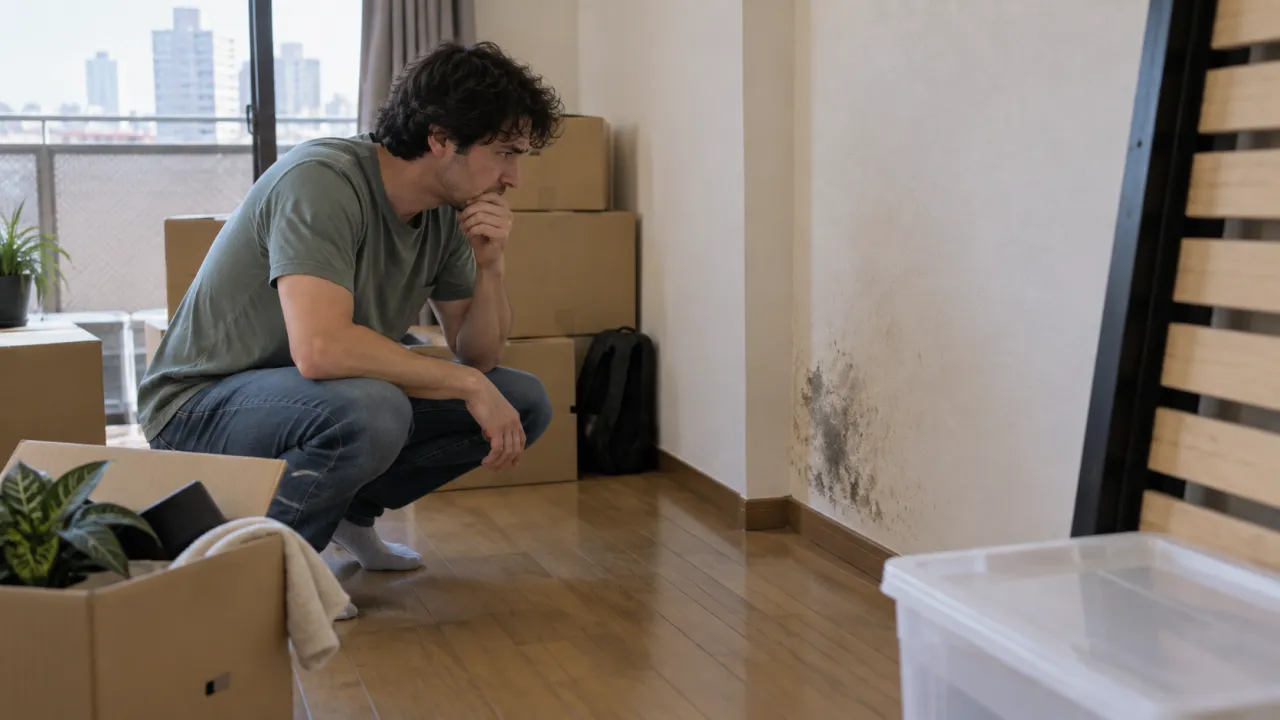
冷蔵庫裏の黒ずみ・カビ相談
2026/10/18
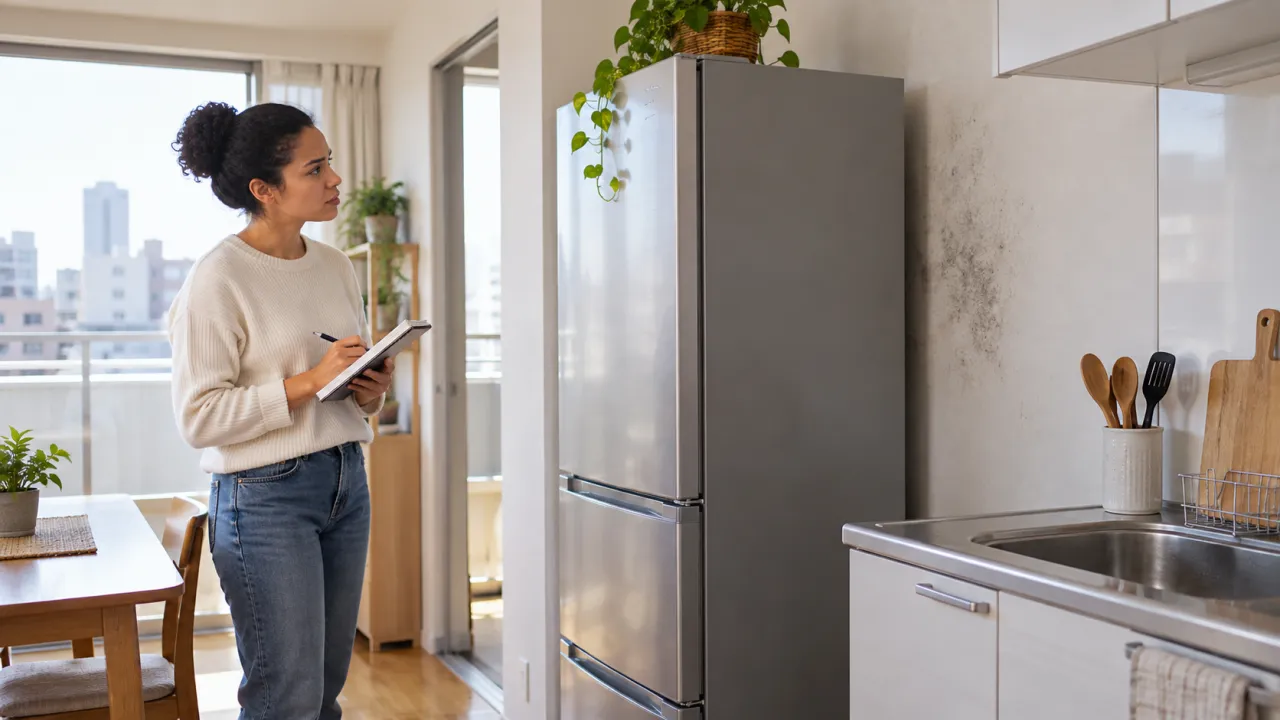
Quick answer. A black patch behind a refrigerator is not automatically mold. Heat and moving air can carry dust onto the wall, while a wet floor, condensation or a plumbing leak can create a separate moisture problem. Do not drag a heavy refrigerator alone or touch wet electrical parts. Photograph the wall and floor from safe positions, check for actual wetness and odor, consult the appliance manual for clearance, and report damp or damaged rental surfaces to the property manager. If a mold-like mark persists after the moisture source is understood, Kabibusters Yokohama can receive an English inquiry about the indoor material. This guide is for Tokyo, Kanagawa and Chiba residents.
日本語の要点: 冷蔵庫裏の黒ずみは必ずしもカビではありません。放熱で運ばれたほこりの付着と、壁や床の濡れを分けて確認します。重い冷蔵庫を一人で動かさず、壁紙が湿る・剥がれる場合は管理会社に報告してください。カビの範囲については英語で相談できます。
1. Why a dark refrigerator wall may not be mold
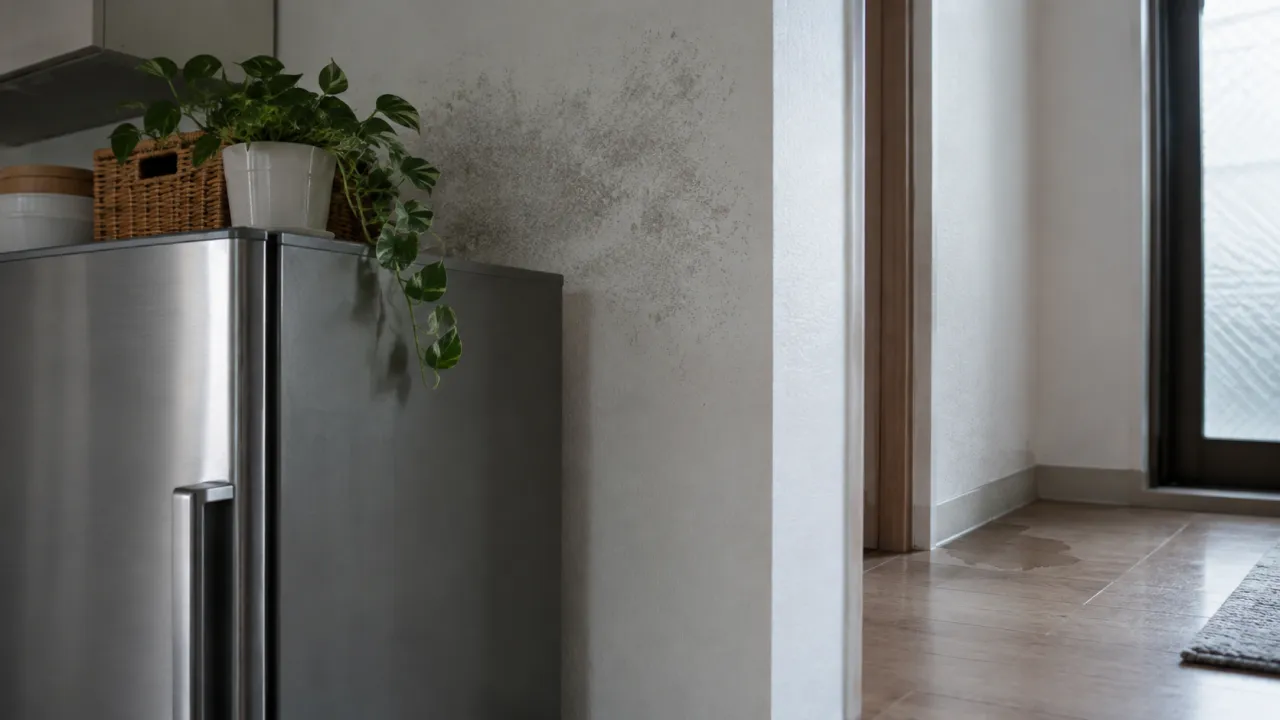
A refrigerator releases heat as it works. Mitsubishi Electric's official refrigerator FAQ explains that warm exhaust air rising between the appliance and wall can gradually deposit dust and grime, making a white wall look black. This observation is important because a dark wall alone cannot establish biological growth. MLIT's English restoration leaflet specifically mentions dark wallpaper patches behind refrigerators, often called “electric burns,” in its general examples. Neither source can identify your patch remotely or determine a particular renter's cost responsibility.
Look at the pattern before cleaning it. Is there an even gray film aligned with the rising airflow? Are there irregular spots on wet wallpaper, a musty odor, soft material or droplets on the floor? Is the blackening limited to the wall directly behind the unit, or does it continue across a nearby exterior corner? A dry dust film and a damp, damaged wall need different responses. A photograph may not settle the difference, but it helps show the location and change over time. If you can smell burning or see smoke or sparking, stop use if safe and contact the appliance or building emergency route; this is not a mold-cleaning issue.
You may not be able to see behind the refrigerator without moving it. Do not pull on the door or power cord. A large appliance can tip, scratch a rental floor, trap a foot or strain a water line. If the appliance has an ice-maker supply, a drain, or a fixed cabinet surround, ask the manager or an appliance professional how to access it safely. Never place your hand near a wet socket to take a better photograph. The need for a safe inspection is more important than a perfect close-up image.
| Finding | What it could mean | First response |
|---|---|---|
| Dry gray-black film above the refrigerator | Dust carried by warm air is possible | Photograph; check appliance manual and wall-care guidance |
| Wallpaper feels damp or peels | Condensation or water entry needs investigation | Report the rental wall to management |
| Rust or standing water below the appliance | Spill, supply line or appliance fault may be involved | Protect safety; contact manager or appliance service |
| Mark returns after approved cleaning | Persistent source may remain | Recheck moisture and request assessment |
2. Check the appliance and room without creating a new problem
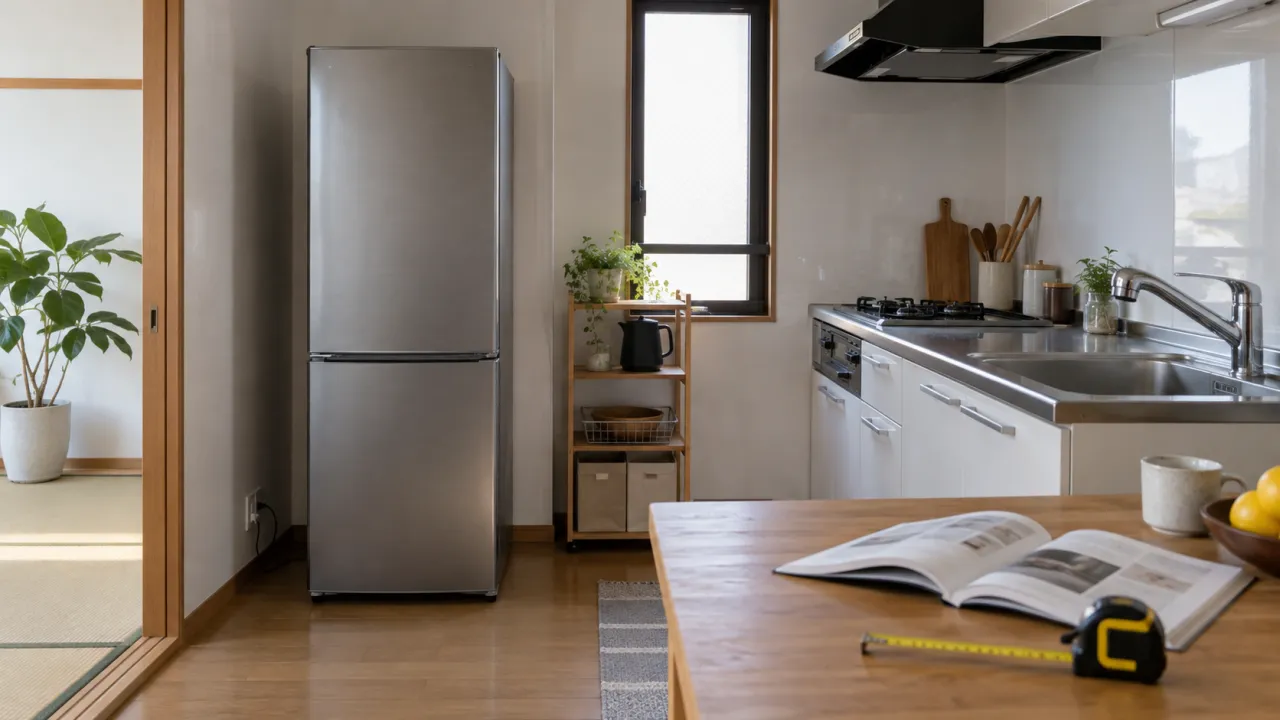
Each refrigerator model needs its own installation clearance. Panasonic's official installation guide advises checking the ventilation space required at the sides, top and back of the actual product, and notes that dust behind an appliance can interfere with heat release. Do not take a single distance from a different model and treat it as universal. Locate the model label or manual, and ask for help if the fridge is installed in a tight alcove. If it is a landlord-supplied unit, seek permission before repositioning or arranging service. If it is yours, the wall remains part of the rental, so document any damage before altering it.
The wider room matters too. Tokyo Metropolitan Government's English indoor-environment guidance advises keeping airflow around furniture and reducing persistent humidity. UR Housing's English residents' guide discusses condensation and mold on walls, including walls behind belongings. A kitchen may generate moisture from cooking or an adjacent sink, but do not assume cooking caused the refrigerator-wall patch. Check whether the wall faces outdoors, whether the kitchen exhaust works, and whether a pipe or refrigerator water line is nearby.
If the floor is wet, record where water is collecting and when: after cleaning the floor, after ice-making, after rain or continuously. A damp wall and floor may indicate a leak, not just humid air. If water is near an electrical outlet, avoid the area and contact the property manager urgently. A portable dehumidifier can change room air conditions, but it cannot repair a pipe or prove that wallpaper backing is dry. Follow the appliance maker's instructions; do not block ventilation openings with storage boxes, towels or improvised panels to hide the dark patch.
For a dry surface that the manager confirms can be cleaned, use a method compatible with the wall finish. Do not apply bathroom bleach, abrasive pads or heavy water to wallpaper; these can damage the surface and confuse the evidence. Photograph before and after. If the mark remains, that may be staining rather than active mold. If a musty odor or wetness returns, stop repeating cosmetic cleaning and ask what is keeping the area damp. The key distinction is an appliance dust pattern versus a building-material moisture problem.
3. Report rental damage in English and choose the right specialist
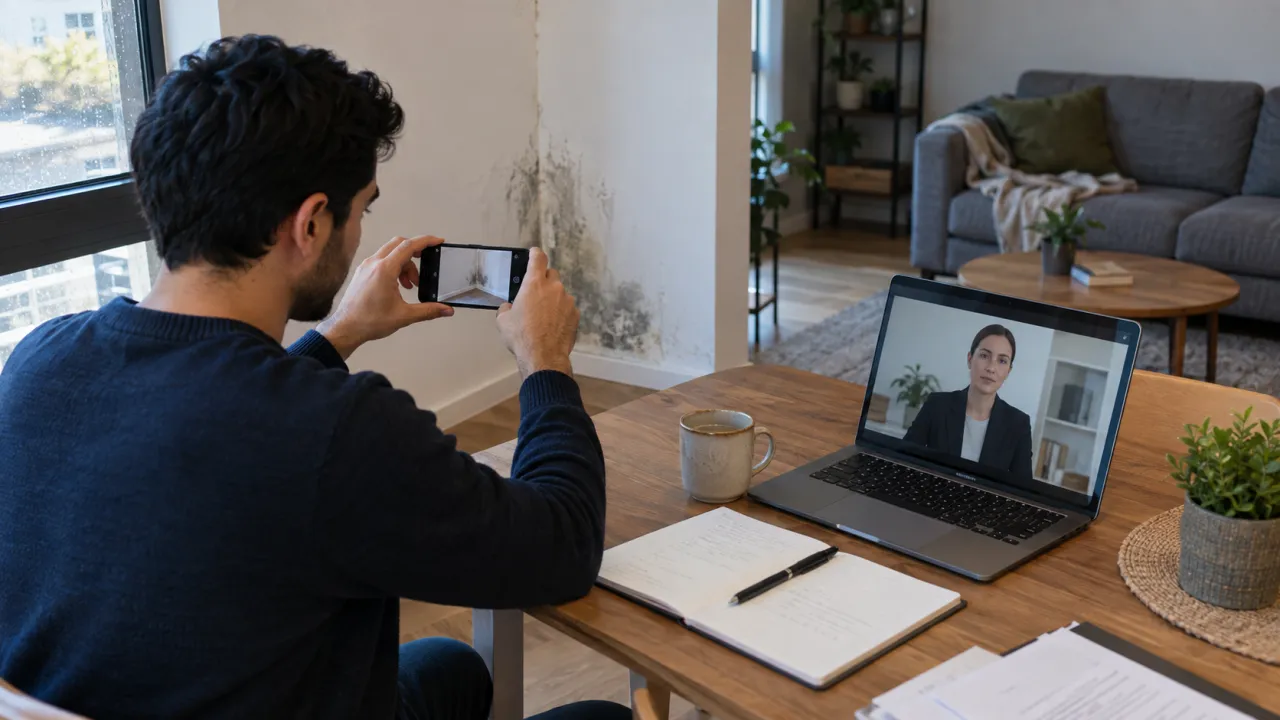
An accurate message to management could say: “I noticed a dark patch behind the refrigerator in [room] on [date]. The visible wall is [dry/damp], the floor is [dry/wet], and I noticed [no odor/a musty odor]. The refrigerator is [provided by the property/my appliance]. I have not moved the appliance or altered the wallpaper. Please advise how the wall and any water line can be checked safely.” Attach a wide image plus details you can obtain without unsafe access. Ask for a written reply and keep it with your move-in condition photographs.
The roles differ. An appliance technician handles refrigerator faults, installation clearance and water-line issues within their trade. The manager authorizes work on the rental wall, arranges building repair and determines access. A mold specialist can assess affected indoor material if a damp wall, recurring mark or musty smell raises a mold-scope question. Kabibusters Yokohama's service page describes mold-related support. The staff can respond in English; use the contact form to state your city in Tokyo, Kanagawa or Chiba, what is wet, whether management has been told, and whether the appliance is movable. Do not assume a guaranteed visit, fixed fee or outcome.
The tenancy question should not be confused with the identification question. MLIT's English leaflet distinguishes examples of ordinary darkening behind refrigerators from mold or staining that spread because condensation was left unattended. Those are general examples, not automatic decisions. The cause, lease, earlier reports, appliance ownership and actual condition matter. Preserve the facts and seek housing advice if charges are disputed; a mold company does not decide deposit liability. Our separate English move-out evidence guide explains the recording process but is not legal advice.
For an international resident, it may help to use both terms in a message: “darkening behind the refrigerator” and “possible moisture damage.” That avoids stating “black mold” as a confirmed diagnosis. Include the dates and avoid guessing whether a stain is a landlord or tenant expense. If active water is present, use the building's emergency repair channel first; an online mold inquiry is not an emergency plumbing service. If someone proposes only repainting, ask whether the wall was damp and how the source will be checked before the finish is covered.
4. FAQ and a decision checklist

Is a black refrigerator wall always mold? No. Manufacturer guidance explains that warm airflow can leave dust behind a refrigerator. Wetness, odor, material damage or recurrence require a closer look, but color alone cannot identify mold.
Can I pull the refrigerator out by myself? Do not do so if it is heavy, unstable, connected to a water supply or near wet electrics. Ask the manager or appliance professional for safe access. Photograph what is visible without taking a physical risk.
How much space should the refrigerator have? The correct ventilation clearance depends on the model and its manual. Panasonic advises checking the particular unit's required space. Do not rely on a universal number from a blog or another appliance.
Should I bleach the wall? Not automatically. A dry dust mark may not need mold treatment, while wallpaper can be damaged by strong chemicals or too much water. Photograph first and obtain compatible wall-care and property guidance.
Does the official “electric burn” example mean I owe nothing? No. It is a general restoration example. A wet wall, ignored leak, contract term or unrelated damage may change the analysis. This article cannot settle an individual cost dispute.
When should I contact Kabibusters Yokohama? When a rental wall is wet or repeatedly marked, when odor persists after appliance and moisture checks, or when the affected indoor material needs a mold-scope assessment. Tell the manager first about fixed property or active water, then send photographs and details through the English inquiry route.
Before concluding that the wall needs mold treatment, ask: Is the patch dry? Is there a musty or burning smell? Is the wallpaper sound? Is the floor wet? Is there a water line? Is the refrigerator yours or supplied? Has the manager replied? The answers direct you to the appropriate next step and help avoid unnecessary cleaning. For Tokyo, Kanagawa and Chiba residents who still need an indoor mold assessment after those checks, contact Kabibusters Yokohama in English with clear photos and the manager's status.
Primary sources: Mitsubishi Electric's refrigerator-wall FAQ, Panasonic's refrigerator installation guidance, Tokyo's English indoor-environment guidance, UR Housing's English residents' guide, and MLIT's English restoration leaflet. They are general guidance, not an inspection of your refrigerator or wall.
----------------------------------------------------------------------
カビバスターズ横浜
住所 :
〒221-0056
神奈川県横浜市神奈川区金港町5-14 クアドリフォリオ8階
電話番号 :
0120-133-199
----------------------------------------------------------------------