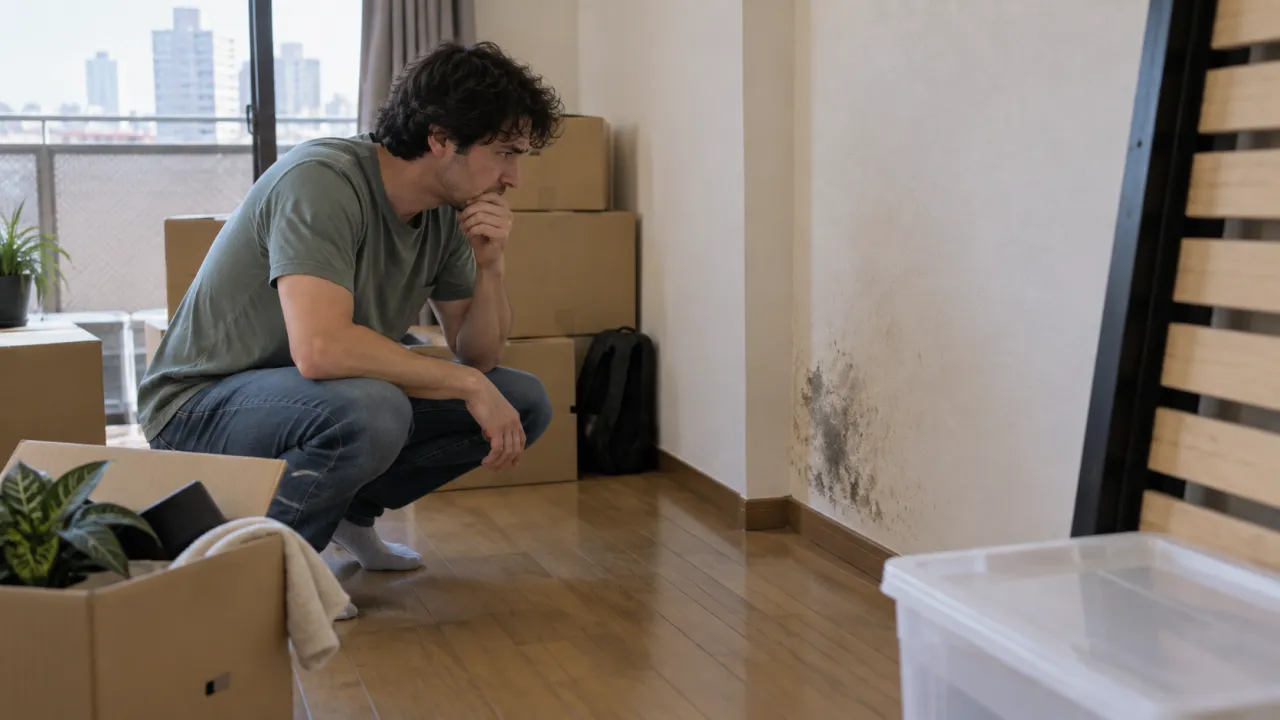
Hillside lounge dampness and mold
2026/10/18
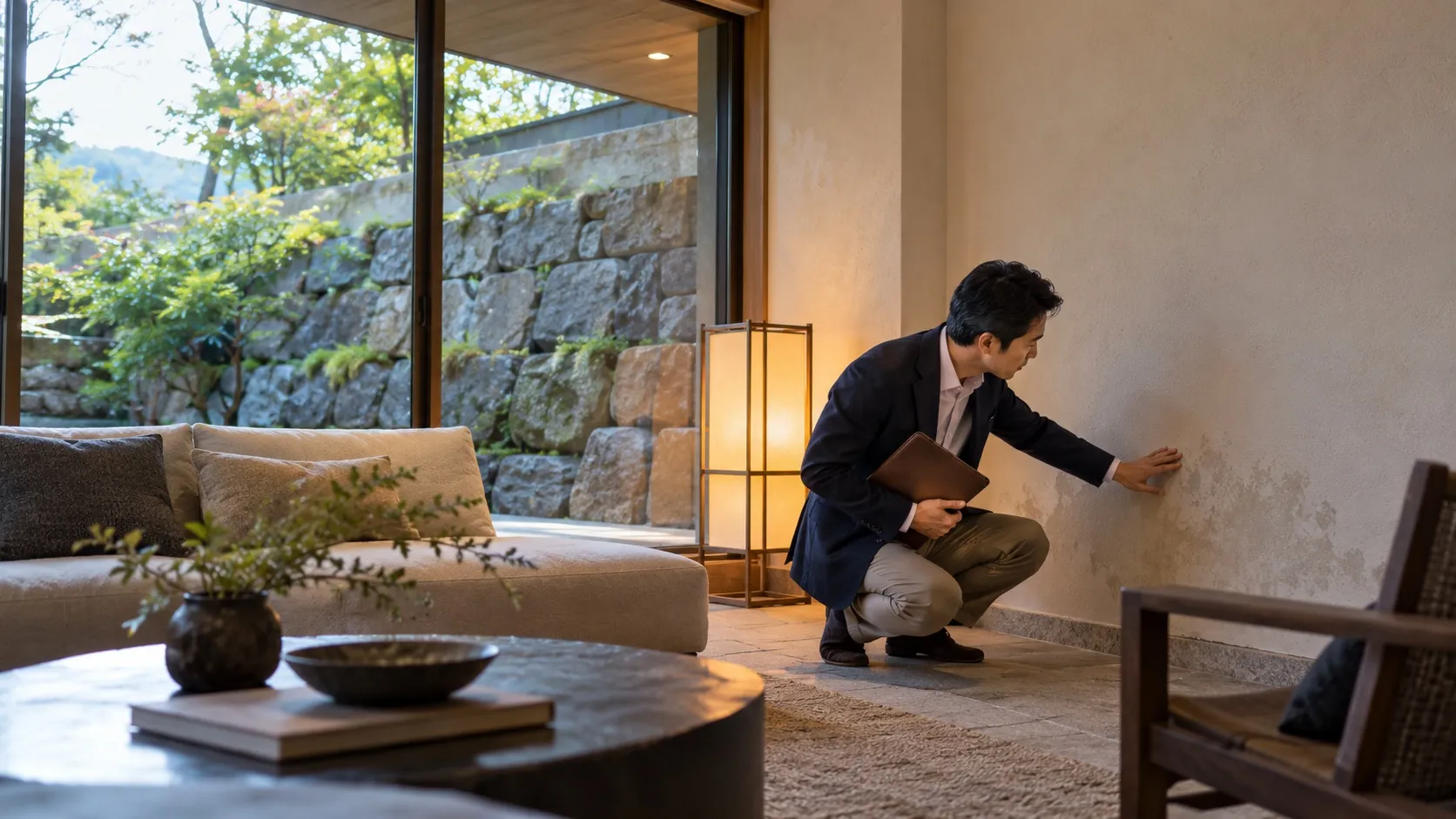
Direct answer: If a lower-level lounge in a Kanagawa hillside residence smells musty or shows a damp wall after rain, do not assume the retaining wall has failed—or that repainting the interior will solve the problem. Keep people away from any visibly unstable wall, fresh cracking, bulging, heavy seepage or electrical hazard and contact the property manager and a qualified structural or geotechnical professional. For an otherwise stable-looking room, document rain timing, drainage, staining and indoor moisture; have the relevant building specialist determine whether surface water, below-grade seepage, plumbing, condensation or another route is responsible. Stop the source before mold remediation or luxury-finish reinstatement. A mold specialist can assess affected interior building materials, while retaining-wall safety and drainage design require their own qualified expertise.
The setting here is specific: a private lower-level reception lounge, media room or gallery-like sitting area built against or below a sloped site, often finished in stone, timber panelling or bespoke wallcovering. It may be used only for guests, so moisture can go unnoticed between visits. A manager of an overseas-owned home may notice a smell after prolonged rain and be asked to restore the room before an event. That creates pressure to dry, clean and redecorate quickly. Yet the visible mark is only a symptom. Water can move behind finishes or enter from above, while cold surfaces can accumulate condensation without an exterior leak. The exterior retaining wall may or may not be part of the room's waterproofing system; drawings and site investigation are needed. The scope must therefore distinguish life safety, external drainage, building-envelope water entry, interior material condition and possessions.
Three search-leading primary resources answer different aspects. Kanagawa Prefecture's retaining-wall safety guidance emphasizes owner or manager inspection and points to changes that require attention. Its retaining-wall checklist (PDF) explains soil and water pressure and the role of drainage openings. The US Department of Energy's foundation-moisture guidance (PDF) describes bulk water, capillary movement and water-managed foundations. The US EPA's basement and indoor-air guidance advises correcting basement moisture before converting or refurbishing living space. Their purposes differ: wall safety, water pathways and indoor-use consequences. None can identify the specific cause or stability of a particular Japanese wall from photos. Site design, local rules and professional inspection govern actual remedial work.
1. Separate retaining-wall safety from the lounge's indoor mold question
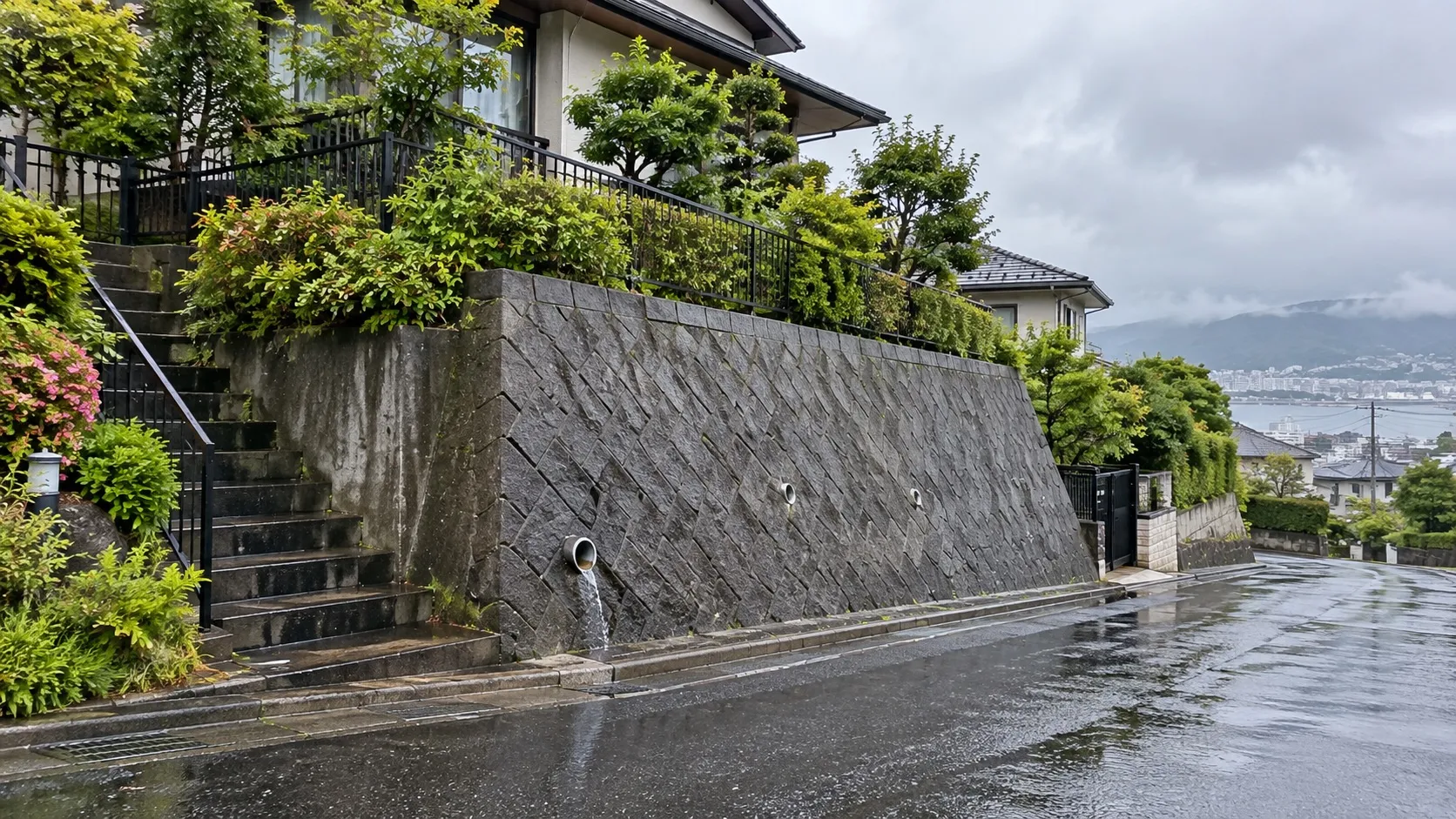
The first decision is whether anyone should approach the wall or room. In an exterior wall, new bulging, significant cracking, displacement, falling material, active soil movement or unusual water flow after heavy rain warrants a safety-first response. Keep people clear and ask the property manager to contact the relevant authority or qualified structural/geotechnical professional. Do not enter an unsafe slope or excavate behind a wall to find a leak. On the interior, water near outlets or a saturated ceiling also requires an emergency response by the appropriate trade. A mold treatment is not a substitute for a structural evaluation, and an apparently dry lounge does not certify the retaining wall safe.
The Kanagawa Prefecture overview notes that owners, managers and occupiers need to pay attention to retaining-wall condition. The prefectural checklist explains how rainfall and clogged drainage can increase water pressure behind a retaining wall and identifies visible changes for inspection. Do not read the checklist as authority to drill a new weep hole, alter a drain or remove soil yourself. Retaining structures are engineered for their site and loads. Any intervention can change stability or send water toward the building. The manager should preserve dated photographs, record the inspection position and ask a qualified engineer what further examination is required.
The lounge's damp mark is a different observation. It may be associated with the same rainfall event but not necessarily caused by structural wall distress. A source could be water running down a window well, a roof or terrace drain, a plumbing line, a slab-edge joint, a defective waterproofing detail, capillary uptake or condensation on a cool surface. Map the stain's start point and extent and note whether it changes after rainfall, HVAC operation or use of nearby plumbing. Water at floor level can come from more than one route. An experienced building-envelope professional may need drawings, non-destructive readings and limited opening of finishes to establish the path. Do not use a surface meter reading alone to label a retaining-wall defect.
For a VIP residence, access and privacy affect the investigation. Permit the safety professional to see the outside wall, slope and drainage route while giving interior trades only the required lounge and plant-room access. Move fragile or valuable furnishings only with an approved plan; do not let a contractor assume that all fabric, art and custom timber can be sprayed or wiped. Record where the water is observed without sharing security systems, resident names, guest schedules or collection values. An English-language summary for the overseas owner should separate “observed,” “suspected” and “not inspected.” That language is more useful than a confident but unsupported declaration that “the hill caused the mold.”
2. Trace rainwater, ground moisture and indoor condensation as distinct mechanisms
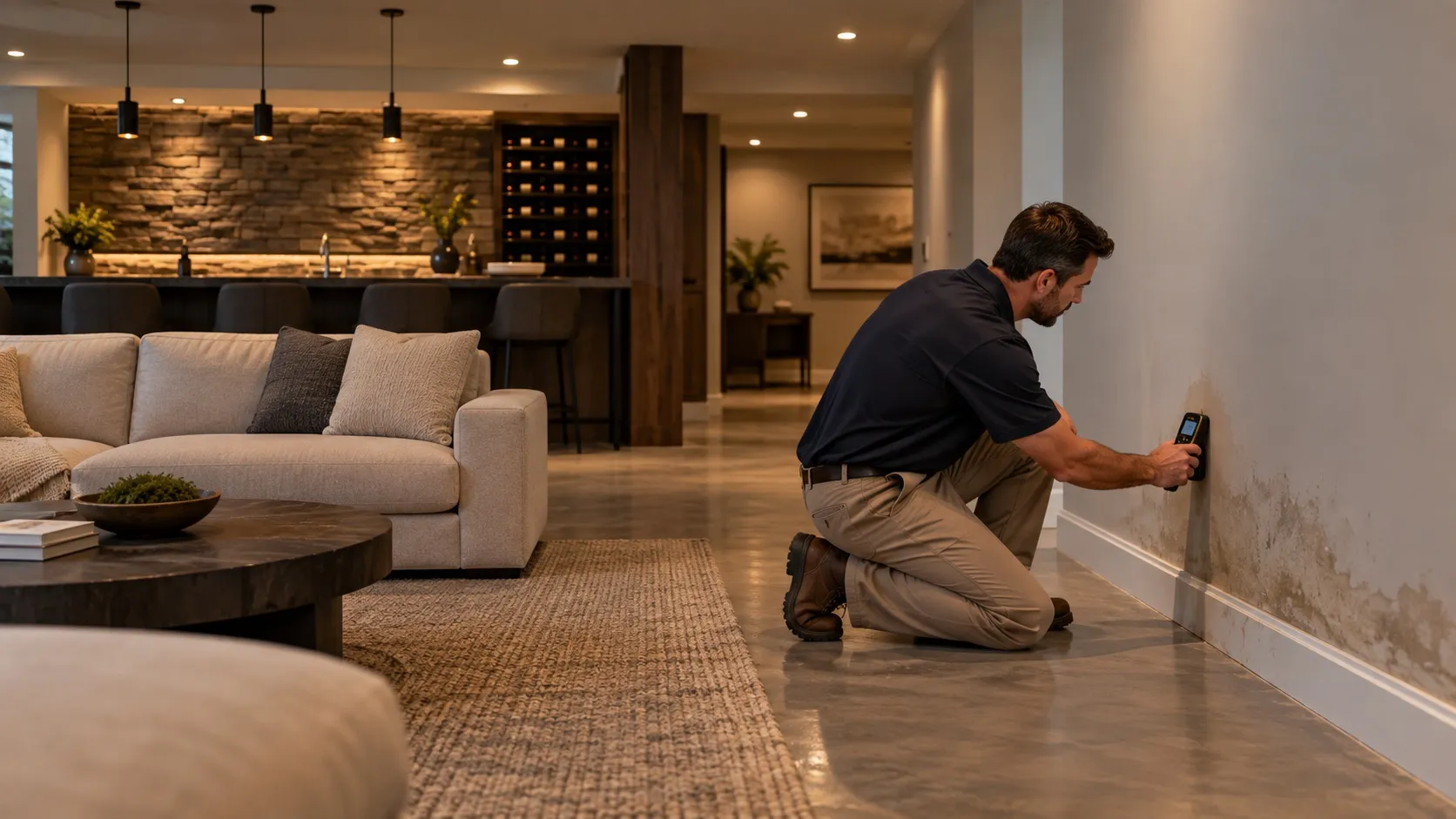
The Department of Energy foundation-moisture guidance (PDF) distinguishes bulk liquid water from capillary transport and emphasizes drainage and water-managed foundations. In a sloped property, rainwater can collect uphill, run along paving, enter a planter, overflow a terrace or bypass a drain before reaching a below-grade wall. A drain may exist but be blocked or discharge to the wrong place. Ask the site engineer and drainage specialist to trace the route from roof, gutters, surface grading and retaining-wall outlets to the final safe discharge. The lounge's interior wall and the retaining wall may have separate systems; the technical team needs to identify their actual relationship.
Do not copy a foreign construction detail into a Japanese property without design review. Foundation geometry, waterproofing, soil, seismic considerations, neighboring land, ownership boundaries and local permissions vary. The DOE material provides building-science concepts, not a specification for repairing this Kanagawa slope. Likewise, clearing a visible weep hole or adding a coating might seem simple but can alter water behavior or conceal evidence. Ask which engineer is responsible for a proposed structural/drainage change and how the work will be verified. If a drain is inaccessible, document that limitation rather than claiming it is clear.
Indoor condensation can imitate seepage. A lower-level concrete or stone surface may remain cool while humid air enters from an open terrace door or an air-conditioning imbalance. A stain that appears even without rain but during cooling could point to a different pathway. Check the HVAC and ventilation configuration, furniture spacing and surface temperature along with the exterior investigation. Neither a dehumidifier nor an air-conditioner proves that rainwater entry is fixed; they may temporarily lower room moisture while water remains behind panelling. Conversely, a dry-wall reading after a sunny spell does not rule out intermittent ingress during the next storm. Consider time-series observations across ordinary use and rainfall, as appropriate and safe.
The EPA's basement-remodeling guidance advises resolving leaks or other moisture before finishing a basement as living space, because damp conditions can support biological growth. That principle applies to a high-finish lounge: do not simply install new wallcovering or cabinetry over a damp assembly. The choice to remove, dry or replace materials depends on their condition and professional assessment. Porous finishing materials and hidden cavities may need a different scope from a dry, intact masonry surface. A contractor should explain why each material is included and how the moisture source will be controlled before reinstatement.
3. Protect bespoke finishes and establish a defensible investigation scope
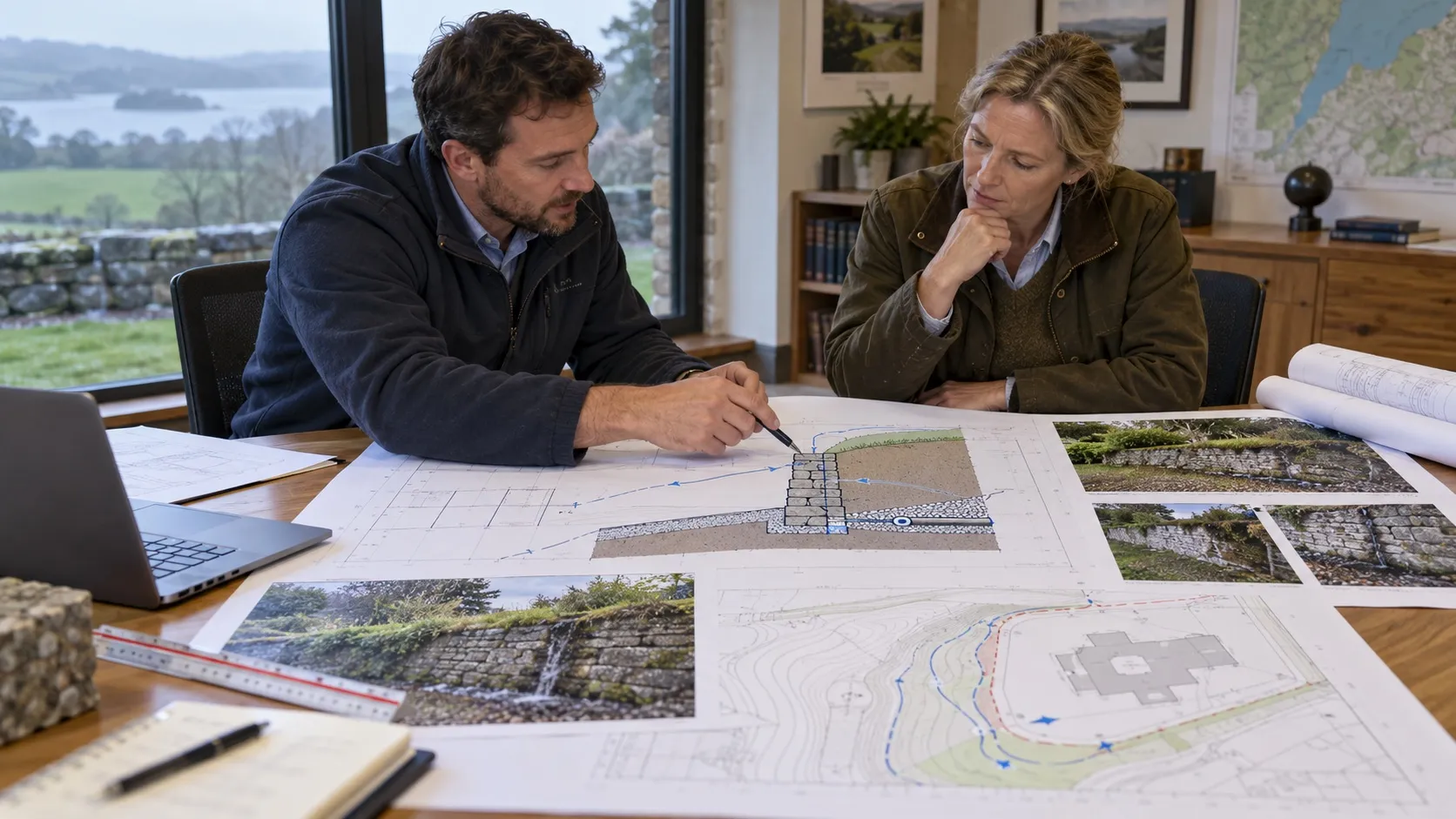
A high-value interior needs a clear boundary between investigation and restoration. Before opening a custom panel, agree on the minimum access needed, the method of protecting adjacent furniture, dust control, photographic documentation and who can authorize further opening. A small inspection opening may reveal dry material, wet insulation or a hidden leak; each finding changes the next decision. No prearranged cleaning package can reliably substitute for that evidence. A restoration contractor can price finish work after the building-side source and affected extent are understood. If artworks or sensitive textiles are involved, their owners or appointed conservators should direct object handling; a building mold firm should not guarantee their repair.
Ask for an inspection map: exterior slope, retaining wall, drainage outlets, terrace or roof routes, interior wall sections, floor perimeter, plumbing, HVAC, and areas not accessible. The professional report should state instrument type, reading locations and limitations. Photos of an exterior crack need scale and date; a moisture reading needs material context. A rain correlation is an inference until the route is established. Where multiple causes may coexist, the report can prioritize hypotheses and tests. Overclaiming certainty is particularly risky when an overseas owner must authorize expensive intrusive work remotely.
| Finding | First professional lead | Building-side decision | Avoid this shortcut |
|---|---|---|---|
| New retaining-wall bulge or major crack | Structural/geotechnical expert via manager | Safety, access and urgent evaluation | Send housekeeping to inspect the slope |
| Drain or weep outlet visibly blocked | Qualified wall/drainage specialist | Confirm design, water route and safe correction | Drill or unblock without engineering context |
| Interior mark grows after rain | Building-envelope and drainage team | Trace entry path; inspect affected assembly | Repaint the wall immediately |
| Mark occurs during cooling without rain | HVAC/building-science professional | Check condensation and air route | Assume all water came through the hill |
| Growth-like material behind panelling | Mold specialist after source/safety review | Scope material handling and containment | Spray decorative surface and conceal cavity |
| Valuable furnishing or artwork exposed | Owner and object-specific specialist | Protect and assess item separately | Promise full recovery from room treatment |
The roles are complementary, not interchangeable. The manager handles access, records and communications. The engineer judges retaining-wall or slope safety. The drainage or waterproofing specialist identifies and repairs water entry. The HVAC professional evaluates condensation or controls. A mold specialist deals with affected interior building material and recurrence prevention in coordination with the source-repair team. A conservator or other object specialist assesses personal property. The owner's insurer or legal adviser may address contractual questions, but a general article cannot decide liability or coverage.
4. Decide on repair, indoor use and follow-up without promising a permanent cure
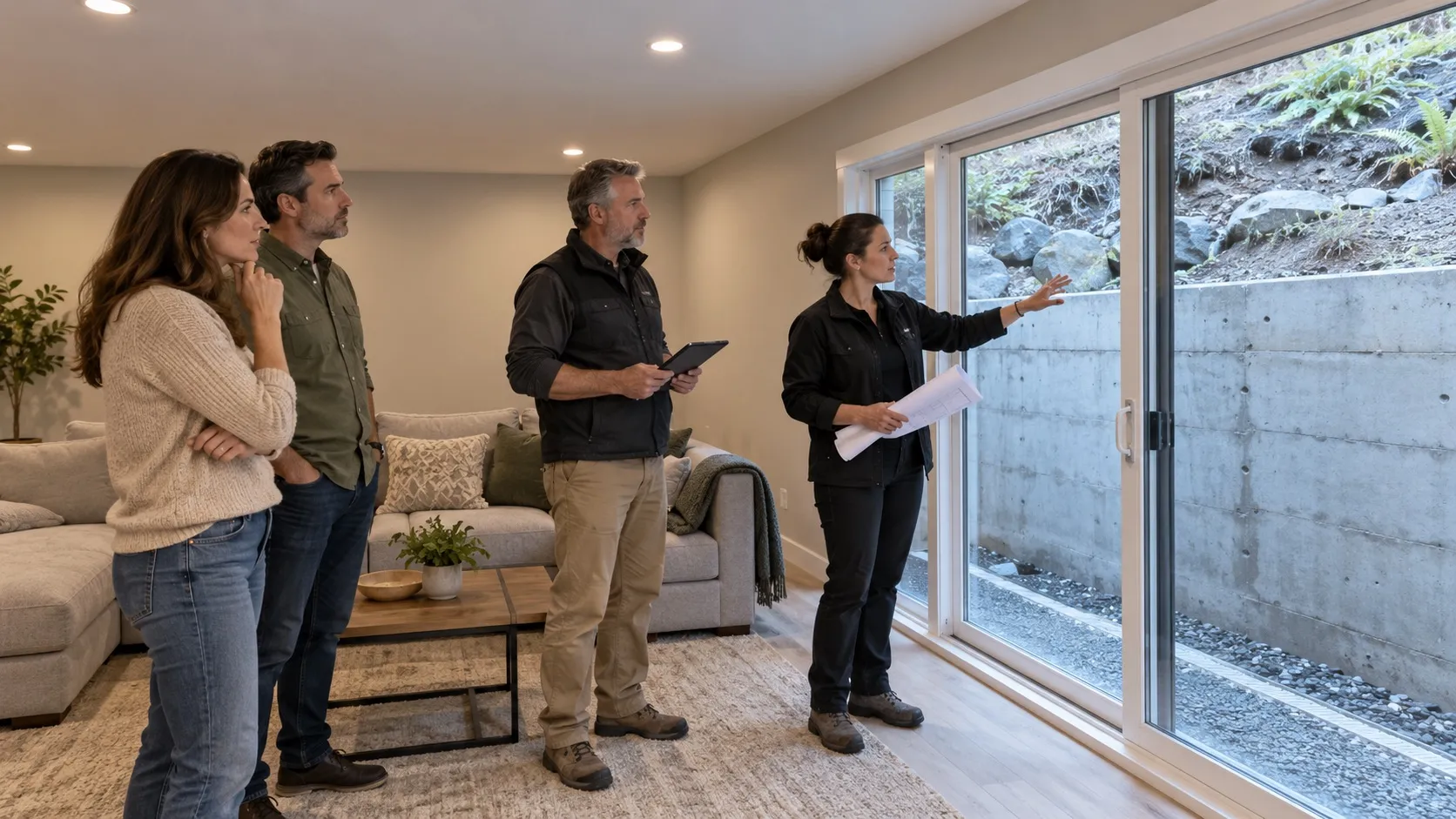
Once a source is identified, ask the design and repair professionals for a written sequence: immediate safety measures, source repair, drying and assessment of affected materials, mold remediation if warranted, finish reinstatement and verification. A lounge can look luxurious again while an upstream drain remains compromised. Conversely, an exterior retaining wall can be structurally sound while a nearby window detail leaks. The close-out report should say what was repaired and inspected—not certify the entire hillside or home. Where rain is the trigger, a future rainfall observation may be part of monitoring. If conditions recur, the case should reopen with the same photo and observation log, not start from a vague recollection.
When can the lounge return to use? A practical answer depends on safety clearance where needed, control of active water, assessment of affected building materials, completion of warranted remediation, and a reinspection of the defined area under normal operation. There is no universal “one dry reading” or “24 hours without smell” rule that establishes all hidden assemblies are safe. The EPA mold-and-moisture guide stresses that water control is key to preventing recurrence. If the slope or retaining wall remains under investigation, the owner may choose another room for guests and leave the lounge closed. A risk-based decision is more credible than a guarantee that the property will never experience moisture again.
FAQ: Is the retaining wall automatically unsafe if the lounge smells musty? No. An indoor odor does not establish structural failure. However, visible retaining-wall deformation, new cracking, significant seepage or ground movement deserves safety-focused evaluation regardless of the indoor smell.
FAQ: Can a mold specialist repair the retaining wall? Retaining-wall design and structural safety belong to qualified structural or geotechnical professionals. A mold specialist may assess affected interior building materials and coordinate with the source-repair team.
FAQ: Can the exterior drain be cleared by a caretaker? Routine property maintenance should follow the engineer's and manufacturer's instructions, but a suspected retaining-wall drainage defect should not be modified casually. Do not enter an unsafe slope or change engineered drainage without appropriate advice.
FAQ: Will a dehumidifier solve the lounge's problem? It may help control indoor moisture temporarily, but it does not repair rainwater entry, a pipe leak or a deficient drainage route. Its readings must be interpreted with the source investigation.
FAQ: Is a clean surface after repainting enough to invite guests? No. Confirm water source control and the condition of affected assemblies first. Reinstatement can conceal evidence.
FAQ: What should an overseas owner send first? Municipality, broad property description, safe photos of the wall and room, dates of rain and staining, whether water is active, whether any wall movement is observed, and the local manager's contact. Share exact address and security details only through an agreed channel.
FAQ: Does Kabi Busters Yokohama guarantee wall stability or expensive-finish restoration? No such guarantee should be assumed. Ask the team about building-side mold and moisture assessment; ask the proper engineering and conservation professionals about structural safety and valuable objects.
For a building-side mold or moisture concern in the lounge, read Kabi Busters Yokohama's service overview and send an English-language enquiry describing the observed room conditions. Confirm Kanagawa coverage, availability, site-access requirements, report scope and coordination with the engineer before booking. A concise first message is: “Our lower-level lounge in a Kanagawa hillside residence has a musty odor and wall-base staining after rain. The estate manager is arranging a retaining-wall safety review. Could you assess the affected interior building materials and coordinate the moisture-source investigation?” If wall movement or active water poses immediate danger, use the property's emergency process first.
日本語の要点: 神奈川県の斜面地住宅で擁壁に近い地下・半地下ラウンジが雨の後に湿る場合、まず擁壁の安全と室内のカビ・水分問題を分けて判断します。擁壁の新しい亀裂、はらみ、地盤の動き、強い湧水があれば近づかず、管理者から構造・地盤の専門家へ連絡してください。室内の染みは雨水、配管、結露など原因が複数あり得ます。排水経路と建物への浸入経路を確認し、水分源を止めてから、必要な室内材料の調査・カビ対処・内装復旧を進めます。表面の塗装だけで安全や再発防止を証明することはできません。
----------------------------------------------------------------------
カビバスターズ横浜
住所 :
〒221-0056
神奈川県横浜市神奈川区金港町5-14 クアドリフォリオ8階
電話番号 :
0120-133-199
----------------------------------------------------------------------