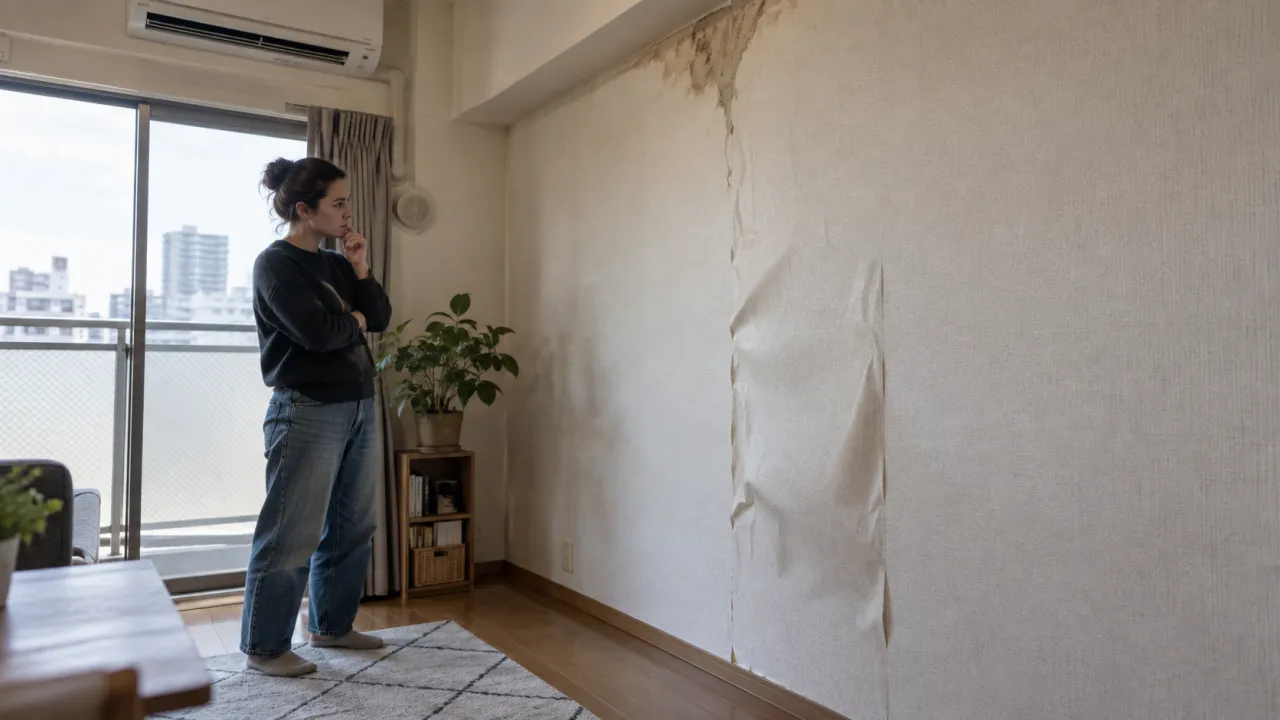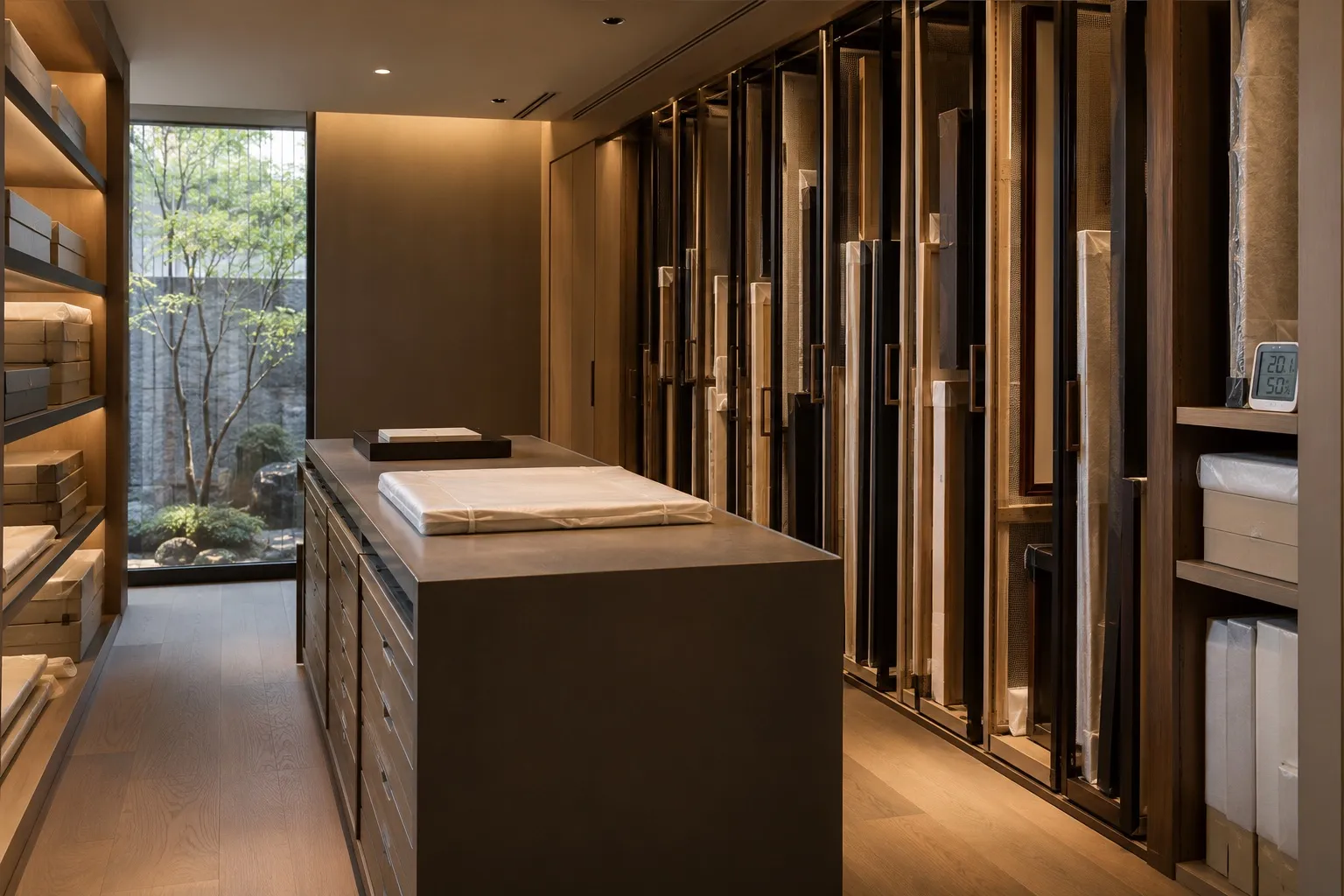
VIP guest suite HVAC and mold check
2026/10/17

Direct answer: A musty guest suite should not be made “guest ready” by fragrance, a fresh sheet change, or indiscriminately shutting air vents. Before an important visitor arrives, the estate manager should identify active water, document where and when the odor occurs, check the room's dedicated or shared HVAC equipment, and have the appropriate building professional investigate persistent moisture or visible growth. If mold contamination is suspected inside an HVAC system, do not simply run that system to air out the suite; obtain a qualified assessment. Fix the moisture source, document the limited scope of inspection and repair, and only then decide whether the room is ready for occupancy. This article is for private guest suites in Tokyo, Kanagawa and Chiba residences, not a promise that any room can be certified mold-free at a distance.
A rarely occupied suite is different from an ordinary unused bedroom. It may have a separate thermostat, dedicated fan-coil, hidden return, dressing room, en-suite bathroom and a door kept closed for privacy. The main residence can feel comfortable while one zone has a blocked condensate drain, an exterior-wall thermal bridge, a plumbing leak or poor airflow. Conversely, an odor from the suite does not prove the air-conditioning is contaminated. The central task is to distinguish sources before changing controls. An overseas owner may ask a caretaker to prepare the space at short notice; the caretaker needs a clear stop/use decision and authority to call the right trades. The guest's health status, personal identity and travel details should not be circulated with general contractor photographs.
This guide compares three prominent primary-source answers to the search question rather than claiming a fixed search ranking. The US EPA's mold and HVAC course chapter explains why a system found contaminated with mold should not be operated until assessed and addressed. The US Department of Energy's HVAC renovation guide (PDF) addresses airflow, zoning and pressure balance, cautioning against simplistic vent-closing tactics. The CDC/NIOSH mold testing and remediation guidance emphasizes visual inspection, odor and moisture investigation over routine air sampling. These sources answer different parts of the problem: suspected contaminated equipment, control-system behavior and how to investigate. None diagnoses this particular Japanese residence or replaces its equipment manufacturer's instructions and a site-specific professional review.
1. Record the odor pattern and identify the water pathway before inviting a guest
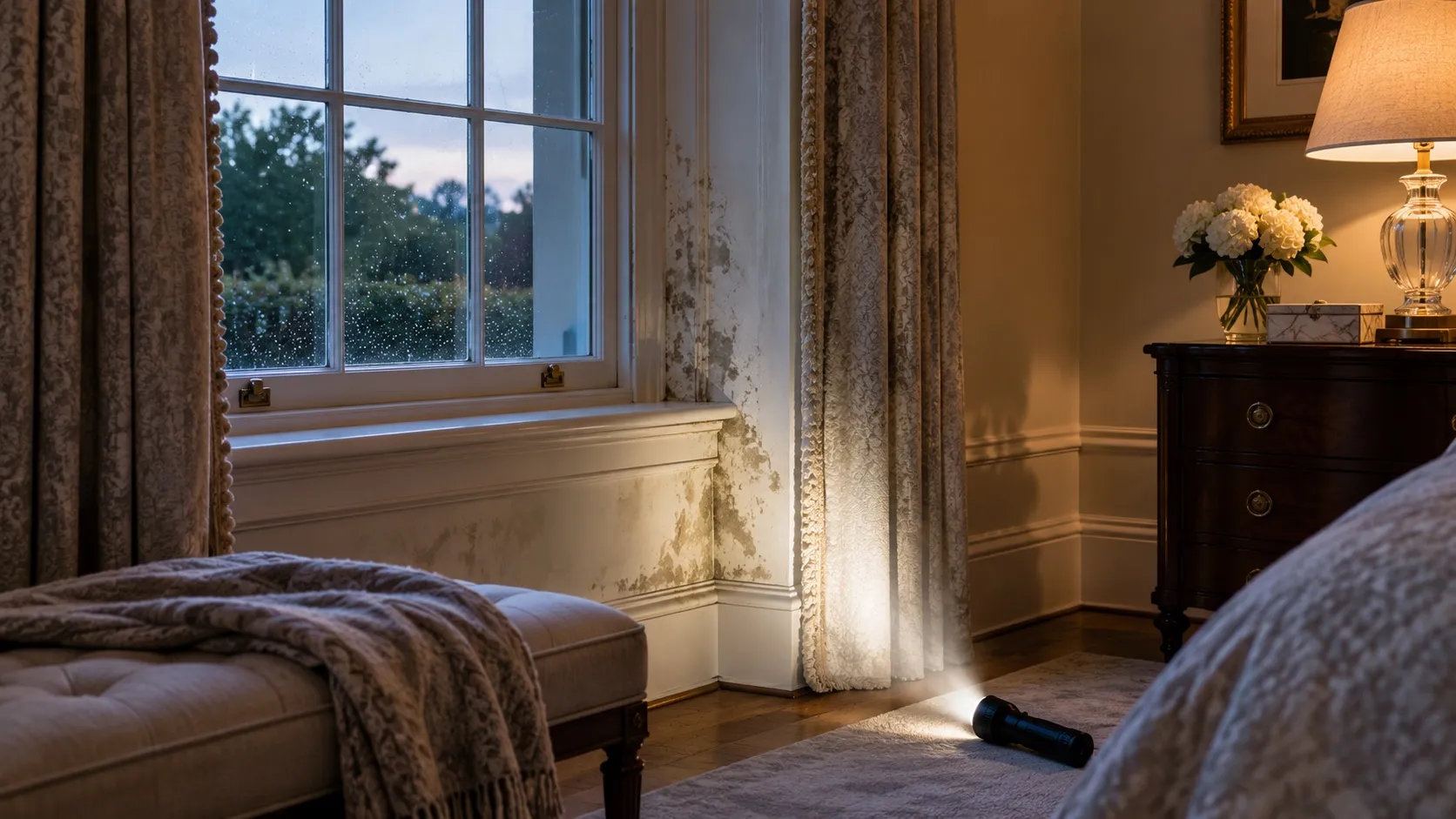
Begin with dated observations, not a chemical product. Which room first smells musty: bedroom, bath, wardrobe, entry vestibule or the air outlet? Is the odor strongest on entry after the door has been closed, when cooling starts, after rain, after shower use, or near the window? Are there visible stains, condensation, damp carpet edges, swollen joinery, peeling wall covering or a water alarm? Photograph the building feature, not a guest's possessions. Note weather and HVAC operating mode, because a single visit cannot distinguish a recurring seasonal pattern from an isolated spill. If a wall or ceiling is visibly wet, look above and beside it for roof, balcony, pipe, bathroom, AC condensate or facade routes; do not label the mechanism from a photograph alone.
The EPA's guide to mold and moisture in homes makes source control fundamental: cleaning alone will not keep growth away if the water problem continues. In a large home, the source may lie outside the guest suite, such as a plant room, adjoining bathroom, exterior wall or concealed ceiling void. The property manager should coordinate an appropriate plumber, HVAC technician or building-envelope specialist to repair the physical cause. A mold specialist can assess affected building material and the scope of safe remediation, but cannot substitute for every repair trade. If water is close to electrics, a ceiling is unstable, sewage or contaminated water is involved, or a guest reports acute symptoms, use the property emergency process and keep the room out of service while qualified help is arranged.
Do not infer that a closed suite is safe merely because a humidity display in the main hall looks normal. A sensor reports at its own location and time. The guest suite may be cooler or warmer; the wardrobe interior, wall cavity and underside of a bed may differ. A practical log notes sensor position, instrument condition, date, operating mode, door position and a short narrative of water observations. A spot measurement is useful context, not proof of the absence of hidden dampness. If no visible growth is found but the odor persists, the inspection scope may need to include the air handler, filters, condensate pan, drain, return path and adjacent construction. Agree access boundaries before opening bespoke finishes.
An estate manager can make a stoplight decision without pretending to diagnose the organism. Red: active water, visible growth-like material, a wet electrical zone, an unstable finish or suspected contaminated HVAC—keep guests out, secure the hazard and call the relevant professionals. Amber: persistent unexplained odor or recurring condensation—hold the booking or offer another room until the source is investigated and documented. Green is not an absolute certification; it means the identified source was addressed within a stated scope, the suite has no current concerning observations on reinspection, and the manager has a follow-up plan. The owner decides guest arrangements from that factual report, with medical questions directed to a clinician rather than a contractor.
2. Investigate the HVAC zone without creating an airflow problem
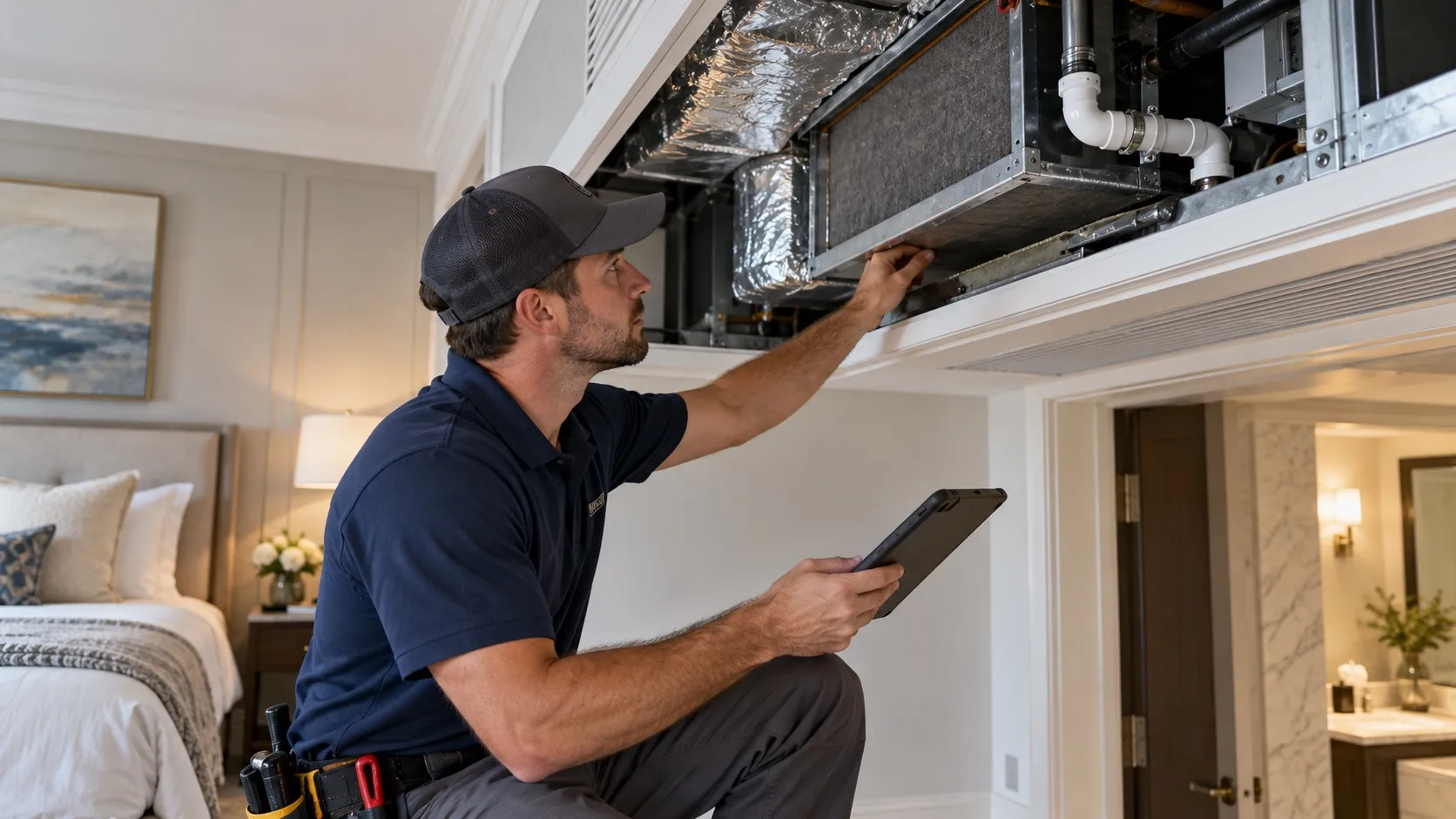
In a high-spec residence, a suite may have its own fan-coil, a branch from a central system, a bathroom exhaust and a fresh-air supply that interact. Ask the HVAC contractor to identify the equipment and service zone rather than guessing from a wall thermostat. Review maintenance records for filters, coils, condensate pans, drain lines, pump operation and any recent control changes. If staining is concentrated below a fan-coil or at a condensate line, confirm the drainage pathway before replacing decorative wall covering. If odor appears only on start-up, the equipment and duct or return path may warrant closer inspection; that temporal relationship alone does not prove contamination.
The EPA's air-duct cleaning guidance distinguishes evidence of substantial visible mold growth in hard-surface ducts or components from blanket claims that every duct needs routine cleaning. It also notes that contamination in insulated duct material can require different decisions. Have the technical team explain what was actually observed, how it was accessed and why any proposed cleaning or replacement is necessary. A photograph of dust at a grille is not a complete system diagnosis. If the HVAC system is found mold-contaminated, the EPA mold course cautions against running it before remediation because it can spread contamination; a professional should assess the system and safe interim conditioning.
Do not “solve” the issue by taping a supply grille shut, closing all doors, turning down the thermostat aggressively or placing a portable dehumidifier in an inaccessible closet. The Department of Energy's HVAC guidance (PDF) discusses how zoning, airflow and pressure relationships affect performance. The exact consequence depends on the installed system and its design, so an HVAC technician should decide whether controls, balancing, filtration or drainage need adjustment. Likewise, exhausting air from the bathroom without adequate make-up air can draw air from adjoining cavities or other rooms. An owner should ask for an explanation of the intended air route in plain English and Japanese, not a single “humidity is fine” reading.
Keep the contractor scopes distinct. An HVAC technician assesses equipment and airflow; a plumber fixes a pipe or drain; a building-envelope professional examines rain entry; a mold specialist evaluates affected construction and remediation precautions. One firm may coordinate several scopes, but the report should still say which physical source was confirmed, which was only suspected and which spaces were not inspected. Do not apply sanitizer into a duct or wall as a substitute for stopping water. Follow equipment maker instructions, building-management rules and qualified professional judgment for any intervention.
3. Prepare a discreet, evidence-based pre-guest decision

For a private owner abroad, speed and confidentiality matter, but rushing can enlarge the loss. Nominate one local contact who can authorize safe access and emergency source control. Give contractors only the room, plant access and photographs necessary for their scope; do not circulate guest names, security layouts or travel schedule. Agree whether wardrobe contents or bespoke furniture may be moved, who photographs interiors and where reports are stored. If the guest suite is in a leased residence, notify the landlord or management company according to the lease and building procedures while preserving dated facts. Whether a tenant or owner bears a particular repair cost is a legal and contractual question, not something an odor photograph can settle.
Before a guest is offered the suite, ask for a concise close-out note: water source and repair status; areas inspected and inaccessible; HVAC components checked; observed damp or growth-like materials; remediation or cleaning scope; date of reinspection; remaining uncertainty; and trigger for follow-up. The room may be aesthetically restored while a concealed source remains. Conversely, a persistent smell may come from another source and should not automatically be called mold. If an independent air sample is proposed, ask what decision it will change and how the result will be interpreted. CDC/NIOSH's testing guidance explains why routine air sampling cannot replace a thorough visual and moisture investigation, and why short measurements can be hard to interpret.
| Observation | Immediate decision | Professional follow-up | What not to claim |
|---|---|---|---|
| Active leak or damp ceiling | Keep suite out of service; secure water and electrical safety | Plumber or building repair; assess affected materials | That perfume or a new ceiling panel fixes the source |
| Musty odor only when cooling starts | Stop treating the odor as merely housekeeping | HVAC technician checks equipment, drainage and return path | That a start-up odor alone proves duct mold |
| Visible growth-like mark at window | Limit disturbance and document the location | Building moisture and mold assessment; repair water route | That one cleaned patch certifies the room |
| Condensation in wardrobe | Document timing and local conditions | Check ventilation, thermal bridge and moisture load | That hallway humidity represents the wardrobe |
| No current odor after repair | Reinspect under normal operating conditions | Record scope and follow-up trigger | That every hidden cavity is permanently safe |
The comparison table is a decision aid, not a substitute for a site assessment. Prioritize an alternate guest room if the source remains uncertain close to arrival. If the owner needs the suite for a specific event, a candid “not ready” report is more useful than an unsupported guarantee. Ensure the manager knows how to contact the repair trade if odor or water recurs during occupancy. For overseas owners in Tokyo, Yokohama and wider Kanagawa, or Chiba, the first enquiry should include the municipality, room type, approximate timing of the odor, photos of building features, whether water is active and whether the HVAC is shared. Precise address and sensitive access arrangements can follow through an agreed secure channel.
4. Define who to call, what to ask and when the suite can return to use

Call the property manager first for access, guest alternatives and building notices. Call an emergency repair trade if there is active water or an electrical or structural hazard. Ask an HVAC professional to assess controls, equipment and drainage where the symptom follows system operation. Ask a building-side mold specialist when growth-like material, recurring dampness or unexplained mustiness persists despite routine maintenance. A clinician—not a mold contractor—should answer individual medical questions. Kabi Busters Yokohama can be asked about the building-side mold and moisture concern and English-language communication; confirm current service coverage, timing, inspection scope and any coordination with the property's HVAC or repair firm before arranging a visit.
Questions worth asking before commissioning work include: Which surface or component will be inspected? What moisture source is suspected and how will it be verified? Does the air system serve other rooms? Will operation be changed while contamination is evaluated? What is the access route through occupied spaces? Which belongings must be protected or moved, and by whom? What will the written report distinguish as observation versus inference? What conditions justify returning the suite to service? What remains uninspected? A precise answer may be conditional. Avoid purchasing an unqualified “whole residence mold-free” certificate from a single room visit.
FAQ: Can housekeeping use fragrance and run the AC before an inspection? Fragrance hides information, and a system found contaminated should not be operated until appropriately assessed. If contamination has not been established, ask the HVAC professional how to maintain safe conditions without disrupting pressure or airflow.
FAQ: Should we close the guest-suite vents because the room is unused? Not by default. Closing vents can affect the system's design airflow and balance. Let the HVAC professional review its zoning and controls.
FAQ: Is one air-mold test enough to clear the room? No. Visual, odor and moisture investigation is the starting point; sampling does not identify a leak or establish that all hidden areas are dry.
FAQ: Does a clean smell after a few hours mean the problem is gone? No. Recurrent water may be intermittent. Document operating and weather conditions and recheck the source.
FAQ: Can your team guarantee that a VIP guest will have no symptoms? No building contractor can promise an individual's medical outcome. Seek medical advice for personal health concerns and make occupancy decisions from the documented building condition and remaining uncertainty.
FAQ: What should an overseas owner send in English? A short, factual note: “Our private guest suite in Tokyo has a musty smell when cooling starts after months unused. There is a stain near the window, but no known active leak. Could you assess the building-side moisture concern and coordinate with our HVAC manager? We need a written scope before the suite is offered to a guest.” Do not include guest identity or security details in the first message.
For a building-side conversation, see Kabi Busters Yokohama's service information and contact the team about an English-language guest-suite assessment. The goal is a defensible decision about the actual room, not a claim that one product or one measurement will solve every property. If active water is present, arrange source repair immediately through the property's emergency contact.
日本語の要点: 長期間使っていない来客用スイートでカビ臭がしたら、香りで隠したり、空調の吹出口をむやみに閉じたりせず、水分の原因と空調系統を切り分けます。臭いが出る時間、場所、雨・冷房との関係を記録し、管理担当者、設備業者、必要に応じて建物側のカビ専門業者へ相談します。空調内の汚染が確認された場合は安易に運転せず、専門家の判断を仰ぎます。来客に提供する前に、修理・確認した範囲と未確認箇所を文書に残してください。個人の健康への影響や室内全体の「無カビ」を保証するものではありません。
----------------------------------------------------------------------
カビバスターズ横浜
住所 :
〒221-0056
神奈川県横浜市神奈川区金港町5-14 クアドリフォリオ8階
電話番号 :
0120-133-199
----------------------------------------------------------------------