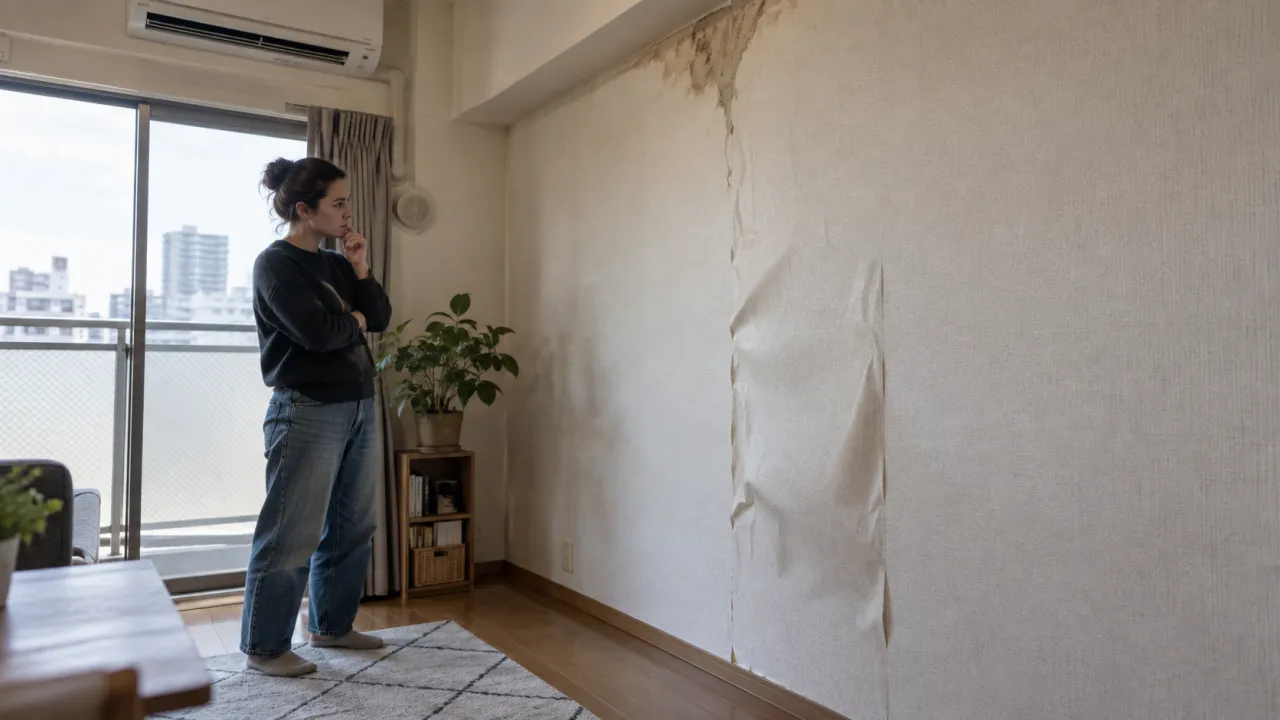
退去前のカビ発見と記録・相談
2026/10/17
Quick answer. If you find a mold-like mark while preparing to leave a Japanese rental, do not hide it with paint or remove fixed materials. Photograph the condition before cleaning, locate your move-in checklist and earlier messages, tell the property manager promptly, and ask how the area should be inspected or cleaned before handover. If the cause or mold scope is unclear, an English-speaking mold specialist may help assess the indoor condition, but a cleaning company cannot decide legal responsibility for your deposit. Residents in Tokyo, Kanagawa and Chiba can use the same record-first approach.
日本語の要点: 退去前にカビらしい黒ずみを見つけたら、塗装で隠さず、入居時の記録・過去の連絡とともに写真を残します。管理会社に早めに報告し、清掃や調査の許可を確認してください。原状回復の負担判断とカビの専門評価は別です。
1. Record the condition before you change it
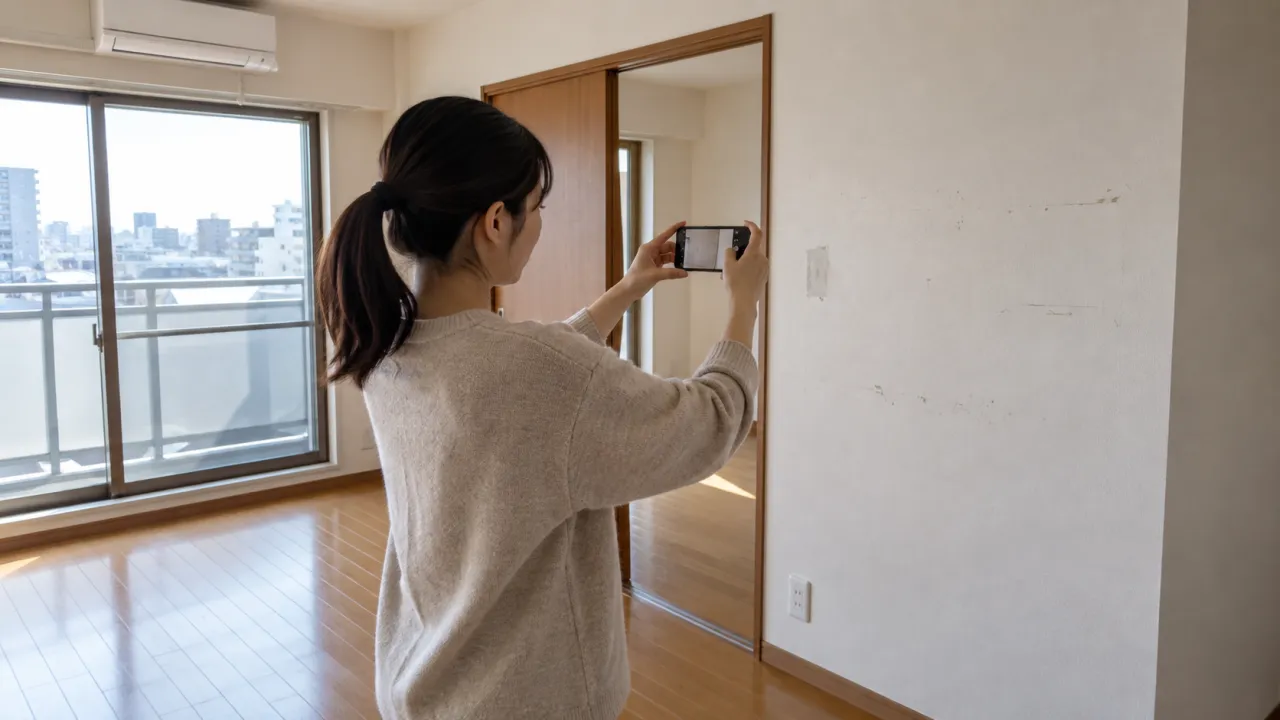
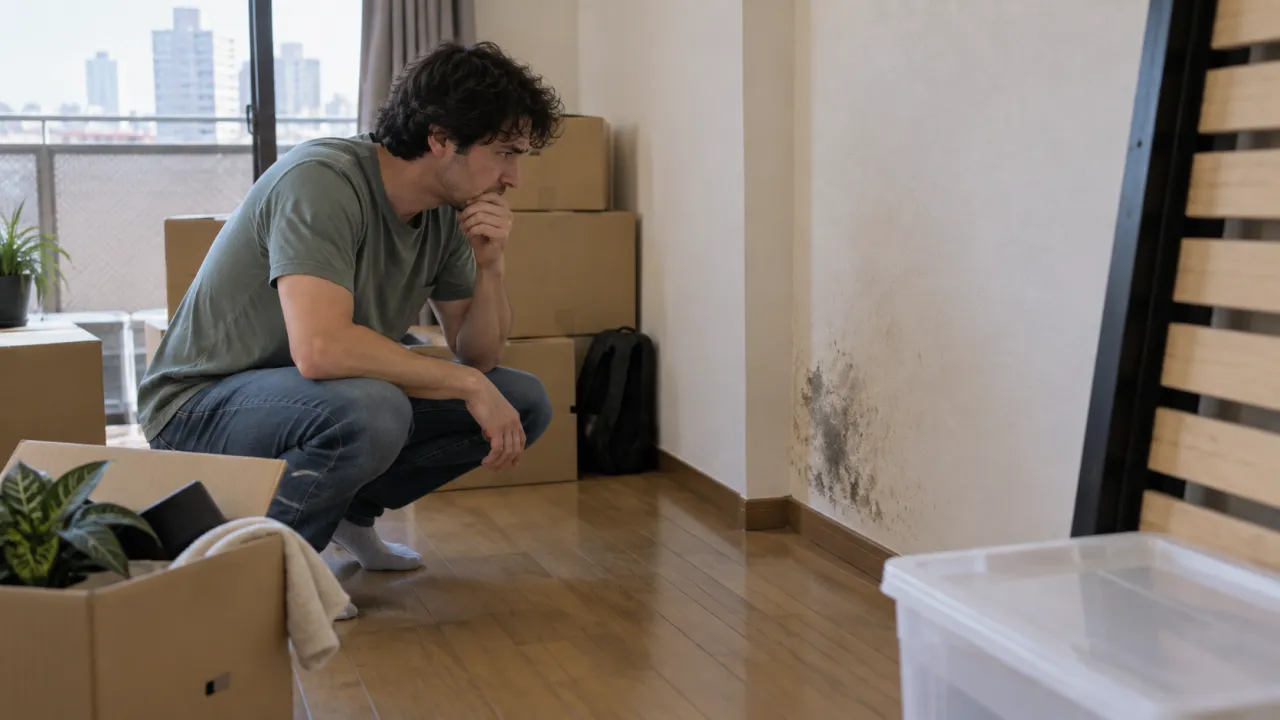
Moving boxes can reveal a mark behind furniture, a damp closet wall or a stain near a window. First capture a wide view that shows exactly where it is, then a close view with a stable reference such as the corner of a door frame. Save the date and whether the surface feels wet, has a musty smell, is peeling, or is near plumbing. Record what was covering it and when you last saw the area clean. Do not scrub away all evidence before taking photographs; equally, do not delay reporting a current leak just because you are collecting evidence.
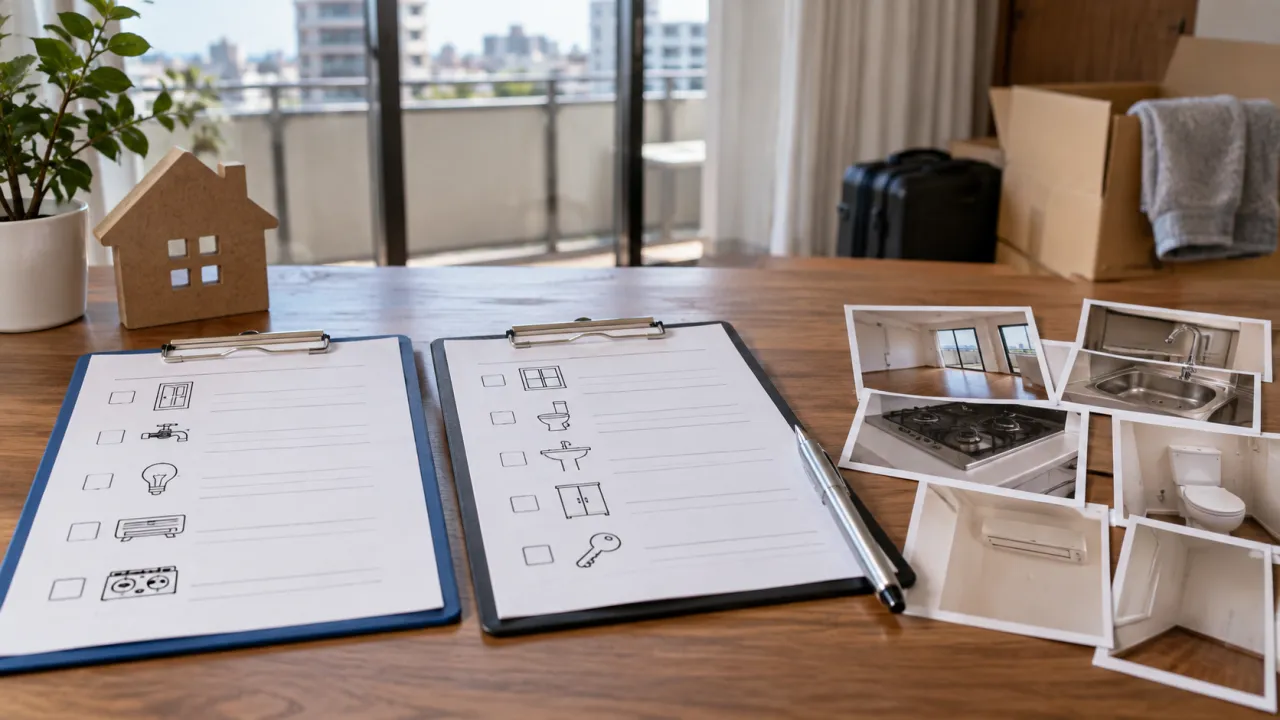
Find the check-in condition record, messages to management, previous repair requests, and any photographs from the start of the tenancy. MLIT's English move-in and move-out condition checklist is designed so both sides can compare the property's condition at the two stages. If you have no original form, make a dated list now rather than inventing a move-in condition. Distinguish an old mark noted when you arrived from a new mark discovered this week. Our separate English guide to mold found on move-in focuses on the arrival stage; this article addresses the pre-departure inspection and records.
For each location, write the material and visible condition: wallpaper, painted wall, tatami, wooden trim, silicone seal, window sash or ceiling. A dark spot on removable furniture is different from a mark on landlord-owned wallpaper. Photograph both if there is contact. If there is still dripping or a wet wall, use the building repair contact promptly. Take a short video only if it clarifies active water or fan operation; ordinary still images are often enough. Keep original files and copies of messages, rather than applying filters that change the appearance.
| Record | Why it helps | A careful description |
|---|---|---|
| Move-in checklist and photos | Shows earlier visible condition | “Mark noted at entry,” if actually documented |
| Current wide and close photos | Locates and dates the issue | “Dark mark behind cabinet; wall feels dry” |
| Manager messages and repairs | Establishes notification timeline | “Reported dripping on [date]” |
| Cleaning and inspection notes | Clarifies what was done | “Wiped reachable surface with approved method” |
2. Understand what official guidance does—and does not—decide
MLIT's English leaflet on restoration explains the general distinction between ordinary wear and damage for which a tenant may be responsible, and encourages reporting existing problems and preventing mold from expanding. Chiba Prefecture's English points for restoring rental housing is a useful local-language aid. Neither document can determine from a photograph who pays for a specific mold mark. The lease, cause, material, duration, management responses and agreed maintenance all matter. Do not promise yourself a deposit refund or concede liability without reviewing the evidence and itemized explanation.
The word “mold” in an exit report may refer to several situations: a small wipeable surface mark; repeated condensation on a cold wall; a concealed leak; a damaged wallpaper backing; or an appliance-related moisture problem. Each needs a different response. A one-size-fits-all cleaning fee cannot show what moisture source was present. Ask whether the material must be repaired, whether an underlying leak exists, and what work is proposed. If you disagree with a charge, ask for an itemized written explanation and consider a housing or legal consultation. Houterasu's English housing information explains routes to general legal help.
Report the condition early even if you believe the building caused it. Delayed notice can allow damage to spread and make the timeline harder to establish. Do not dismantle fixed cabinets, peel wallpaper, repaint, or hire a contractor to alter the property without approval. If the manager authorizes ordinary surface cleaning, follow the actual material and product instructions, ventilate appropriately and document before and after. If a mark returns quickly, note that and ask about moisture; the recurrence matters more than a photo of a newly white wall.
Your move-out meeting may include a walk-through and a proposed repair list. Bring the check-in record, dated photos, earlier reports and a concise location list. Ask for any disagreement to be written down rather than trying to settle the technical cause at the doorway. Do not sign a statement you do not understand as an admission of cause. Ask for an English explanation or qualified interpretation if needed. This is practical communication advice, not legal representation. Rules and forms vary by contract and property.
3. Decide whether cleaning, inspection or a specialist is appropriate

Small, safe and accessible surface maintenance may be part of normal housekeeping, subject to the material and lease. A damp or damaged wall, repeated mold-like growth or an unknown leak deserves management inspection. If an independent mold assessment might clarify affected material or remediation scope, ask the manager whether the specialist may enter and examine fixed areas. The assessment should identify what it can and cannot conclude without opening the wall. It cannot retrospectively prove who caused every mark or guarantee a deposit outcome.
Kabibusters Yokohama's service information describes mold-related consultation, and staff can respond in English. A useful inquiry through the contact form says: “I am leaving a rental in [city, prefecture] on [date]. I found marks on [material and location]. I reported [water/condensation] to management on [date], and they have [approved/not yet approved] an assessment. Could you advise whether the indoor mold condition is within your service scope and what evidence to prepare?” Include photos if safe and permitted. Do not assume a visit or outcome is guaranteed.
Separate a repair contractor, mold specialist and housing adviser. A plumber or building contractor may need to stop water. A mold service may assess and address affected indoor materials after the source is managed. A legal or consumer adviser can explain a disputed charge. Hiring one of these does not automatically replace the others. If move-out is imminent, tell both manager and specialist the exact handover date so no one assumes access will continue afterward. Ask whether a report, inspection or treatment is realistically possible before handover; do not promise the manager work you have not arranged.
If there is a serious health concern, seek medical advice, not a cleaning quote as a diagnosis. Avoid claims that a color or odor proves a specific toxic species. Keep your communication factual: where, when, what material, water evidence, previous notice, and photographs. Tokyo, Yokohama and wider Kanagawa, and Chiba have different rental providers, but those facts make a clearer English consultation anywhere.
4. FAQ and a move-out checklist

Should I remove the mark before the inspection? Record it first. If it is safe, on a surface you are allowed to maintain, and the manager or instructions permit a method, ordinary cleaning may be appropriate. Do not repaint, strip wallpaper or conceal damage without approval.
Does mold automatically mean I lose the deposit? No. The responsibility question depends on the contract and the cause, timing, reporting and maintenance record. Official examples are guidance, not a decision about your unit. Request an itemized explanation if a charge is proposed.
What if the mark was present when I moved in? Locate dated entry photos or the check-in checklist and send them to management. If there is no record, state honestly what you recall and when you first noticed it. Do not fabricate a date.
Can a mold company decide who pays? A mold specialist can discuss material condition and treatment scope, within its expertise. It cannot make a binding legal or deposit decision. A housing adviser is the right route for a contested allocation of costs.
Should I wait until move-out day to mention it? No. Report promptly, especially when dampness or a leak continues. Early notice allows inspection and may limit damage. Keep a copy of the report.
Can I ask Kabibusters Yokohama in English? Yes, staff can respond in English about a mold-related inquiry. Provide your city, move-out date, material, photos, management status and the specific question. A visit, fee and result depend on the property and agreed scope.
Before handing back the keys, check that you have: a complete photo set; the original condition record if available; copies of all notices and repairs; a list of current marks and any active moisture; permission records for cleaning or assessment; and a request for an itemized written settlement. If the mold issue needs a professional scope assessment before departure, contact Kabibusters Yokohama in English while also keeping the manager informed. If charges are disputed, use a housing or legal advice route. A good record protects clear decision-making; it does not guarantee a particular deposit result.
Primary sources: MLIT's English condition checklist, MLIT's English restoration leaflet, Chiba Prefecture's English rental-restoration points, and Houterasu's English housing information. They offer general guidance, not a case-specific decision.
----------------------------------------------------------------------
カビバスターズ横浜
住所 :
〒221-0056
神奈川県横浜市神奈川区金港町5-14 クアドリフォリオ8階
電話番号 :
0120-133-199
----------------------------------------------------------------------