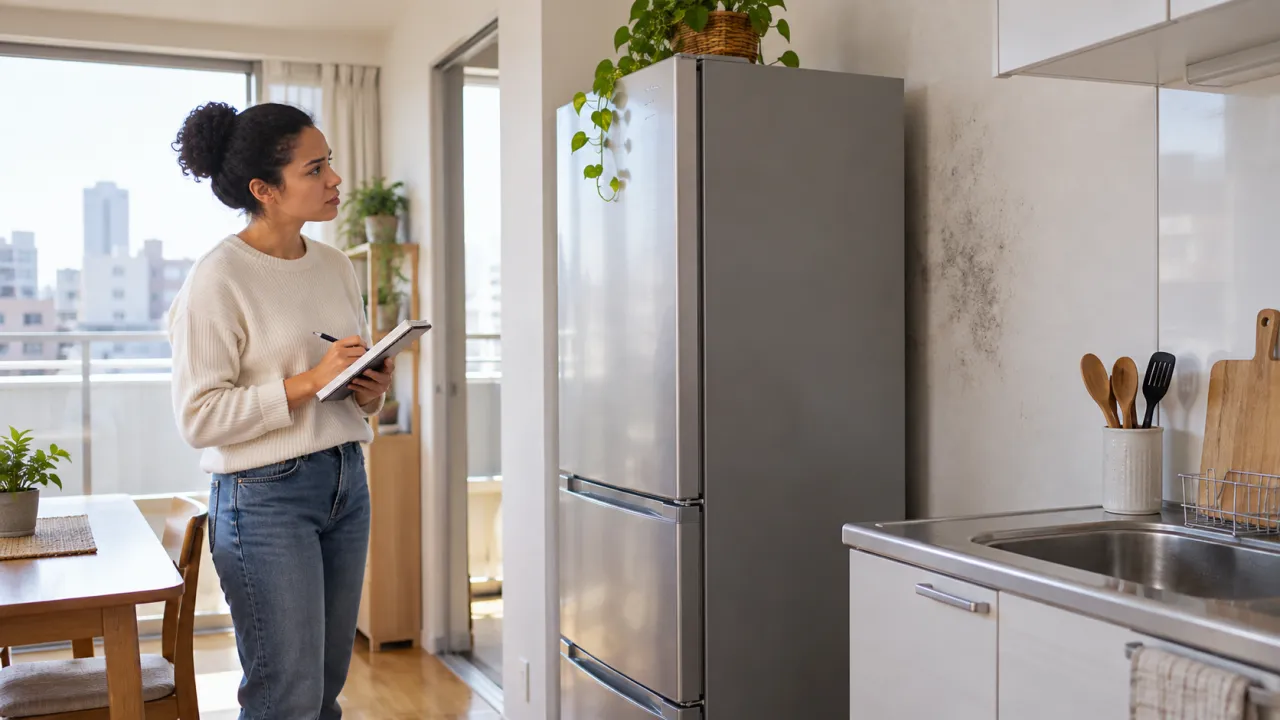
洗濯機パンの水漏れ・カビ相談
2026/10/19
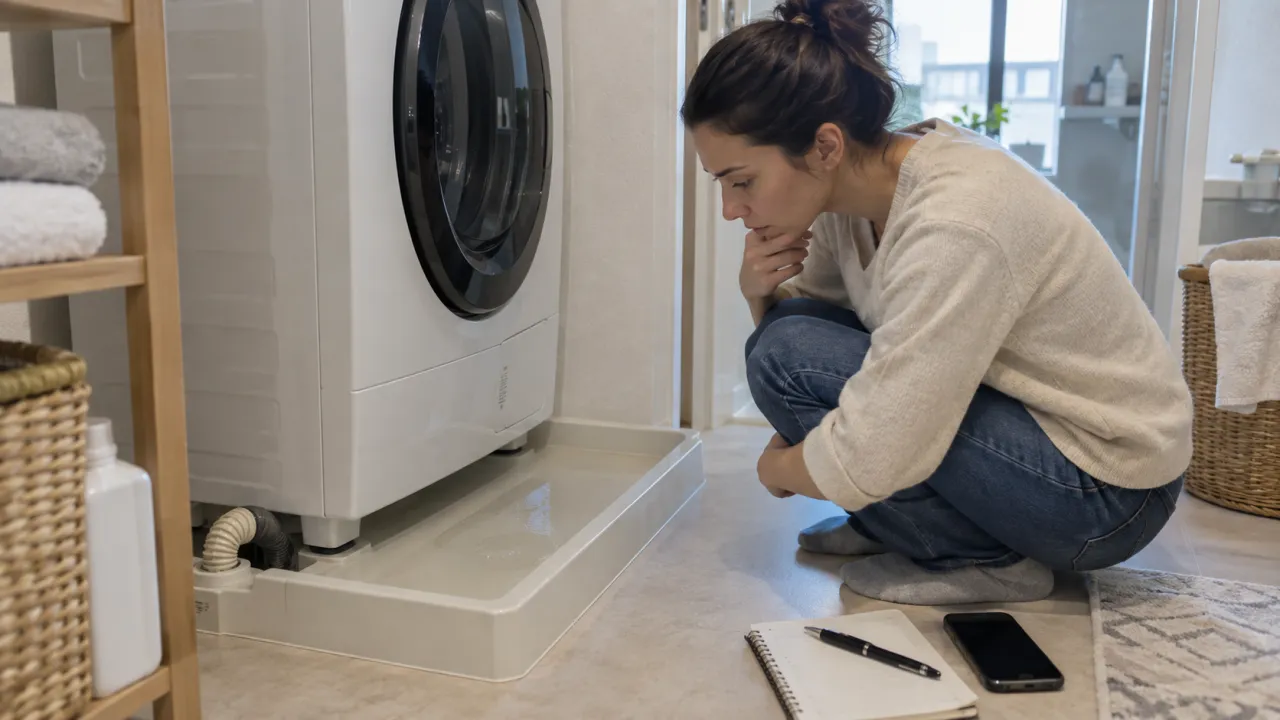
Quick answer. If the washing-machine pan or floor is wet, pause the machine and look from a safe position at when the water appears: while filling, while draining, after a cycle, or even when the machine is off. Do not touch a wet electrical outlet or run repeated test cycles into a possible overflow. Photograph the pan, hose, floor edge and time of discovery, then contact your property manager or appliance service according to the likely source. A waterproof pan does not guarantee that surrounding floor or wall materials stayed dry. Once the leak is stopped, persistent musty odor, staining or damp building material can justify a separate mold assessment. Kabibusters Yokohama can receive English inquiries about indoor mold concerns from residents of Tokyo, Kanagawa and Chiba; ask about the specific address and availability rather than assuming a visit is guaranteed.
日本語の要点: 洗濯機パンの水たまりは、給水・排水ホース、排水口、洗濯機本体など原因を分けて確認します。濡れた電源に触らず運転を止め、発見時刻と写真を残して管理会社に連絡してください。水漏れ修理後も床や壁の湿り・カビ臭が続く場合は室内環境の相談対象です。
1. First distinguish filling, draining and water that remains after use
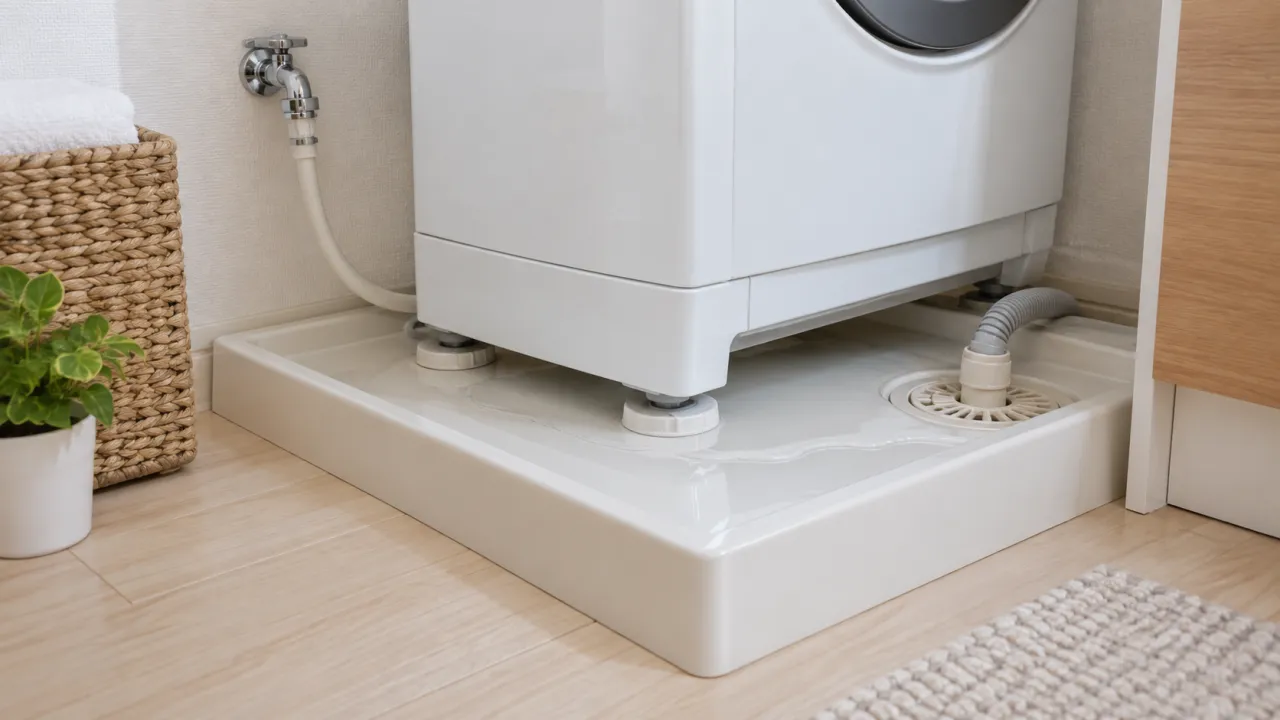
The place where you notice water is not always where it escaped. A thin film in a washing-machine pan may come from the supply connection at the tap, the drain hose, a blocked drain trap, condensation on a nearby pipe, or water carried over from cleaning the floor. It is unsafe to name a cause from a photograph alone. Ask three questions before wiping away all clues: When was the pan last dry? At which point in the cycle did water appear? Is the floor outside the pan wet too? A broad photograph showing the appliance, pan, tap and floor is often more useful than an extreme close-up.
UR Housing's English resident guide tells occupants to make sure the washing-machine drainage hose is securely connected and cautions that even a small amount of water can reach the unit below through some floors. Daito Trust's English tenant handbook likewise warns that an improperly placed drain hose can cause overflow from a pan. These are general resident guides; the instructions for your particular machine and lease still matter. They do not prove who is responsible for an individual leak.
If water is actively spreading, stop the washing machine if you can do so without stepping into water around electrical equipment. Close the water tap if it is safe and accessible. Keep children and pets away from a wet outlet. If water may be entering another apartment, contact the building's emergency or management route promptly. You do not have to crawl behind a running machine to find the exact connection before calling. Never detach an unknown hose or open a fixed drain assembly just to take a photograph.
| Observation | Possible source to ask about | Safe next step |
|---|---|---|
| Water appears near the tap during filling | Tap fitting or supply hose | Stop use; ask appliance installer or manager to inspect |
| Water rises near the drain during pump-out | Hose connection, drain trap or shared drain | Stop use; report possible overflow urgently |
| Pan is dry but floor outside it is wet | Spill, pan damage or another source | Photograph both sides of the pan; report floor wetness |
| Musty smell remains after a leak is repaired | Damp floor or wall materials may remain | Ask how the materials were dried and whether assessment is needed |
The comparison is a triage aid, not a diagnostic test. For example, an apparently dry pan can conceal an earlier spill that moved under the floor finish. Conversely, a stale smell can come from a drain trap without mold in the wall. Daito Trust's English drain-odor FAQ explains one non-mold odor route, while UR's resident guide warns of water reaching a lower unit. Avoid equating every odor with mold; let the timing and material condition guide the next call.
2. Check the pan, hoses and room without making damage worse
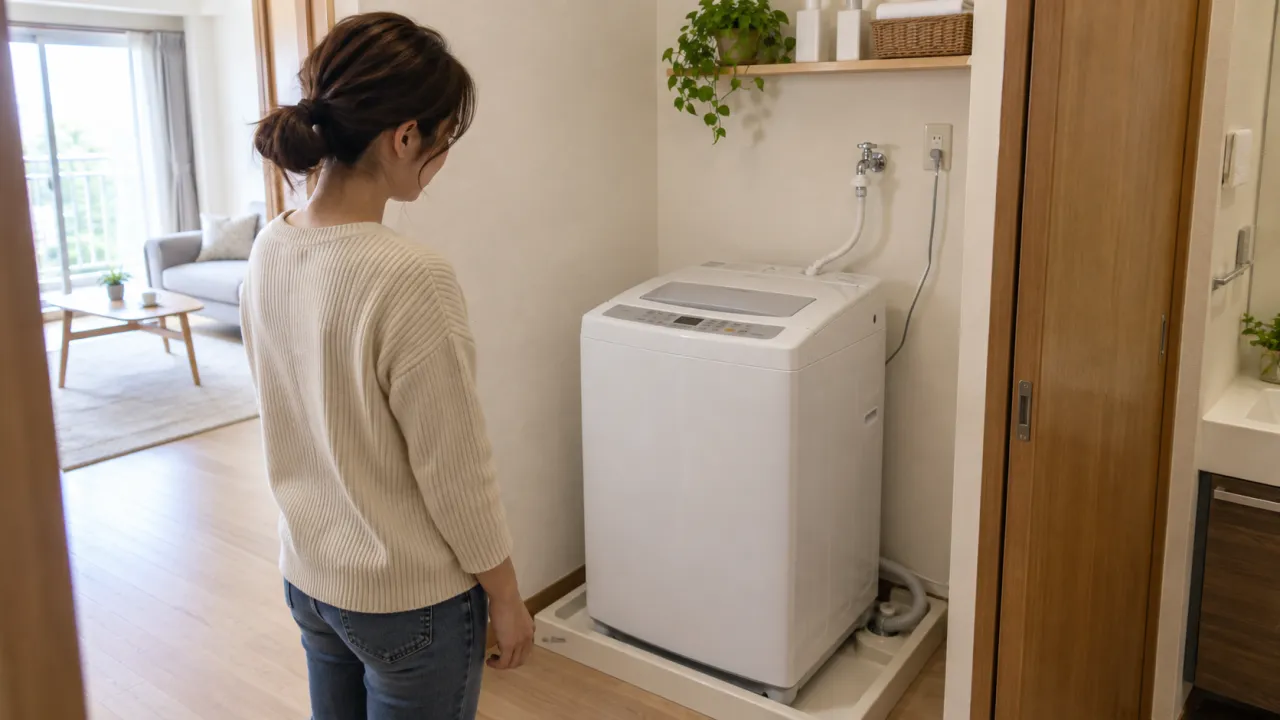
The Japanese term bōsui pan usually means the shallow waterproof tray under a washing machine. It collects water but has limited capacity and depends on a functioning drain. It is not a complete waterproofing system for the room. A hose can slip, a drain can back up, and a pan can crack. UR's resident guide specifically stresses secure drainage connection; it also says to check drainage carefully where a pan is absent. The pan design, drain position and hose route vary between buildings. Do not assume a diagram from another property matches yours.
From a safe standing position, note whether the tap and supply fitting look dry, whether the visible drain hose appears seated, and whether water has crossed the pan rim. If the machine was recently installed or moved, tell the manager and installer. If the machine is landlord-supplied, explain that before arranging a repair. A connected hose may still leak where it bends or underneath the machine, but moving a heavy appliance alone can pull a line loose, scratch the rental floor or create a new leak. Ask for a qualified visit when access requires moving it.
Before any routine cleaning, identify whether the wet material is the pan, a washable tile, vinyl flooring, wood, wallpaper or a baseboard. Smooth visible surfaces may be dried after the source is controlled, but water trapped below a floor covering cannot be confirmed dry by wiping its top. A dehumidifier and open door can help room air, yet neither repairs a drain obstruction nor verifies dryness inside construction layers. If the edge of the flooring is swollen, peeling, soft or discolored, record it rather than scrubbing or lifting it without permission. The property manager should decide how rental materials are inspected and repaired.
Smell deserves a careful description. A sewer-like smell near a drain may relate to the water seal rather than visible fungal growth. Daito Trust's English FAQ on drain odors says the water seal can evaporate after a home has been empty. On the other hand, a damp, musty smell from a wall or flooring after a documented leak deserves attention even if the drain itself is working. Note the location and timing; do not cover the smell with fragrance and call the underlying condition resolved.
3. Who should an English-speaking renter contact first?
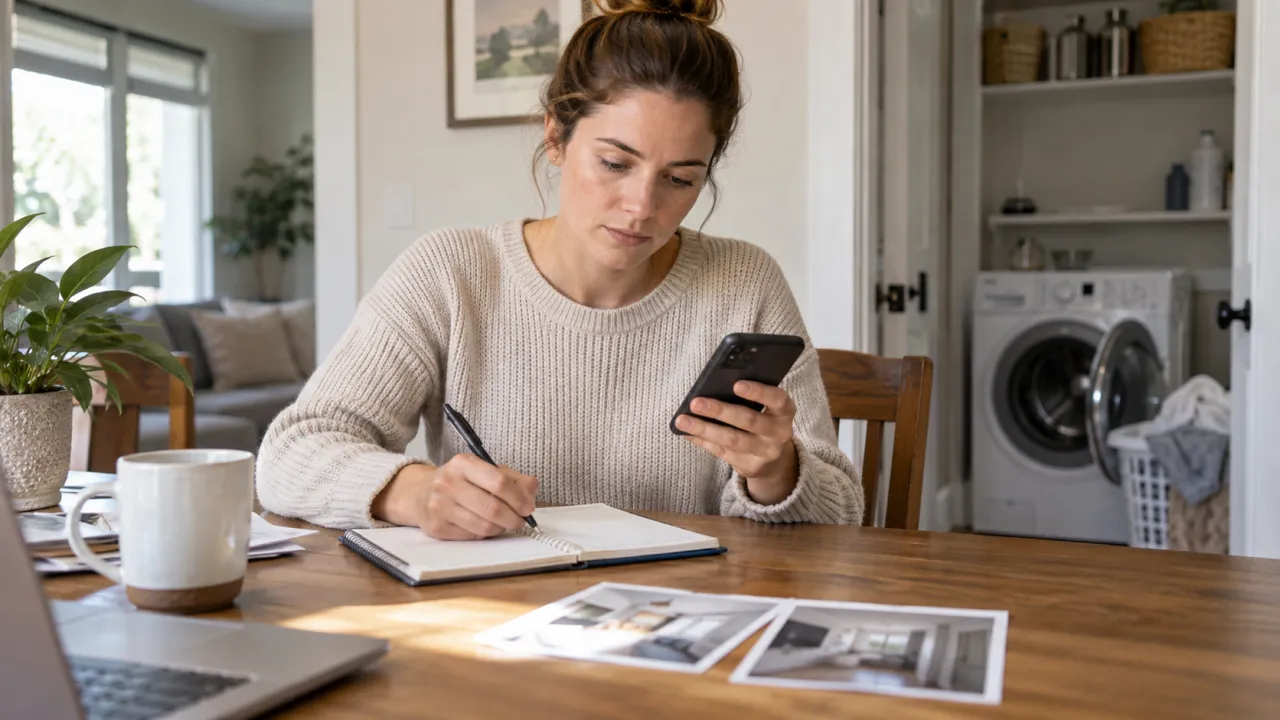
The first contact depends on the hazard and the material. A continuing overflow or water at an outlet is an urgent building/appliance issue. For a leak from a tenant-owned washer or a recent installation, the appliance installer or manufacturer may need to inspect it. For a landlord-provided unit, fixed pan, drain or damaged floor, notify the property manager. If both appliance and building components may be involved, tell each party what has been observed without assigning blame. The priority is stopping water and documenting the condition, not deciding a financial dispute from a blog article.
A short English report can read: “I found water at the washing-machine pan at [time] on [date]. The water appeared [during filling/during draining/after the machine was off]. The floor outside the pan is [dry/wet]. I have stopped using the machine and have not removed any fittings. Please advise whom to contact to inspect the supply, drain and affected floor. Photos are attached.” If a downstairs resident reports water, include that information promptly and use the emergency contact given in your lease. Keep copies of messages, photographs, repair reports and dates.
For rental condition records, Japan's Ministry of Land, Infrastructure, Transport and Tourism provides multilingual rental-housing resources, including English information on checking property condition. These help with communication but do not decide legal responsibility for your specific event. Avoid statements such as “the tenant always pays” or “insurance always covers it.” The cause, contract, equipment ownership, reporting timing and verified damage all matter. If a dispute develops, obtain qualified housing or legal advice rather than relying on a cleaning contractor to interpret the lease.
Where does a mold specialist fit? After the leak is controlled, ask whether wet flooring, wallboard, skirting or cabinetry remains. A specialist can help assess visible or suspected mold in indoor materials and discuss a suitable removal and recurrence-prevention approach, but cannot fix a tap or determine liability. Kabibusters Yokohama's service overview explains the site's mold-related service; the inquiry page is the route to describe the affected material and request English communication. Include your city or ward in Tokyo, Kanagawa or Chiba, the first date of wetness, what repair is planned, and a safe overview photo. Confirm the service area and timing directly.
4. FAQ and a practical decision checklist
Is black material in the pan always mold? No. It may include lint, detergent residue or dirt. Color alone cannot identify a substance. If the pan is wet, fix or report the water issue first; if surrounding materials remain damp or stained after drying, request assessment. Avoid scraping an unknown deposit near an electrical part.
May I keep washing laundry if the leak seems small? A small visible puddle does not show how much water may be hidden or whether the next drain cycle will overflow. Stop and report an unexplained active leak. In an apartment, overflow can affect neighbors below, as the English resident guides note. Resume only after the relevant manager or appliance professional has explained the safe repair and checks.
Can I lift the washing machine and clean underneath myself? Only if your appliance instructions, physical ability, connections and lease make that safe. Large machines are heavy, and an inexperienced move may disconnect a hose or damage the floor. Do not move it while powered or connected to a leaking supply. Ask for professional access where the pan or wall cannot be seen safely.
What if the drain smells but nothing is visibly wet? Odor alone is not proof of a wall mold problem. Ask management about the drain trap, ventilation and any prior water incident. Record whether the smell is strongest at the drain, baseboard or wall. If a long-empty unit has a dry trap, the building or appliance guidance should determine the appropriate remedy. Do not pour incompatible chemicals into an unknown drain.
When should I ask about mold after a water leak? After the source is stopped, seek further assessment when the floor edge or adjacent wall stays damp, a musty smell persists, staining spreads, or damaged material cannot be inspected without moving the machine or opening the floor. Those signs warrant investigation, not an automatic claim that mold is present. If someone has symptoms, seek medical advice separately; a blog cannot diagnose exposure or illness.
My washer is my own but the floor belongs to the landlord. Who do I tell? Contact the appliance installer or maker about the machine and the property manager about the rental surface. Send the same factual timeline and photographs. Avoid dismantling a fixed pan or flooring without the owner's permission. Responsibility is a separate issue from stopping the leak and protecting the room.
Use this final checklist before requesting help: (1) Is water actively spreading or near electricity? Stop use and call the emergency building route. (2) Did it start during filling or draining? Tell the manager and appliance professional exactly when. (3) Has the leak been stopped but a wall, floor or baseboard stayed wet or musty? Ask how the material will be checked and dried. (4) Is there an ongoing mold-like condition in indoor materials after the plumbing issue is addressed? Send an English inquiry with location, timeline and photos to Kabibusters Yokohama's contact form. This sequence helps direct the right work to the right professional.
Primary sources consulted: UR Housing's English resident guide, Daito Trust's English washing-machine guidance, Daito Trust's drain-odor FAQ, and MLIT's multilingual rental-housing resources. These explain general care and communication; none is a remote inspection of your apartment.
----------------------------------------------------------------------
カビバスターズ横浜
住所 :
〒221-0056
神奈川県横浜市神奈川区金港町5-14 クアドリフォリオ8階
電話番号 :
0120-133-199
----------------------------------------------------------------------