玄関の靴箱のカビ臭・英語相談
2026/10/20
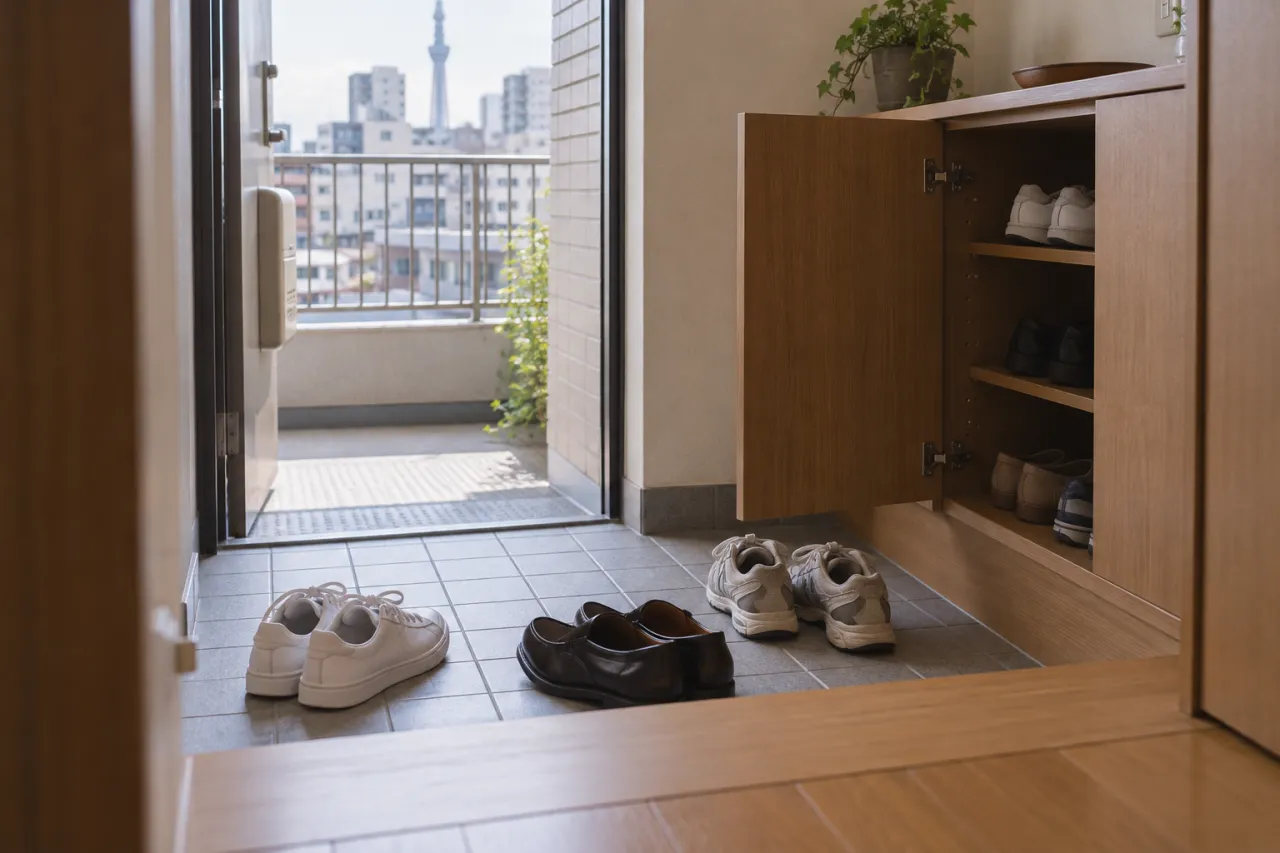
Quick answer. A musty entrance or shoe cabinet is a reason to check moisture, not proof that every shoe or wall is moldy. Take shoes out, let wet pairs dry before storage, look for condensation or water at the cabinet back and floor, and document any staining without scraping it. If an active leak, soft building material or spreading marks are present, tell the property manager promptly. If the source is addressed but the indoor cabinet or wall remains musty or visibly affected, ask a mold specialist about an assessment. Kabibusters Yokohama accepts English inquiries; residents in Tokyo, Kanagawa and Chiba should confirm availability for their address.
日本語の要点: 玄関の靴箱がカビ臭いときは、濡れた靴をすぐ収納せず、靴・棚・背面の壁・床を分けて確認してください。水漏れや建材の損傷は先に管理会社へ連絡し、湿気やカビ臭が続く場合は専門相談を検討します。臭いだけでカビや責任者を断定しません。
1. Find out whether the smell comes from shoes, storage or the building
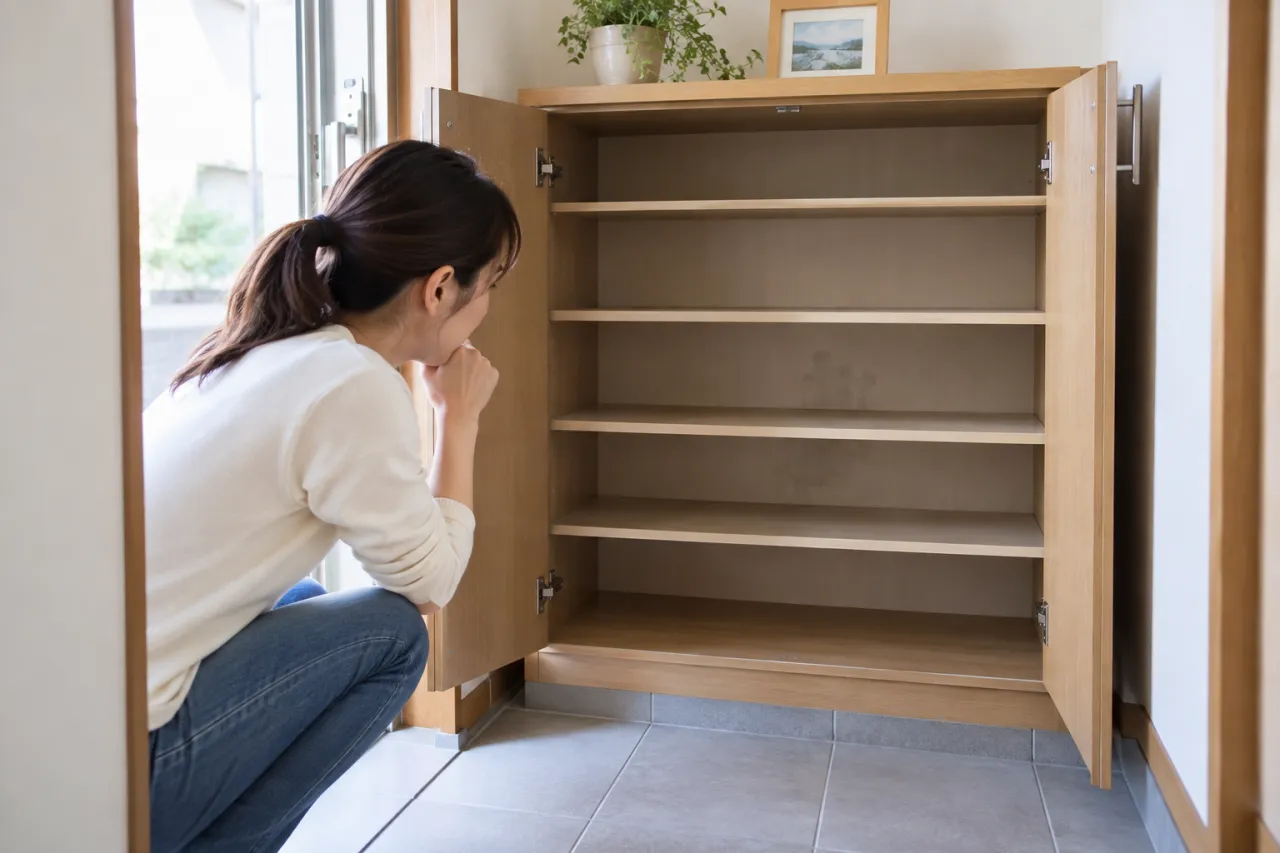
The entrance of a Japanese apartment may have a built-in getabako or shūzu boksu: a cabinet close to the door where outdoor shoes are stored. That is convenient, but shoes carry rainwater, perspiration and dirt into a small closed space. The cabinet may also sit against a cool outside-facing wall or beside a damp entrance floor. These are different possible moisture routes, and they call for different responses. A smell that appears only when one pair of shoes is opened is not the same observation as staining across the back panel and wall. Neither observation alone identifies a species of mold or proves a structural defect.
Tokyo Metropolitan Government's English guidance on indoor mold specifically discusses the entranceway and shoe closet. It advises drying shoes thoroughly out of direct sunlight before putting them away, keeping storage well ventilated, and cleaning dirt before long-term storage. Shinagawa City's housing-hygiene guidance gives similar advice for shoes and shoe cabinets. These public sources support basic prevention, but they cannot establish the cause of the odor in a particular rental.
Begin with a simple observation log. When do you notice the smell: after rain, on opening the cabinet, after returning from a trip, or even when the cabinet is empty? Are one or several pairs damp to the touch? Does the odor follow a pair when it is moved to a dry place? Is there a stain on removable shelf paper, on the cabinet's fixed back board, or on the wall outside the cabinet? Is the entry floor wet near the door frame? Record the date and take wide and close photographs before cleaning. Use a flashlight to inspect visible surfaces, but do not force a fixed cabinet away from the wall or pull off trim in a rental home.
Use the comparison below as a communication tool, not a remote diagnosis.
| What you notice | Plausible issue to distinguish | Sensible first contact or action |
|---|---|---|
| One recently worn pair smells; cabinet surfaces look dry | Moisture or soil retained in footwear | Dry and care for shoes according to their maker; observe whether the cabinet odor clears |
| Several pairs and shelves smell after rain | Moist air trapped in crowded storage | Empty and ventilate cabinet; photograph any visible material change |
| Back panel, wall or floor remains damp or discolored | Condensation, water entry or another building moisture source | Report the material condition to the property manager before alteration |
| Water is actively entering at the door or ceiling | Leak or rain intrusion, not a shoe-care issue | Use the building's urgent repair contact; keep clear of wet electrical fittings |
| Smell persists after shoes are removed and the source is corrected | Possible residual dampness or affected indoor material | Ask the manager how material dryness will be assessed; consider a mold specialist |
The smell may also be unrelated to mold: shoe materials, adhesives, accumulated dirt, drain odor from nearby plumbing, or a neighboring space can all affect an entrance. Do not describe a smell as proven mold in a report. State what you can see, smell and feel, where it is located, and when it occurs. If you have asthma, allergy symptoms or another health concern, obtain medical advice separately. A photograph or blog article cannot diagnose exposure or illness.
2. A safe, practical inspection and prevention routine
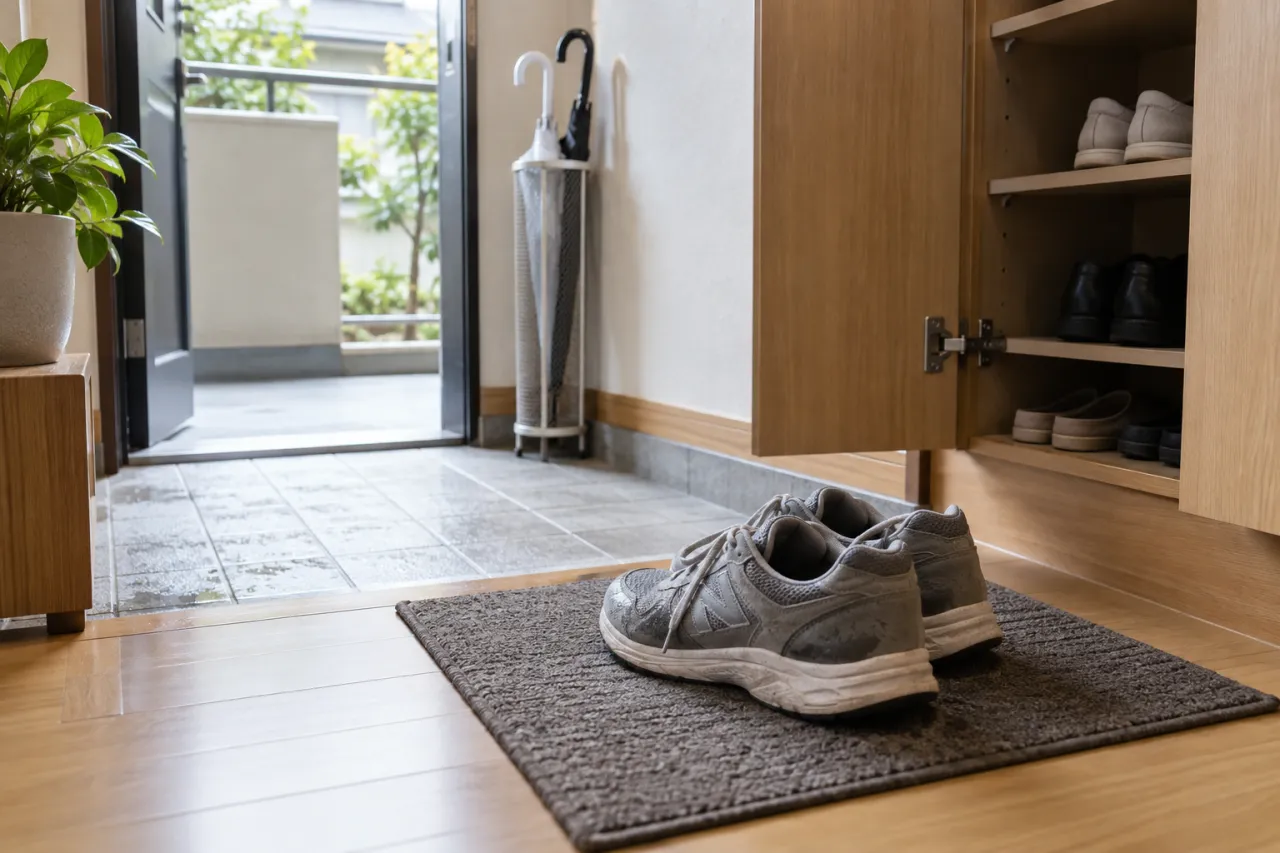
Take the footwear out one pair at a time and set it on a clean, dry surface. Keep any pair with obvious growth separate from unaffected items so you do not brush residue onto other shoes. Do not vigorously shake, brush or vacuum suspect material inside the occupied entrance. Where there is extensive growth, a strong persistent odor or a vulnerable occupant, ask for professional advice before cleaning. The handling method depends on leather, fabric, synthetic materials and the maker's care instructions; a household disinfectant that suits one surface may damage another. Avoid mixing cleaning chemicals, especially bleach with other products.
For ordinary prevention, allow wet shoes to dry thoroughly before returning them to a closed cabinet. Remove loose dirt as appropriate for the shoe material. Leave space between pairs so that the rear of the cabinet is not sealed by a solid wall of footwear. Open the cabinet door when room conditions allow and ensure the home's intended ventilation is operating. If the entry air itself is very humid, a moisture absorber in the cabinet may help manage local humidity, but it does not repair water entering through a door or wall. Replace an absorber safely according to its product directions; a tipped liquid container can create another wet spot.
Daito Trust's resident guidance on ventilation and condensation identifies shoe cabinets among places where mold may occur in airtight homes and recommends room and storage ventilation. The Japanese version of its ventilation guidance also addresses supply-air openings and the building's 24-hour ventilation. Follow the instructions for your own property and ask management if a vent seems blocked or inoperative. Keeping a cabinet door open for an hour is not a universal cure; outdoor air can itself be damp, and a concealed leak will continue until repaired.
A small humidity meter can help you describe conditions, but a single reading is not a diagnosis. Tokyo's English public-health page advises keeping indoor humidity no higher than 60% through airing, ventilation and dehumidification. Measure in more than one location and note the time, weather and whether the entrance door has recently been opened. A cabinet may be more humid than the room, and a room reading may miss a local wet back panel. Do not promise that any particular number means a surface is safe or that a dehumidifier has dried material hidden behind a fixed cabinet. If water is visible or the panel feels soft, record that physical condition and involve management.
Look at the cabinet without dismantling it. Is the back panel flat and dry, or swollen and peeling? Are marks limited to removable liners or do they continue into fixed joinery? Does the entrance floor edge show water, separation or a new stain? Photograph a ruler or ordinary object near a mark for scale, but do not present the size as a laboratory measurement. Recheck after drying shoes and improving ventilation. A mark that spreads, returns after cleaning or remains accompanied by dampness is more important than a one-time odor that disappears when a wet pair is removed.
For English-speaking residents, it helps to name the exact place: “shoe cabinet,” “cabinet back panel,” “entryway floor,” “front-door frame,” or “wall behind the cabinet.” The Japanese words getabako (下駄箱), genkan (玄関), ketsuro (結露, condensation) and kabishū (カビ臭, musty/mold-like smell) may help your manager locate the issue. You do not need to diagnose the cause before reporting a damaged building surface. A clear timeline and photographs are more useful than an absolute statement that “the apartment has toxic mold.”
3. When to contact the property manager, a shoe-care provider or a mold specialist
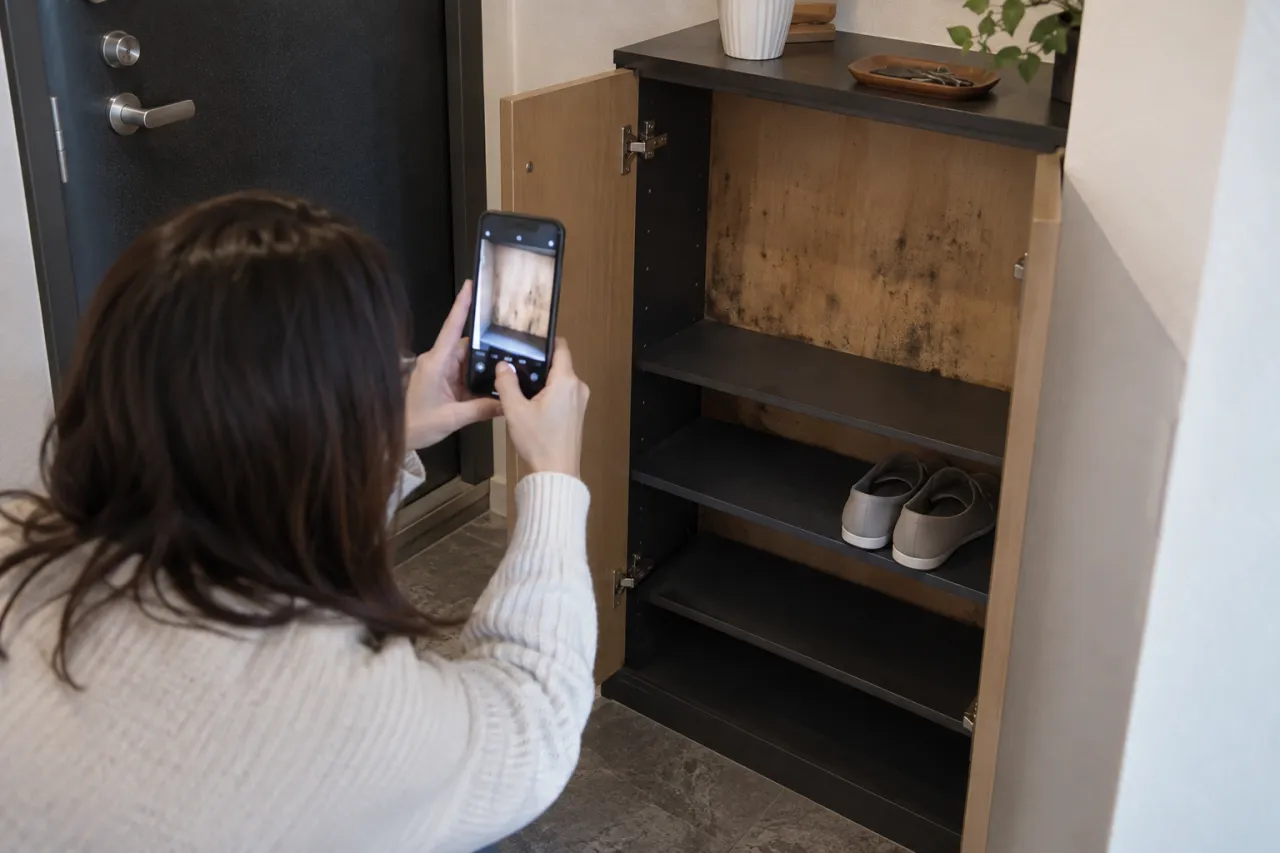
Footwear is usually a personal item; a fixed cabinet, door frame and wall are usually part of the rented premises. That practical distinction helps direct the initial question, but it does not decide payment responsibility. If a single pair has a problem and the storage area is dry, check the footwear maker's care advice or a suitable repair and cleaning service. If there is water ingress at the entrance, a swollen fixed panel, repeated condensation on building surfaces, or staining that appears behind the cabinet, notify the property manager or landlord's repair contact. Ask whether they will inspect the door seal, wall, ventilation and affected materials. Do not remove a built-in cabinet, repaint a stain, or seal it with adhesive film without permission.
Japan's Ministry of Land, Infrastructure, Transport and Tourism offers multilingual rental-housing information for communicating about housing conditions. It is useful background, not a ruling on an individual deposit or repair dispute. The actual lease, equipment ownership, cause of water and inspection findings matter. A contractor who assesses mold should not be expected to decide legal liability or compensate for a damaged pair of shoes. If the condition is disputed, keep a dated record and seek appropriate housing or legal advice.
An English message to the manager can be short and factual: “I noticed a musty smell in the entrance shoe cabinet on [date]. I removed and dried the shoes. The back panel is [dry/damp/soft] and I can see [describe location and size of staining]. The entrance floor and door frame are [dry/wet]. I have attached photographs taken before cleaning. Could you advise whether the cabinet, wall, door seal or ventilation should be inspected, and whom I should contact?” If water is actively entering, say that at the beginning of the message and use the urgent contact specified in your lease. Save the reply and any inspection report.
A mold specialist becomes relevant where the moisture source has been stopped or is being investigated but an indoor surface still shows suspected growth, persistent musty odor, or repeated staining. The specialist can discuss what can be inspected, whether the material is suitable for treatment and how recurrence risks will be addressed. A mold service cannot repair a leaking door, replace a ventilation fan, diagnose a medical condition or guarantee that a hidden space is dry without appropriate access. Kabibusters Yokohama's service information describes its mold-related work. If you live in Tokyo, Kanagawa or Chiba, use the contact form for an English inquiry with your city or ward, photographs, the first date of the problem, whether water is still present and what management has said. Confirm the service area, timing and scope directly; this article does not promise a particular visit or price.
This sequence avoids paying for the wrong service. A shoe cleaner can address footwear but not a damp wall. A property manager can arrange building repairs but may need additional assessment of residual affected material. A mold specialist can assess and discuss mold treatment but should not be used as a substitute for stopping water entry. Sometimes more than one professional is necessary. Ask each party to identify what they observed and what remains uncertain.
4. FAQ: practical next steps for a musty entrance
Does a musty smell mean my shoe cabinet is full of mold? No. Odor is a clue, not a laboratory result. Check whether it follows a particular shoe, persists in an empty cabinet, or coincides with visible dampness or staining. Document the observation and do not advertise an unconfirmed diagnosis to the landlord or a contractor. If the smell continues after shoes are removed and the space is dried, ask for an inspection.
Can I put wet shoes in a plastic bag inside the cabinet? Sealing wet footwear can trap moisture. Follow the shoe maker's care instructions, remove excess surface water when safe, and allow the pair to dry thoroughly before storage. Tokyo's public-health guidance specifically recommends drying shoes before putting them into a shoe closet. If contaminated material is suspected, avoid shaking it in the living area and seek advice appropriate to the material.
Should I keep the cabinet open all day? Opening the cabinet can improve air exchange, but it is not a substitute for controlling the cause of moisture. Consider room humidity and outdoor conditions; follow your building's ventilation instructions. If the back panel or floor stays wet, tell management instead of relying only on an open door or moisture absorber. Do not block a required air inlet to reduce a draft without checking the building guidance.
What if a stain returns after I wipe the shelf? Record when it returned, where it appears, and whether the surface is damp. A removable shelf liner and a fixed wall are different materials. Do not use a harsh chemical or paint to conceal a recurring mark on rental joinery. If a fixed surface is repeatedly affected, ask management to check the moisture route and whether the material needs assessment.
Who pays for shoe or cabinet damage in a rental? This article cannot determine that. The cause, lease, equipment ownership and condition records matter. Report promptly, preserve evidence and request written guidance before altering fixed materials. MLIT's multilingual rental resources can help with the communication process, but a case-specific dispute belongs with qualified housing or legal support.
What should I send to a mold specialist? A wide photograph of the entrance, a close photograph of the affected cabinet or wall, the city or ward, when the smell began, whether it followed rain, whether the shoes have been removed and dried, and whether there is active water. Mention any manager or repair inspection already arranged. Do not send a cropped photograph alone and ask for a guaranteed diagnosis or price; an on-site condition may be different.
I have respiratory symptoms. Should I wait for a cleaning appointment? Seek medical advice for symptoms, especially if they are severe or worsening. A mold contractor assesses building materials, not a person's health. If you think the accommodation is unsafe or there is an urgent water/electrical hazard, use the appropriate medical or building emergency route. Keep the housing investigation separate from clinical decisions.
In short: dry and separate footwear, document cabinet and building surfaces, report fixed-material wetness or water entry to management, and ask about mold assessment when affected indoor materials remain after the source is addressed. For an English discussion about a persistent indoor mold concern in Tokyo, Kanagawa or Chiba, contact Kabibusters Yokohama with your location and photographs. This is an invitation to assess the facts, not a promise that every odor is mold or that every location can be served.
Primary information: Tokyo Metropolitan Government's English indoor mold guidance, Shinagawa City's mold-prevention guidance, Daito Trust's English ventilation and mold guidance, and MLIT's multilingual rental-housing resources. These are general sources; they are not inspections of your home.
----------------------------------------------------------------------
カビバスターズ横浜
住所 :
〒221-0056
神奈川県横浜市神奈川区金港町5-14 クアドリフォリオ8階
電話番号 :
0120-133-199
----------------------------------------------------------------------