布団・マットレス下の床カビ相談
2026/10/21

Quick answer. If you lift a futon or floor mattress and find a damp underside, odor or dark marks, stop leaving the bedding flat on that floor. Photograph the bedding and the flooring separately before cleaning. Dry and care for the bedding only according to its maker's instructions; do not assume a stained mattress can be made safe by wiping the surface. If the rental flooring is damp, swollen, discolored or repeatedly affected, report it to the property manager. If the moisture source is addressed but suspected mold remains in building materials, an indoor mold assessment may be appropriate. Kabibusters Yokohama can receive English inquiries; residents of Tokyo, Kanagawa and Chiba should confirm service availability for their exact address.
日本語の要点: フローリングに布団・マットレスを直置きして裏面や床が湿った場合、寝具と建物の床を分けて記録します。寝具は製品表示に沿って乾燥・手入れし、床の変色・膨れ・湿りは管理会社へ連絡してください。寝具の汚れだけで床下のカビや責任を断定せず、建材の異常が残れば専門相談を検討します。
1. Identify what is actually wet: bedding, floor finish or both
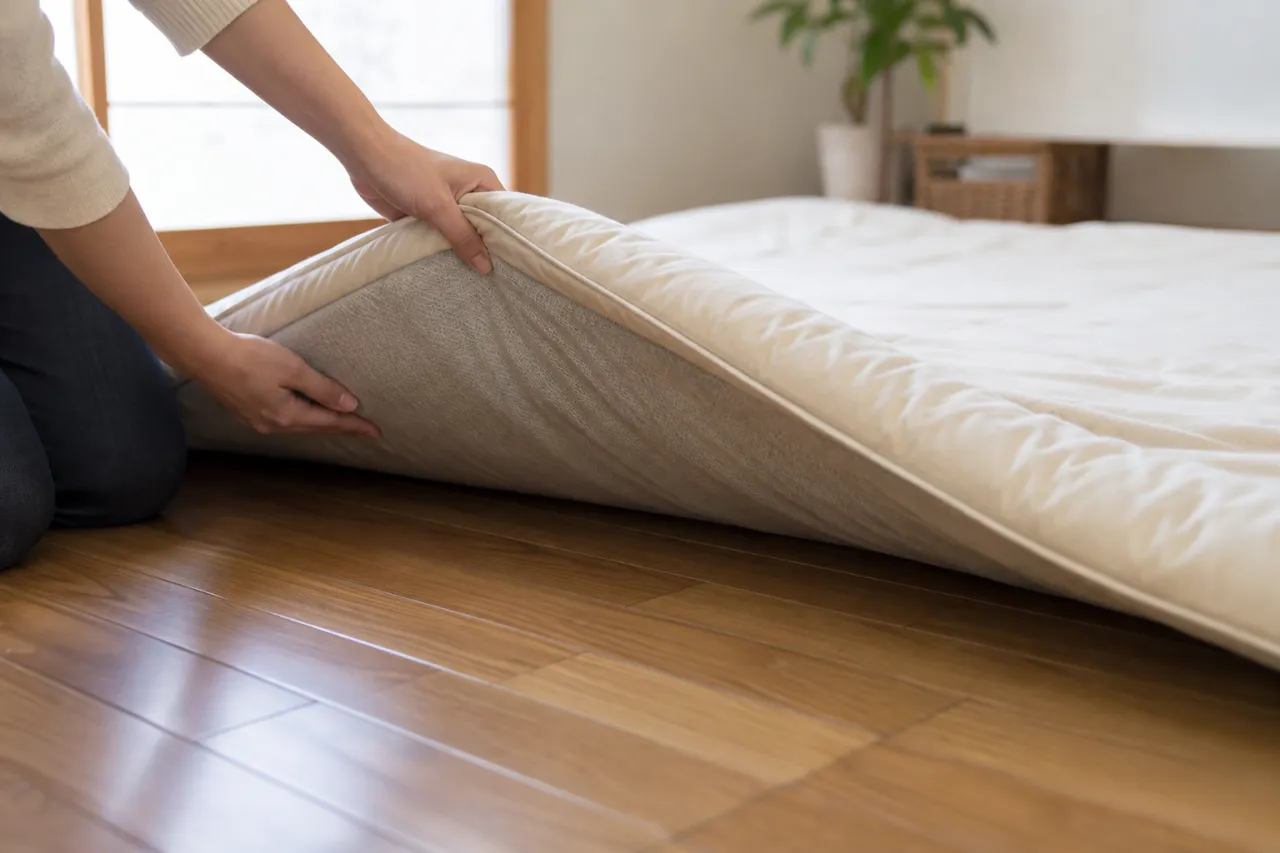
Sleeping on a futon is common in Japan, but a thin shikibuton meant to be raised and aired is different from a thick Western-style mattress designed for a frame. Neither label alone tells you how the product should be used. At night, a person's body and bedding produce moisture; when the underside stays pressed against a cooler, relatively impermeable flooring surface, local air movement is limited. The risk is greatest when bedding remains in one position day after day, but an individual room's conditions depend on its temperature, ventilation, floor construction, product and daily habits. Do not use a single photograph to declare the precise cause.
France Bed's official mattress guidance discourages placing its type of mattress directly on flooring and explains how moisture may be retained underneath. Nishikawa's official bedding-care article discusses drying and avoiding continuous contact between bedding and a floor. Those are useful manufacturer perspectives, but their advice is not interchangeable for every product. Some foldable floor bedding is made for temporary floor use; a sprung mattress with an instruction to use a base may not be. Read the care label and the exact product manual before washing, drying, folding or setting it on a slatted support.
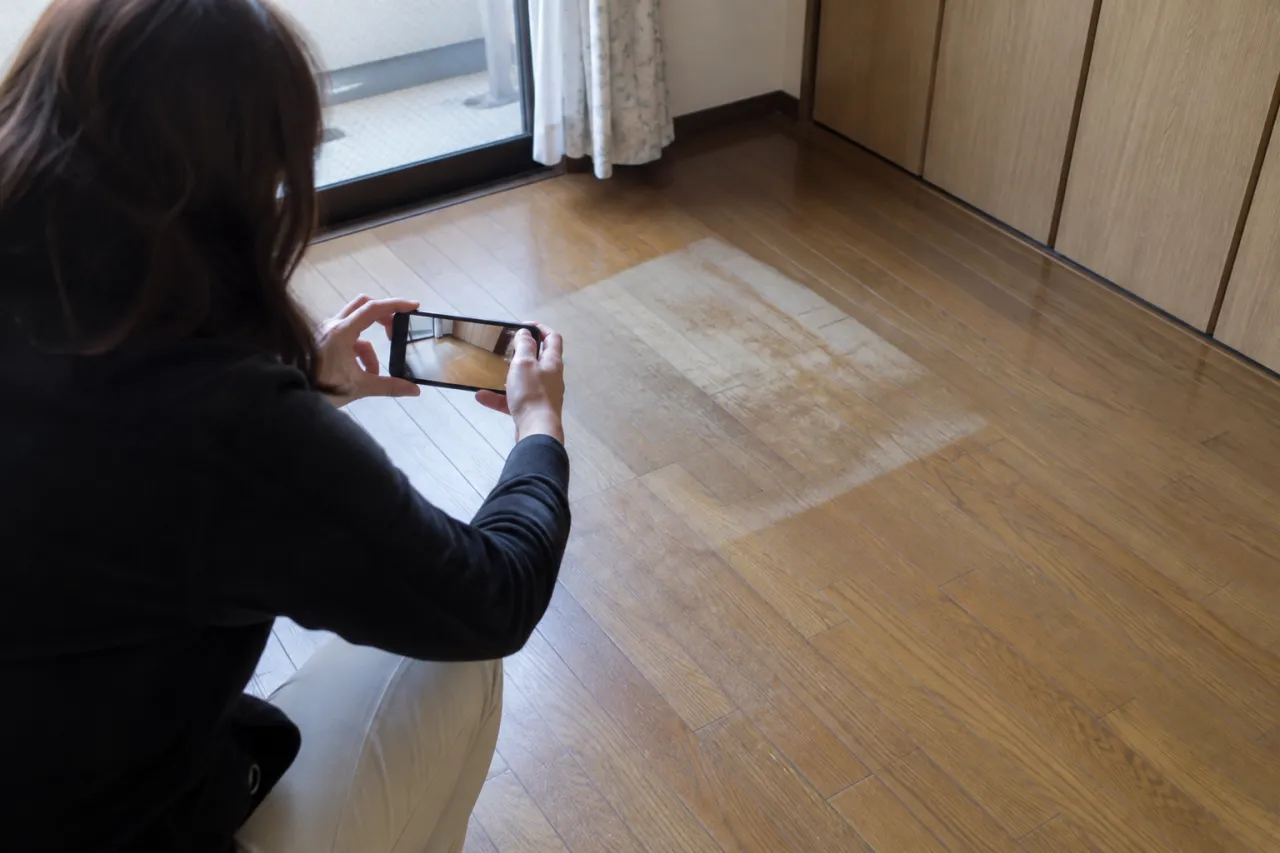
Lift the bedding carefully, preferably with help if it is heavy. Photograph the whole sleeping area and then the underside, seam, sheet, any underlay and exposed floor. Note the date, the last time you moved the bedding, whether the underside feels damp and whether the floor itself is wet. If you see dark marks on a washable sheet only, that differs from marks on the mattress core or fixed flooring. A mark may be mold-like, but color by itself cannot identify it. Do not rub an unknown deposit until you understand the material and avoid dispersing residue into the room. If you see pooled water, swelling or a soft floor, contact the manager promptly rather than waiting for a routine bedding-care day.
| Observation after lifting the bedding | What remains uncertain | First sensible step |
|---|---|---|
| Sheet or removable pad is damp; floor looks dry | Whether bedding has retained sweat or laundry moisture | Check its care label, dry it fully and monitor the floor |
| Mattress underside is marked; floor is dry | Depth of staining inside a porous product | Consult the bedding maker or a qualified cleaner; do not promise a surface wipe solves it |
| Floor finish is wet, raised, darkened or soft | Condensation, a spill, a leak or hidden floor damage | Photograph and report to property management before altering the finish |
| Staining or odor returns after routine airing | Persistent room humidity or moisture within material | Ask for inspection of conditions, not just another deodorizer |
| Water is spreading from a pipe, window or ceiling | An active building issue | Use the building's urgent repair route and avoid wet electrical points |
This table is a triage tool rather than a mold test. In a Tokyo studio, a futon may be placed near an exterior wall; in a Kanagawa apartment, a floor mattress may sit close to a balcony door; in Chiba, another home may have a different floor assembly. Those are examples of layouts, not claims about regional risk. Record actual conditions in your home. If a child or person with a respiratory concern sleeps there, seek medical advice about symptoms separately and consider using another dry sleeping area while the housing condition is clarified. A building specialist cannot diagnose illness.
2. A safer daily routine for futons and floor mattresses
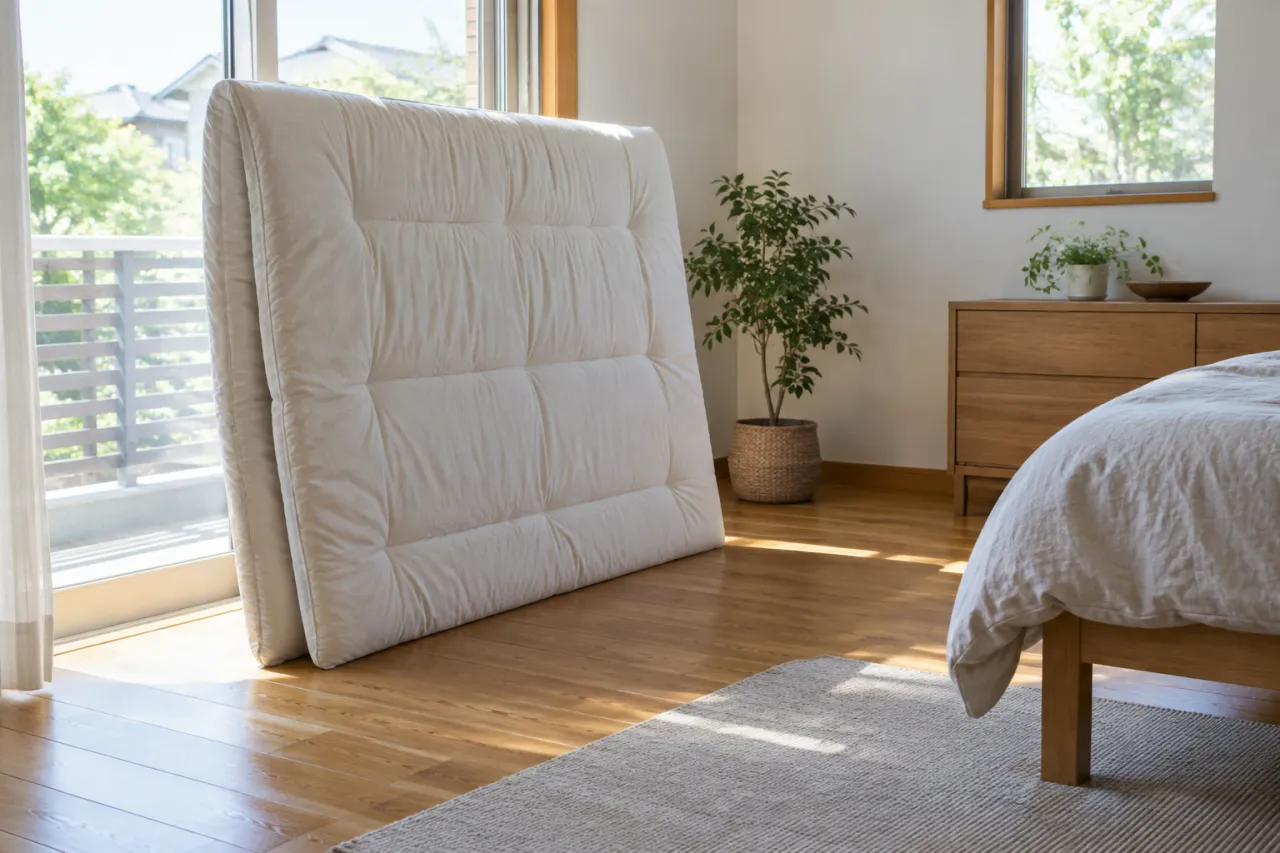
For a floor-use futon, the key habit is to lift it so both the bedding underside and floor can dry. Do not fold or store it while damp. A washable sheet or removable pad can be cleaned according to its label, but washing a cover does not prove a mattress core is dry. If the product is heavy or difficult to move, plan a safe support or frame that follows its maker's directions. Avoid dragging it across a rental floor; dragging can scratch finishes. Keep the surrounding floor clean and inspect it periodically, especially where furniture restricts airflow.
Tokyo Metropolitan Government's English indoor-environment guidance advises ventilation and humidity reduction as part of mold prevention. It gives a general indoor target of no higher than 60% humidity, but a room hygrometer is not a measurement of moisture inside a mattress or under the floor. Check readings at more than one time and note what the bedding and floor feel like. If the room is persistently humid, address ventilation, indoor laundry and obvious water sources. A portable dehumidifier may help room air but cannot repair a leak or confirm that concealed flooring has dried.
The exact bedding instructions matter. Nishikawa's official bedding guidance describes moisture management and care for bedding, but it does not establish instructions for a different maker's product. France Bed's guidance emphasizes a bed frame for the mattresses it discusses and warns that an improvised thin slat layer may not provide enough air movement. A blanket, plastic sheet or thin mat added under a mattress is therefore not an automatic cure; it may merely move moisture to a layer you no longer inspect. Ask the maker about a suitable base and about any warranty or cleaning limitations.
Take care with drying methods. Sun, tumble dryers, heated futon appliances and chemical cleaners can damage some foams, adhesives and coverings. Read the label and keep heat sources away from combustible materials. Do not spray strong cleaning chemicals into a porous mattress simply to erase a stain, especially where you will sleep against it. If there is widespread visible growth, a strong persistent odor or material that cannot be safely cleaned, seek product-specific advice or replacement guidance. Avoid making medical or microbial claims from a visual mark. Protect yourself from unnecessary dust exposure while handling the bedding; if someone has symptoms, seek medical care independently.
Floor protection is a separate question from bedding care. A renter may be tempted to cover a dark mark with a rug or adhesive floor sheet. That can trap moisture and conceal progression; adhesives can also damage rental flooring. Instead, photograph the original condition and discuss it with management. If a visible wet spot appeared after a spill, report the event and the area affected. If the flooring was already stained when you moved in, show dated move-in photographs. If a floor board lifts, creaks unusually, feels soft or gives off an odor after the bedding is removed, ask management whether they will inspect its layers and any adjacent wall or baseboard.
3. Rental reporting and the point at which mold expertise helps
Your bedding and the rental floor may require different people. The product maker or retailer is best placed to answer whether a futon cover can be washed, a core can be dried or a mattress should be replaced. A property manager or landlord's repair route should address fixed floor surfaces, suspected leaks, ventilation equipment and permission to inspect beneath a finish. A mold specialist can discuss suspected fungal contamination of indoor building materials and suitable assessment or treatment after the moisture source is controlled. No single party should be asked to guarantee a result outside its role.
UR Housing's English resident guide describes condensation and mold as maintenance concerns and discusses reporting and property use. Japan's Ministry of Land, Infrastructure, Transport and Tourism provides multilingual rental-housing resources that can help foreign residents communicate about condition records. Neither source decides whether a tenant or owner pays for a specific floor repair. The cause, lease, condition at move-in, timing of notice and verified damage all matter. Avoid assuming that a removable futon stain automatically proves the tenant damaged the floor, or that a floor mark automatically proves the building was defective.
A factual English message can say: “On [date], I lifted the futon/mattress from the wood flooring in [room]. The underside of the bedding is [dry/damp/marked]. The flooring is [dry/wet/swollen/discolored], especially at [location]. I have stopped placing the bedding there and have attached photographs taken before cleaning. Please advise whether the floor, ventilation or any nearby water source should be inspected and whether I should avoid using that area.” If a leak is active, say so first and use the urgent repair contact. Keep copies of the message, photos, response and any inspection notes.
When does a mold specialist make sense? Consider it if a fixed floor, wall edge or subfloor accessible to an authorized inspection remains damp or shows recurrent mold-like staining after the source is addressed; if a musty smell persists with the bedding removed; or if a larger area cannot be assessed safely without lifting fixed materials. A specialist may need permission or access arranged by the owner. A specialist cannot identify who is liable from a photo, and should not treat a room while an active leak continues. Kabibusters Yokohama's service page outlines mold-related work; the inquiry form lets residents describe an indoor issue in English. Include the city or ward in Tokyo, Kanagawa or Chiba, whether the floor is currently wet, the material, what management has arranged and safe photographs. Confirm service area, timing and scope for the specific address.
If the problem is limited to the mattress and the building floor is clean and dry, a mattress maker or bedding-care provider may be more relevant than a building mold contractor. If a fixed floor is damaged but bedding is not, focus on management and building inspection. If both are affected, communicate to both without assuming one cause. The aim is a correct sequence: stop any water source, protect the rental material, determine whether bedding can be cared for, and evaluate residual indoor contamination only where needed.
4. FAQ and a decision checklist for English-speaking residents

Is a futon always safe on flooring? It depends on the product and how it is used. A floor-use futon is usually intended to be moved and aired; a thick mattress may require a frame. Read the manufacturer's manual. Leaving either item flat for a long period can restrict drying underneath. A floor support or moisture sheet may help in some situations but must not hide recurring wetness. Inspect the underside and floor rather than assuming a product name guarantees safety.
Can I remove black spots with alcohol or bleach? Do not use a general recipe on an unknown mattress or finished floor. The material may be porous, treated or sensitive to chemicals. A wipe may remove a surface mark without establishing what remains inside. Bleach or other strong products can damage fabric, color, adhesive or floor finish, and mixing cleaners can be hazardous. First document the condition, follow product directions and ask management before treating fixed rental surfaces.
If the floor feels dry today, is the problem over? Not necessarily. A one-time damp sheet may dry fully, but recurrent odor, stain or floor swelling deserves attention. Note whether the mark returns after the bedding is lifted regularly and the room is ventilated. A surface that feels dry does not prove the flooring layer beneath it is dry. Management can advise on an inspection if the finish changes or a nearby water source is suspected.
May I move the mattress to a different corner tonight? A dry temporary sleeping place may be sensible while you investigate, but do not transfer visibly affected bedding onto another clean surface and assume the problem is solved. If a heavy mattress cannot be moved safely, get help. Keep it clear of electrical equipment and do not block exits. Discuss any damaged rental flooring with management before covering it.
Should I buy a dehumidifier or a slatted mat? Neither is a substitute for finding a leak or following the mattress manual. A dehumidifier can lower room humidity; a suitable base may increase airflow. But their effectiveness depends on the room, product and whether the bedding is lifted and inspected. Some manufacturers specifically require a frame rather than a thin slatted layer. Compare the product's care instructions with your arrangement and ask the maker if uncertain.
Who decides whether the deposit will be charged? Not a blog or a mold contractor. Keep move-in records, dates, photos and written reporting. Ask the manager to explain the observed cause and repair scope. MLIT's multilingual rental materials may help with general communication; a particular financial or legal dispute requires qualified housing or legal advice. Promptly reporting a wet floor can help protect both the room and the accuracy of the record.
Can Kabibusters Yokohama clean the mattress? Do not assume a service intended for building mold includes every type of bedding. Explain exactly what is affected and ask what is within scope. The company can receive English inquiries about indoor mold; confirm whether the relevant service and address are covered before arranging work. For bedding-specific washing or disposal, the product maker and local rules may be the more appropriate sources.
Use this final decision path: (1) Is there active water or an electrical hazard? Stop use of the area and contact the building's urgent repair route. (2) Is only removable bedding damp while the fixed floor remains clean and dry? Follow the maker's care instructions and change the storage or support routine. (3) Is rental flooring wet, swollen, stained or repeatedly musty? Photograph and report it to management before altering it. (4) After the water source is controlled, do indoor building materials still show suspected mold or persistent odor? Ask about assessment and send an English inquiry to Kabibusters Yokohama with location, timeline and photographs. This order helps avoid treating an active moisture problem as merely a cosmetic stain.
Primary sources consulted: Tokyo's English indoor-environment guidance, France Bed's official direct-on-floor mattress guidance, Nishikawa's official bedding-care guidance, UR Housing's English resident guide, and MLIT's multilingual rental resources. Their guidance is general and cannot replace an inspection of your particular floor or bedding.
----------------------------------------------------------------------
カビバスターズ横浜
住所 :
〒221-0056
神奈川県横浜市神奈川区金港町5-14 クアドリフォリオ8階
電話番号 :
0120-133-199
----------------------------------------------------------------------