Security Room Dampness and Mold
2026/10/21
Direct answer: If water staining, a musty smell, or suspected mold appears in or beside the security-control room of a private residence in Tokyo, Kanagawa, or Chiba, separate electrical safety from building-material remediation. Keep people away from standing water, wet sockets, racks, power supplies, or uncertain wiring. Have the estate manager activate the property's emergency procedure and ask a qualified electrician and the equipment vendor to assess affected electrical systems before anyone touches or restarts them. In parallel, identify and repair the water route—roof, pipe, air-conditioning condensate, drainage, or condensation—and have the affected wall, ceiling, flooring, or duct materials assessed for moisture and mold. A mold contractor cannot certify surveillance, access-control, or network equipment safe to energize. Nor can an electronics vendor establish that concealed building materials are dry. Both questions need the right specialist.
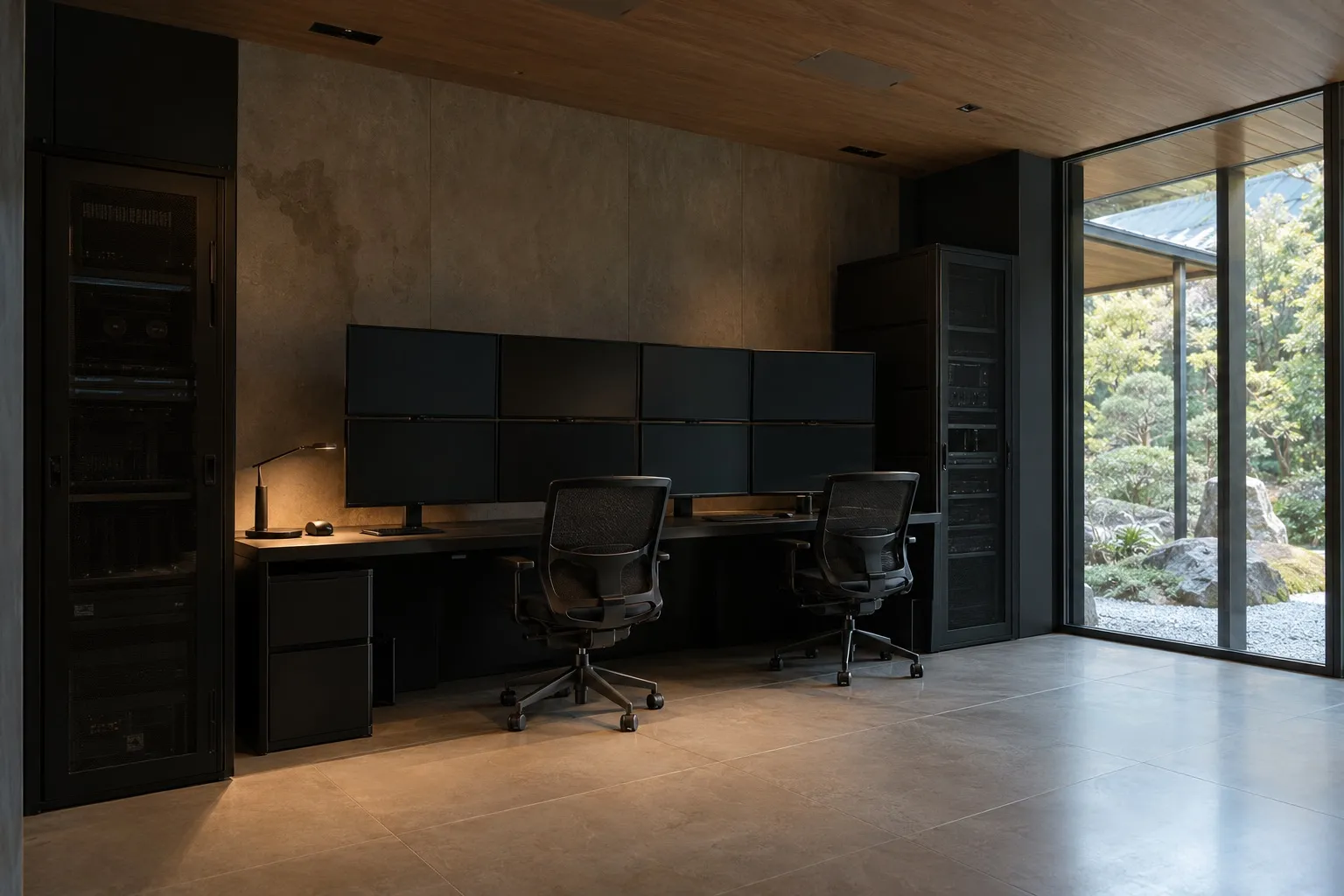
This article addresses a specific owner concern: a small, access-controlled room containing cameras, recorders, alarms, access-control panels, communications devices, or building-management screens. The equipment may be valuable, but its more immediate importance is that it serves the household's safety and privacy. A leak may threaten both equipment and nearby plasterboard, insulation, flooring, or acoustic finishes. An overseas owner may only receive a close-up photo of a dark mark behind a cabinet; the cause and urgency remain uncertain. The room might be in a basement in Tokyo, beside a roof terrace in Yokohama, or near a coastal equipment area in Chiba. Those locations suggest different possible pathways, but a location alone never proves a cause.
The three strongest source types encountered for this search answer different questions. The National Electrical Manufacturers Association's guide to evaluating water-damaged electrical equipment addresses assessment and possible replacement or reconditioning of electrical products after water exposure. The US EPA's building-remediation guide addresses moisture sources, hidden mold, HVAC and building-material cleanup. The US EPA's homeowner mold guide explains why correcting moisture is fundamental to recurrence prevention. A search result for a commercial server-room restoration company may offer a useful workflow, but it is not evidence that one vendor can certify every device and wall assembly. None of these sources is a Japanese electrical standard or a diagnosis of a particular home. Use the equipment manufacturer's instructions, the property's electrical design, and appropriately qualified local professionals for site decisions.
1. Stabilize the room without turning a moisture complaint into an electrical incident
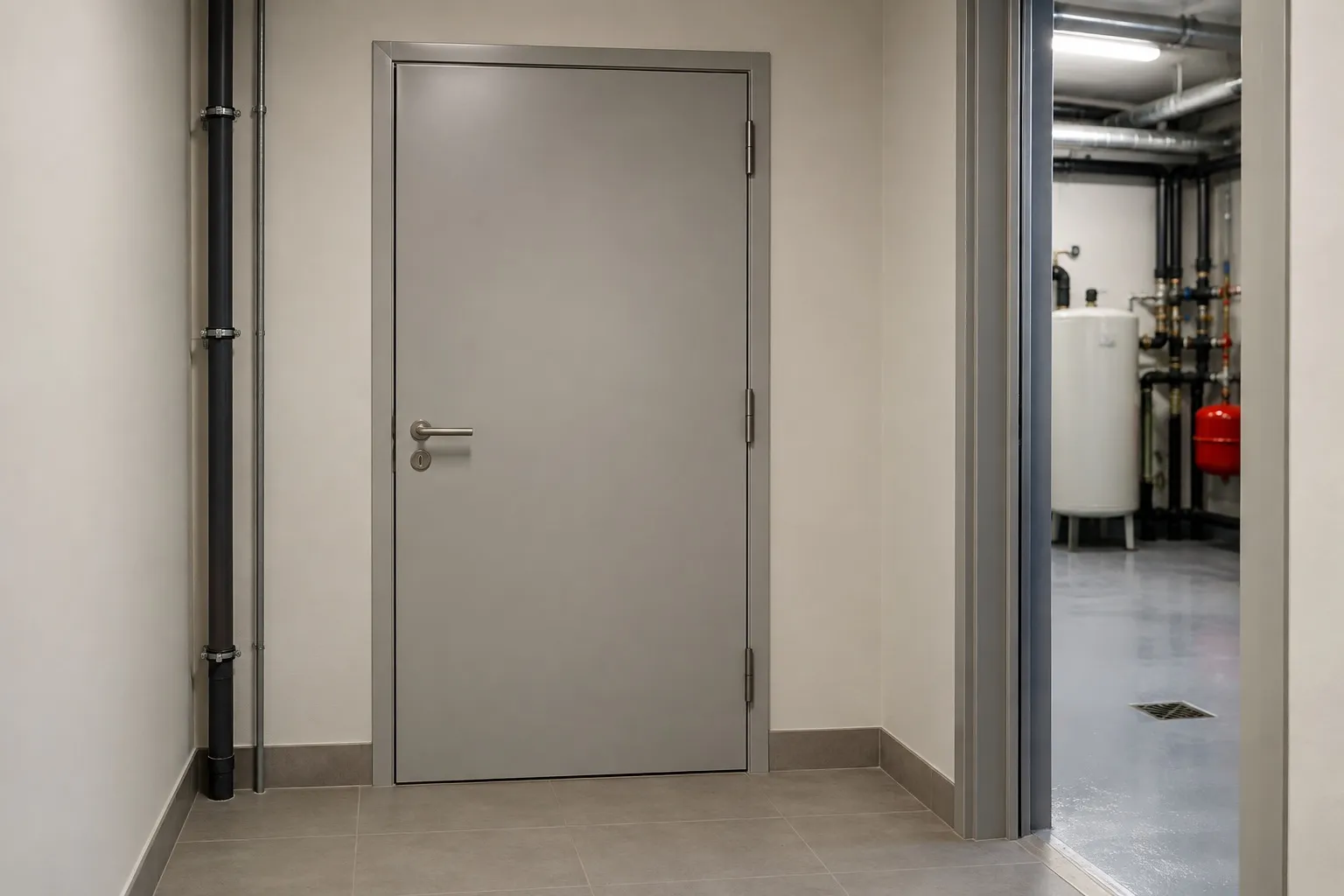
Before anyone thinks about mold cleaning, establish what is wet and what may be energized. A ceiling leak above a rack, water on the floor near a socket, a dripping pipe close to a distribution panel, or a wet power supply is not a routine housekeeping request. Restrict entry and use the property's emergency contact chain. Do not ask a caretaker to step into water to unplug a device, pull a cable, or reach an emergency switch whose surroundings are wet. A qualified electrician should determine whether and how to isolate a circuit safely. The security integrator or equipment vendor can then advise on the affected equipment, data and system operation. This division protects people and avoids the false assumption that a dry-looking chassis is fit to be powered.
The NEMA water-damaged electrical equipment guide distinguishes among types of electrical equipment and the circumstances in which replacement or evaluation may be required. It is a manufacturer-association reference, not a blanket instruction to repair every item. It also does not substitute for the exact product manufacturer's directions. The Electrical Safety Foundation International's explanation of water-damaged equipment warns that merely drying equipment does not establish long-term electrical safety. The specific decision in a Japanese residence belongs to a qualified electrician and the relevant equipment manufacturer or service specialist. Avoid quoting foreign wiring rules as though they automatically govern the site.
Continuity of household security must be managed separately from physical remediation. The estate manager may need a temporary patrol, approved alternate monitoring arrangement, or another private procedure while an affected device is offline. These operational options require the owner's security lead; a public blog cannot specify a property's camera layout, backup channels, access codes, or alarm bypass steps. Do not send images of screens, network labels, floor plans, resident movements, or gate controls to an unrelated contractor. In an English-language incident note, describe the safe building observation—“water stain at the east ceiling edge, above but not confirmed inside the cabinet”—without exposing the protection system itself.
If there is no visible water at the electrical system, do not leap to a conclusion that everything is safe. Check whether the stain tracks along conduit, a cable tray, wall penetration, or a pipe chase. An electrical specialist can judge electrical exposure; a building-envelope, plumbing, or HVAC specialist can trace the source. The manager should record when the mark appeared, weather and air-conditioning conditions, and whether the room had condensation on metal surfaces. A photo taken before disturbing materials preserves the original pattern. Where a water route is not known, the initial report should say “not determined,” not “the air conditioner caused the mold.”
2. Trace the water path and investigate concealed building materials
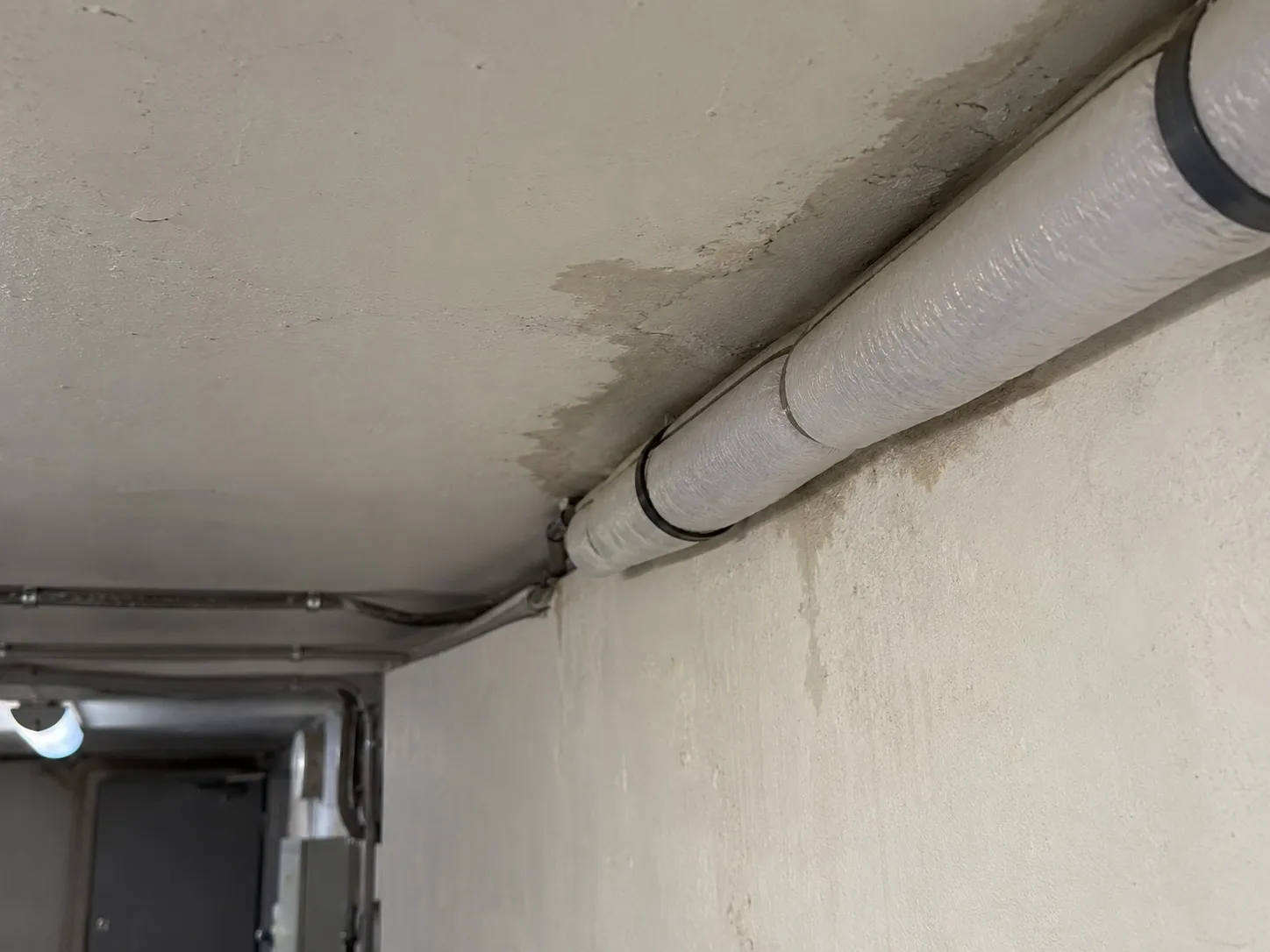
Moisture in a security room can have multiple paths. A flat roof or terrace above may leak during rain. A chilled-water pipe or air-conditioning condensate line may drip intermittently. Outdoor humid air entering a continuously cooled room may condense on a cold surface. A floor below grade may receive water at a joint or service penetration. In a room filled with equipment, a wall may be obscured by racks for years, so odor and staining can appear long after the first leak. A narrow surface mark may hide wet insulation or plasterboard behind it. Conversely, a dark mark could be dust or another deposit; do not label it a species of mold from appearance alone.
The EPA guide for building managers specifically lists hidden locations such as the back of drywall, wallpaper, paneling, pipe chases, duct liners, and condensate pans. It recommends identifying and correcting the water or humidity problem and revising a remediation plan if concealed mold is found. That is why a surface wipe near a rack cannot close a case if the wall behind the rack remains damp. The building investigation should document what was accessed, what was not accessible because of live equipment, and what opening or shutdown will be needed to verify a hidden assembly. An instrument reading can map a pattern but cannot, by itself, identify the exact leak or certify an unseen cavity dry.
Plan the sequence before moving equipment. An electrician and security integrator should approve any disconnection, movement or temporary power arrangement. The building specialist should then map the stain and likely water route, including ceiling void, wall penetration, condensate drain and exterior exposure. Where intrusive work is proposed, agree on dust isolation, protection of nearby electronics, access permissions, and a photographic record limited to building surfaces. If a cabinet blocks a wet wall, do not let a mold crew pull it forward without equipment approval. Likewise, do not let the equipment vendor reseal a cable opening while the wall remains wet and the source unidentified.
The EPA homeowner guide states that moisture control is central to mold control and advises prompt attention to leaks. Its general residential advice can orient an owner but should not be treated as a repair specification for a cooled security room. The room's design, electrical classification, fire protection, ventilation, data requirements and security controls may all change the safe method. If HVAC ducts or insulation may be affected, have a qualified HVAC professional evaluate them. The EPA building guide cautions against running a system known or suspected to be mold-contaminated; the site team must decide how to maintain necessary environmental conditions safely during investigation.
3. Assign the right work and preserve privacy while the room is examined

An incident lead can organize the work without pretending to be every specialist. The manager controls access and communication. The electrician assesses power and wiring. The equipment vendor assesses devices and approved restart conditions. A plumber, roofer, waterproofing specialist or HVAC technician traces and repairs the source. A mold professional assesses and addresses the affected interior building material when warranted. The homeowner or security principal decides which sensitive systems may be seen, photographed or discussed. If data or recorded images are involved, the relevant IT and privacy personnel should set handling rules. This division prevents a broad “clean the security room” instruction from becoming uncontrolled contact with critical equipment.
| Observed condition | First safety or technical lead | Building-material question | Wrong shortcut |
|---|---|---|---|
| Water near powered rack, socket or panel | Electrician and security integrator | Assess affected wall/floor after area is safe | Unplug through water or switch equipment back on after surface drying |
| Ceiling stain after rain | Roof/envelope specialist | Check concealed ceiling and insulation if wet | Paint ceiling before tracing entry |
| Damp wall beside cooled pipe or condensate line | HVAC or plumbing specialist | Map adjacent porous material and cavity | Treat only the visible black patch |
| Musty odor behind inaccessible cabinet | Equipment vendor for access; mold/building assessor for wall | Define safe opening and investigation scope | Pull rack without permission or assume odor proves mold species |
| Water source corrected but wall still wet | Drying/building-material specialist | Decide drying, removal or replacement and verify | Refit custom panel immediately |
| Equipment apparently dry after leak | Electrician and manufacturer | Separate equipment clearance from room clearance | Ask mold contractor to certify electronics |
The comparison shows why the cheapest-looking one-trade answer may not be the lowest-risk answer. A contractor competent to treat a wall should not promise safe reuse of a power supply. An electronics technician cannot confirm that a decorative wall panel has no concealed growth. The owner should request separate deliverables: (1) safety and equipment disposition, (2) source diagnosis and repair, and (3) defined building-material remediation and verification. Where expertise overlaps, name a single coordinator and make the handoff explicit. Avoid claims that any company guarantees permanent mold prevention, full data recovery or security uptime.
For a VIP household, reports should use a least-necessary-information principle. The mold contractor needs the room's moisture observations and safe work boundary, not a camera inventory. The electrician needs the relevant circuits and exposure history, not guest identities. The owner may need cost, time and access decisions, but not every photograph of private living areas. A report may use labels such as “restricted equipment zone” and “east wall assembly” rather than disclosing the room's exact location in a publicly forwarded email. Store on-site incident photos in the property's approved channel; this article does not prescribe a cybersecurity system. Ask whether the contractor's own photos will include sensitive devices and agree on redaction or no-photo zones before entry.
4. Decide when the room can return to service and when to seek mold help
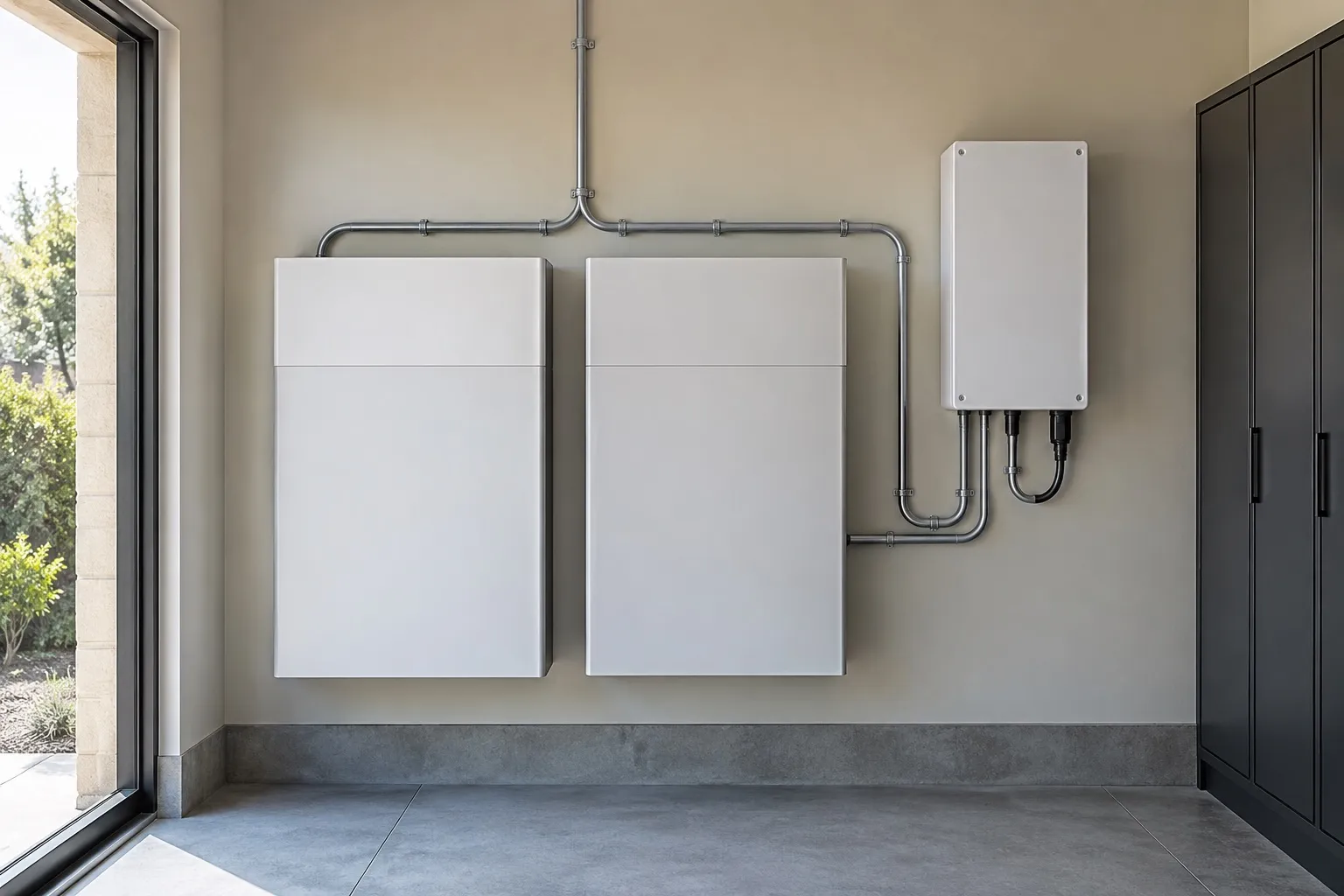
“Dry” is not a single decision. Electrical equipment can be unsafe despite a dry exterior. A repaired pipe can be sound while the wall remains wet. A clean wall can coexist with an unresolved condensate route. Close-out should therefore answer three separate questions. Has the electrical and security equipment been evaluated and approved for the intended use by its responsible specialists? Was the moisture source identified and corrected, or is its cause still uncertain? Were affected interior materials inspected, dried, cleaned or replaced as appropriate, and was the defined area checked again under normal operating conditions? If any answer is unresolved, state the limitation and the interim operating rule.
The EPA building-remediation guide recommends checking for recurrence of moisture and mold after remediation. For an intermittent condensate or rain event, the follow-up may need observation during cooling or after another relevant weather event. A single visual inspection on a dry day cannot verify every hidden route. Conversely, keeping an equipment room out of service indefinitely without a defined test plan is not useful. Agree on what evidence would close each workstream, who will sign it, and when the room will be rechecked. A neat photograph is a record of appearance, not proof of electrical safety or a guarantee against future leaks.
FAQ: Does a musty odor mean the security equipment is contaminated? No. Odor may point to damp building material, but it does not identify a device fault or a mold species. Investigate the moisture source and affected materials while the equipment specialist checks any exposure.
FAQ: Can we use a dehumidifier next to the rack? Only under an approved electrical and equipment plan. A dehumidifier may reduce room humidity but cannot repair a pipe or roof leak. It also adds electrical load, heat and condensate-management questions.
FAQ: Should we take an air sample first? Do not postpone urgent water or electrical safety work for a routine sample. Ask a qualified assessor what specific decision a test would inform and how it would be interpreted. The water route and building condition remain central.
FAQ: Can the mold contractor move the recorder cabinet? Not without the owner's authorized security lead, equipment vendor and safe electrical plan. Moving equipment can interrupt monitoring or damage connections; the wall investigation can be designed around an approved access window.
FAQ: Can a clean wall be put back into service immediately? Only the defined building area can be assessed by the building team. Electrical and security systems need their own clearance. A dry-looking surface does not establish that hidden layers or equipment are sound.
FAQ: Does this guide give Japanese electrical-code advice? No. The cited US sources explain hazards and decision roles. Qualified local electricians, equipment manufacturers and applicable Japanese requirements govern site-specific work.
FAQ: When should an overseas owner contact Kabi Busters Yokohama? When a recurring odor, visible growth-like material, wet wall/ceiling finish or suspected concealed dampness calls for assessment of interior building materials. Describe the source status, the safe access boundary and the roles of the electrician and security vendor. Ask about Tokyo, Kanagawa or Chiba coverage and scope before booking.
To discuss the building-side mold and moisture question, review Kabi Busters Yokohama's service overview and send a private enquiry about the affected room. An English note might say: “There is staining on the wall beside our residence's restricted security-control room in Kanagawa. We have asked a qualified electrician and system vendor to assess nearby equipment. Could you discuss inspection of the affected wall and ceiling materials and coordination with the leak-repair team?” Do not include camera feeds, access codes, network diagrams or resident schedules in the initial enquiry. If water is touching energized equipment or an unsafe ceiling, use the emergency process first.
日本語の要点: 東京・神奈川・千葉の邸宅で警備・監視機器室の近くに水染みやカビ臭が出た場合、まず通電設備と水の接触を確認し、危険があれば立入を制限して電気の専門家と機器業者へ連絡します。次に雨水・配管・空調ドレン・結露などの水分経路を特定して修理し、壁や天井など室内材料の湿り・カビを別途評価します。カビ対処業者は機器の通電安全を保証できず、機器業者だけでは壁内の乾燥を証明できません。セキュリティ情報を必要以上に共有せず、役割ごとの確認結果を残して再開を判断してください。
----------------------------------------------------------------------
カビバスターズ横浜
住所 :
〒221-0056
神奈川県横浜市神奈川区金港町5-14 クアドリフォリオ8階
電話番号 :
0120-133-199
----------------------------------------------------------------------