在宅勤務デスク裏の壁・カビ相談
2026/10/28
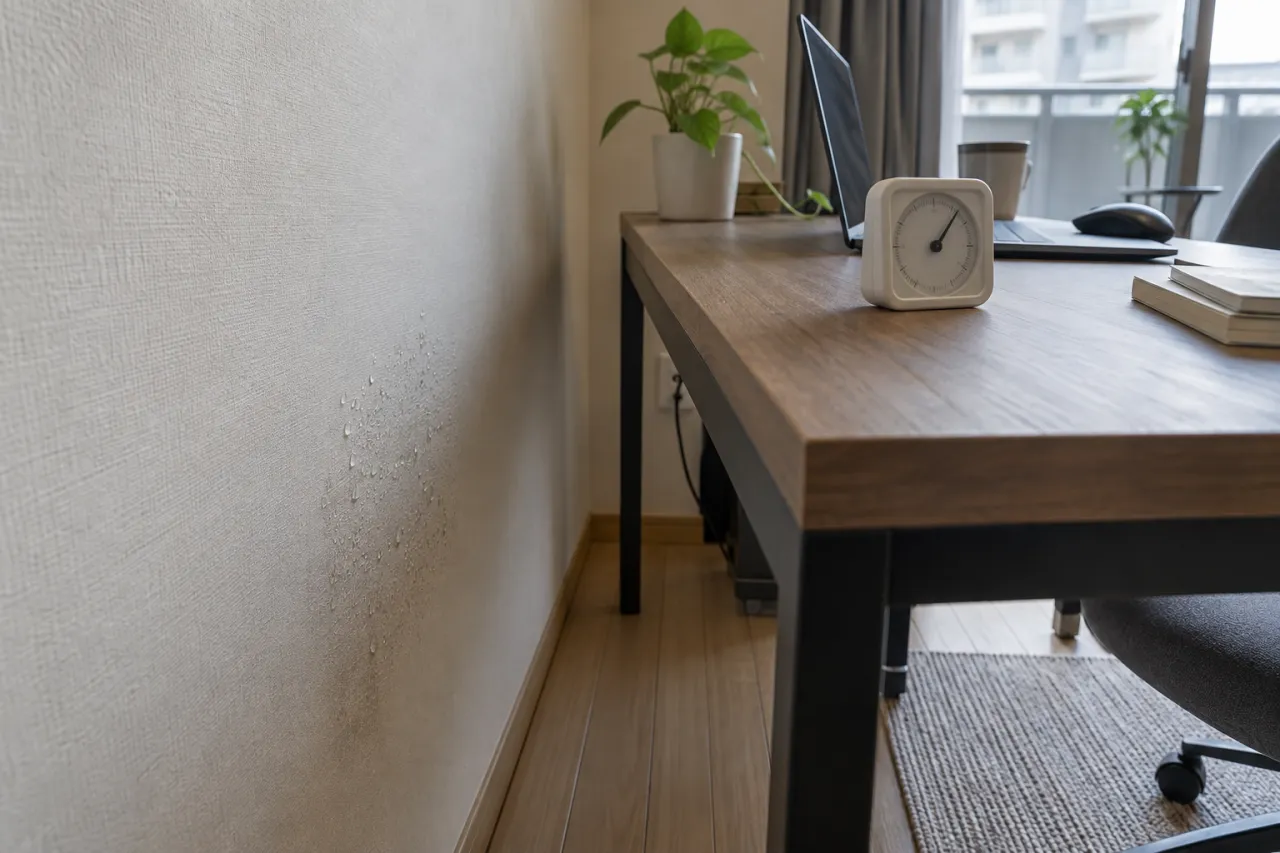
Quick answer: If a musty smell or dark mark appears behind a work-from-home desk in a Tokyo, Kanagawa or Chiba rental, photograph the desk and wall before moving anything. Unplug and move electronic equipment only when plugs and hands are dry and it is safe to do so. Distinguish dust on the desk or cables from damp wallpaper, a wet floor edge and an actual water-entry problem. Restore safe airflow and address room moisture, but report damaged fixed wall or floor material to the property manager. If the source is controlled and growth or odor remains, ask whether a mold specialist should assess the area. Kabi Busters Yokohama can receive inquiries in English; a visit, scope and fee must be confirmed for the individual address.
日本語の要点: 在宅勤務の机の裏がカビ臭いときは、机・電源コードのほこりと、賃貸住宅の壁紙や床の湿りを分けて確認します。電源周りが濡れている場合は触らず安全を優先します。写真と日時を残し、壁紙の剥がれ・床材の膨らみ・繰り返す湿りがあれば管理会社へ。原因への対応後もカビや臭いが残るなら専門相談を検討します。
This is not another general bookshelf article. A home-office desk has particular risks: power strips, monitors, chargers, a desk mat, a chair rolling over the same floor edge, and long periods when the worker sits close to the affected surface. A desk placed against an external wall may obstruct airflow while electronics give off heat and cables gather dust. Those factors do not prove that the desk caused mold. A rain leak, window condensation, plumbing route or pre-existing material condition can contribute. A dark patch may be dirt, water staining or suspected growth. Do not identify a species or assign legal responsibility from a photo.
The Tokyo Metropolitan Government's English indoor-environment advice explains the importance of moisture control and leaving airflow behind furniture. Daito Trust's English tenant handbook also discusses furniture spacing and condensation prevention. These are general preventive sources. They cannot tell whether the wall behind your desk is dry, whether a particular cable is safe to touch or whether a building leak exists. Your own equipment manual and property manager remain important.
1. Observe the desk, wall and floor as different surfaces
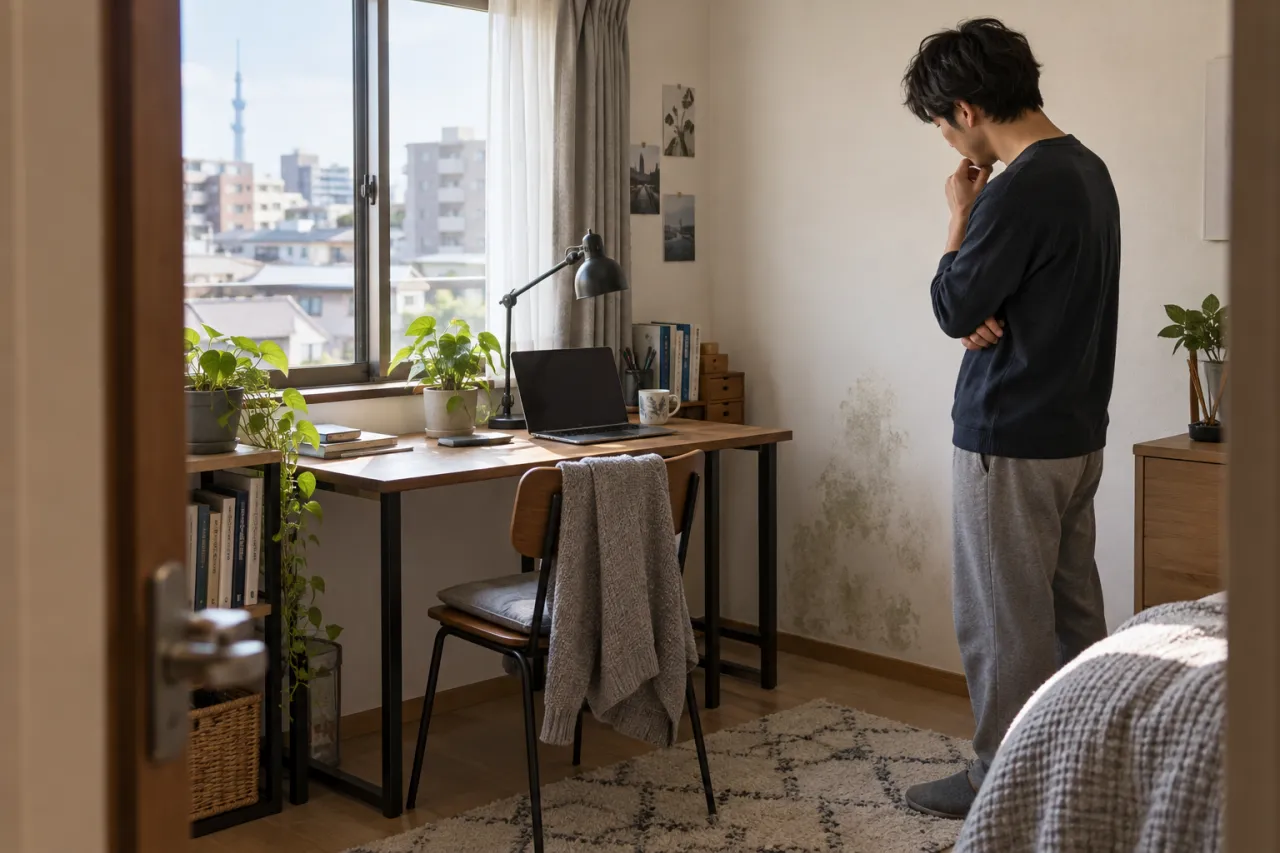
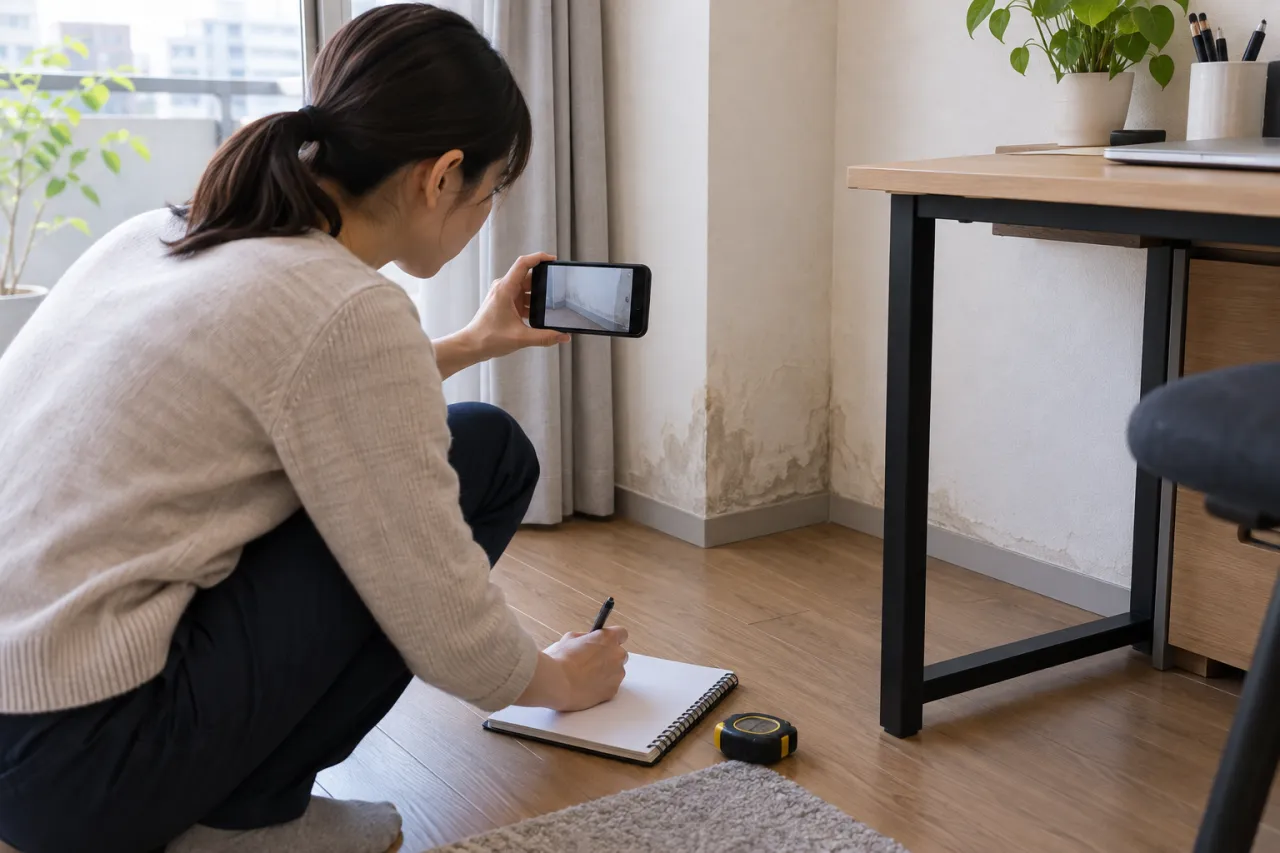
Start with a wide photograph of the work area. Include the window, outside-facing wall, air-conditioner, supply-air vent, desk position, floor edge and any visible power strip. Then take close photographs of the stain or damp area without leaning into it or disturbing material. Note the date and whether it is worse after rain, overnight, after indoor laundry, in winter or after a humidifier runs. If the odor occurs only when a cardboard box or desk mat is lifted, record that separately. A damp personal item and a damaged rental wall are not the same issue.
The rear panel of a desk can accumulate ordinary dust. Cable bundles can trap lint and make a wall harder to inspect. A dark line on a removable desk backing may be an equipment-cleaning issue. Wallpaper that feels soft, peels at the seam, develops repeated spots or shows a spreading water outline is a building-material concern. A lifted or swollen skirting board may point to a floor-edge moisture problem even if the visible wall is not heavily marked. A dry-looking desk surface does not prove that the fixed wall is dry. Conversely, a dusty cable is not evidence of fungal growth. Keep the observations separate when you report them.
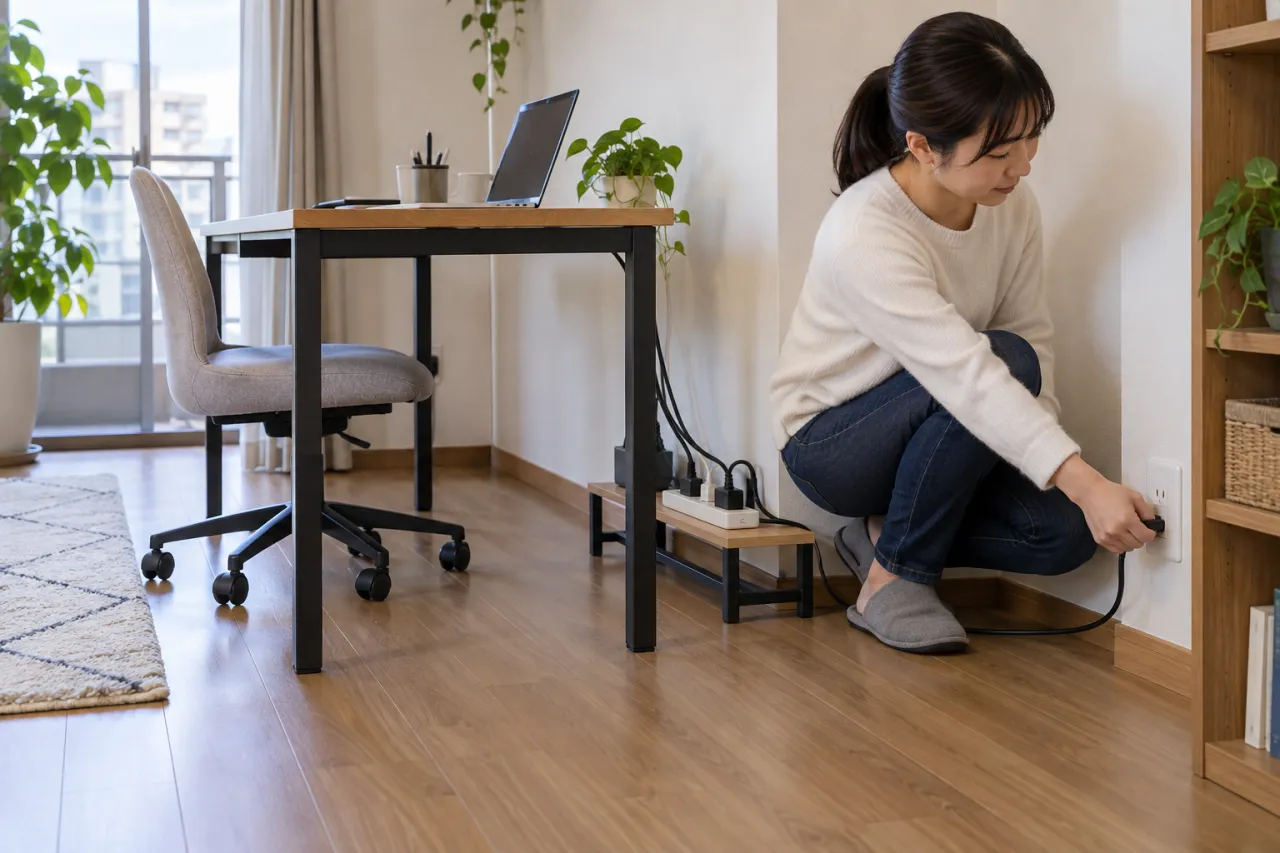
Do not move a heavy standing desk, monitor arm or anchored equipment alone. Shut down computers normally before disconnecting them. If water is near a power strip, outlet, adapter or cable connection, do not touch wet electrical components; seek appropriate building or electrical help. Do not drag a powered desk across a damp floor. If the desk can be moved safely, photograph its original position first and move it enough to see the wall without damaging cabling or the floor. Do not detach a fixed wall plate, peel wallpaper or drill a hole to look inside.
| What you notice | First distinction | Appropriate next step |
|---|---|---|
| Dust on cables or desk backing; fixed wall is sound and dry | Movable items versus building material | Clean equipment according to maker instructions and restore safe airflow |
| Small condensation drops on window and cool external wall | Room moisture versus actual water entry | Document timing, manage ventilation and report persistent wall dampness |
| Wallpaper lifting or floor edge swelling | Fixed material may be affected | Photograph and contact the property manager before cleaning or alteration |
| Mark spreads after rain or near a pipe route | Possible building leak | Ask management for source inspection promptly |
| Musty odor or visible growth remains after the moisture route is addressed | Possible residual affected material | Ask about professional mold assessment with manager coordination |
The table is a practical routing guide, not a diagnosis. It uses no invented quantitative risk score. A general room hygrometer may not represent the microclimate in a narrow gap behind the desk. The manager may need to inspect a window, external wall, pipe or floor assembly, while the appliance manufacturer addresses electronic equipment. Those roles should not be merged into one vague “mold cleanup.”
2. Improve airflow without creating an electrical or tip-over hazard

Once the area is safe, consider whether the desk can be positioned so room air can move behind it while maintaining normal working ergonomics and cable safety. Keep building ventilation inlets and outlets open. Do not place a fan to blow suspected growth directly into an occupied room or toward electronics. A safe gap is not a universal centimeter guarantee; furniture dimensions, power cables, earthquake anchoring and the room layout matter. Tokyo's official guidance and Daito Trust's tenant handbook offer general spacing advice, but the specific setup must remain stable. Ask the property manager before drilling an anchor into rental material.
Avoid pushing a desk mat, large monitor box or stacks of papers tightly against a cool external wall. Those items can conceal droplets and make periodic inspection difficult. Moveable cardboard storage can be vulnerable to dampness; keep records of what is affected rather than assuming the wall is the only source of odor. If there is a window behind the desk, wipe accessible condensation in a finish-safe way and observe whether water runs onto the sill or floor. Do not ignore a wet sill simply because the desktop looks dry. Follow the apartment's designed ventilation and the maker's instructions for any humidifier or air conditioner.
When cleaning equipment, power it down and follow its manual. Do not spray mold remover, alcohol or water onto a power strip, outlet, monitor or cable bundle. Never mix cleaning chemicals. If an electrical connection appears wet or corroded, leave it alone and seek qualified advice. A mold company does not repair electrical equipment. If the fixed wall is soft or visibly deteriorated, avoid vigorous brushing, sanding or repainting. Those actions may spread dust, remove evidence and make material repair more difficult. Photograph and report the condition instead.
The Daito Trust English ventilation and mold FAQ mentions condensation in rooms, behind furniture and on floors. Its guidance supports ventilation and observation, but it cannot establish that a specific desk-wall mark is “tenant-caused condensation.” The Ministry of Land, Infrastructure, Transport and Tourism's rental-housing Q&A explains why notifying a landlord when repair is needed matters. Neither source is a substitute for inspection of a particular apartment or advice on electrical safety.
3. Report a fixed-wall problem with useful evidence
Contact the property manager when wallpaper, plasterboard, skirting, flooring or a window surround is repeatedly wet, soft, discolored or peeling. Contact promptly if the area is spreading after rain or there is active dripping. A manager can authorize inspection of building components and coordinate repair; a tenant should not dismantle fixed surfaces. Give a clear timeline: when you first saw it, whether the desk had been moved before, whether the room was humid, whether the window or wall was wet, and what happened after the desk was pulled away. If you moved electronics, state only that you moved them safely; do not present that as proof of the cause.
An English message could say: “I found a damp-looking area behind my home-office desk on [date]. The desk is against an external wall / internal wall, near a window / not near a window. The mark is [spreading / unchanged], and the wallpaper or floor is [dry / damp / peeling / swollen]. I have attached wide and close photos taken before moving the desk. Could you inspect the wall and advise whether there is condensation, water entry or material damage?” Replace each bracket with what you actually observed. A Japanese message can be: “在宅勤務用デスクの裏の壁紙と床際に湿り・変色を見つけました。写真と発見日時を添付しますので、建材の状態と水分の原因について確認をお願いします。”
If management suggests simply wiping the area, ask whether the fixed material has been assessed and whether it is safe to clean without damaging the finish. A previously repaired leak may leave a stain, while an apparently small new patch may conceal a damp board. Request a written explanation of the proposed work, keep photos before and after, and note whether the odor resolves. Do not assume every stain means an expensive repair, but do not cover a recurring wet patch with new furniture. The MLIT multilingual rental-housing resource page can help an international resident understand common rental terminology; it does not determine who pays in your case.
If the building source is repaired or condensation managed yet odor or visible growth persists in a fixed surface, a mold specialist may help assess the extent and treatment options. The specialist should first know whether the material is still wet and whether management has authorized access. A stain on a desk drawer, a wet laptop and a damp wall require different providers. For English-language inquiries about persistent suspected building-material mold in Tokyo, Kanagawa or Chiba, Kabi Busters Yokohama's service page explains the mold-related scope and the contact form lets you send the city or ward, photographs and timeline. Confirm visit availability, scope, timing and cost directly.
4. FAQ for people working from home in a Japanese rental
Is black dust behind a desk definitely mold? No. Dust, soot-like deposition, water staining and suspected growth can look similar. Look at location, moisture, texture and change over time. A photograph cannot identify a species or prove exposure. If fixed material is damp or deteriorating, report it rather than trying to label it remotely.
Can I keep working at the desk? If water is near an outlet or power strip, or the wall or ceiling is actively wet, prioritize safety and seek advice before using that setup. Otherwise, the decision depends on the actual conditions and any health needs. This article cannot certify the work area as safe. Move equipment only when doing so is safe and follow the manager's instructions for building issues.
Should I just leave a gap behind the desk? A stable airflow path may help, and official sources advise not pressing furniture flush against damp-prone walls. A gap will not fix a leak, dry a wet board automatically, or override furniture anchoring and cable safety. Use it as one preventive step while watching whether the surface stays dry.
What about a desk mat or carpet under the chair? Lift it periodically if safe and check for trapped dampness. A mat can hide a wet floor edge. Do not lay an impermeable cover over a swollen rental floor. Photograph damage and ask management before treatment. If the mat itself is affected, manage it separately from fixed flooring.
Do I have to pay for the wall? No conclusion follows from the location alone. Records at move-in, maintenance, notification, contract terms and inspection findings matter. The manager and relevant advisors handle responsibility. A mold treatment company should not promise to decide legal liability.
When is a mold specialist appropriate? When the moisture source is addressed or being investigated and suspected growth, odor or affected material remains, especially where ordinary cleaning cannot reach or the condition recurs. The specialist should coordinate with the manager for any work on the rental wall. For a wet outlet, active leak or structural defect, contact building or electrical professionals first.
Can the company answer in English? English inquiries are possible. In your message include the city or ward, wide and close photos, whether water is near electronics, the dates of changes, the wall and floor condition, and what the manager has already checked. Contact Kabi Busters Yokohama for a case-specific discussion; no service outcome is guaranteed by this article.
The useful sequence is safe observation, separate movable equipment from fixed material, maintain ventilation, report building damage, control the water source, and assess residual mold if needed. A well-described desk-wall issue is easier for a manager or specialist to triage than “black mold behind my computer.” For a household in Tokyo, Kanagawa or Chiba, the city or ward and room conditions matter more than a generic regional assumption.
Primary information: Tokyo's English indoor mold guidance, Daito Trust's English tenant handbook, its English ventilation and mold FAQ, and MLIT's rental-housing information for foreign nationals. These sources support general steps; none inspects your desk or apartment.
----------------------------------------------------------------------
カビバスターズ横浜
住所 :
〒221-0056
神奈川県横浜市神奈川区金港町5-14 クアドリフォリオ8階
電話番号 :
0120-133-199
----------------------------------------------------------------------