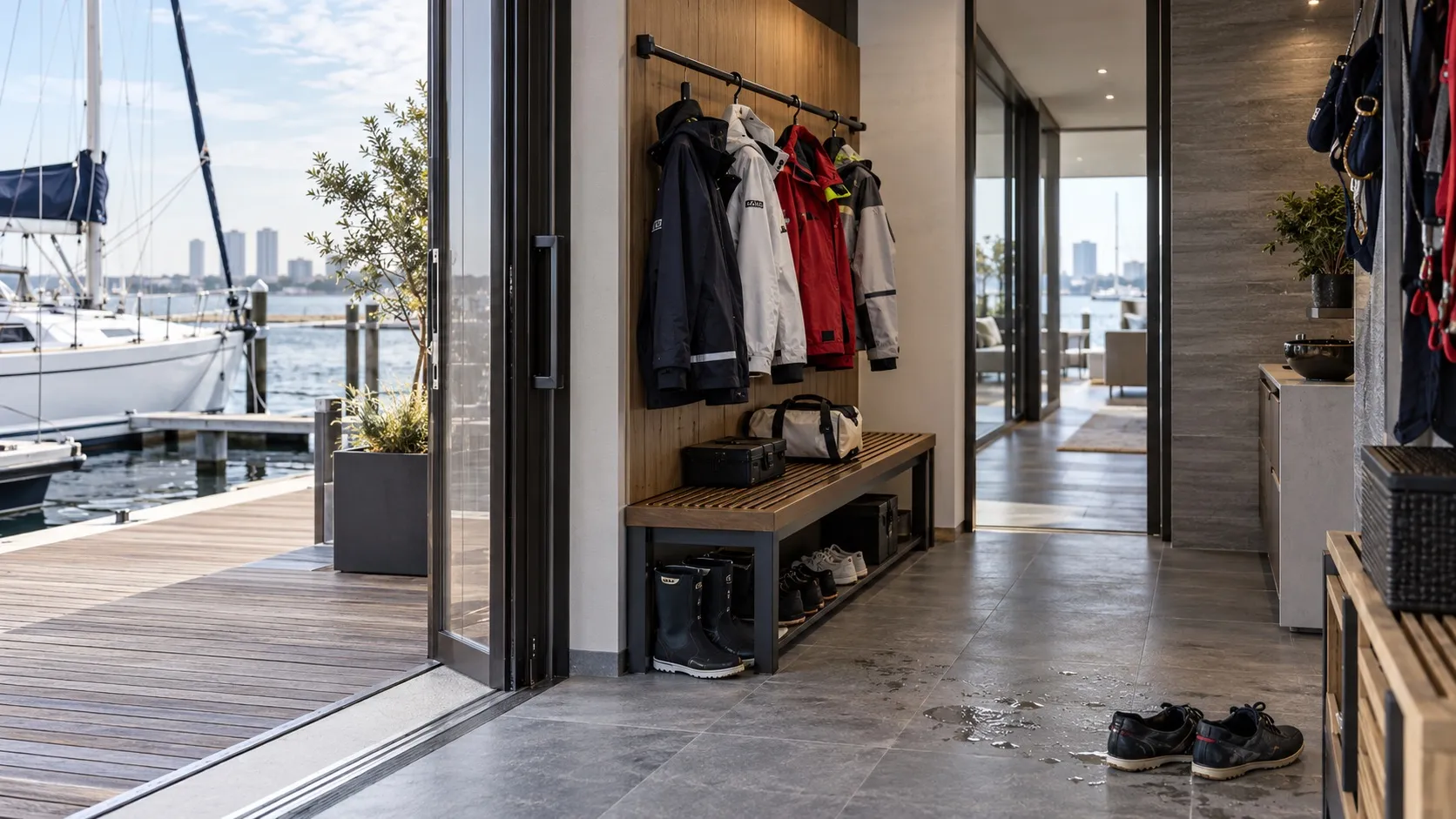
Steam Room Anteroom Mold Risk
2026/10/28

Direct answer: If a private steam room in a Tokyo, Kanagawa or Chiba residence leaves its anteroom damp or musty, first separate steam escaping at the door from water crossing the threshold, condensation on a cooler surface, and a concealed leak. Record when and where the moisture appears; have the steam enclosure and ventilation checked by their installers; and assess any repeatedly wet wall, ceiling, floor or built-in joinery before cosmetic repair. An attractive tile surface does not prove the dry-side backing is dry. Kabibusters Yokohama can discuss the building-side mold concern in English; the scope and visit availability should be confirmed directly.
This guide is deliberately about the transition room, not whether to buy a steam generator or how to clean a sauna. A high-value house may place a shower or steam cabin beside a changing area, relaxation room, walk-in wardrobe or bedroom. Steam use is brief, but the adjacent finishes can be absorbent and difficult to inspect: timber veneer, wallpaper, gypsum backing, fabric panels, recessed lighting and hidden cabinet plinths. The question is not whether steam is inherently dangerous. It is whether the design, operation and maintenance allow moisture to stay inside the intended wet zone and allow the next room to dry between uses.
The US EPA guidance on remodeling and indoor air notes that bathroom moisture can reach wall and ceiling cavities even where ventilation is present, and highlights water management and accessible air sealing. The EPA building moisture-control guide frames moisture as an interaction between the enclosure, HVAC and maintenance. The EPA mold cleanup guidance warns that mold in porous materials may be difficult to remove completely and says water problems must be corrected. These are general primary sources, not a diagnosis of a particular Japanese residence.
For a search such as “steam shower adjacent room condensation mold”, prominent results include an EPA remodeling guide, which explains moisture routes but not private-spa handover; a steam-spa remodeling project guide, which illustrates design choices but cannot establish the cause in another house; and a steam-shower design case description, which emphasizes enclosure performance but is not an independent remediation specification. Search order varies by location and time. This comparison concerns their scope, not a claim of permanent ranking. The missing step for an overseas owner is a documented investigation of the dry-side room and its hidden finishes.
1. Trace the moisture boundary, not only the visible stain
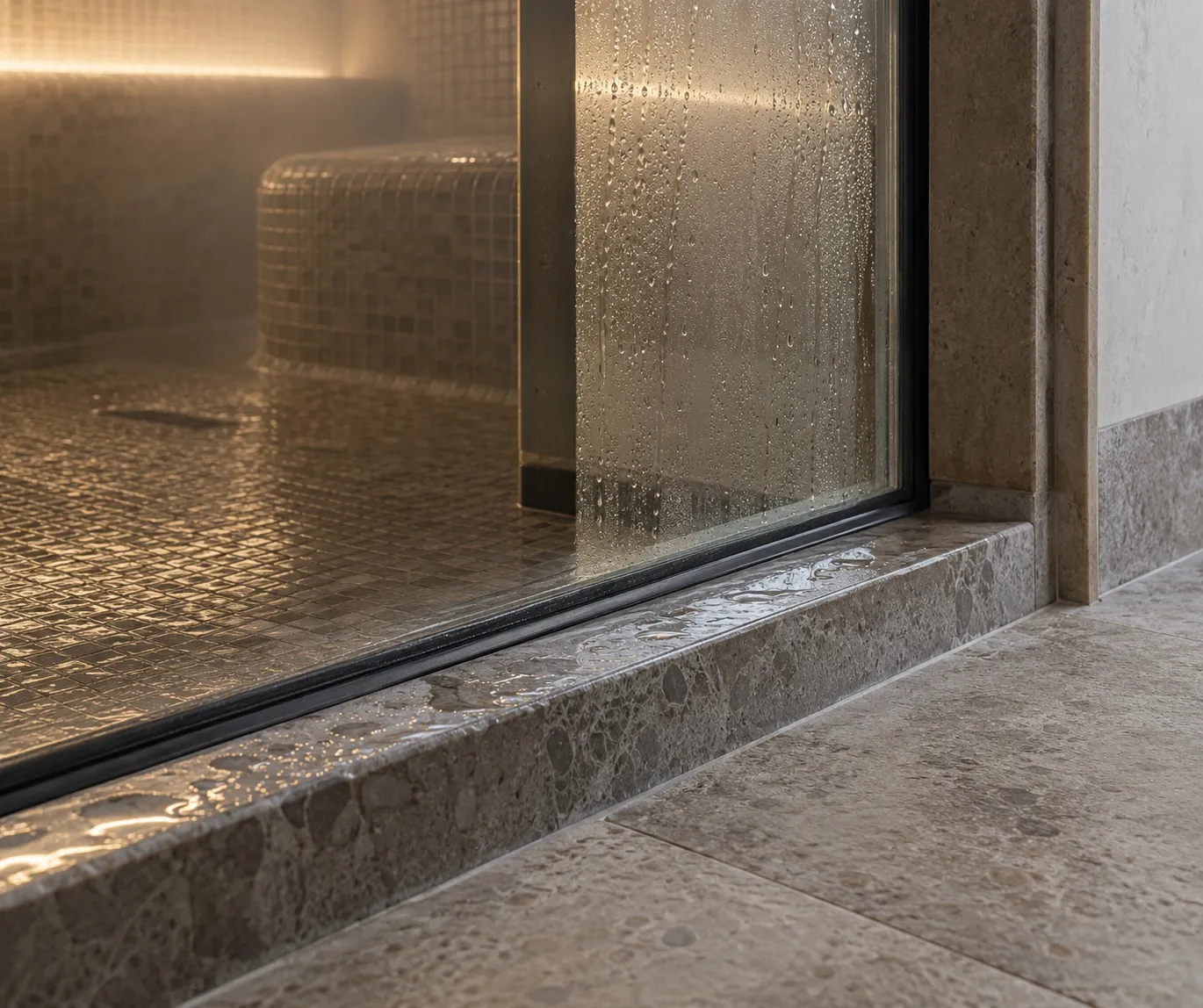
Start with a simple room plan. Mark the steam enclosure, glass door, door sweep, wall and ceiling junctions, threshold, floor drain, anteroom supply and exhaust, cold surfaces, joinery and the doorway to the next occupied room. Then mark the first visible wet point after each use. Water on the floor immediately outside the door suggests one pathway; a damp ceiling corner above a closed door suggests another; a stain that appears only during air-conditioning suggests a cold-surface or HVAC question. These are clues, not conclusions. A leaking pipe, roof or condensate line can coincide with steam use by chance.
Keep observations dated. Record the duration of steam use, whether the door was held open, whether the exhaust was running, whether the adjacent room was being cooled, and how long a surface remained wet. Photograph the same edge before use, shortly after use and when the house has been idle. Avoid moving valuable fabric or artwork through a suspected affected area until their conservator or owner has agreed on a safe plan. Do not smear a discolored surface simply to test whether it is mold; the color alone does not identify a material or organism.
The physical distinction between water vapor and liquid water matters. A door gap can let humid air pass into the anteroom; if that air meets a cooler panel or metal trim, condensation may appear away from the steam cabin. Liquid water may flow under a door and soak a timber threshold. A concealed plumbing leak may wet the same threshold independently. The EPA explanation of biological contaminants and condensation explains the general cold-surface mechanism. It does not mean that every wet mark beside a steam room is condensation. A building professional should test the competing hypotheses without damaging premium finishes unnecessarily.
Ask the steam-room designer or installer for the actual enclosure drawings, membrane and door details, equipment commissioning record and maintenance instructions. Ask the builder for the transition-floor and wall assemblies. If these records are absent, label the details “unknown” rather than assuming a standard detail was installed. The point of the documents is to know where a moisture boundary was supposed to be; they are not proof that the installed boundary is still sound. If the door has been adjusted, a gasket replaced or a new exhaust fan fitted, note the dates. A small operational change can alter where damp air travels.
If water reaches a socket, lighting recess or control cabinet, keep the area out of use and involve a qualified electrical professional. If the floor is slippery or water is actively spreading, stop the steam session and control access. These immediate safety decisions come before a mold quotation. A mold specialist can assess affected building materials, but should not be asked to certify an electrical or steam-generator system outside that trade's competence.
2. Inspect the dry-side assembly and expensive finishes

The anteroom may look dry in its center while moisture persists at a perimeter. Check the underside of a bench, the back of a fixed cabinet, a door casing, a wallpaper seam, the ceiling above a transom and a baseboard where tile changes to timber. Repeated swelling, peeling, staining, softening or a musty odor after routine cleaning warrant investigation. A veneer face can remain attractive while its backing is wet. Conversely, a small stain does not prove the whole room is contaminated. Define the affected area by evidence.
The EPA mold course on hidden growth discusses why wet concealed locations deserve attention. The EPA home cleanup page explains that porous materials can be difficult to clean completely and that painting or caulking over mold is not a substitute for correction and drying. These points are especially relevant when an anteroom uses absorbent decorative layers. The decision to open a panel should be proportionate: identify the likely moisture route, choose a limited inspection point, protect adjacent finishes, document what is found and agree in advance how the opening will be reinstated. A destructive survey without an access plan can create avoidable loss in a furnished VIP residence.
Do not infer moisture depth from a single meter reading. Instruments respond differently to materials and surface conditions; stone, metal, adhesives and dense timber may complicate interpretation. A qualified investigator may compare affected and unaffected locations, look for repeatability and use the assembly drawings to decide whether further access is justified. A thermographic image alone is not a mold test. Sampling every surface before locating water can spend money while leaving the source untouched. Conversely, repeated odor behind a panel should not be dismissed because the visible face looks clean.
Separate the conservation question from the building question. If a textile wall covering, custom leather bench, antique cabinet or artwork has been exposed, the owner may need a material-specific conservator. Kabibusters Yokohama's building-side consultation cannot guarantee restoration of a valuable object. The site manager should preserve the relevant photographs, invoices and product details, but not send a private inventory through an open inquiry form unless necessary. Request an appropriately limited first review and establish a secure channel for sensitive records.
The design team may propose more sealing, a stronger fan or a different door. None should be adopted as a universal answer. Sealing a wet cavity before it is dry can conceal damage. A fan in the wrong position may draw humid air across the anteroom rather than out through the intended route. Replacing only a decorative face may leave wet backing. Ask each trade to state what observation supports its proposal, what remains uncertain and how success will be checked after ordinary steam use.
3. Compare use, ventilation and repair options
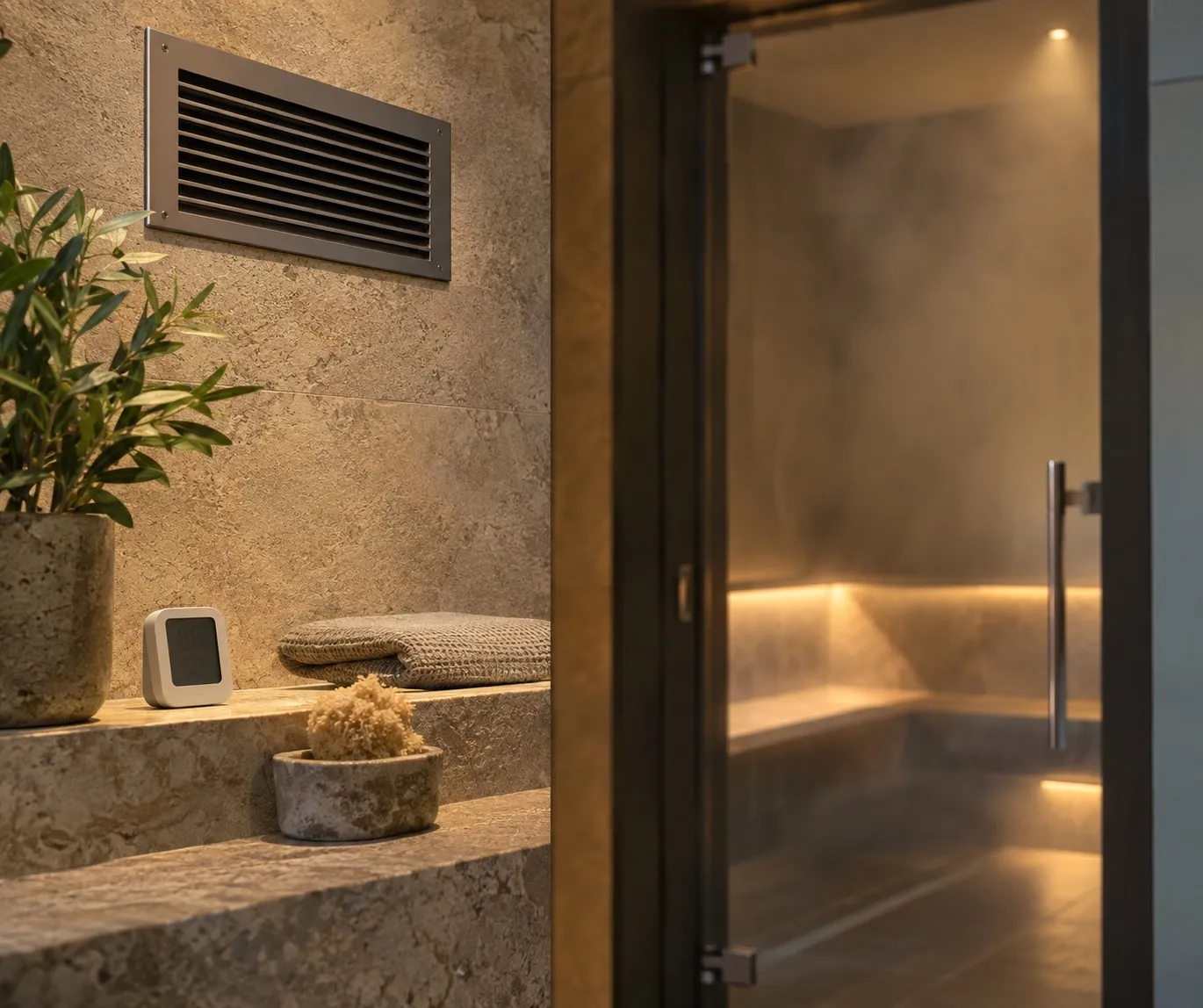
Operational records can prevent an expensive misdiagnosis. Does the anteroom become damp after every session or only when guests leave the door open? Does the exhaust operate during and after use according to the installed system's instructions? Is the adjacent relaxation room chilled more aggressively than the steam-room lobby? Are towels stored against a cold wall? Does cleaning water pool at a floor joint? An overseas owner may see the room only on arrival, when it is dry. A caretaker's dated observations are more informative than one polished photograph.
Have a qualified HVAC professional verify the actual air path, exhaust discharge, controls and any condensate drain. Have the steam-system or enclosure specialist check the intended door and waterproofing details. A building-envelope or plumbing professional may be needed if water appears when the spa is unused. A building-moisture and mold specialist should assess affected finishes and concealed backing where dampness persists, odor recurs or growth is suspected. These scopes overlap, but they are not interchangeable. A manager should collect their findings in one log so that one trade does not close a wall before another has inspected it.
| Observation in the anteroom | First useful check | Appropriate lead | Do not assume |
|---|---|---|---|
| Water beads at the glass door immediately after use | Door closure, sweep and operating pattern | Steam enclosure installer | A mold chemical will repair a door gap |
| Damp wall or ceiling beyond the threshold | Air path, cool surface and concealed assembly | HVAC and building-moisture specialists | Visible tile proves backing is dry |
| Floor joint wets while the steam room is idle | Plumbing, drain or other water source | Plumber or building specialist | Steam use is the only possible source |
| Cabinet plinth swells or odor returns after wiping | Hidden backing and repeat wetting | Building-moisture/mold specialist | New veneer alone completes repair |
| Controls or wiring are wet | Electrical safety before access | Qualified electrician | Staff should open equipment to inspect mold |
This table is a triage aid, not a remote diagnosis. There is no invented chart of “risk percentages” because no measurements from the property or cited population dataset support one. Record real temperature, humidity and material observations if available, with location and date, and let a qualified professional interpret them in context. A single comfortable room reading is not evidence that a concealed wet backing has dried.
The practical repair sequence is source identification, safety control, agreed access, affected-material assessment, correction of the water or vapor path, cleaning or removal where appropriate, drying verification, and reinstatement. Exact methods depend on the assembly and scope. Keep the owner informed of decision gates: what is known, what must be opened, what can remain in service and what should wait. A premium finish can be protected by a careful sequence, not by a promise that every surface can be saved. The EPA building moisture guide supports linking design, construction and maintenance rather than treating a stain as an isolated decoration issue.
4. Decide who to call and when the room can reopen

For a private home in central Tokyo, Yokohama or elsewhere in Kanagawa, or a Chiba weekend residence, write a short English brief with the municipality, room layout, affected finish, dates and relation to steam use. Include whether water is active, whether electricity is affected, and whether guests can avoid the area. Attach a few photographs without unnecessary identifying details. Ask the manager to distinguish observation (“lower casing damp after two sessions”) from hypothesis (“door gasket may leak”) and confirmed finding (“installer found an unsealed junction”). This lets the owner authorize proportionate work remotely.
Call the owner or property manager immediately if access to a guest room must change, water is spreading, an electrical component is wet, or premium contents are at risk. Call the enclosure or steam equipment specialist if the door, membrane, generator or control is implicated. Call HVAC or plumbing if the air path, condensate, pipe or drain is implicated. Ask a building-moisture/mold specialist when porous building finishes remain wet, growth is suspected, or odor recurs despite source correction. If anyone has significant symptoms or a medical concern, seek medical advice; an article cannot diagnose health effects from a room photograph.
A return-to-use decision should have explicit evidence: the active source has been stopped; affected materials have been assessed and treated or replaced as appropriate; the assembly is dry by an agreed method; electrical and steam equipment are cleared by their trades; and a normal steam session does not recreate the wet pattern. Photograph the same checkpoints after use, not only immediately after a polished handover. Record outstanding uncertainties and maintenance actions for staff. A first successful test is useful, but it is not a lifetime guarantee. If the home is used intermittently, schedule a follow-up after ordinary use and after a period of vacancy.
FAQ — Is condensation on the steam-room glass proof of a defect? No. Condensation within an intended wet enclosure may be expected. The concern here is recurrent moisture in the adjacent dry-side finish, especially when it cannot dry. Identify where water forms and travels before deciding a defect exists.
FAQ — Should staff leave every door open after use? Follow the installed system's safe operating and ventilation instructions. An open door may help a particular room dry, but it can also send humid air into a cooled bedroom or wardrobe. Confirm the designed air path with the installer or HVAC specialist.
FAQ — Can a surface be sealed and repainted immediately? Not when the cause or material condition is unknown. The EPA advises correcting water problems and drying before coating affected surfaces. A finish-only repair can hide a wet backing.
FAQ — Does a humidity logger decide if the room is safe? No. It helps show patterns if its position and timing are documented. It does not inspect a concealed wall, establish mold species or certify electrical equipment. Use readings alongside physical observations and relevant trades.
FAQ — What if a rare textile or artwork is nearby? Protect it from further exposure and consult a suitable conservator about that object. Keep the building moisture investigation separate. Do not assume a mold contractor can guarantee restoration of unique contents.
FAQ — Can an English-speaking overseas owner contact the Yokohama team? Yes, the business has confirmed English support. Describe the building-side concern, location in Tokyo, Kanagawa or Chiba, and whether an installer, HVAC contractor or electrician has already inspected it. Confirm travel, assessment scope and scheduling directly.
日本語要点: 自宅スパのスチームルーム前室にカビ臭・結露・仕上げ材の膨れがある場合、ドアからの蒸気漏れ、敷居を越える水、冷えた壁面での結露、設備や配管の漏水を切り分けます。表面の石材やタイルがきれいでも、壁紙・木製造作・下地が湿っている可能性はあります。使用時刻と濡れる位置を記録し、スチーム設備施工者、空調・配管業者、建物の湿気・カビ専門家の担当を分けて確認します。東京・神奈川・千葉の住宅管理者や海外オーナーは、所在地・写真・症状を整理して英語で相談できます。高価な家財の修復は別の専門家の判断が必要です。
For a building-side assessment, read Kabibusters Yokohama's service information and contact the Yokohama team about an anteroom moisture concern. Please do not describe a generated editorial image as a photograph of this property or as proof of treatment results.
----------------------------------------------------------------------
カビバスターズ横浜
住所 :
〒221-0056
神奈川県横浜市神奈川区金港町5-14 クアドリフォリオ8階
電話番号 :
0120-133-199
----------------------------------------------------------------------