長期不在後の部屋のカビ臭・英語相談
2026/10/29

Quick answer: A musty smell when you return to a closed apartment in Tokyo, Kanagawa or Chiba is a reason to inspect, not a diagnosis of mold. First check for an active leak, wet electrical area or other immediate hazard. Ventilate safely, then compare the odor at drains, stored belongings, windows, walls and floors. A dry drain trap after a long absence can produce an unpleasant smell without proving that the wall is moldy. Photograph any damp fixed surface and notify the property manager. If the moisture source is addressed but suspected mold or a persistent musty odor remains, ask about a specialist assessment. Kabi Busters Yokohama can receive inquiries in English; the visit area, scope and fee should be confirmed for your address.
日本語の要点: 長期不在後のカビ臭さは、閉め切った室内、排水トラップの封水切れ、荷物の湿り、壁や床の水分などを分けて確認します。臭いだけでカビと断定せず、水漏れや濡れた電気設備があれば安全を優先してください。固定された壁・床の湿りを写真と日時で記録し、管理会社へ連絡します。原因対応後もカビや臭いが残る場合に専門相談を検討します。
The return from a trip creates a special diagnostic problem. The unit may have had closed windows for days or weeks, an inactive bathroom or kitchen drain, and stored clothing or cardboard that has not been moved. Some residents notice the smell at the entrance; others notice it only when opening a closet or switching on an air conditioner. These observations point to different next steps. This guide does not say that every unpleasant odor is mold, nor that ventilation alone can solve a leak. It offers an order of operations that a tenant can communicate clearly to management in English or Japanese.
The UR English housing and facilities guide explains condensation, mold and ventilation in Japanese apartments, including attention to rooms left closed for a long period. The Daito Trust English drain-odor FAQ identifies an important non-mold possibility: water that normally seals a drain can evaporate when a unit is unused. The U.S. Environmental Protection Agency's mold course notes that a moldy smell can be a clue to hidden moisture, not proof of where it is. None of these pages has inspected your apartment. Use them to organize the observations, not to assign responsibility.
1. Re-enter safely, and record what you found before cleaning
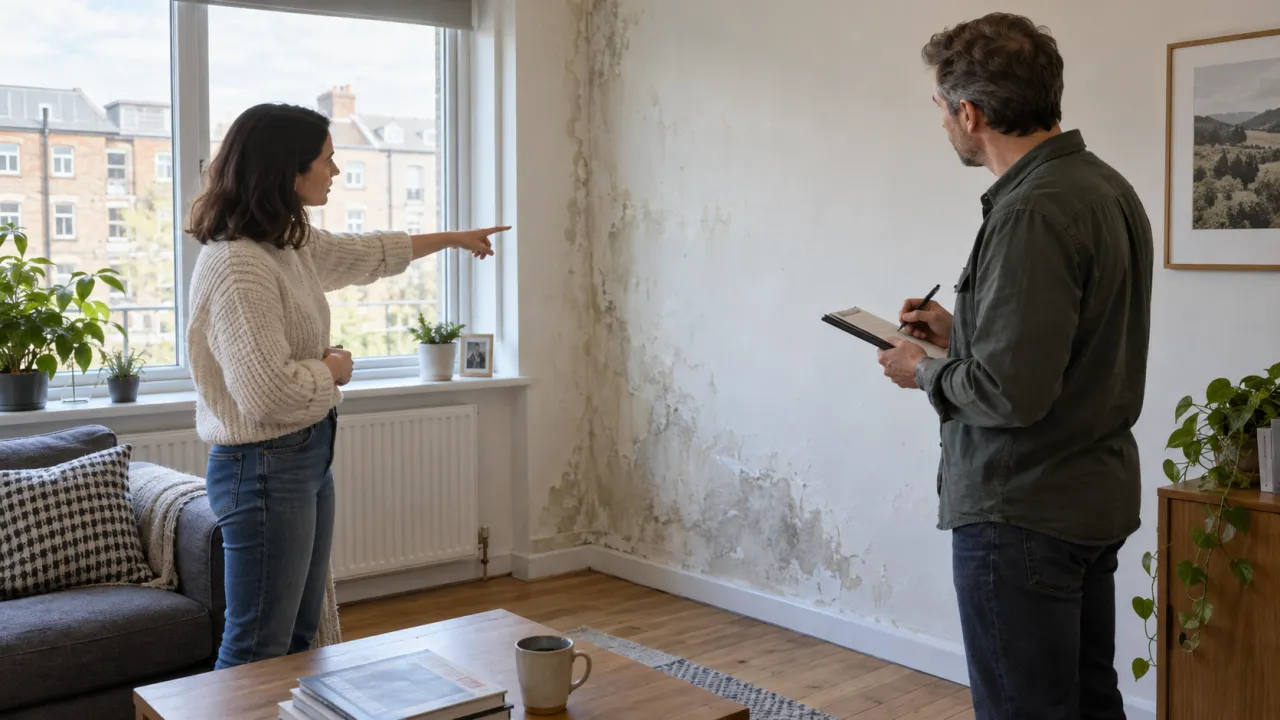
Begin with a brief safety survey before opening every cupboard or running appliances. Is there active dripping, a pool of water, a wet socket or power strip, a sagging ceiling, or another condition that makes the room unsafe? If so, avoid touching wet electrical equipment and contact the building's emergency or management contact. Do not stand under visibly compromised material. If you smell gas, follow the gas supplier's emergency instructions rather than treating the situation as a mold problem. This article cannot determine whether a room is safe to occupy.
If there is no immediate hazard, write down the date and time you returned, how long the home was unoccupied, and where the odor was strongest before you changed the airflow. Take wide photographs of the entrance, bathroom, kitchen, windows, closet, visible wall and floor, then close photographs of any water stain or damaged finish. A photo of an intact, dry-looking surface can be useful later as a baseline. Do not peel wallpaper, lift fixed flooring or remove ceiling panels to search for mold. Disturbing hidden material can damage a rental unit and may expose a larger area than intended.
Ventilate in a way that fits the weather and apartment design. Where it is safe and permitted, open windows or use the installed ventilation system. Keep supply-air openings unobstructed. If it is raining hard, water is entering through a window, or outdoor air is exceptionally humid, simply leaving every window open may be counterproductive; address the actual water route. Check whether a bathroom exhaust fan was turned off during travel and whether the vent is blocked. The Daito Trust English ventilation guidance describes the roles of ventilation, furniture spacing and condensation. Its practices are useful context, not a guarantee that a particular wet wall will dry safely.
Avoid masking the smell with fragrance before locating its likely source. Air freshener can make it harder to compare a drain odor with a closet or wall odor. Do not spray bleach or a mold product across wallpaper merely because the air smells stale. Chemicals cannot repair a pipe, roof or window leak, and a painted-over patch may obscure the information the manager needs. If you are concerned about symptoms or have a medical vulnerability, obtain advice from a qualified healthcare professional; a blog cannot attribute symptoms to a particular room or species.
2. Distinguish drain-trap odor, stored-item odor and damp building material
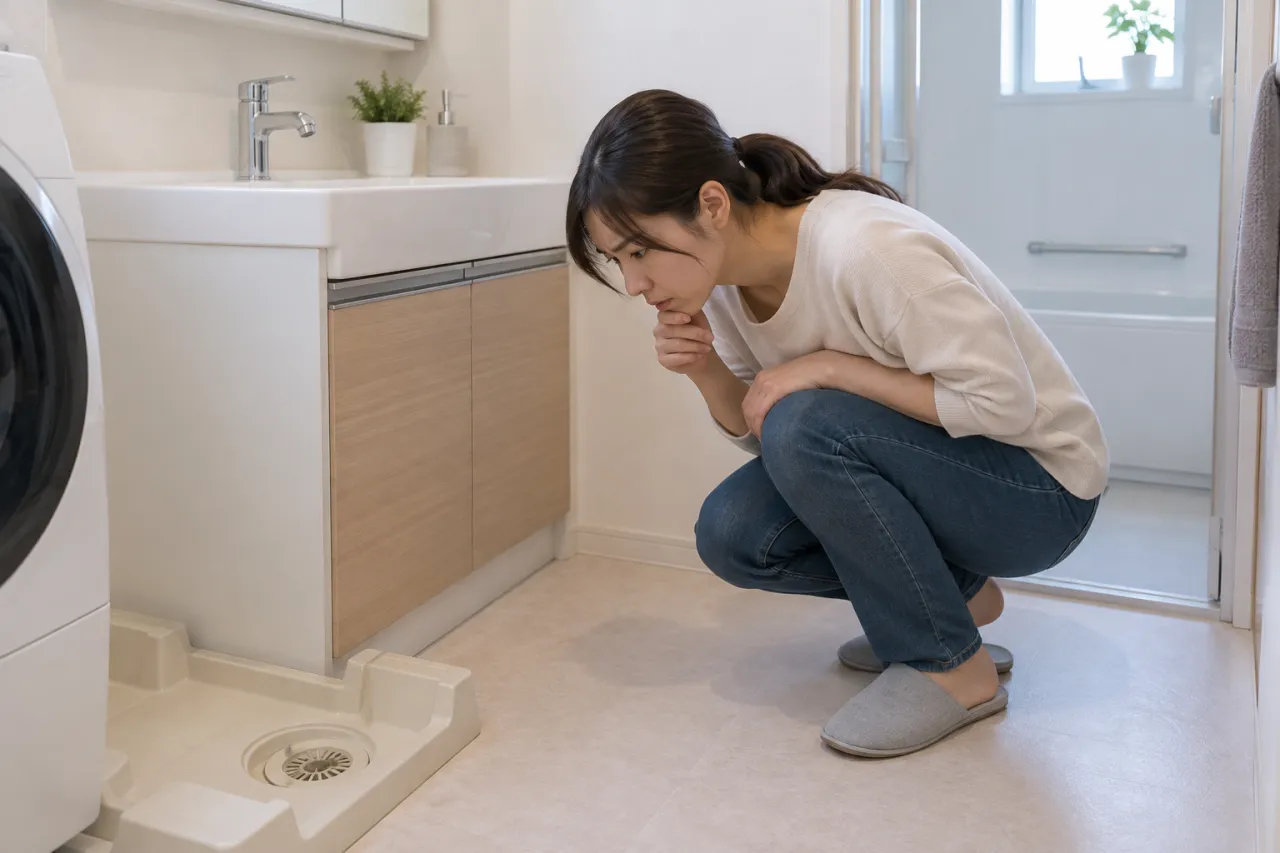
An unused bathroom, washbasin, kitchen or washing-machine drain deserves a separate check. Plumbing often uses standing water in a trap to block sewer odor. Daito Trust's English FAQ on drain odor after vacancy states that this seal can evaporate and advises ventilating and running water into the relevant drains. Follow your building's instructions and do not dismantle a fixed fitting. If the smell clearly comes from one drain, changes after normal water use, and there is no damp wall or floor, report it as a possible plumbing odor rather than calling it confirmed mold. If there is persistent odor, gurgling, backup or leakage, contact management or the appropriate plumbing provider.
A closet, luggage bag, shoe cabinet or cardboard box may hold moisture from before the trip. Open storage carefully, note whether the smell changes, and separate personal belongings from fixed surfaces. Photograph any wet belongings and the wall or floor behind them. A damp shirt is a different repair question from a wet plasterboard wall; both can be present at once. Do not throw away important damaged belongings before documenting them if you may need a management or insurance discussion. Handle your own items according to their material-care instructions. A molded or weakened fixed shelf is a building issue to report.
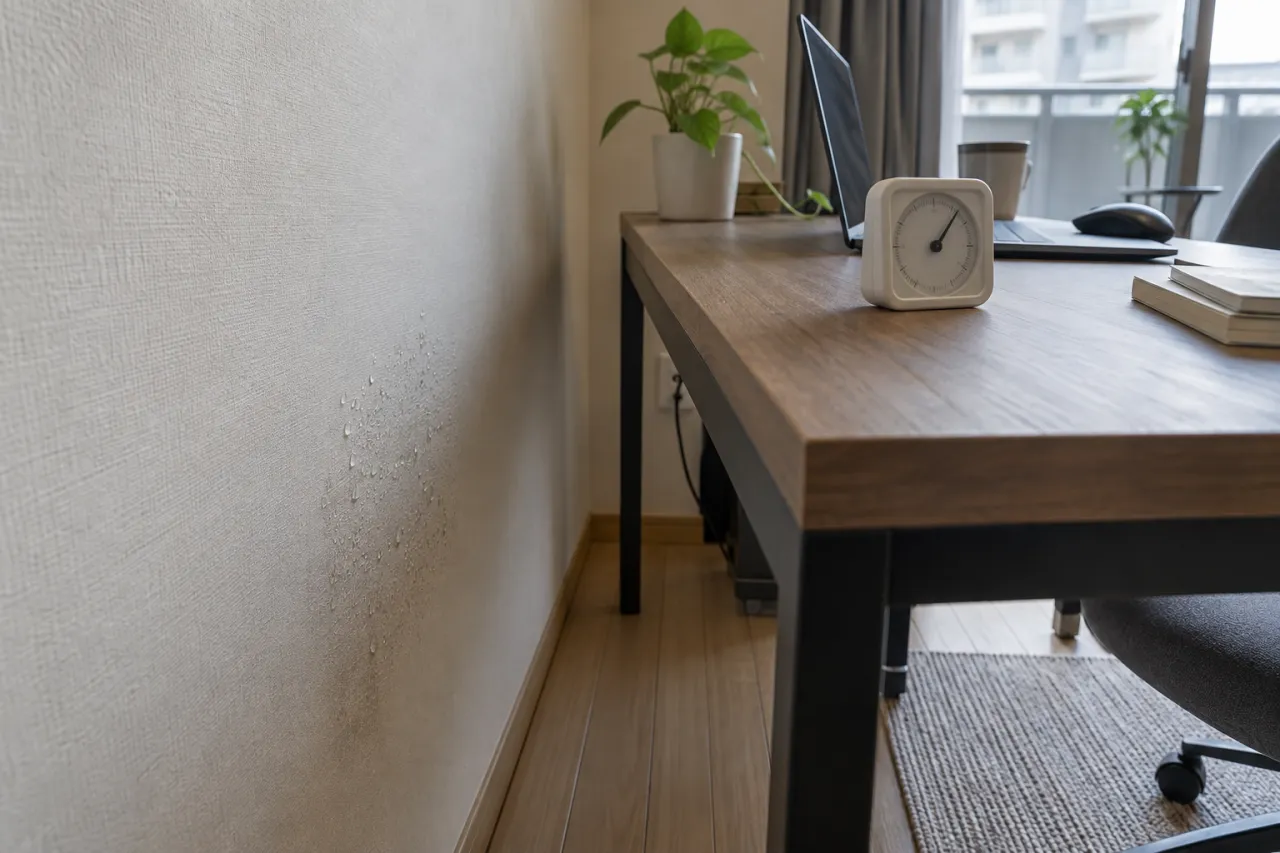
Check accessible windows and their nearby wall and floor edges. Condensation may leave droplets or streaks even when the room is no longer visibly wet. A discolored skirting board, swollen floor edge, peeling wallpaper or stain that grows after rain needs a building-source assessment. The EPA mold course lists potential hidden sites such as wallpaper backs, walls behind furniture and carpet undersides. That does not mean you should open those assemblies yourself. Instead, document the location and ask the manager about an inspection. A smell alone cannot identify the source, material depth or species.
| Observation on return | What it may indicate | First contact or action |
|---|---|---|
| Odor strongest at an unused drain; no visible wet wall | Possible dry trap or plumbing issue | Follow building drain guidance; ask management if it persists |
| Stale air improves with safe ventilation, and surfaces appear dry | Closed-room air may be contributing | Continue observation; do not declare the unit mold-free |
| Odor mainly inside luggage, shoes or a removable box | Stored-item moisture may be involved | Separate, document and care for the item; inspect fixed surface behind it |
| Damp, peeling or swollen wall/floor, or mark after rain | Possible building moisture | Photograph and tell property management promptly |
| Odor or suspected growth persists after source action | Residual affected material may remain | Coordinate with management; ask about mold-specialist assessment |
This table is an orientation aid rather than an identification test. Several rows can apply to one room. A bathroom may have a dry drain trap while a balcony-door frame also leaks. A temporary reduction in smell after opening a window does not prove the building material is dry. Likewise, the fact that a drain smells unpleasant does not mean a dark wall mark is irrelevant. Record each evidence stream separately. That distinction makes the repair conversation faster and reduces the risk of buying the wrong service.
3. Tell the rental manager what changed while you were away
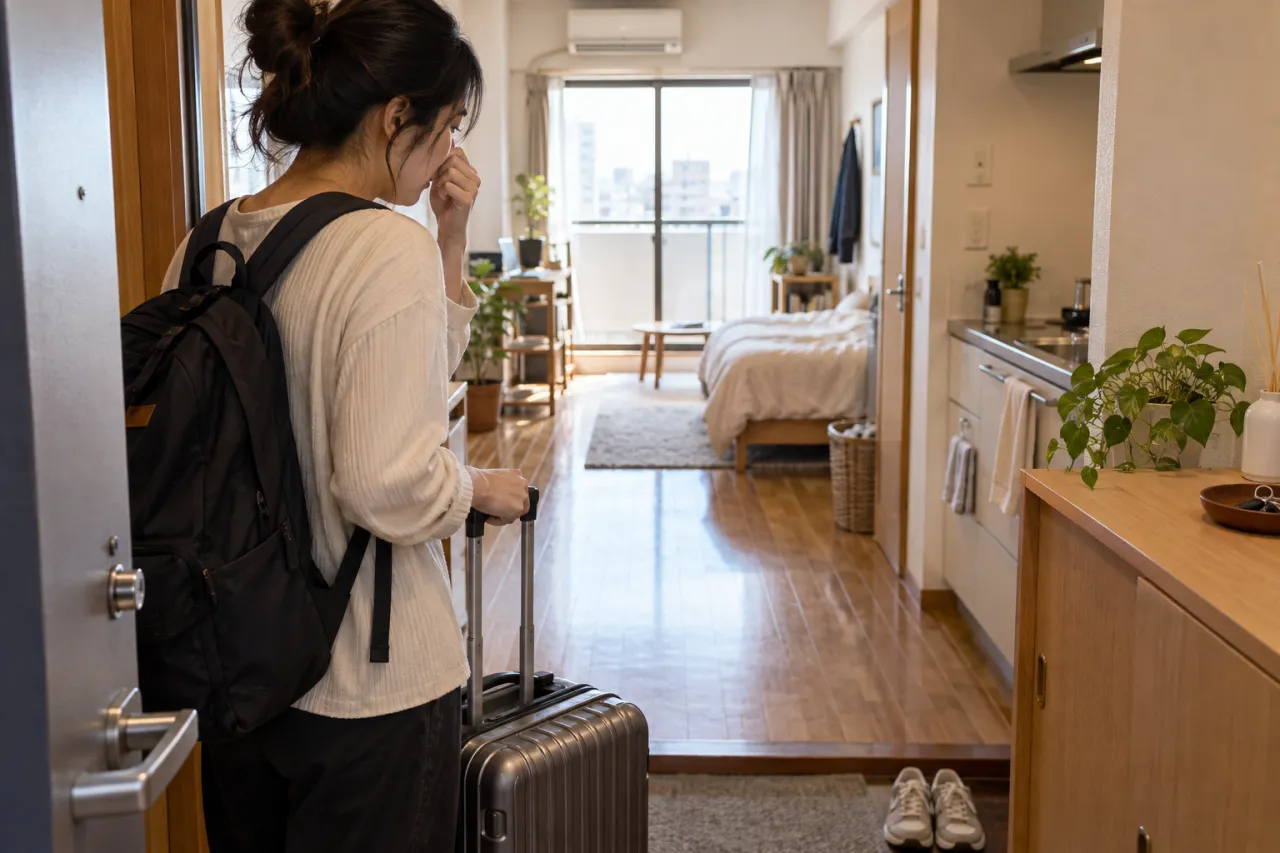
If a fixed wall, ceiling, window frame, skirting or floor is wet or damaged, notify the property manager or owner promptly using the contact method in your lease or tenant portal. The manager can arrange inspection of building systems and authorize repairs. A tenant should not make a hole in a wall or hire someone to alter fixed material without appropriate approval. The Ministry of Land, Infrastructure, Transport and Tourism's multilingual rental-housing materials include resources for foreign nationals and condition checklists. They do not decide who is responsible for a specific stain; the contract, timeline and inspection findings matter.
Write a short factual note: “I returned to the apartment on [date] after [duration] away. I noticed an odor strongest at [place]. I found [no visible water / damp wallpaper / a swollen floor edge / a leaking fitting]. Attached are photographs taken before cleaning. I have [ventilated / run water in an unused drain according to building guidance / not touched the wet electrical area]. Please advise on an inspection of the building material or plumbing and the next safe step.” Replace the bracketed options with facts. Avoid writing “toxic black mold” or assigning blame when neither has been established. Include the building name, unit and a way to reach you, but do not post private address or images publicly.
A concise Japanese version is: “長期不在後に帰宅したところ、室内の[場所]で臭いを感じ、[壁紙の湿り・床材の膨らみ・排水口の臭い等]を確認しました。清掃前の写真と帰宅日時を添付します。建物設備や建材の点検方法、今後の対応をご案内ください。” If the issue appears to be only an unused drain, say so and ask whether normal trap-water replenishment is appropriate for the installed system. If it is a recurring wet wall, ask specifically whether the moisture source will be inspected before surface cleaning. Keep copies of messages, photographs and responses. Documentation is not a substitute for repair, but it lets everyone compare conditions over time.
When the manager responds, clarify which component they will inspect: drain trap, plumbing connection, ventilation fan, window seal, external wall or other part. Ask whether a contractor needs access and whether personal belongings should be moved. If the proposed response is only “wipe the stain,” ask how the moisture source will be ruled out or corrected. Conversely, do not insist on mold treatment for a resolved dry-trap smell with no evidence of damp building material. The right path depends on what was actually observed. If you disagree about a fee or legal responsibility, use the contract and relevant advice channels; a mold service is not a legal adjudicator.
4. Decide when an English-language mold consultation is useful

After a plumbing or building source is addressed, persistent musty odor, visible suspect growth, a previously soaked porous surface or recurring discoloration may justify a case-specific mold assessment. Ask what has been repaired, whether the affected material is still wet, and who can authorize access to fixed surfaces. A specialist may discuss investigation and treatment scope, but cannot guarantee from an email that hidden material is unaffected. If the issue is an active leak, structural deterioration, electrical hazard or drain failure, the appropriate building, plumbing or electrical professional must deal with that first. Cleaning before source control can leave the problem able to recur.
For a resident in Tokyo, Kanagawa or Chiba, send the city or ward, the return date, duration away, wide and close photographs, where the odor is strongest, what changed after ventilation or normal drain use, and what management has already checked. Kabi Busters Yokohama's mold service information explains its general service and the inquiry form is a way to request an English-language discussion. Confirm whether the specific address can be visited, the available date, scope and fee directly; this article does not promise an outcome or exclusive suitability. A clear description helps separate a plumbing job from a possible mold job, which is useful to the resident as well as the provider.
FAQ — Does a musty smell after travel prove hidden mold? No. EPA notes that a moldy smell may raise suspicion, while the Daito Trust drain FAQ shows a non-mold plumbing explanation after vacancy. Ventilation and a systematic inspection help narrow the question. Persistent unexplained odor with water damage merits investigation, but a smell alone does not identify species, location or exposure.
FAQ — Should I run every tap immediately? If there is no flood, leak or other hazard, normal water use may replenish a dry trap in an unused drain, as the building provider's guidance explains. Follow your own building instructions. Do not run water into an overflowing or damaged fixture, and do not dismantle a drain to test a theory. Report persistent drain smell or backup to management.
FAQ — Can I wash or repaint the wall before telling management? Avoid altering a damp or deteriorated fixed surface. Photograph it and notify management. Cleaning chemicals and paint may hide evidence and cannot fix water entry. For a small dry, cleanable mark, ask what the lease and material-care instructions permit. Never mix cleaning products; do not apply a product near live electrical equipment.
FAQ — What if the smell disappears after an hour with windows open? That is useful information, but it is not a moisture test. Continue to look for stains, repeated dampness and the location of odor when the room is closed again. If the smell returns or fixed material remains wet, share the timeline with management.
FAQ — Is the tenant automatically responsible after a vacation? No such conclusion can be drawn from absence alone. Building condition, source, lease terms, maintenance and notice history must be considered. MLIT's foreign-national resources are useful for understanding rental documentation, but case-specific responsibility requires the appropriate parties and advice.
FAQ — When should I contact a doctor? If you have concerning symptoms, especially if they are significant or persistent, seek qualified medical advice. A blog, photograph or odor description cannot diagnose a condition or link symptoms to a specific organism. Children and people with existing respiratory or immune conditions may need individual medical guidance.
FAQ — Can I ask Kabi Busters Yokohama in English? Yes, English inquiries are possible. Describe what is known and unknown; do not feel obliged to identify the mold yourself. A specialist discussion is most useful after urgent safety and building-source issues have been raised with the manager. Send a case-specific inquiry with your city or ward and photos, and ask about availability and scope.
The practical sequence is safety, location of odor, check for a dry drain trap and damp belongings, observe fixed materials, report building damage, control the moisture source, and then assess residual suspected mold. That sequence is more informative than assuming that a closed apartment always needs “mold removal.” It also gives an international resident a straightforward English message to send while avoiding unproved claims about responsibility or health.
Primary information: UR's English guide to housing and facilities, Daito Trust's English drain-odor FAQ, Daito Trust's English ventilation and mold FAQ, the EPA mold course on hidden moisture, and MLIT's multilingual rental-housing resources. Each link explains general principles; none verifies conditions in this apartment.
----------------------------------------------------------------------
カビバスターズ横浜
住所 :
〒221-0056
神奈川県横浜市神奈川区金港町5-14 クアドリフォリオ8階
電話番号 :
0120-133-199
----------------------------------------------------------------------