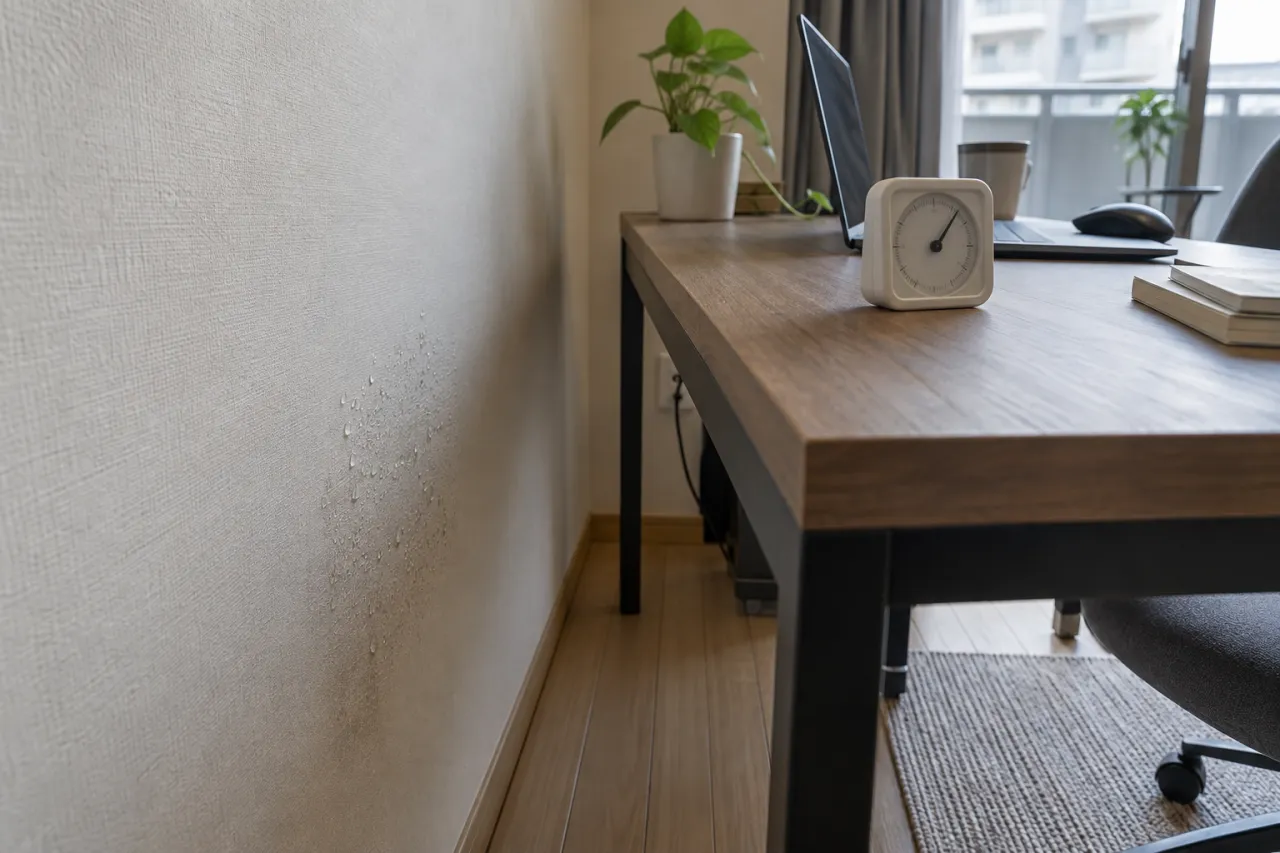
VIP Room Reopening After Mold Repair
2026/10/29

Direct answer: A repaired room in a private Tokyo, Kanagawa or Chiba residence should not be returned to VIP use solely because the wall is freshly painted or one contractor has finished its invoice. The manager needs a documented answer to five linked questions: Has the water source stopped? Were affected materials assessed and addressed? Is the assembly dry? Are HVAC, electrical and other equipment fit for their intended use? Does ordinary operation avoid recreating the problem? Agree on room-specific checks with the relevant trades, record unresolved items and obtain the owner's decision before reinstating guests or valuable contents. Kabibusters Yokohama can discuss the building-side mold and moisture scope in English, while the other trades remain responsible for their own systems.
This article is a closeout guide for one repaired VIP room. It is not a whole-estate incident command plan, a promise of “sterile” air, or a certification that a room is safe based on a photograph. A high-value residence often has several vendors working in sequence: a plumber or roofer stops water; a building contractor opens and reinstates the wall; a mold specialist handles affected materials; an HVAC technician checks airflow and condensate; an electrician checks wet controls; a conservator deals with contents; and a house manager manages access and privacy. Each may correctly report that their task is complete while the room as a whole remains unready. The owner needs one coherent record that shows where those scopes join.
The US EPA mold-remediation guide for buildings emphasizes protecting occupants and remediators while work is planned and executed. The EPA home mold guide says the underlying moisture source should be corrected and the site revisited after cleanup. The EPA homeowner and renter disaster-cleanup guide addresses cleanup before reoccupying a home after significant water damage. These are primary guidance sources, but a private-room reopen decision still depends on the actual building, extent of damage and qualified trade findings. They do not create a one-number clearance rule for every house.
Searches for “mold remediation clearance return to occupancy” frequently show three different answer types: the EPA remediation guidance, which addresses process and occupants; the EPA homeowner disaster-cleanup guide, which focuses on post-disaster home use; and commercial clearance-test pages, which may market one test or certificate. The first two are public primary guidance with different settings. A commercial test may have a legitimate role, but its advertisement alone cannot define the conditions of a particular VIP room. Search order changes by place and time; this is a comparison of scope and gaps, not a fixed ranking or an endorsement of a service. The key gap is coordinating the separate vendor records into one owner-approved room decision.
1. Build one evidence file from separate contractors
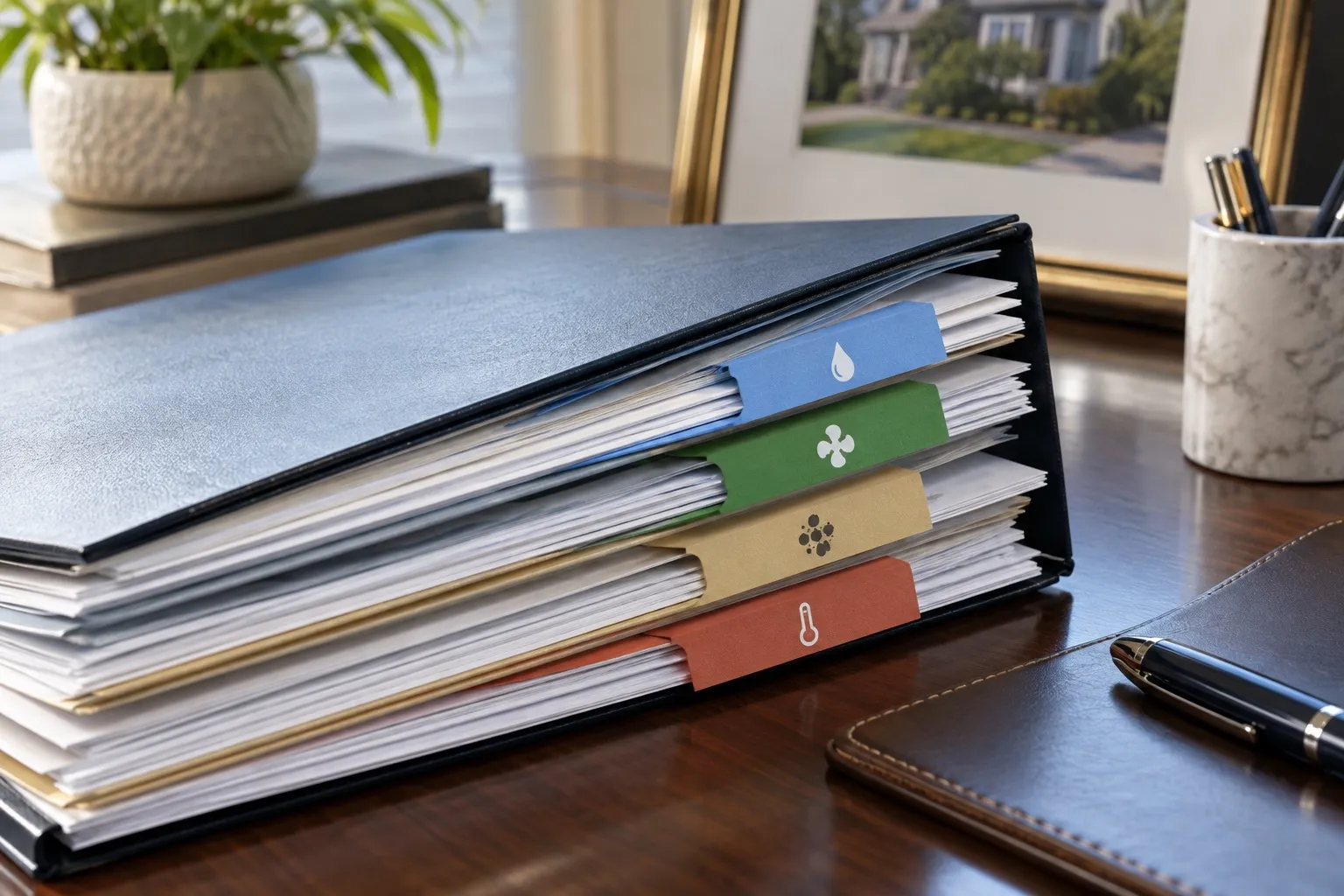
Start with the room identifier and a short event timeline. What was the first sign—visible water, odor, condensation, staining, equipment alarm or a guest report? When was the source stopped, by whom, and how was that verified? Which surfaces were opened, dried, cleaned, removed or rebuilt? What adjacent rooms or furniture were affected? Use dated photos from the same viewpoints, drawings with marked locations, purchase or material records where relevant, and a list of changed equipment settings. Do not let a beautifully formatted handover cover letter replace the underlying observations.
Ask the water-source trade for a written account of what failed and what was repaired. A roof contractor should identify the roof or flashing area; a plumber should state the pipe, joint, appliance or drain; an HVAC contractor should specify condensate, cooling, airflow or controls as applicable. “No leak found today” is a limited observation and may be appropriate, but it is not identical to “the cause is permanently removed.” If the origin remains uncertain, record the competing hypotheses and the next observation or test that would distinguish them. This is especially important when a residence is occupied only intermittently and a leak may require a rain or operating event to recur.
Ask the building or mold specialist for an affected-material map. It should distinguish finished face, backing, cavity and contents. A photo of a clean painted wall is useful only if it can be connected to records of the damp area and repair. Where porous material was removed or treated, record the material and limits; where material was retained, document the reason and its condition. The EPA home mold cleanup guidance notes that porous materials can be hard to clean completely and that water problems should be fixed. It does not require every decorative surface to be discarded. The decision should be made with the actual material and contamination history in view, including the cost and cultural value of irreplaceable objects.
Each contractor should label the evidence it owns. Moisture readings need the location, material, date, instrument or method and relevant comparison points; a bare number in a spreadsheet has little meaning. Equipment commissioning needs the equipment identifier, observed function and any limitations. A photograph of a repaired ceiling needs an orientation and date. In an executive household, this discipline also protects privacy: share only the room information needed by that trade, and keep detailed owner itineraries or asset inventories out of routine project emails. A manager can hold a controlled master file while vendors receive a narrower packet.
Do not postpone the handover meeting until every vendor has demobilized. If a builder closes a cavity before the moisture assessor sees the backing, later verification can become invasive and expensive. If a cleaner reinstates fabric panels before the HVAC contractor tests the air path, the room may be made damp again. Set a few explicit hold points: after source repair, before closing concealed work, after drying or remediation, after system recommissioning, and before guests or valuable contents return. These are operational gates, not an invented legal requirement.
2. Check moisture, cleanliness and equipment as separate conditions
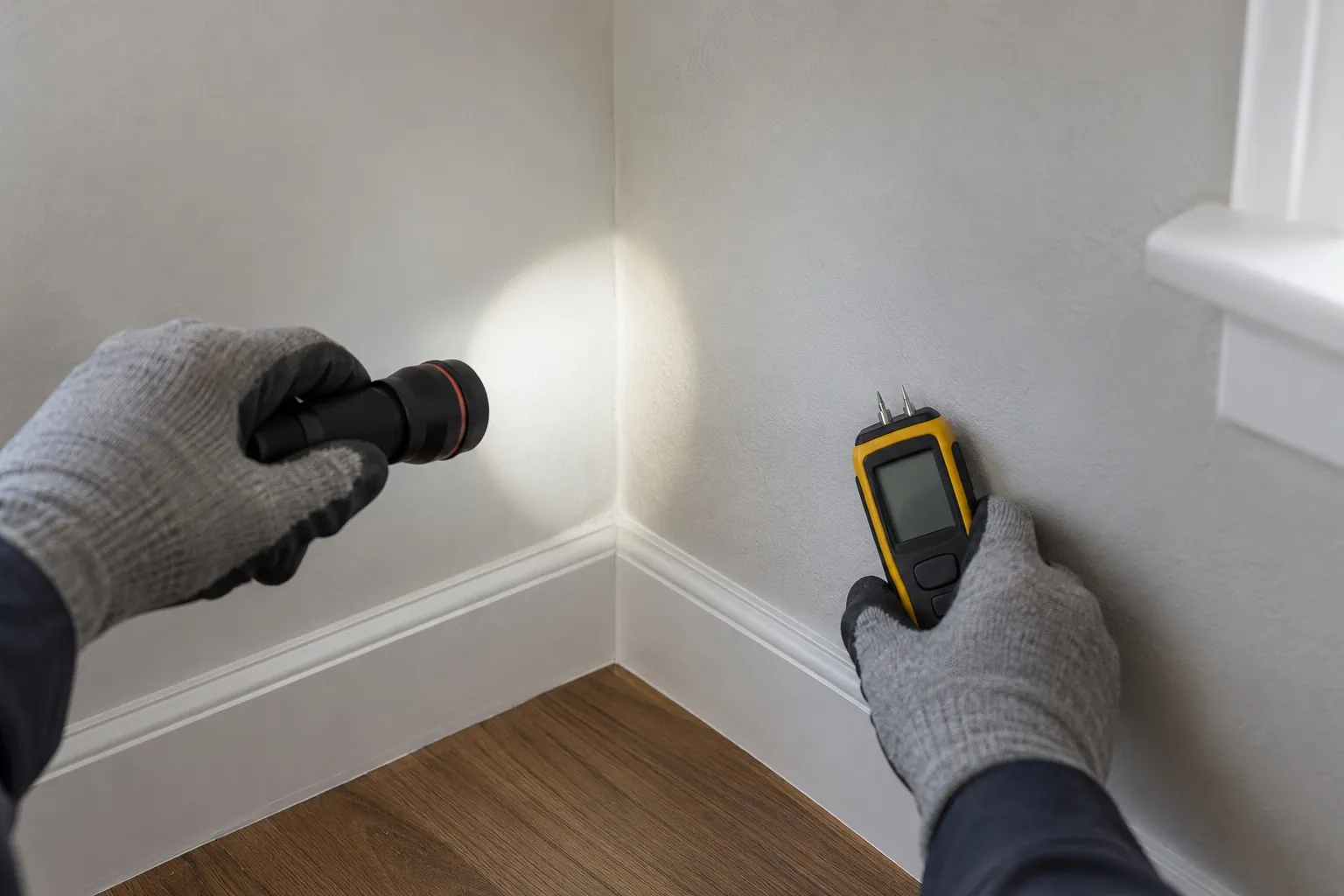
A reopen decision is not one laboratory result. A room can have acceptable-looking air sampling on a particular day while a wall remains wet, or a dry wall while a damaged electrical control remains unsafe. Conversely, a small stain after repair does not automatically mean active growth; material and history must be assessed. The EPA brief home guide stresses correction of moisture and follow-up. The EPA building moisture-control guide treats operation and maintenance as part of moisture management. These sources support a multi-condition review rather than a universal “all clear” number.
For the building fabric, ask whether the source can still wet the room, whether damp materials were identified beyond the visible mark, and whether drying was assessed in the relevant assembly. Measurement methods vary by material; a timber panel, plasterboard, stone cladding and insulated wall cannot all be interpreted from the same meter display. A qualified investigator should explain method, comparison and uncertainty. Avoid quoting a generic percent threshold from a sales page as if it applies to every material in every Japanese residence. If a concealed area cannot be checked without reopening it, that limitation should be visible in the closeout note, not hidden behind a “passed” stamp.
For cleanliness, ask what work area and adjacent routes were protected, what material was removed or cleaned, and whether settled debris or visible growth remains. A follow-up walk-through should look at the original affected location and likely migration points, including a cabinet base, ceiling penetration or return-air grille when relevant. A manager should not undertake risky disturbance of suspected growth merely to inspect it. The EPA remediation guidance is written for schools and commercial buildings, so adapt its principles with a competent professional rather than claiming it is a binding residential rule.
For systems, have the proper trade document electrical checks, HVAC condensate and airflow checks, and any plumbing pressure or drainage check required by the repair. This is not work for a mold contractor unless specifically qualified. If a long-unoccupied building has water-system or ventilation concerns, those should be separately assessed. The EPA building moisture-control guide treats building systems and moisture as connected design and maintenance questions; it should not be copied as a fixed procedure for a one-room repair. It is a reminder that “the wall is repaired” and “the room's services are operational” are different statements.
| Closeout condition | Evidence to request | Decision owner | If not established |
|---|---|---|---|
| Water source corrected | Repair detail and repeat-event observation if relevant | Plumber, roofer or envelope specialist | Keep the room on hold and identify next test |
| Affected materials addressed | Map, work record and retained-material rationale | Building/mold specialist with owner approval | Do not conceal unresolved backing |
| Assembly dry | Located readings or other justified method with limitations | Qualified moisture assessor | Continue drying or investigation |
| Systems fit for use | Trade-specific HVAC, plumbing and electrical records | Each licensed or qualified trade | Restrict the affected system or room |
| Ordinary use does not recreate wetness | Agreed operating trial and follow-up date | Manager and relevant specialists | Treat first handover as provisional |
The table does not mean every property needs the same tests. A small localized repair and a widespread flood call for different scopes. What matters is that the chosen evidence addresses the actual cause, materials and intended use. Do not invent a graph of airborne spore reduction without a genuine primary dataset, sampling plan and interpretation; this article uses a decision table because that is the honest format for a room without measurements.
3. Stage return to use, not a theatrical one-day “all clear”

Once source repair and material work are complete, a staged return can reveal problems before a VIP guest or valuable contents are exposed. First, keep the room free of unnecessary furniture and run building systems under the conditions that previously produced moisture. Recheck the repaired area and likely adjacent surfaces after the relevant weather or operating cycle. A leak that appeared only during heavy rain cannot be ruled out by a sunny-afternoon tour. Condensation that appeared when cooling was active should be considered under normal cooling operation. Photograph any recurrence and stop the return if the original wet pattern reappears.
Second, confirm that the room is clean and accessible for a final check before the decorator reinstates fabric, joinery and delicate objects. The owner may choose a conservator for a rare textile or artwork, and a specialist installer for bespoke paneling. Do not promise that mold work restores an antique or that a dry wall guarantees the contents are unharmed. Keep a contents decision log separate from the building record. The EPA mold cleanup page advises specialist advice for expensive or sentimental items when cleaning is uncertain. This is an important boundary in a luxury home, where the building and objects may require different experts.
Third, specify a follow-up date after ordinary use. A newly repaired room may be dry on handover day but later experience a repeated rain event, increased occupancy, altered air-conditioning schedule or a changed housekeeping routine. A follow-up is not proof the initial work failed; it is a reasonable way to test that the root cause stayed corrected. The EPA brief guide describes revisiting a cleaned site and looking for renewed signs of damage. Keep the manager's observation checklist short enough to use: smell, visible staining, water at known locations, ventilation function and guest concerns. Escalate a repeat symptom rather than masking it with fragrance.
An independent reviewer may be appropriate when the damage is extensive, the owner needs a separate view of the work, or vendors disagree about whether the room is ready. Independence can reduce conflicts of interest, but no inspector can guarantee a room will never become damp again. Define exactly what an inspection or sampling plan is meant to answer, what it cannot answer, and who will act on an unfavorable result. A generic “clearance certificate” from a commercial advertisement is not a substitute for source repair, documented drying and system-specific sign-off. Avoid portraying a negative sample at one time and place as proof of every concealed cavity.
4. Send an owner-ready decision packet and know when to pause

An overseas owner should receive one concise English packet, not ten disconnected contractor emails. Start with the room name, municipality, original problem, current status and recommended decision: reopen, limited use, or remain closed. Then list the evidence behind that recommendation, trade by trade. Include photographs with dates and orientation, a brief material map, repair record, drying observations, equipment notes, unresolved items and a follow-up plan. Mark each item as observed, confirmed or pending. Avoid a statement such as “100% mold-free”; it is neither scientifically realistic nor supported by a visual handover.
The manager should make the limits visible. For example: “The plumbing joint was replaced and pressure-tested; the west wall backing was removed and reinstated after drying; the HVAC condensate line was inspected; the adjacent custom cabinet was not opened; the next check is after one week of ordinary cooling.” This is more useful than “work complete.” If the unopened cabinet is in the former wet area, the owner can decide whether further access is needed before use. If guests require the room immediately, record any interim restrictions and alternative accommodation. Do not imply a contractor's invoice authorizes occupancy on the owner's behalf.
Pause reopening and seek the relevant professional if there is active water, recurrent odor or visible growth, unexplained damp readings, electrical exposure, unsafe flooring, a missing source-repair explanation, or material hidden behind a new finish without agreed verification. Ask the building/moisture specialist when the extent of affected porous materials remains uncertain. Ask HVAC, plumbing, envelope or electrical trades for their respective system concerns. Seek medical advice for health questions rather than diagnosing occupants from the building record. A manager can coordinate these decisions; a blog cannot remotely certify an individual room.
FAQ — Is a negative air sample enough to reopen? No single sample answers whether the source is fixed, concealed materials are dry, equipment is safe or the sampling plan covers the relevant area. Sampling may have a role when its purpose and interpretation are defined by a qualified professional, but it does not replace the physical closeout record.
FAQ — Who signs the final room decision? Each trade should sign off on its own work and limitations. The property manager should reconcile the records and present the decision to the owner or authorized representative. Authority may depend on the household's arrangements; do not assume one vendor can approve every system and guest-use decision.
FAQ — Can the room reopen while a custom cabinet remains unchecked? That depends on its proximity to the wet area, evidence of moisture, intended use and the owner's risk decision. State the limitation clearly and seek a proportionate inspection if it may conceal affected material. Do not turn a hidden uncertainty into a silent assumption of dryness.
FAQ — Does repainting show the mold is gone? No. Surface finish is not evidence of source correction or condition behind the finish. The EPA advises fixing water problems and drying before painting or caulking mold-affected surfaces.
FAQ — Must every room use the same numerical clearance threshold? No. Materials, measurement methods and project scope vary. Ask an assessor to explain the chosen comparisons, locations and limitations. Avoid importing a sales page's threshold into a residence without a justified plan.
FAQ — What should an English inquiry to the Yokohama team include? Provide the location in Tokyo, Kanagawa or Chiba, the affected room and material, the source-repair history, current signs, other vendors' status and whether guests are scheduled. Ask what building-side mold or moisture assessment is available and what records would be useful. Confirm service scope and timing directly.
日本語要点: 修理したVIP居室は、塗装が新しい、あるいは一業者の工事が終わったという理由だけで再使用を決めません。水の侵入原因の修理、湿った建材の評価と処置、乾燥の確認、空調・配管・電気設備の各担当による点検、通常使用で再発しないかの確認を一つの記録にまとめます。未確認の壁内や造作家具は「未確認」と明示し、オーナーが利用再開・制限付き利用・継続閉鎖を判断できる資料にします。東京・神奈川・千葉の管理者や海外オーナーは英語で建物側のカビ・湿気相談が可能です。高価な家財は別の保存修復専門家に相談し、完全な復元や無再発を保証しません。
For the building-side portion, see Kabibusters Yokohama's service information and contact the Yokohama team about a VIP-room closeout. The editorial images in this article are generated concepts, not images of a customer property, actual clearance inspection or treatment outcome.
----------------------------------------------------------------------
カビバスターズ横浜
住所 :
〒221-0056
神奈川県横浜市神奈川区金港町5-14 クアドリフォリオ8階
電話番号 :
0120-133-199
----------------------------------------------------------------------