
改装後の部屋の臭い・カビ相談
2026/10/30
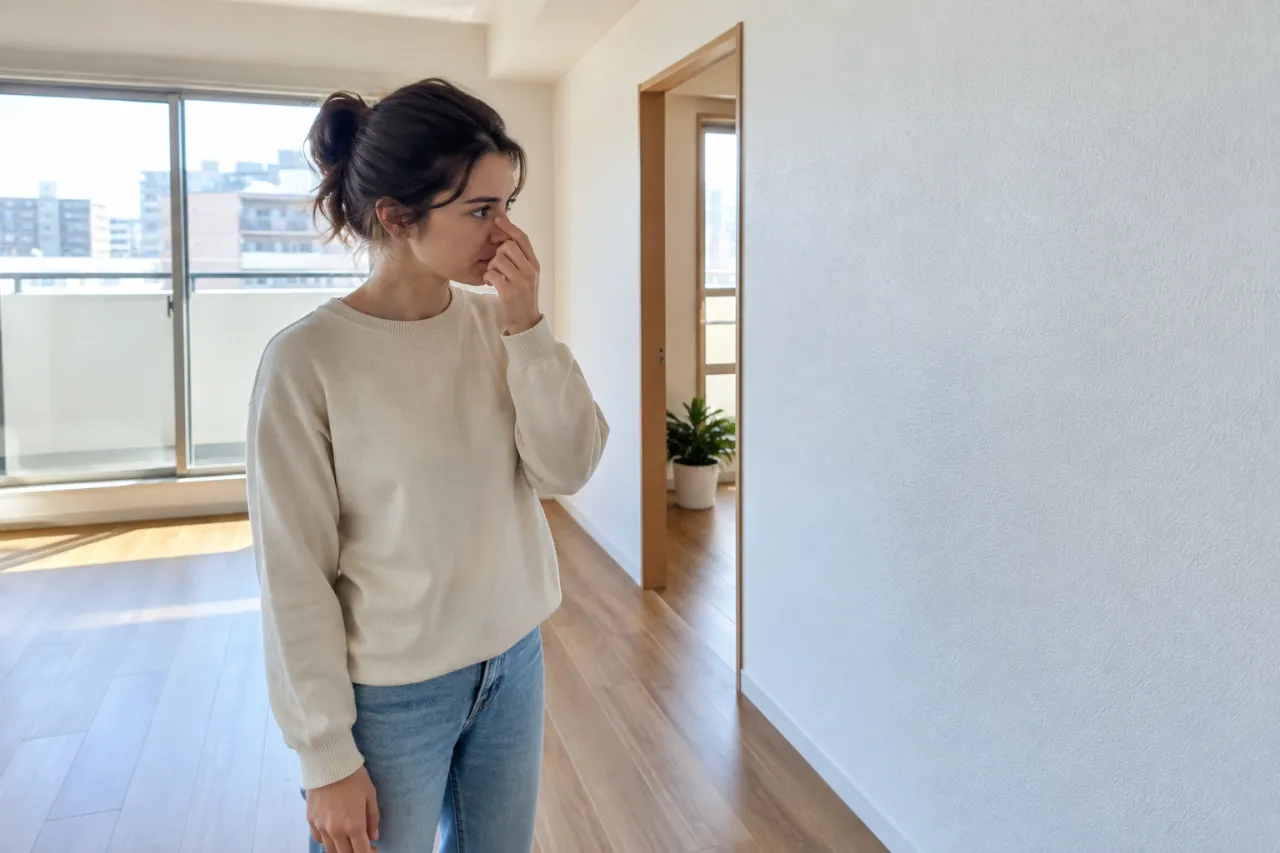
Quick answer: A smell after wallpaper replacement, painting or another apartment renovation in Tokyo, Kanagawa or Chiba is not, by itself, a mold diagnosis. Note when the work happened, what materials were used if management knows, where the odor is strongest, whether the wall or floor is wet, and whether ventilation is operating. Tell the property manager or renovation contractor about a chemical-like odor associated with recent work. Tell the manager promptly about damp, peeling or repeatedly stained fixed materials. If the water source is investigated and suspected mold or persistent mustiness remains, ask whether a mold specialist should assess it. Kabi Busters Yokohama can receive English inquiries about suspected mold; it cannot identify a chemical or guarantee a particular result from an odor description.
日本語の要点: 改装直後の臭いを、臭いだけで「カビ」や「化学物質」と断定しないでください。工事日、使用建材・塗料、換気状況、湿った壁や床の有無を記録して管理会社へ伝えます。新しい建材や塗装に関する確認は管理会社・施工側へ、漏水や結露による建材の湿りは原因調査へ。原因対応後もカビが疑われる場合に専門相談を検討します。症状が気になる場合は医療機関へ相談します。
An international resident may arrive at a freshly renovated rental and be unsure how to describe an odor in Japanese. One room may smell like paint or adhesive. Another may smell earthy after wallpaper was installed over a previously damp wall. Both problems can coexist. The purpose of this guide is not to tell the reader to purchase mold treatment for every renovation smell. It is to help distinguish observations so the right person can inspect the right source. This article also avoids claiming that a “low-VOC” label, an F-star material rating or an open window proves the air is safe in a particular home.
The Ministry of Land, Infrastructure, Transport and Tourism's English overview of sick-house building rules discusses formaldehyde-emitting building materials and ventilation, while its Japanese regulatory overview explains applicability in more detail. The U.S. Environmental Protection Agency's VOC information lists many indoor sources, including some paints and solvents. The EPA's explanation of mold odors notes that mold can be associated with musty smells. None of those sources can determine from a resident's description which substance or organism is in one specific apartment. The practical response starts with location, timing, moisture and work records.
1. Record the renovation timeline before trying to name the smell
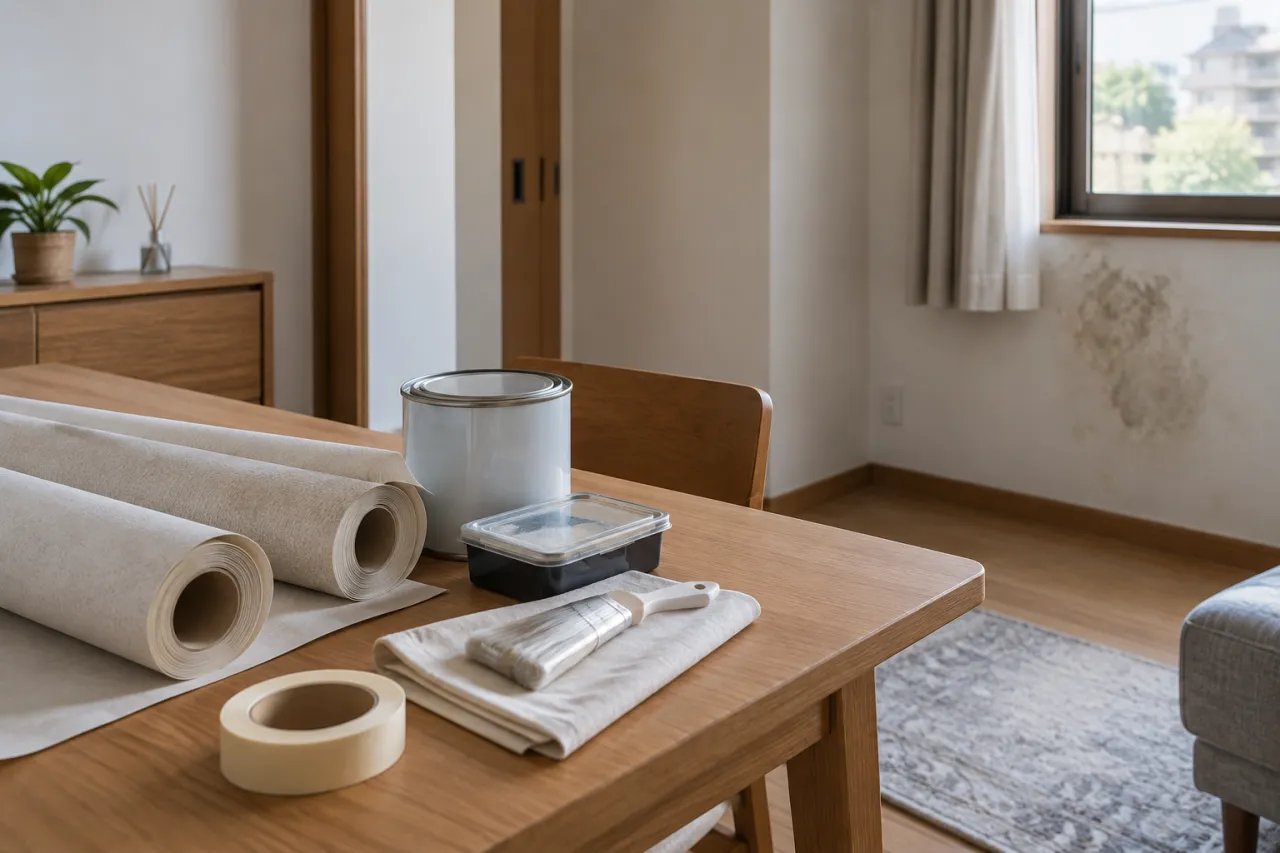
Write down the date you moved in or returned, the date and location of work, and when you first noticed the odor. Was a room painted, wallpaper replaced, flooring installed, cabinets fitted, a leak repaired, or an air conditioner cleaned? Ask management for the work description and manufacturer or contractor information where appropriate. Do not assume that a fresh-looking surface means the substrate is dry; likewise, a paint smell does not prove that the surface is wet. Photographs of the finished room, any discoloration and any accessible water mark help establish a baseline. If a repair was carried out after a leak, ask what was dried or replaced, not merely which surface coating was applied.
Compare the odor in several locations without inhaling deliberately at close range. Is it strongest at a newly painted surface, inside a newly installed cabinet, near a drain, behind furniture, or at a wall that had a water stain? Does it change when the installed ventilation operates? Can you see condensation, a soft wall area, peeling wallpaper or swollen floor edge? These observations do not identify a chemical or mold species. They can, however, make a request for inspection much more specific than “the room smells bad.” If there is an active leak, wet electrical connection or visibly unsafe ceiling, deal with safety and building management first. Avoid touching wet wiring or dismantling a fixed wall.
Do not use fragrance or aggressive cleaning to cover the odor before documenting it. Spraying products on new paint or wallpaper may damage the finish or add a new chemical source. Do not mix cleaning agents. If the room causes concerning symptoms, seek qualified healthcare advice; this article is not a medical assessment and cannot attribute symptoms to one material, odor or microorganism. If a chemical spill, gas smell or other acute hazard is suspected, follow the relevant supplier or emergency guidance, not a mold-cleaning checklist.
The UR English guide to apartment facilities discusses condensation, mold, volatile organic compounds and ventilation together because more than one indoor-air issue can occur in a dwelling. The relationship is not a license to merge them into one diagnosis. Ventilation may reduce some indoor contaminants and moisture under appropriate conditions, but it does not repair water entry, identify a product emission or substitute for a professional assessment when there is actual damage.
2. Compare new-material odor with evidence of moisture

Recently applied paint, adhesive, flooring finish, cabinet material or cleaning product can contribute to an unfamiliar smell. The EPA's VOC overview explains that a variety of household and building products can emit volatile compounds. A resident cannot identify a particular compound by smell, and lack of smell does not certify zero exposure. Ask the property manager or contractor what materials were used and what ventilation or curing instructions the manufacturer supplied. A specialist in mold removal does not test all chemical emissions or correct a poorly specified renovation product; those questions belong to the manager, contractor, manufacturer and, where needed, an appropriate indoor-air professional.
Moisture evidence tells a different story. A wall that remains damp, wallpaper that blisters, a floor edge that swells, or staining that grows after rain points toward a water source or wet material. Even if that area was recently painted, it should not simply be covered again without investigation. The MLIT healthy-housing research summary discusses both building-material emissions and renovation-specific consideration. It supports asking about materials and ventilation but does not let a tenant conclude that every renovated room has a chemical problem. The EPA's mold-odor page makes a musty odor a clue worth investigating; it does not show exactly where growth is hidden.
| Observation | Plausible question, not a diagnosis | Appropriate first route |
|---|---|---|
| Smell starts immediately after painting or floor work; no visible dampness | Which products were used and what ventilation or curing instructions apply? | Property manager and contractor; product manufacturer if identified |
| Smell strongest near an unused drain | Is there a plumbing or drain-seal issue rather than wall mold? | Management or plumbing provider |
| Wallpaper peels, wall is soft, floor edge swells or stain spreads after rain | Is building material still wet or is water entering? | Property manager for source inspection and repair |
| Odor persists after a leak repair, with suspected growth or damp porous material | Was source control complete and is affected material still present? | Management plus case-specific mold assessment |
| Strong symptoms or acute safety concern | Is medical or emergency advice needed? | Healthcare or emergency professional, not a blog diagnosis |
The table does not assign likelihood percentages or invent a numerical risk score. Multiple routes can apply. A newly painted wall can also be wet behind the finish; a unit can have a new cabinet odor and a drain odor at the same time. Do not classify an entire apartment based on one smell adjective. If management has a work order, compare that scope with the location of the odor and any visible damage. A renovation date is a useful lead, not proof of fault or exposure.
3. Ask management and the contractor for a source-specific response
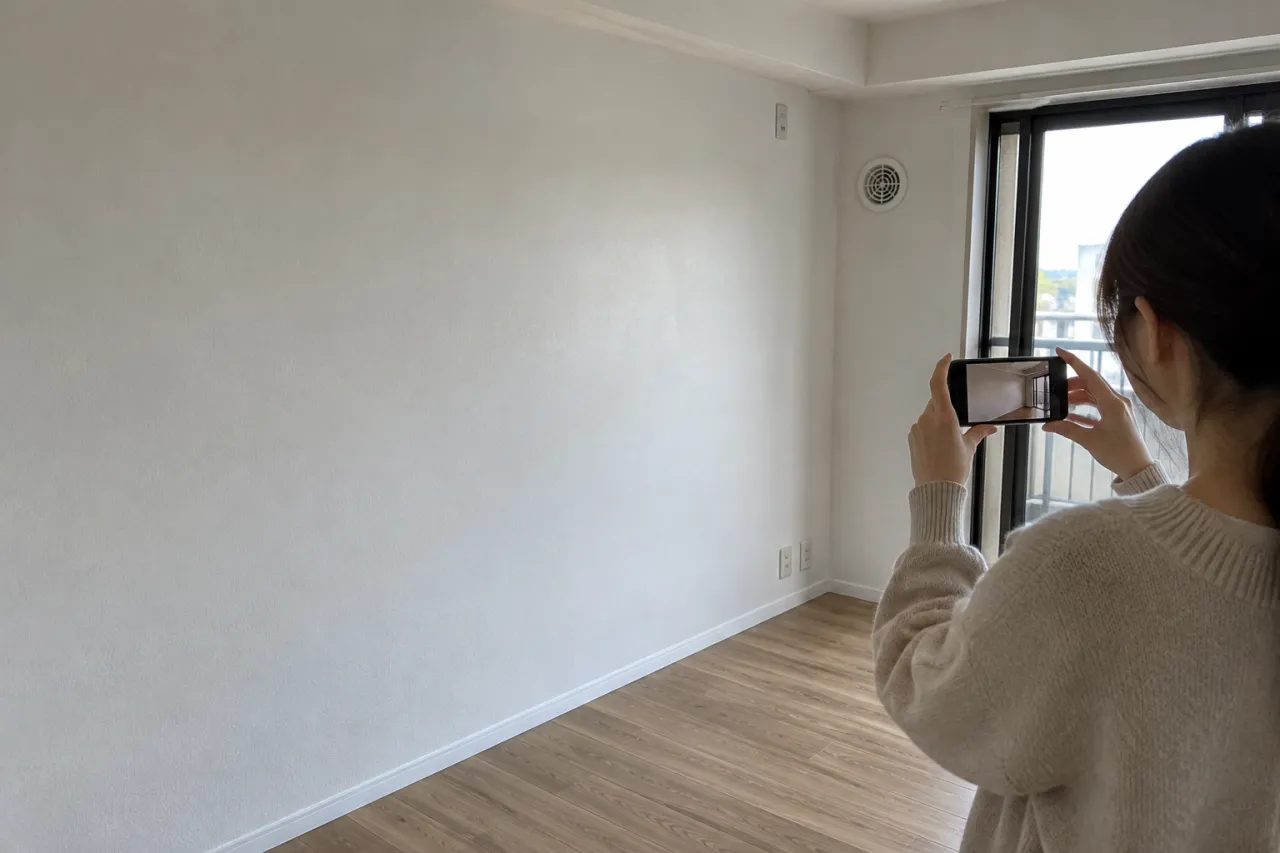
For a rental, the property manager usually coordinates information about fixed building materials and recent work. Send a concise message with dates, locations and photographs. For example: “I moved into/returned to the apartment on [date], after renovation work in [room] on [date if known]. An odor is strongest at [location]. I also observed [no visible dampness / a damp wall / peeling wallpaper / a swollen floor edge]. Could you tell me what work and materials were used, whether the room has been ventilated according to the product instructions, and whether the wall or floor needs a moisture inspection?” Replace the bracketed text with observed facts. Do not write that a product is unlawful or that a landlord caused mold unless those facts have actually been established by the appropriate process.
In Japanese: “改装後の[部屋・場所]で臭いが続いています。工事日、使用した建材・塗料、施工後の換気方法を確認したいです。[壁の湿り・壁紙の浮き・床の膨らみ]もあるため、必要であれば水分の原因や建材の状態を点検してください。写真と気付いた日時を添付します。” If there is no wet area, omit the moisture sentence and focus on the product and ventilation questions. If there was a prior leak, ask what repair and drying work was documented. Keep the manager's written response, material names and follow-up dates together. These records make it easier to see whether the issue changes after ventilation or source repair.
If management proposes repainting a damp patch, ask whether the substrate and leak source have been checked first. If management proposes mold spraying for a chemical-like odor with no moisture evidence, ask why mold is suspected and how the renovation-material question will be handled. You need not choose between “mold” and “VOC” before anyone investigates. The MLIT English building-law overview provides context on formaldehyde and ventilation; its legal requirements vary with the work and building circumstances. A blog cannot certify regulatory compliance or assign the cause of symptoms. For disputes about repairs, fees or occupancy, consult the contract and suitable housing or legal advice channels rather than asking a mold company to decide liability.
4. Decide when a mold specialist belongs in the sequence
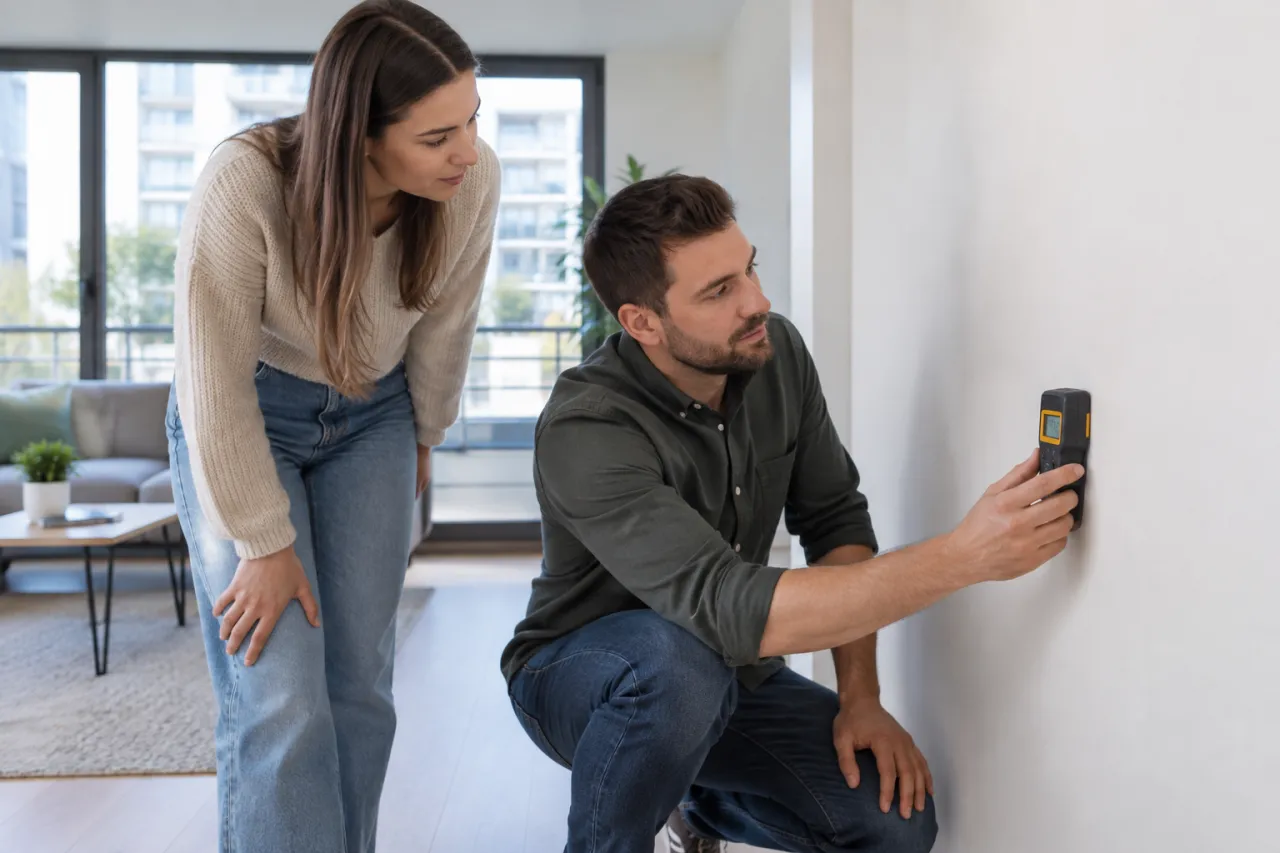
A mold consultation becomes more relevant when a moisture source has been identified or is being investigated and suspected growth, persistent mustiness or affected porous building material remains. The specialist should know what was renovated, what was repaired, whether the area is still wet, and who can authorize work on rental materials. Do not describe generated blog images as evidence of a real job. Real photographs of the resident's actual wall, taken safely, are the useful evidence. If the issue is a paint formulation or adhesive emission, the contractor and manufacturer are the right starting point. If the issue is a plumbing leak, fix the plumbing route. Mold treatment alone cannot solve either source.
For an English inquiry from Tokyo, Kanagawa or Chiba, send your city or ward, the renovation and odor timeline, work description if available, photographs of any wet or discolored fixed surface, and what the manager has already checked. Kabi Busters Yokohama's service information describes its general mold-related work, and the English-language inquiry can be sent through its contact page. Confirm coverage, timing, inspection scope and cost for the specific address. The company should not be presented as the only possible provider or as a laboratory for every indoor-air contaminant. A useful consultation begins with the right question: after the building source is addressed, is there residual mold-related damage to assess?
FAQ — Does a “new paint” smell exclude mold? No. Different sources can coexist. The smell of a new finish may be noticeable while a wall remains damp behind it. Conversely, a chemical-like odor is not proof of mold. Look for moisture evidence, work records and persistence, and ask the responsible parties to inspect.
FAQ — Can I identify formaldehyde by smell? No. Odor descriptions are not a reliable substance identification or concentration test. Ask for the product information and appropriate professional advice if there is a concern. MLIT's building-material guidance explains regulation, not the actual concentration in your room.
FAQ — If a material is marked F☆☆☆☆, is the apartment definitely safe? That marking addresses specified formaldehyde-emission classification of a material; it does not measure every pollutant or moisture problem in a completed room. Other products, ventilation and conditions also matter. Do not use a label as a substitute for case-specific inspection.
FAQ — Should I keep the windows open all day? Follow the building's ventilation design and the material manufacturer's or contractor's instructions, while considering weather, security and water entry. Ventilation can be relevant to both moisture and emissions, but opening windows during driving rain may add moisture and will not repair a leak.
FAQ — Should I spray bleach on the newly finished wall? Do not use cleaning chemicals as a diagnostic test. They can damage finishes, introduce another odor, and fail to correct a moisture source. Document damaged fixed material and ask management before treatment. Never mix chemicals.
FAQ — Who handles a wet wall after renovation? Start with property management so they can investigate water entry, installation work and material repair. After source control, a mold specialist may help assess residual affected material. Do not ask a mold provider to replace the manager's authorization or a plumber's leak repair.
FAQ — What if I feel unwell in the room? Seek qualified medical advice, particularly for significant or ongoing symptoms. Describe the timing and environment to the clinician, but do not self-diagnose “toxic mold” or a specific chemical from an odor. A blog cannot provide an exposure measurement or medical diagnosis.
FAQ — Can I write to Kabi Busters Yokohama in English? Yes. English inquiries are possible. Include the city/ward, renovation date, what the manager says was done, photos of any damp wall or floor and the current source-control status. Contact the team to ask whether a mold assessment fits the actual situation.
The practical sequence is record the renovation work, check for safety and dampness, ask management about materials and building sources, follow appropriate ventilation and repair instructions, and only then consider residual mold assessment. That order is more useful than deciding from a smell alone. It also helps an international resident ask precise questions without overstating health, legal or technical conclusions.
Primary information: MLIT's English sick-house rules overview, MLIT's detailed Japanese regulatory summary, MLIT's healthy-housing research summary, UR's English housing-facilities guide, EPA information on VOC sources, and EPA information on mold-associated odor. These provide general context, not a site-specific diagnosis.
----------------------------------------------------------------------
カビバスターズ横浜
住所 :
〒221-0056
神奈川県横浜市神奈川区金港町5-14 クアドリフォリオ8階
電話番号 :
0120-133-199
----------------------------------------------------------------------