
VIP meeting room acoustic-panel mold
2026/10/30

Direct answer: If a private meeting room has a musty smell, staining at an acoustic panel edge, or recurring dampness near a cooled wall, do not simply deodorize the space or cover the stain. Document the location and operating conditions, ask the property manager to identify the water source, and have the panel assembly and HVAC system assessed by the appropriate specialists before high-value furnishings or confidential meetings return. Kabibusters Yokohama can discuss the building-side mold and moisture question in English; an HVAC contractor remains responsible for its equipment and a specialist installer for the acoustic finish.
This guide addresses a sound-isolated conference room inside an executive residence, family office or guesthouse in Tokyo, Kanagawa or Chiba. It is different from an ordinary bedroom or a home theatre: the owner may need the room for private decisions, the wall may conceal absorptive layers, and use may be intermittent. A quiet, attractive finish can conceal a damp backing. Equally, a spot on the visible fabric is not proof that the entire wall cavity is moldy. The task is to distinguish water entry, surface condensation, HVAC condensate and an unrelated stain without damaging confidential records or expensive fittings.
The US EPA's mold course on finding mold and moisture specifically notes that mold can occur on acoustic liners in ventilation ducts and on ceiling materials. Its building moisture-control guidance explains how wet materials, air movement and building operation interact. These are primary educational sources, not a remote diagnosis of a Japanese property. An actual decision requires observation of the particular wall, supply-air pattern and water history.
For the search intent “mold behind acoustic panels” or “musty private meeting room,” the first three useful result types may be a public moisture guide, an acoustic-panel vendor's cleaning advice, and a mold contractor's service page. The EPA mold course helps locate hidden moisture; a vendor instruction can explain how its specific panel may be removed or cleaned; a service page may describe a scope but cannot establish the cause in this room. Search order varies, so this is a comparison of evidence and limits, not a claim about fixed rankings. The gap for a VIP property is a coordinated diagnosis that keeps acoustic performance, confidentiality and building moisture separate.
1. Map the symptom without disturbing the acoustic lining
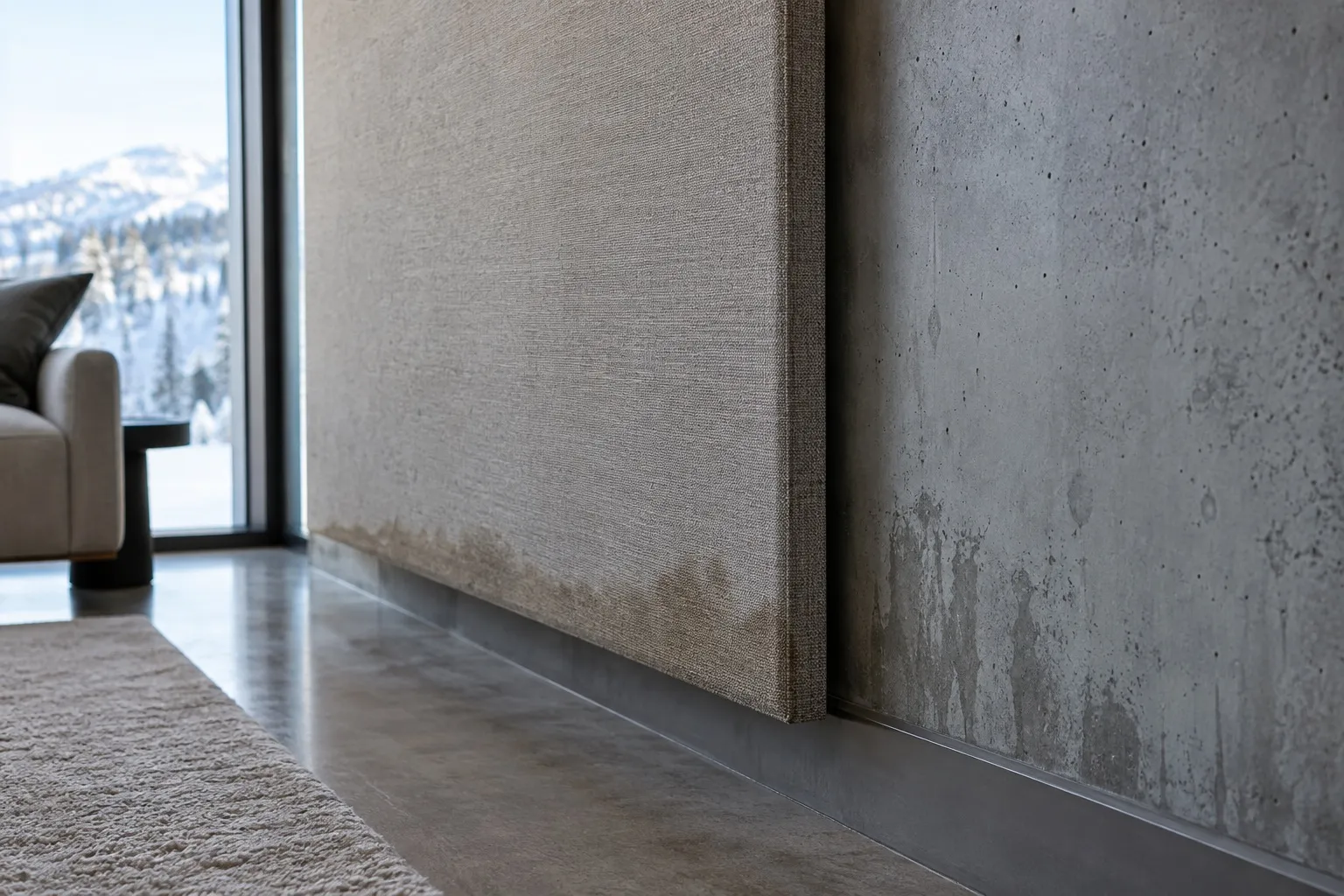
Begin with the room's layout: exterior wall, window, roof edge, plumbing route, air supply, return grille, equipment closet and the position of each acoustic panel. Record the first date the odor or mark was noticed, weather before it appeared, whether cooling was on, occupancy level and which wall was affected. Photograph the same locations from a wide view and a close view. Do not assume the visible edge is the source; moisture can travel along a metal track, a ceiling joint or a concealed backing. A panel may also show old water damage after a leak has been repaired. Dates and repeat observations matter more than a dramatic single photograph.
Ask the installer or facilities manager how the panels are mounted. Are they fabric-wrapped absorbers, perforated timber over mineral wool, removable decorative boards, or a lining built into the wall? The removal method and risk to the material differ. A housekeeper should not pull panels off to “see what is behind them.” Disturbing a damp porous backing may spread debris or damage a custom installation. A specialist can select a limited inspection point after considering the assembly drawings and the extent of the symptom. The EPA course on hidden mold emphasizes investigating the source and taking care when hidden growth is suspected.
For a meeting room used by an overseas owner, preserve privacy while documenting the building problem. Remove meeting papers and sensitive devices before inspection, restrict photography to the affected construction and give contractors a room plan without unnecessary names or itineraries. Confidentiality is a project-management practice, not a guarantee that a mold contractor provides security services. The manager should agree who can access the room, who holds photographs, and how an opened wall will be secured at the end of each day.
2. Separate condensation, leaks and HVAC faults
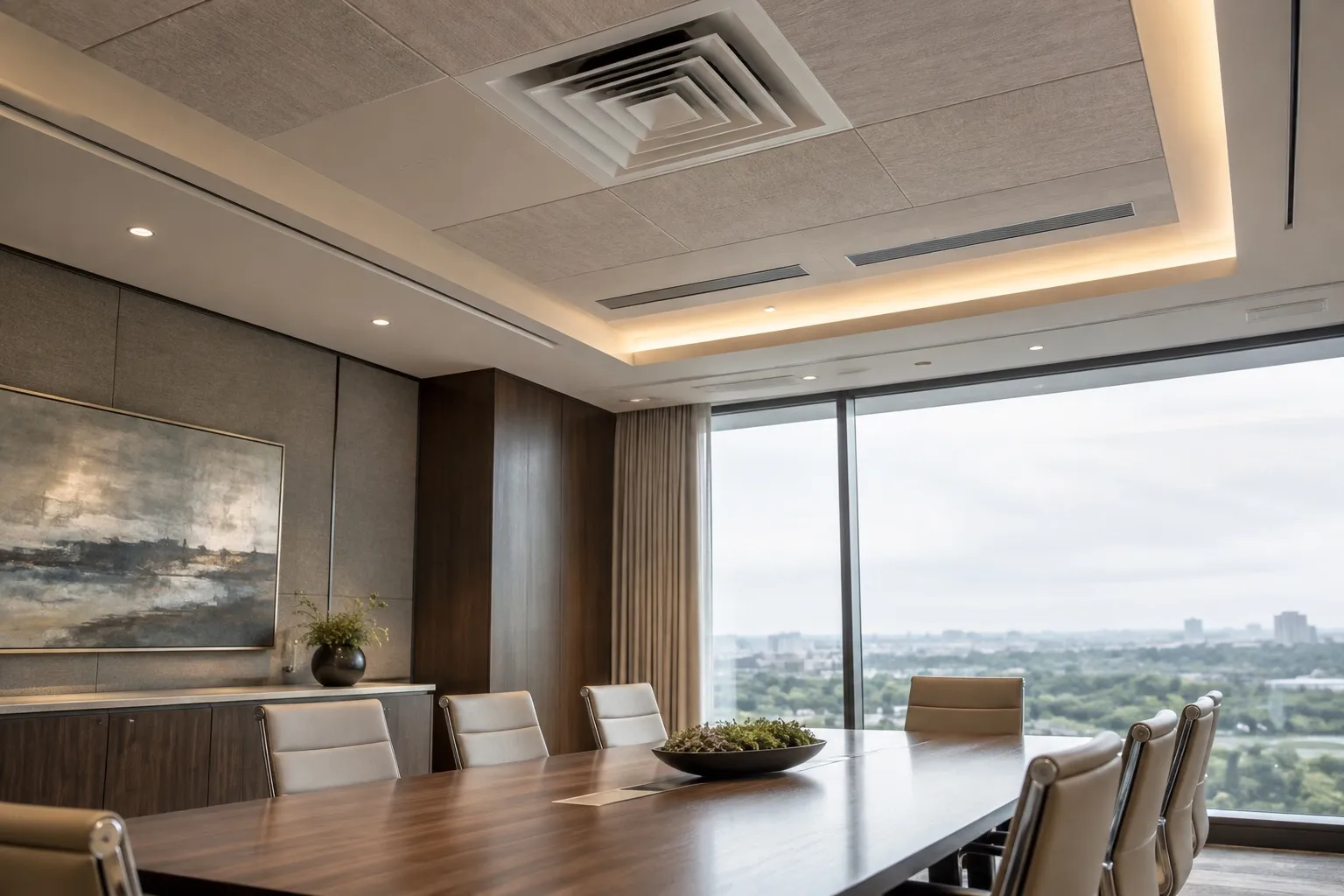
A cool supply jet, a cold exterior wall and humid air can make a surface wet under some operating conditions. Rainwater may enter from glazing or a roof detail, while plumbing or an HVAC condensate line may create a different wet pattern. None should be inferred solely from a musty smell. Check whether the mark appears after rain, after cooling starts, when the room is closed for days, or at a particular season. A qualified HVAC contractor should inspect equipment, drainage, insulation and airflow; a building-envelope contractor should inspect exterior water entry. Kabibusters Yokohama can assess the building-side mold and moisture scope, but should not be represented as certifying the HVAC unit.
The EPA HVAC and indoor-air-quality design guidance discusses the relationship between ventilation components, moisture and maintenance. The EPA office-occupant IAQ guide encourages useful symptom reporting and communication with building management. A private meeting room is not a school or office in regulatory terms; these sources are used for their building-science principles, not as a Japanese compliance certificate. Do not change system settings or block grilles without the HVAC contractor's advice.
| Observation | Plausible question | First professional to ask | What not to assume |
|---|---|---|---|
| Mark recurs after rain | Is water entering the façade or roof? | Envelope specialist and manager | That cleaning the fabric fixes the leak |
| Dampness appears during cooling | Are supply air, insulation or condensate involved? | HVAC contractor | That the wall alone is at fault |
| One panel smells but no visible wetness | Is backing or an adjacent cavity affected? | Building/moisture assessor | That odor proves a specific species or extent |
| Ceiling tile or duct lining is stained | Is the HVAC path wet? | HVAC contractor with mold assessor | That ordinary duct cleaning is enough |
An investigation plan should identify which hypothesis each measurement or opening tests. Record the location, instrument, material, date and comparison point; a lone moisture-meter number cannot establish a universal pass or fail across plasterboard, timber and textile. Avoid a spore-count graph without a genuine sampling design and source data. A diagram of the wall and a dated event timeline are more honest and often more useful to a remote owner.
3. Protect the meeting room while the cause is addressed
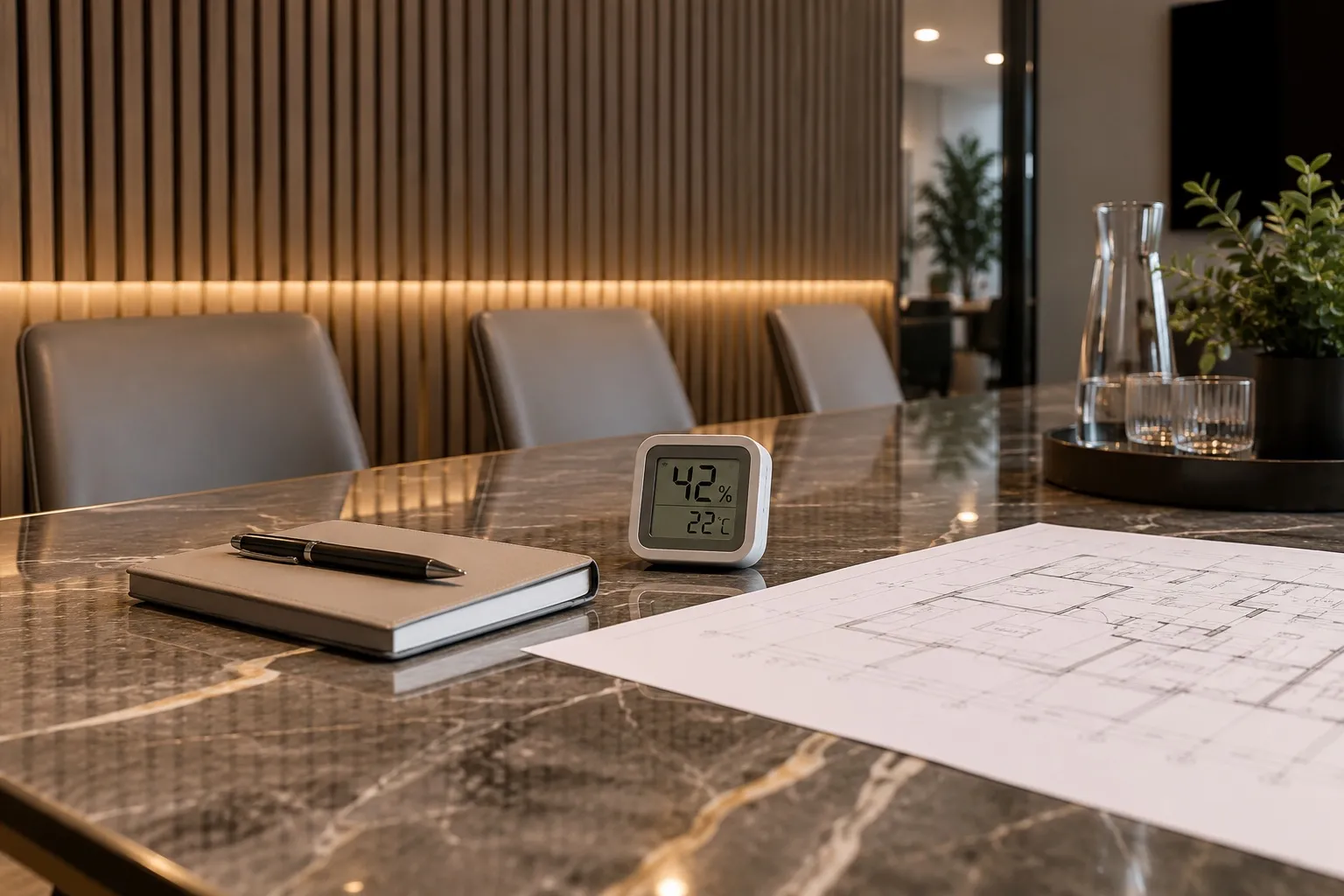
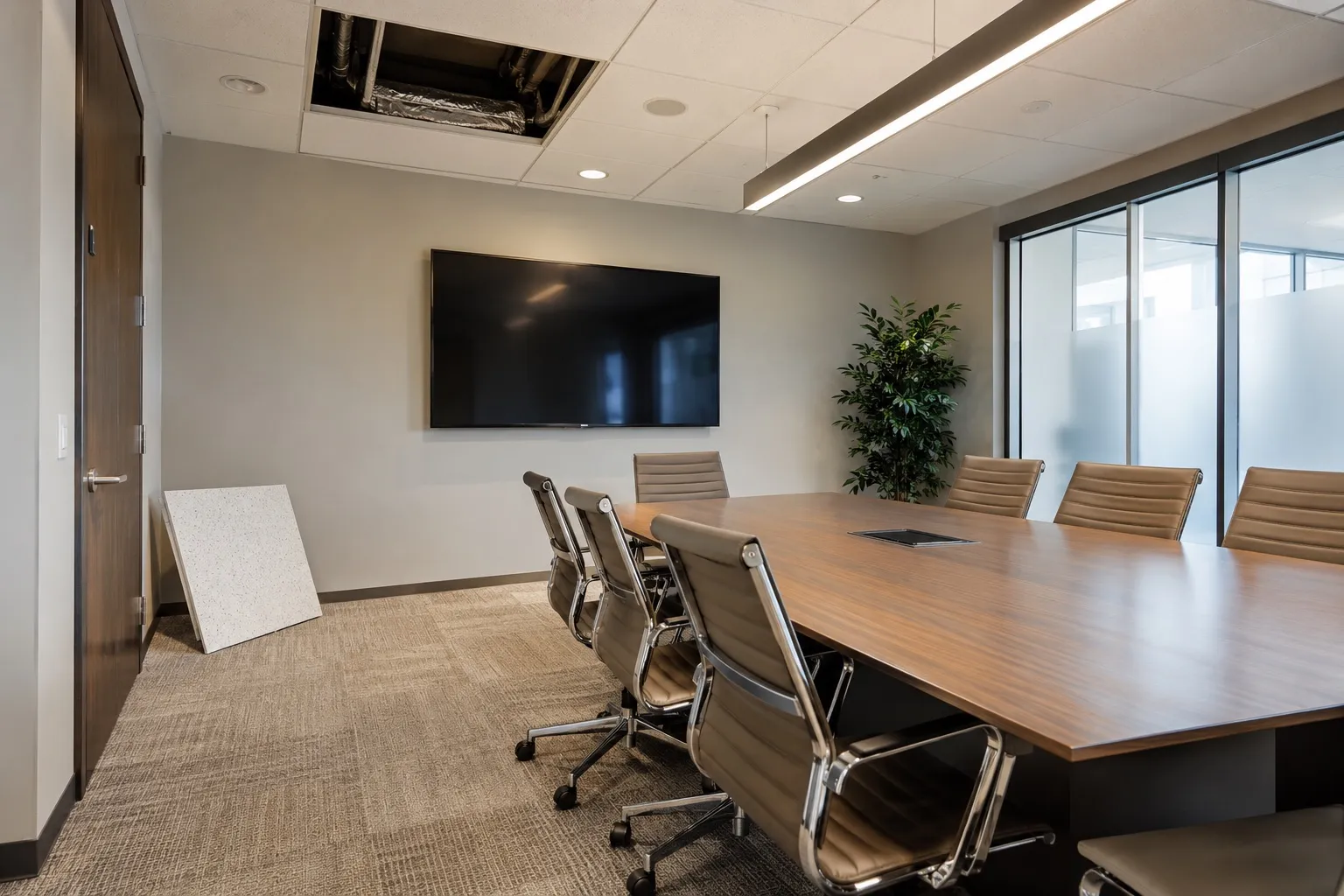
Once active wetness or suspected growth is found, decide whether the room should be temporarily taken out of use. That decision depends on extent, occupants, access and the work required; a blog cannot make it remotely. Do not seat guests against a damp lining or run a confidential meeting while dusty intrusive work is underway. Have the manager relocate documents and high-value movable contents before an inspection opening. Delicate fabric, decorative timber or electronics may need their own qualified conservator, installer or equipment technician. Mold treatment of the building does not guarantee restoration of every object.
If the source is rain entry, the envelope repair must be planned with the interior work. If HVAC condensate or insulation is involved, the HVAC contractor must correct that system issue. If a plumbing line is wet, involve the plumber. The EPA brief guide to mold and moisture in homes states the core principle: clean up mold and fix the moisture problem. Painting, perfume or a new fabric face without source correction may leave a damp backing. The EPA building remediation guidance discusses occupant protection and work planning; adapt its general principles to a residence with the responsible professionals.
Agree a hold point before a removed panel is reinstalled. The manager should know which surfaces were exposed, which were dry, which materials were retained or replaced, and what remains inaccessible. A replacement acoustic panel should not be fitted simply because the wall looks clean from the doorway. The installer also needs to confirm that attachment, fire-related specification and acoustic design are not compromised by a proposed replacement. Those are installer and design-team responsibilities. A building-side mold assessment can inform the sequence but cannot promise the rebuilt room will have identical acoustic performance.
4. Prepare an English owner decision and escalation path
An overseas owner may need a short decision memo: room name and location; observed symptom; suspected and confirmed water sources; affected panel and backing map; action by each trade; photos with dates; whether the room is available; and the next check. Mark uncertainty explicitly. “Suspected condensation at the supply-air perimeter, HVAC inspection pending” is better than “mold removed” when the source is not yet known. A confidential room deserves precise, limited claims rather than an expensive-looking but vague clearance statement.
Contact the property manager promptly when there is a new mark, odor or leak. Ask an HVAC or envelope specialist when the source points to their systems. Seek building/moisture expertise when staining recurs, the lining is porous, an inaccessible cavity may be wet, or ordinary cleaning has not solved the cause. Suspend use and obtain safety advice if electrical components are wet or a ceiling/panel attachment is unstable. Ask a clinician about occupant symptoms; a building blog cannot diagnose health effects. The EPA home cleanup guidance also advises specialist advice for expensive or sentimental items, a useful boundary for a high-value property.
FAQ — Can a fabric panel be wiped and returned to use? Sometimes a surface mark is limited, but absorbent backing and the moisture source must be assessed. Follow the panel maker's instructions; do not infer that wiping proves the concealed assembly is dry.
FAQ — Does a clean air test mean the wall is dry? No. A sample at one time and place does not establish the condition behind every panel or correct a leak. Define the question first and use physical evidence where appropriate.
FAQ — Should all panels be removed immediately? Not automatically. Review plans, moisture pattern and safe access with the installer and assessor. A targeted opening may answer the cause with less damage, while widespread wetness may need a broader scope.
FAQ — Can the room be used for a meeting during work? This depends on the condition and protection plan. Avoid using it during active water entry, unstable finishes or intrusive dusty work; the manager and relevant professionals should decide on restriction and an alternative room.
FAQ — Who checks the ventilation? The HVAC contractor checks equipment and controls. The mold/moisture specialist addresses affected building materials and the relationship to wetness. Neither role should silently sign off the other's work.
FAQ — What should an English inquiry include? Send the municipality in Tokyo, Kanagawa or Chiba, affected wall or ceiling, panel type if known, dates of odor or staining, rain/cooling pattern, photographs that protect privacy and any HVAC or leak-repair report. Ask what building-side assessment is available and confirm timing directly.
日本語要点: 私設会議室の防音パネルに臭いや染みが出ても、表面清掃や張り替えだけで解決と判断しません。雨漏り、結露、空調ドレン、配管などの原因を分け、パネル裏と建材の状態を必要な範囲で確認します。空調設備は空調業者、外壁・屋根は建物の専門業者、防音材の復旧は施工業者が担当し、カビバスターズ横浜には建物側のカビ・湿気について英語で相談できます。東京・神奈川・千葉の海外オーナーや管理者は、写真と発生条件をまとめてお問い合わせください。
See Kabibusters Yokohama's building mold services and send an English inquiry to the Yokohama team. The illustrations in this guide are conceptual and do not depict an actual client property, inspection or treatment outcome.
----------------------------------------------------------------------
カビバスターズ横浜
住所 :
〒221-0056
神奈川県横浜市神奈川区金港町5-14 クアドリフォリオ8階
電話番号 :
0120-133-199
----------------------------------------------------------------------