
子ども部屋の壁角の黒ずみ・英語相談
2026/10/31
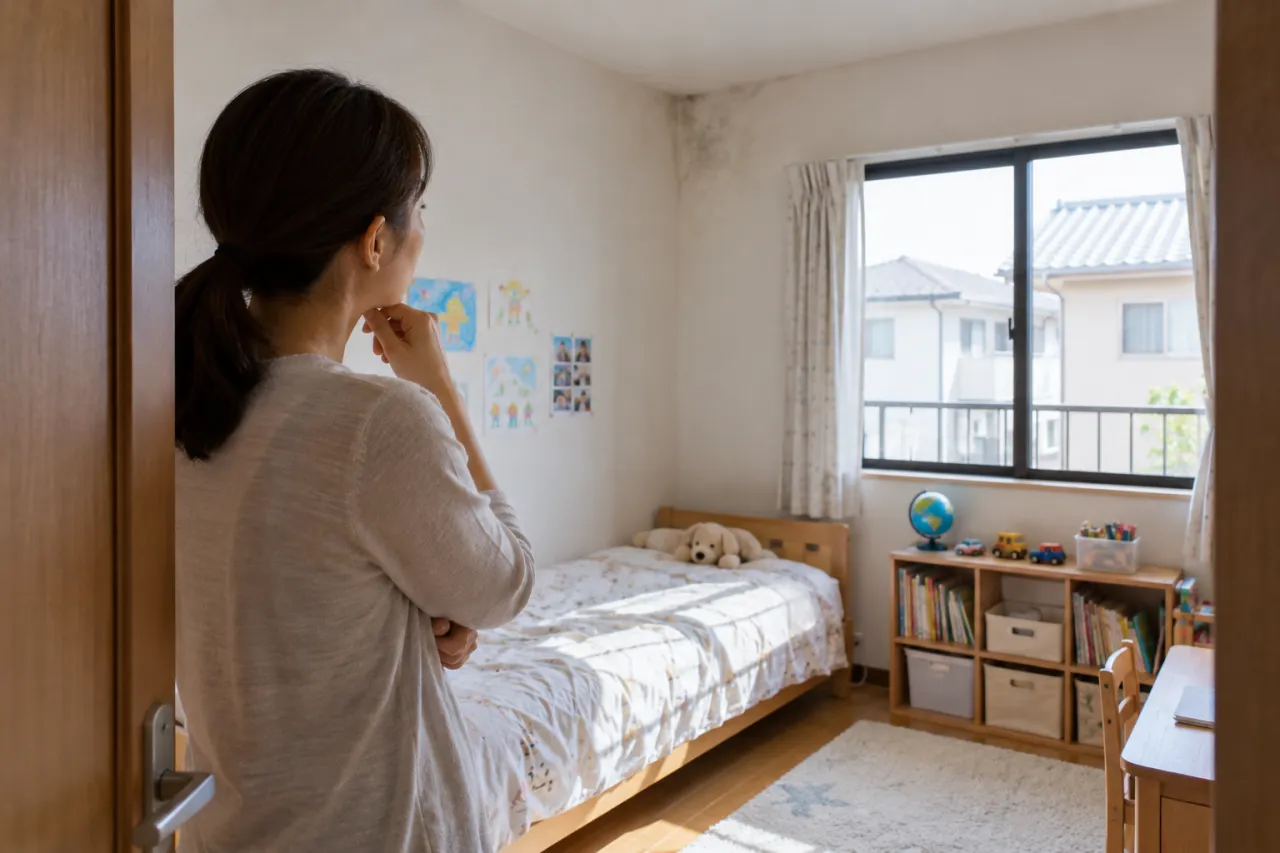
Quick answer: If you find a dark patch in the outside-wall corner of a child's bedroom in a Tokyo, Kanagawa or Chiba rental, do not identify it as a particular mold or judge its health effect from a photograph. Keep the child away from the affected spot while you document it, especially if the wall is wet, crumbling or being cleaned. Photograph the corner, nearby window, furniture position and any rain or condensation pattern. Notify the property manager about damage to fixed wall or floor material and ask for a moisture-source inspection. Seek medical advice for a child's symptoms. Once the source is addressed, a mold specialist may help assess persistent suspected growth or affected material. Kabi Busters Yokohama accepts English inquiries, with visit availability, scope and fee confirmed case by case.
日本語の要点: 子ども部屋の外壁側の角に黒ずみを見つけたら、写真だけでカビの種類や健康影響を断定しないでください。子どもが触れたり清掃作業に参加したりしないよう配慮し、壁・窓・家具との位置関係、結露や雨後の変化を記録します。壁紙や床の湿り・剥がれは管理会社に報告し、水分の原因を点検してもらいます。症状は医療機関へ相談し、原因対応後もカビが疑われる場合に専門相談を検討します。
A parent's first reaction may be to scrub the corner immediately. But an exterior-wall corner in a rental can have several overlapping questions: Is the mark ordinary dust, a water stain or suspected biological growth? Is the wall cold enough for condensation behind furniture? Is rain entering around a window or façade? Has the child had symptoms that need a clinician's attention? Which parts belong to the landlord and which are moveable personal belongings? Treat those as separate questions. A mold-removal company is not a pediatrician, a roofer or a legal decision-maker. Good records let the right people act without claiming more than the evidence supports.
The Tokyo Metropolitan Government's English indoor-environment guide explains that moisture control and airflow behind furniture matter for mold prevention. Its English childhood-asthma page includes mold among possible inhaled allergens, but an individual child's symptoms require medical assessment. The World Health Organization's dampness and mould guidelines discuss population-level links with respiratory problems and emphasize preventing persistent dampness. Those sources support action, not a claim that this particular corner caused a particular illness or that a specific treatment will cure it.
1. Document the corner without disturbing it or involving the child in cleanup
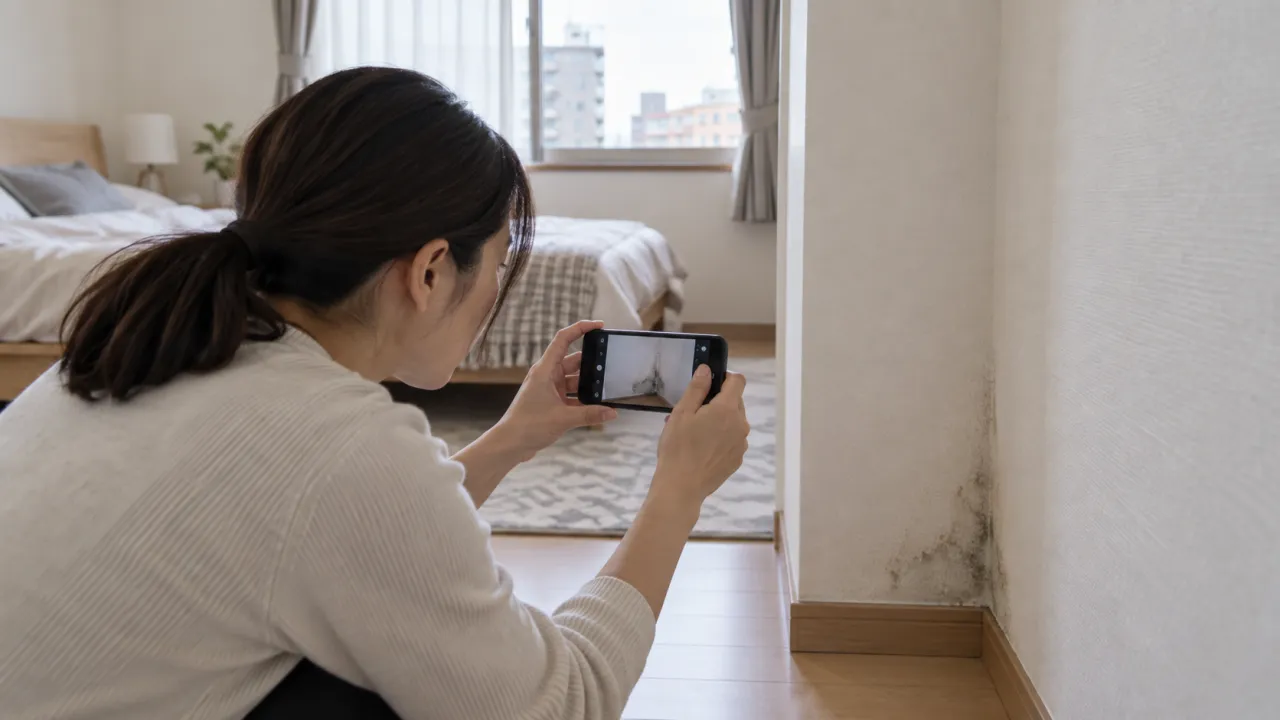
Take a wide photograph showing the corner, window, floor, bed, desk, wardrobe, heater, air conditioner and any ventilation inlet. Then take a close photograph of the patch with a ruler or common object nearby only if you can do so without touching damaged material. Record the date, room, floor level, and whether the mark appeared after rain, during cold weather, after a humidifier was used, or when furniture was moved. Note whether the wall is dry, cool, visibly wet, soft or peeling. You do not need to scrape a sample or make the child stand beside the stain. Keep any cleaning activity away from children and follow product labels and professional advice for the actual material.
Look at the wall-floor junction and the back of any nearby furniture. A wardrobe pushed against an external wall can reduce air movement; a large poster or storage box can hide a damp patch. Do not conclude that furniture alone caused the problem. A leak at an exterior joint, window seal or roof can produce similar-looking damage, and several routes may operate together. Avoid shifting heavy or anchored furniture unsafely. If a fixed skirting board is swollen, wallpaper lifts, or the floor feels soft, photograph it and report it rather than peeling back the finish. Do not use a brush, vacuum or fan directly on suspected growth before understanding the material and source.
If there is active dripping near an outlet, wet electrical equipment, a bulging ceiling or another immediate hazard, prioritize safety and call management's urgent contact or the appropriate emergency professional. Do not touch wet sockets. This article cannot certify that a bedroom is safe to sleep in. Parents can decide a temporary sleeping arrangement while a manager or clinician advises on the particular circumstances; no blanket all-clear or evacuation rule follows from a small dark spot alone. If a child has significant breathing trouble or other urgent symptoms, obtain urgent medical help, not a blog-based diagnosis.
The UR English housing and facilities guide describes condensation, mold and ventilation in Japanese apartments. Read it as a general guide to conditions, not proof of tenant fault. Even if a window has condensation, the fixed wall may need inspection if it stays damp. Likewise, a black corner can be dust or staining rather than mold. Evidence of moisture and material change matters more than the color alone.
2. Check whether the moisture pattern points to condensation or water entry

An external wall can be cooler than the room, particularly near corners and window reveals. Room air reaching that cool surface may leave condensation, especially if air circulation behind furniture is poor. Tokyo's English indoor guidance recommends managing humidity and not pressing furniture flush against walls. These measures can help prevention but are not a substitute for inspecting a leak or damaged material. A room hygrometer reads the open room air, not necessarily the narrow space behind a wardrobe. Keep a simple timeline of visible droplets and stains rather than relying on one humidity reading to diagnose the wall.
Compare the timing. Does the patch become wetter after rain, and is it near a window frame, balcony door or outside-facing joint? Does it form in cold weather along a thermal corner even without rain? Does the paint or wallpaper bubble from beneath? Do other rooms show a similar pattern? These observations help management choose an inspector, but a resident cannot determine the full wall assembly from the surface. Do not drill, cut or remove fixed boards to look inside. A damp patch that expands after rain needs attention to the exterior water route. A condensation pattern also deserves correction if the wall repeatedly becomes wet. In either case, simply wiping the visible stain without controlling moisture may allow recurrence.
| What you observe | What it suggests for the conversation | Who to contact first |
|---|---|---|
| Dry superficial mark, no change over time | May be dust, staining or surface growth; not identifiable by color alone | Document; ask management before treating fixed finishes |
| Repeated droplets on window and cool wall corner | Possible condensation and airflow issue | Review ventilation; report persistent fixed-wall dampness to management |
| Mark grows after rain, or window frame/ceiling is wet | Possible water-entry route | Property manager urgently if active or spreading |
| Wallpaper lifts, wall is soft or floor edge swells | Fixed material may be damaged | Management for source and material inspection |
| Suspected growth or odor remains after source control | Residual affected material may need assessment | Management-coordinated mold specialist |
| Child has symptoms or parent worries about health | Clinical question, not a species-label question | Pediatrician or other qualified clinician |
The table is not a scoring system. Several rows can be true at once, and it does not estimate the child's exposure or predict illness. The WHO dampness and mould guideline concerns prevention of persistent indoor dampness at a population level; it does not convert a photo into a medical diagnosis. The Tokyo childhood-asthma information also does not say that every dark mark causes asthma. Use the evidence to get timely inspection and medical advice where appropriate, without alarmist or falsely reassuring language.
3. Tell the property manager and clinician different, useful facts
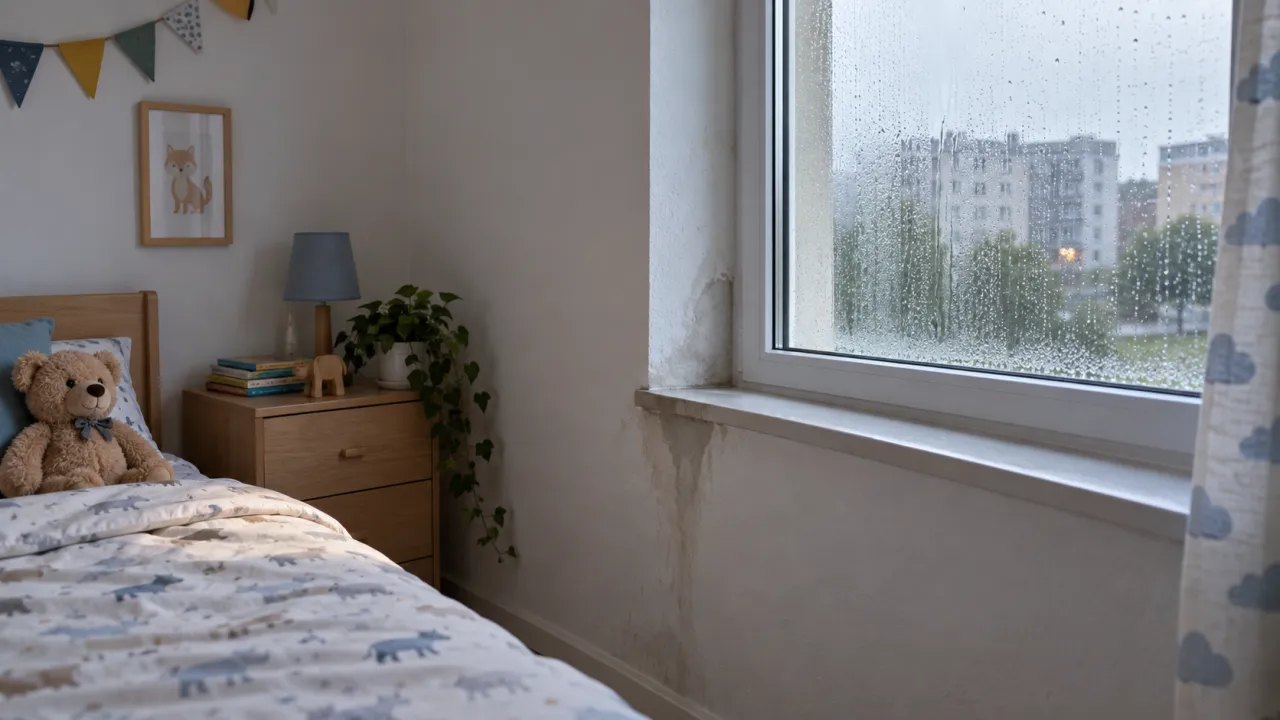
For the property manager, focus on the building: room and wall location, date noticed, rain and condensation timing, visible material change, and photographs. An English message could say: “I found a dark and damp-looking area in the outside-wall corner of my child's bedroom on [date]. It is near [window/floor/ceiling], and the mark [changed after rain / appears when condensation forms / has not changed]. The wallpaper is [dry/peeling/soft], and I have attached wide and close photographs. Please arrange an inspection of the moisture source and advise what should be done with the fixed wall material. We have not removed the wallpaper or treated it.” Replace the bracketed options with actual observations. Include the city or ward and unit privately, not in a public post.
A Japanese version is: “子ども部屋の外壁側の角に変色・湿りを見つけました。発見日時と、雨や結露との関係、壁紙や床材の状態を写真で記録しています。建材の水分の原因と補修方法を点検していただけますか。壁紙は剥がしていません。” Ask the manager to identify whether a window, outside wall, roof or ventilation issue requires a building contractor. Keep a record of when you reported it and what work was done. The MLIT multilingual rental-housing resource page offers terminology and condition-documentation materials for international residents. It does not determine legal responsibility for this individual corner.
For a clinician, focus on the child, not the wall repair: symptoms, onset and duration, known asthma or allergies, and whether symptoms change in different settings. Mention the observed dampness factually. Do not say a mold species was identified unless a qualified investigation actually established it. Do not stop prescribed medication or replace treatment with a cleaning product because a blog discusses indoor air. The Tokyo English childhood-asthma basics can help parents understand general triggers, while the child's own clinician gives individualized advice. A mold service should not promise that removing one patch will resolve symptoms.
If management asks the tenant to wipe the corner, clarify whether the wall is dry and sound, what finish can be cleaned safely, and whether the moisture source has been addressed. Do not use bleach, alcohol or spray near a child or on an unknown painted/wallpapered material without appropriate guidance; never mix chemicals. If the finish is peeling or the mark appears to come through the wall, cosmetic wiping may conceal the evidence. If a contractor repairs a leak, ask whether affected porous material was inspected or replaced and how drying was confirmed. Those questions are more useful than debating whether the dark color is “toxic black mold.”
4. Decide when specialist mold advice fits, after source control
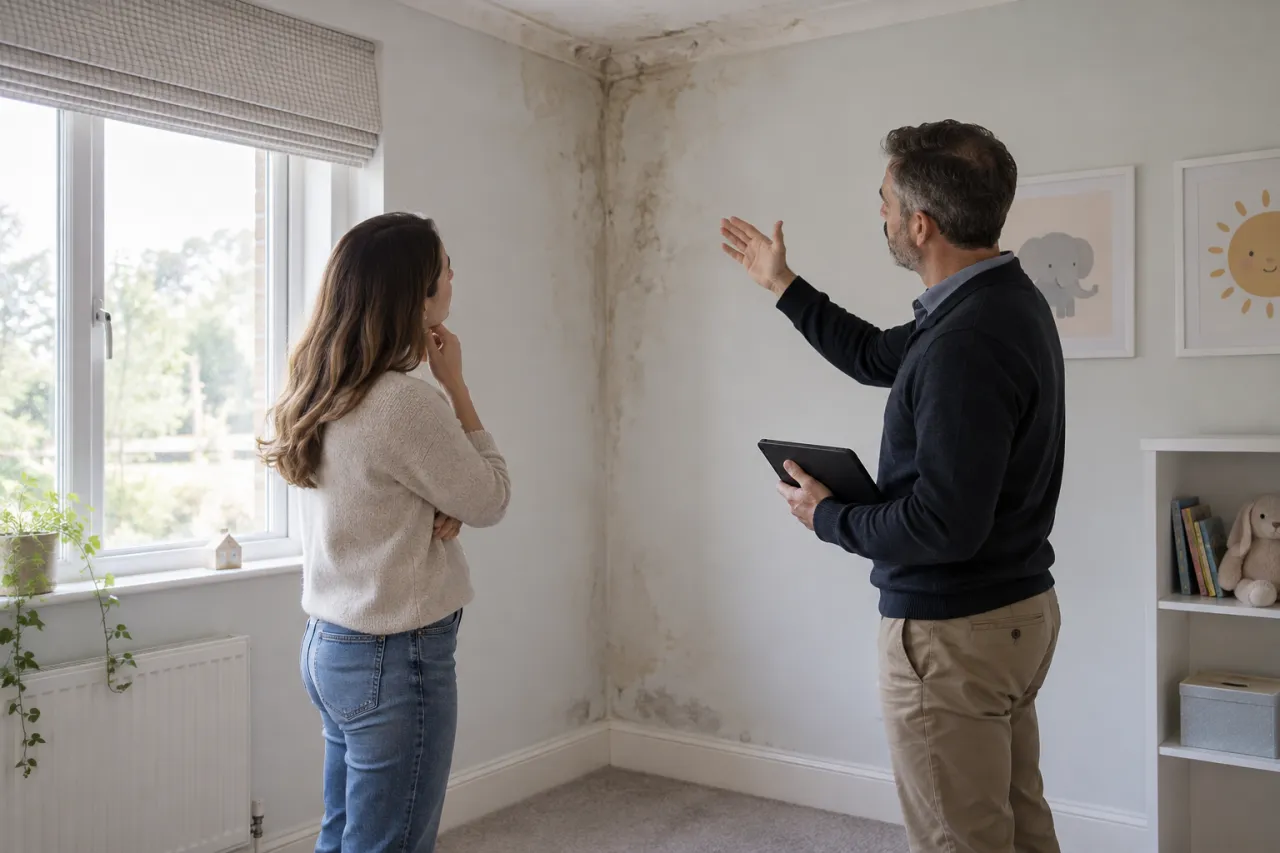
A case-specific mold assessment may be useful if the wall was wet, the source has been repaired or is under investigation, and suspected growth, mustiness or damaged material remains. A specialist should know the repair history and whether access to fixed material is authorized. A mold company cannot repair a façade leak, diagnose asthma or decide a deposit dispute. If the child has symptoms, medical advice belongs in parallel with building-source investigation, not at the end of a mold treatment sales process. If there is active water entry, management's building repair comes first even if a later mold assessment is also needed.
For English-speaking households in Tokyo, Kanagawa or Chiba, Kabi Busters Yokohama's service page explains the general mold-related service and its inquiry form lets you ask in English. Include the city/ward, a room overview and close photographs, the dates of change, whether a child uses the room, and what management has done. Avoid sending private medical details unless you specifically want to discuss how the team will plan around them; a healthcare professional is the right person to assess the child. Confirm visit availability, inspection scope, timing and cost directly. Generated illustrations in a blog are explanatory; they are not photographs of this home or evidence of treatment effectiveness.
FAQ — Is a black corner automatically “toxic black mold”? No. Color does not identify a species or toxin, and a photograph cannot show the extent behind wallpaper. Focus on whether the material is wet or changing and on source control. A qualified inspection can determine what information is actually needed.
FAQ — Can the child sleep in the room tonight? A blog cannot certify an individual room as safe or unsafe. Consider the condition of the wall, any active water or electrical hazard, the child's health needs, and advice from management and a clinician. Keep the child away from the affected surface and any cleanup activity while decisions are made.
FAQ — Should I take an air sample before reporting the wall? You do not need an air-sampling result to report visible dampness or damage. Sampling does not repair the source and may not answer where moisture is entering. Ask management for source inspection first; a specialist can advise whether any testing would change a particular decision.
FAQ — Can opening a window solve it? Ventilation may help prevent condensation under appropriate conditions. It cannot repair rain penetration or dry hidden wet board reliably by itself. Keep ventilation inlets clear, observe the pattern and report recurring damp fixed material.
FAQ — Who is responsible for the cost? The location and color of a mark do not establish responsibility. The lease, pre-existing condition, water source, maintenance records, notice and inspection findings matter. Ask management and seek appropriate housing or legal advice if disputed. A mold contractor should not promise a legal allocation.
FAQ — Does a child with a cough have mold illness? A cough has many possible causes. The WHO and Tokyo resources support reducing persistent dampness, but they do not diagnose an individual child. Tell a clinician about symptoms and the room observations; seek urgent medical help for significant breathing difficulty.
FAQ — May I contact Kabi Busters Yokohama in English? Yes. English inquiries are possible. Send the team photographs and a factual timeline after alerting management to building damage, and ask whether a mold assessment is appropriate for the specific address. Do not assume a guaranteed visit or outcome.
The practical order is protect the child from the damaged area and cleanup, photograph without disturbing, check rain/condensation patterns, ask management to assess the building source, obtain medical advice for symptoms, and consider specialist mold assessment for persistent affected material. This gives parents a clear plan without pretending that a blog or one photo can settle a technical or medical question.
Primary information: Tokyo's English indoor-environment guidance, Tokyo's childhood-asthma basics, WHO dampness and mould guidelines, UR's English housing guide, and MLIT's multilingual rental information. Each is general guidance and does not inspect this room or diagnose this child.
----------------------------------------------------------------------
カビバスターズ横浜
住所 :
〒221-0056
神奈川県横浜市神奈川区金港町5-14 クアドリフォリオ8階
電話番号 :
0120-133-199
----------------------------------------------------------------------