
Private collector-car gallery mold
2026/10/31

Direct answer: A damp wall or musty odor in a private collector-car garage needs two separate decisions. First, address any vehicle-exhaust, carbon-monoxide or electrical danger with the proper emergency and ventilation professionals; do not run a vehicle in an attached garage to “test” the room. Second, locate and correct the building's water source before cleaning or covering suspected mold at the wall, floor junction or storage lining. Kabibusters Yokohama can discuss the building-side mold and moisture issue in English. Car conservation, garage ventilation and vehicle systems require their own specialists.
This article is for a private car gallery or secure garage connected to a high-value residence in Tokyo, Kanagawa or Chiba. It is not a guide to restoring a rare vehicle and does not claim that an attractive garage is safe because it smells pleasant. A gallery may be kept at stable conditions for a collection, yet rainwater at a ramp, groundwater at a below-grade wall, wet tires, a drain fault or cooling condensation can still wet construction. The owner's priority may be the cars, but a mold concern at the enclosure belongs to the building investigation. Treat the two scopes separately and coordinate them deliberately.
The US EPA moisture-control guidance for buildings describes water management across design, construction and maintenance. The EPA guide to carbon monoxide and indoor air identifies vehicle exhaust from attached garages as a potential CO source. A NIST technical study of garage-to-house pollutant transport explains why the interface between an attached garage and living space matters. These are primary public sources; they do not replace the particular property's garage design, Japanese requirements or a professional safety assessment.
Searches such as “mold in luxury car garage” often mix three kinds of answer: a public guide to water and mold, a car-storage article about vehicle finishes, and a commercial dehumidifier or remediation page. The EPA moisture guide explains the building mechanism; a car-storage page may help a conservator think about vehicles but cannot diagnose the wall; a product page may sell a machine without locating the leak. Search positions differ over time, so this is a comparison of scope, not a fixed top-three ranking. The missing decision is who owns each risk at the gallery boundary.
1. Identify the water path without touching the collection
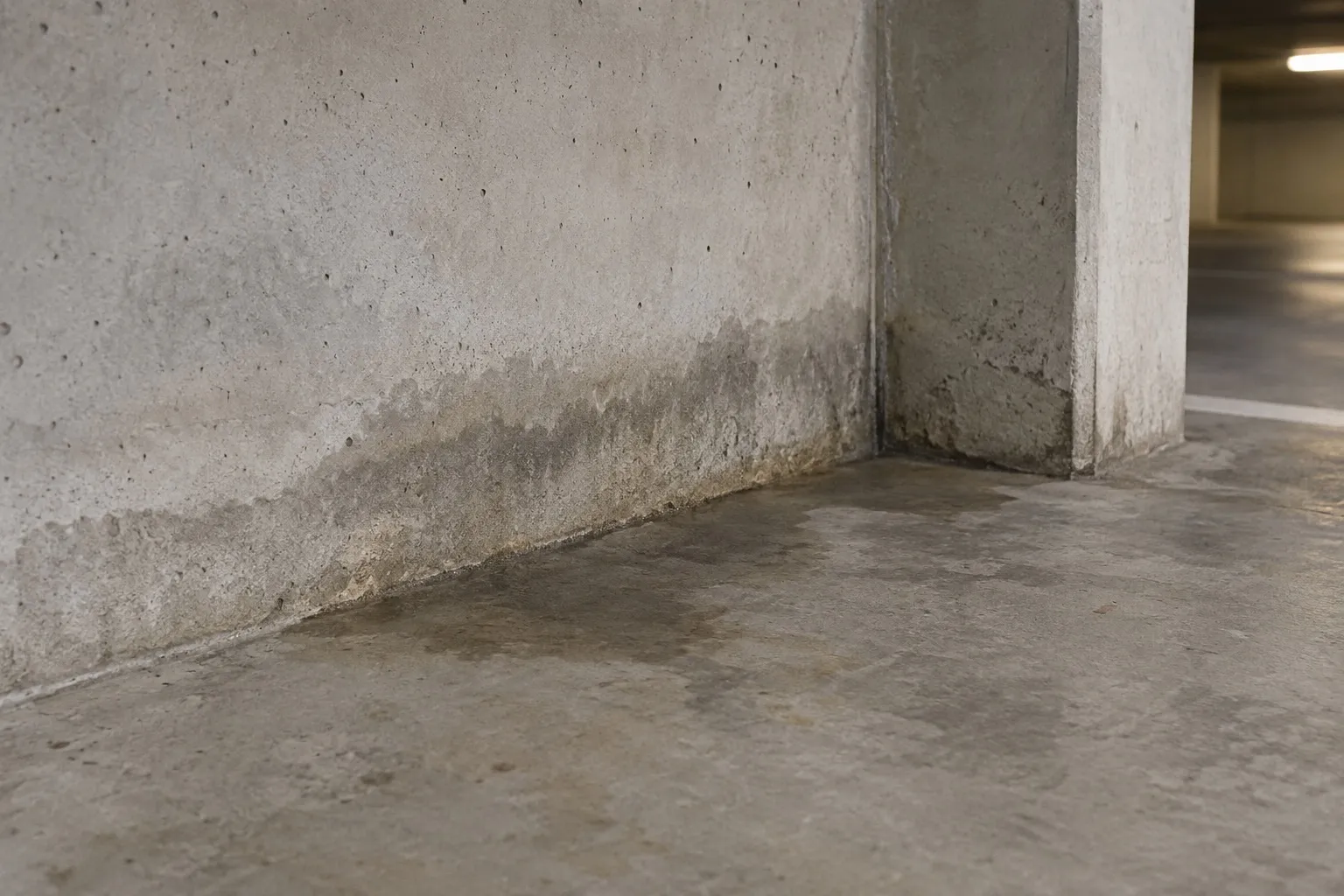
Begin with a property plan: ramp and entrance door, perimeter wall, floor slab, drains, vehicle wash or detailing area, water pipes, HVAC plant, storage wall and the door to the residence. Mark each stain, bubbling finish or odor report. Ask when it appeared: after heavy rain, seasonal groundwater rise, a wash event, cooling operation or a period when the room was closed. Photograph the wall and junction with a scale and date but avoid unnecessary photographs of registration plates, asset lists or security devices. An overseas owner needs useful evidence, not a full public inventory of valuable cars.
The EPA mold course on finding moisture recommends looking for moisture sources and hidden growth rather than treating odor alone as a diagnosis. A dark line at the wall-floor joint may be tracked-in dirt, old staining or active wetness. A qualified building assessor can compare areas and choose a suitable method for concrete, board lining or timber. A moisture-meter reading should be recorded with material, location, instrument and comparison; the number alone is not a universal threshold. Do not lay a porous rug or build cabinetry over an unresolved damp corner merely to improve the gallery's appearance.
Water from a ramp may move along the floor toward a wall; a below-grade wall may receive water from outside; a leaking pipe may wet a small vertical area; poor condensate drainage may mark a ceiling or mechanical corner. These patterns call for different trades. Ask the manager to document the strongest hypothesis and the next observation that would distinguish it. A trial under relevant conditions may be useful, but it must not involve unsafe vehicle operation or deliberate flooding. The EPA building moisture guidance supports source control and maintenance as connected decisions, not a one-product answer.
2. Keep exhaust safety and mold work on separate tracks
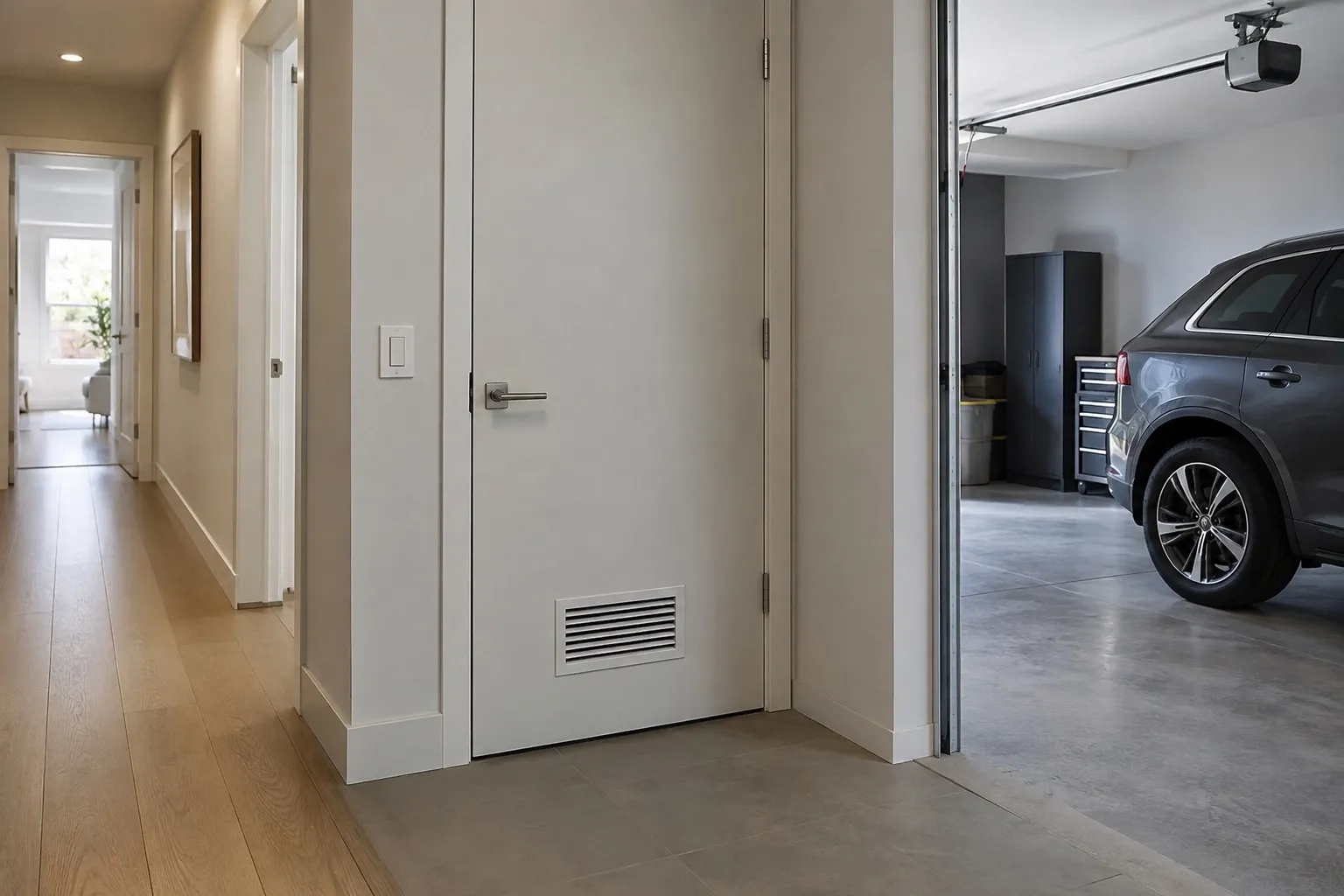
An attached garage is not just another room. Carbon monoxide is odorless and toxic; a musty odor cannot tell you whether CO is present or absent. The EPA CO guide lists automobile exhaust from attached garages among sources. If a CO alarm activates or anyone may have been exposed, leave the area and follow emergency guidance rather than investigating a damp wall. Never run an engine in an attached garage even with the outer door open, as the EPA emergency IAQ guidance states. This is a safety boundary, not a mold-service feature.
The garage-to-residence door, penetrations and ventilation system should be reviewed by the relevant building and HVAC professionals if air transfer is a concern. The NIST garage-to-house study explains that pressure differences and leakage paths can move pollutants from a garage toward living spaces. It is a study, not a diagnosis of this residence. A mold assessor may notice a gap while investigating a wet wall, but should not claim to have certified exhaust ventilation or CO protection unless separately qualified and commissioned to do so. Document unresolved air-separation concerns for the appropriate expert.
| Symptom or risk | Immediate question | Appropriate lead | Why a single mold-cleaning visit is insufficient |
|---|---|---|---|
| CO alarm or suspected exhaust | Is there an acute safety risk? | Emergency service and ventilation professional | Mold treatment cannot assess or clear CO exposure |
| Damp perimeter wall after rain | Where is water entering or retained? | Waterproofing/envelope specialist | Wiping the wall does not repair the water path |
| Stained lining or musty storage | Are backing materials wet or affected? | Building/moisture specialist | Surface appearance does not show concealed condition |
| Water by drain or ramp | Is drainage working under normal use? | Drainage contractor and manager | A dehumidifier cannot fix a blocked route |
| Concern for rare-car interiors | Is vehicle material affected? | Qualified vehicle conservator | Building mold work does not restore leather or paint |
This is a scope table, not a numerical performance chart. Do not claim that one relative-humidity setting protects every car, material and wall assembly. Collection preservation requirements and the building's moisture behavior need to be considered together by the owner's specialists. A generic appliance advertisement cannot decide whether the slab or wall remains wet.
3. Coordinate building investigation and collection protection
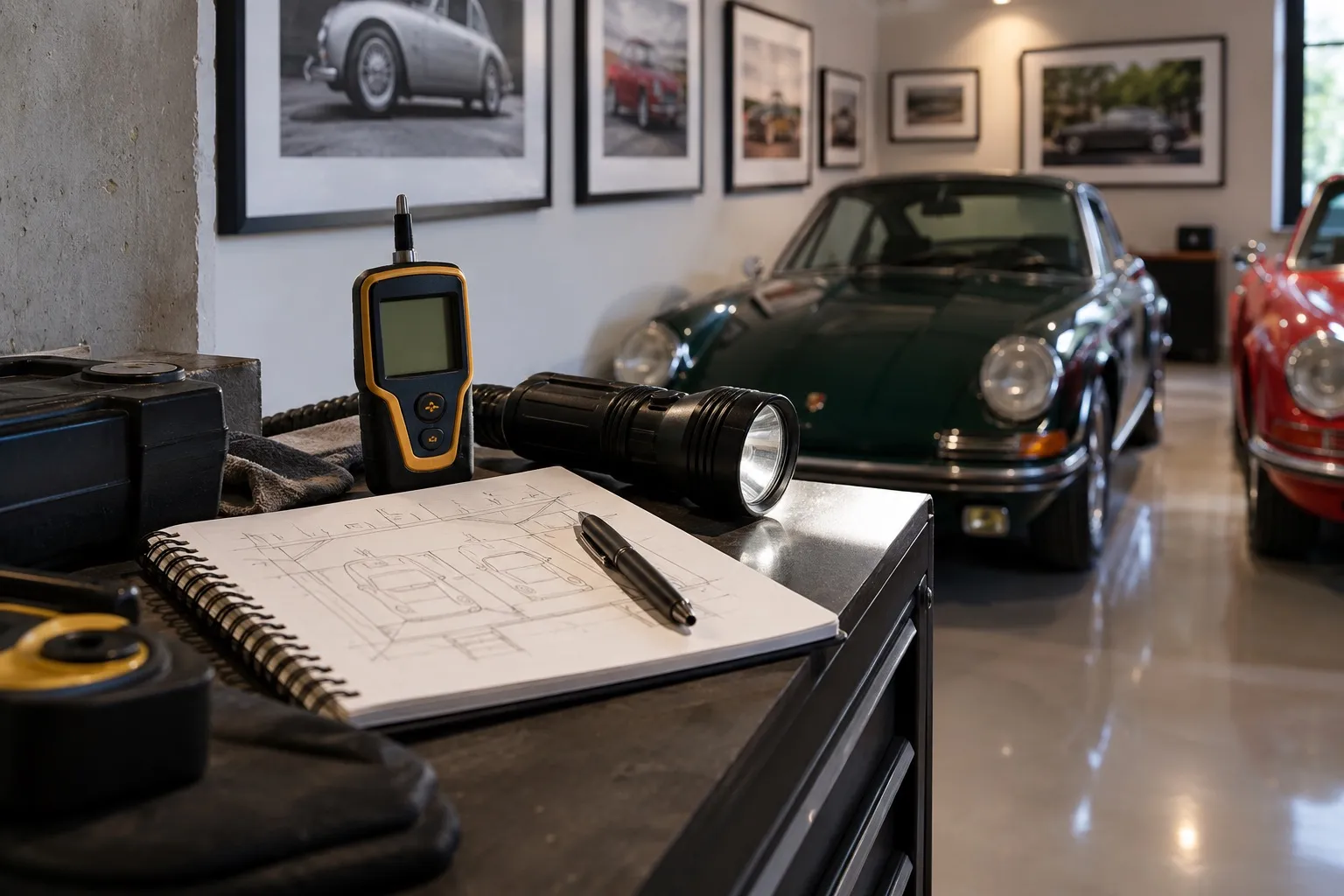
If suspected growth is limited to a wall lining, the manager should still protect the collection from investigation dust, drips and accidental contact. Move or shield cars only under the owner's approved procedures, and use a vehicle specialist if fragile or rare finishes are involved. Do not park a car over an inspection joint or block drainage to make room for equipment. Agree on access routes, temporary barriers and photo permissions before a contractor opens a wall. In a high-security garage, contractors need a clear scope and escort arrangements without receiving unrelated security information.
The EPA brief guide to mold and moisture at home focuses on fixing the water problem along with cleanup. The EPA remediation guidance for buildings discusses planning, materials and occupant protection. A private car gallery differs from a school or ordinary home, so adapt the principles with competent local professionals. If the affected material is porous or the wall cavity is wet, a spray on the finished face is unlikely to answer what is behind it. If the mark is old and the assembly is dry, unnecessary demolition may damage expensive joinery. Evidence should determine the scope.
Create hold points: source identified; active water stopped; affected materials mapped; repair and drying checked; garage systems returned to intended operation; collection returned or access restored. Record what each trade actually observed and any inaccessible area. A leak specialist should not sign off a vehicle interior; a car detailer should not declare a basement wall dry; a mold contractor should not certify the exhaust system by implication. The manager can combine reports into an owner-ready summary with explicit limitations.
4. Decide when to use the gallery again and how to ask for help

Do not judge return to use from fresh paint, an air fragrance or a single room photograph. Ask whether the original water route has been addressed, whether materials remain wet, whether visible growth or damage recurs, and whether drainage and ventilation have been checked by their responsible trades. If the gallery is connected to living areas, include the garage-to-home boundary in the appropriate professional review. The EPA guidance on weatherization and indoor air discusses the importance of both moisture management and garage interfaces. A property-specific sign-off still needs local expertise and documentation.
For an English-speaking owner, the first message can be concise: “Our attached private car gallery in [municipality] has a damp mark at [wall/floor] after [rain/operation]. There is [no/unknown] active water and [no/unknown] odor. Vehicles and electrical systems are nearby. Please advise the building-side mold and moisture assessment scope; our garage ventilation and waterproofing contractors will assess their systems separately.” Attach dated photographs that do not reveal unnecessary valuables or personal information. Confirm access, service area and timing with the Yokohama team directly. No blog can guarantee a response time, complete privacy, collection preservation or permanent prevention.
FAQ — Can I keep the cars in place during inspection? It depends on the access and work needed. The owner and manager should agree protective measures with the building specialist and the vehicle conservator. Do not promise zero risk to a rare finish.
FAQ — Is a dehumidifier enough? It may manage air conditions, but it does not repair a failed drain, water-entry detail or leaking pipe. Determine the cause first and have equipment settings reviewed by the right professional.
FAQ — Does a musty smell mean there is carbon monoxide? No; CO is odorless. A musty smell and exhaust safety are separate concerns. Follow alarm and emergency guidance if CO is suspected.
FAQ — Should I wash the wall with bleach? A wet or porous assembly and active water source need assessment. Surface washing can damage finishes and cannot establish that concealed materials are dry. Consult the relevant specialists before disturbing the area.
FAQ — Who assesses the garage-to-house door? A building and ventilation professional should review the separation and pressure/airflow question. The mold specialist can share observations but should not claim to certify a system outside its scope.
FAQ — What makes this an urgent inquiry? Active water near electrical components, a CO alarm, structural or ceiling instability, rapidly spreading wetness, or symptoms of exposure require immediate safety and trade response. A recurring stain, odor or damp porous lining warrants prompt planned assessment rather than cosmetic concealment.
日本語要点: 住宅に隣接するコレクターカー用ガレージで壁や床際が湿った場合は、車両排気・一酸化炭素の安全確認と、建物の漏水・結露・カビ調査を分けて考えます。警報が鳴った場合はその場でカビ調査をせず退避し、適切な緊急対応を取ってください。壁の染みは雨水、地下外壁、排水、配管など原因を調べ、原因を直す前に塗装や芳香剤で隠さないことが重要です。車の修復は車両の専門家、換気は設備業者が担当します。東京・神奈川・千葉の海外オーナーは、建物側の湿気・カビをカビバスターズ横浜に英語で相談できます。
See Kabibusters Yokohama's building mold services and contact the Yokohama team in English about the garage wall. The images illustrate building-side questions and are not photographs of a customer's gallery, inspection or treatment result.
----------------------------------------------------------------------
カビバスターズ横浜
住所 :
〒221-0056
神奈川県横浜市神奈川区金港町5-14 クアドリフォリオ8階
電話番号 :
0120-133-199
----------------------------------------------------------------------